

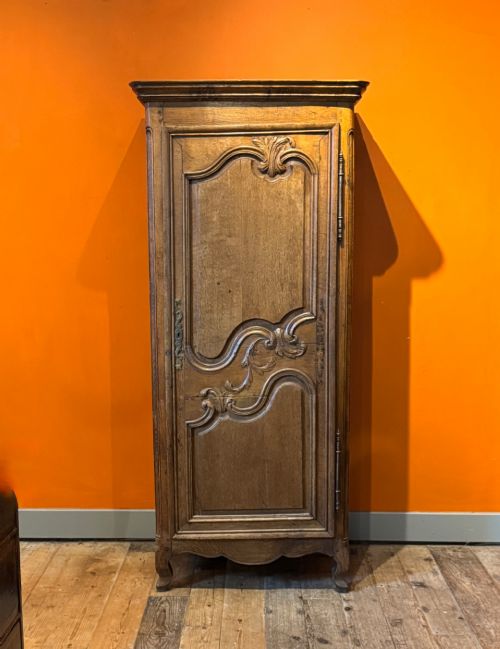


Brown Oak Hall Cupboard
A brown oak hall cupboard grounds an entrance with deep grain and sturdy storage, offering both utility and historic character.
Brown Oak Hall Cupboard
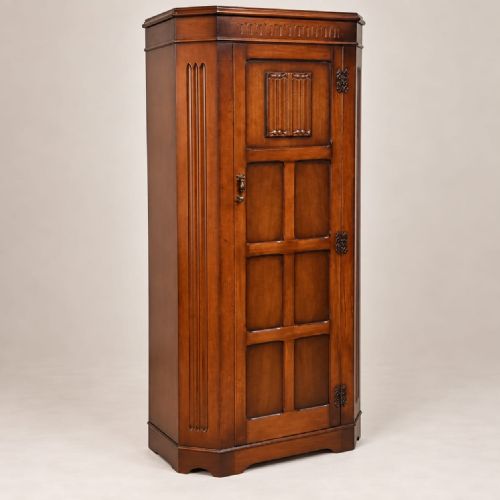
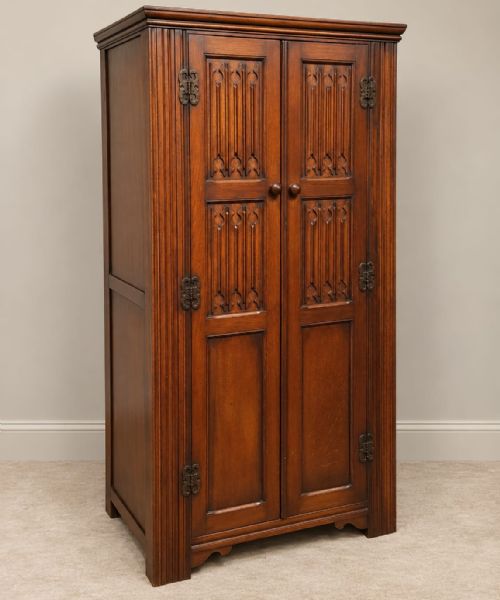
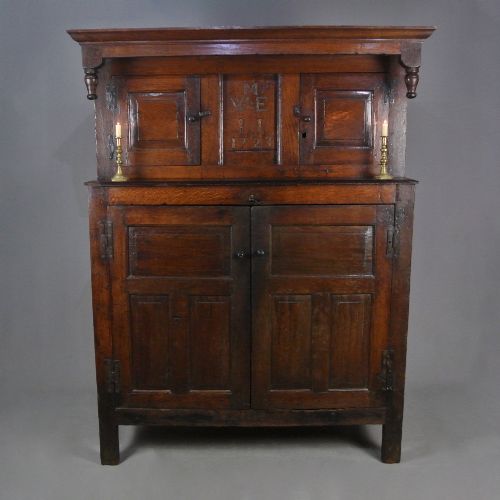
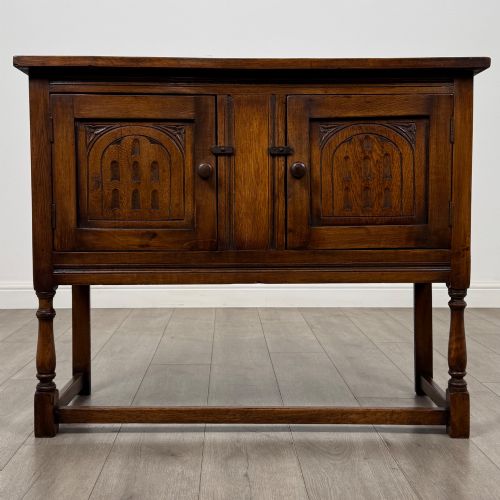
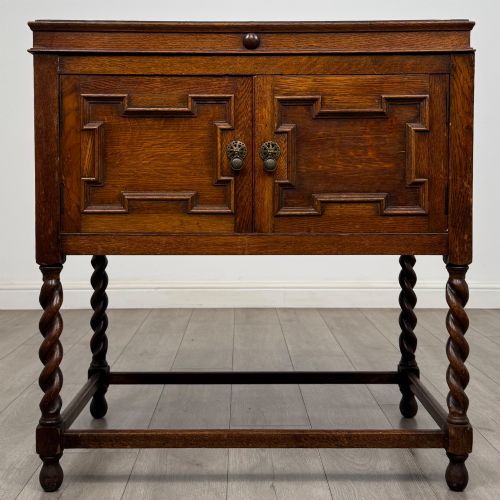
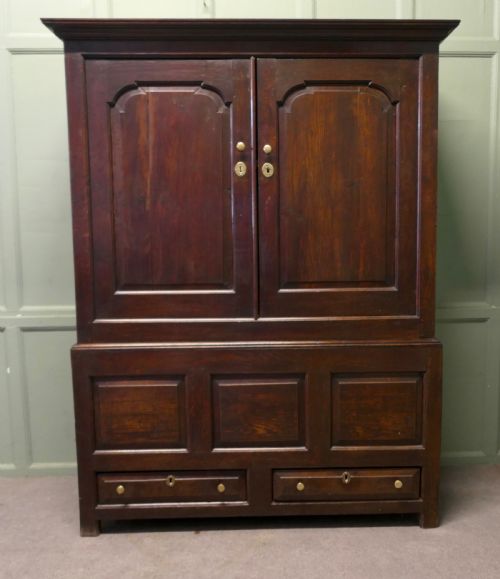
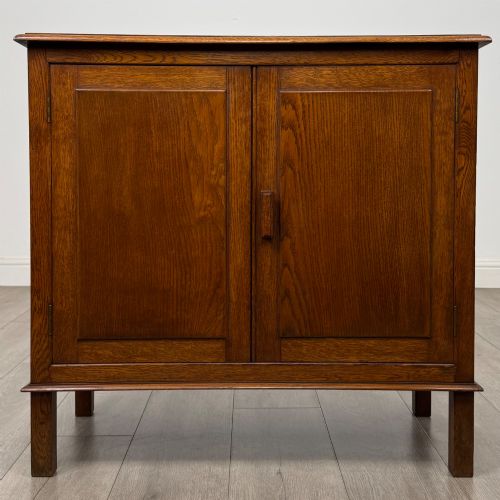
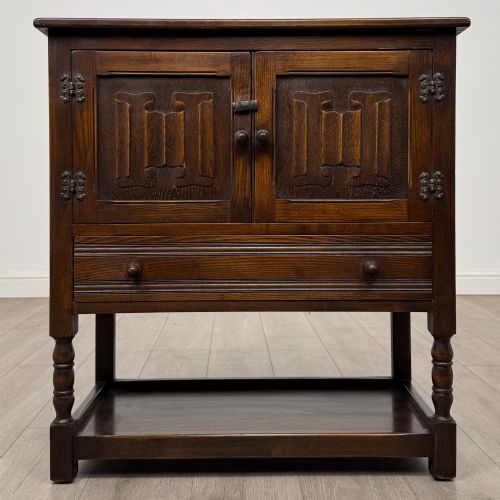
A brown oak hall cupboard brings substantial storage into an entrance space, drawing from centuries of British and European woodworking traditions. When exploring a brown oak hall cupboard, buyers encounter diverse forms ranging from compact side cabinets and court cupboards to tall wardrobes, settles, and standing storage units.
The pieces on this page span the Georgian period, the Victorian era, the Edwardian years, and the early twentieth century, incorporating styles such as Jacobean Revival, Gothic Revival, and Renaissance Revival. Regional variations include English country pieces, West Country designs, and Welsh deuddarn two-part cupboards alongside continental examples.
Judging Quality
Quality rests on the depth of the timber's grain, the crispness of the hand carving, and the integrity of the structural joinery. Pieces with original hardware, such as blacksmith locks and hinges, retain a higher degree of authenticity.
Proportion and scale also distinguish finer items, particularly where smaller proportions or balanced regional designs maintain their original architectural presence within an entrance hall.
Some nineteenth-century makers evidently repurposed church panelling to give modest hallway cupboards an air of medieval devotion.
Hampton & Son's
The Brown Oak Hall Cupboard Glossary
- Brown oak
- Timber exhibiting a rich, dark natural colouration resulting from a fungal process while the tree stood growing. It provides a striking contrast to paler standard oak.
- Deuddarn
- A traditional Welsh two-part cupboard designed for household storage. It usually incorporates panelled doors and distinct upper and lower sections.
- Linenfold
- A style of woodcarving imitating folded parchment or linen cloth. It appears frequently on panels of Tudor and revival furniture.
- Bacon settle
- A high-backed wooden seat incorporating a storage compartment or cupboard within the frame. Historically, rural households used them to store cured meats.
Brown Oak Hall Cupboard: Frequently Asked Questions
How do I date an antique oak cupboard?
Dating relies on examining construction techniques, joinery, timber selection, and hardware such as locks and hinges. Hand-forged ironwork and pegged joints usually indicate earlier periods like the eighteenth century.
Revival styles from the Victorian and Edwardian eras often incorporate machinery-cut elements alongside period-inspired carvings.
How were these cupboards used historically?
These cupboards served to store heavy outerwear, cloaks, and household provisions away from damp entryways. Settles and hall cupboards provided both seating and concealed storage for daily use.
Larger court cupboards and deuddarns displayed wealth and stored linens or dried foods in the main living areas of a home.
How do I care for antique oak furniture?
Care involves maintaining stable indoor humidity and temperature to prevent the solid oak from splitting or warping. Regular dusting with a soft cloth preserves the polished or waxed surface.
Avoiding direct sunlight protects the rich brown colour of the timber from fading over time.