



Carved Game Cabinet
These carved game cabinet examples offer practical storage and striking natural ornament for a room, uniting leisure with heavy timber craftsmanship.
Carved Game Cabinet
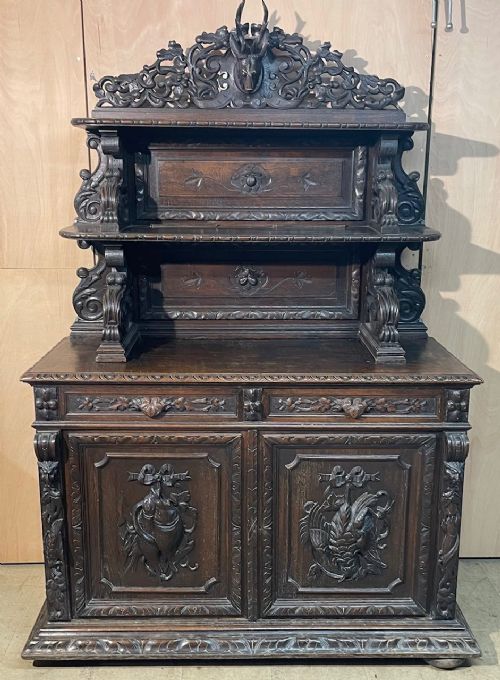
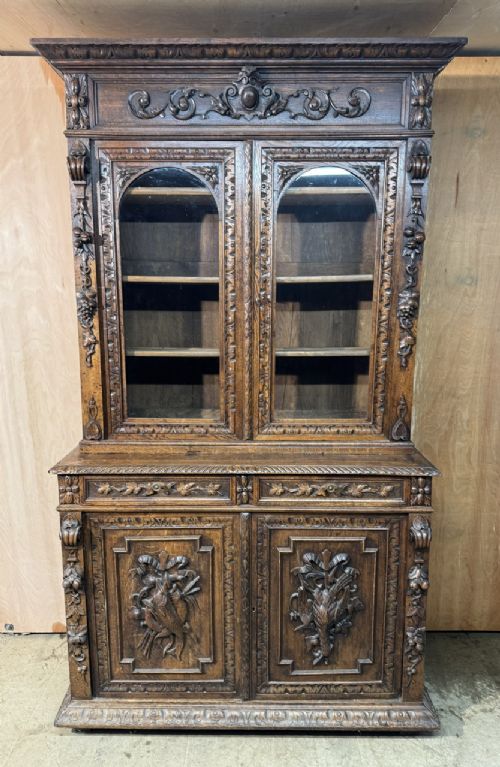
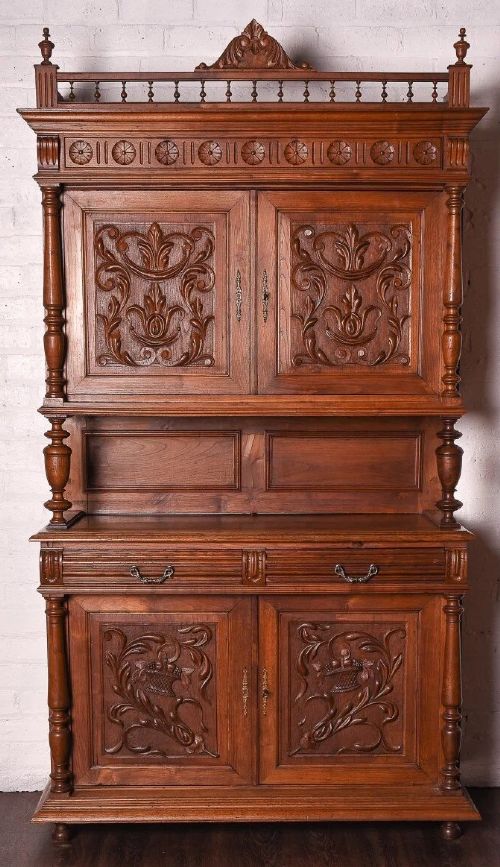
A carved game cabinet brings together substantial storage and pursuits of leisure, appearing primarily as oak or walnut sideboards, cupboards, and scoreboards. These forms originate across the nineteenth century and the Edwardian era, drawing on Victorian and French Renaissance revival styles.
Buyers encounter robust French hunting furniture alongside English scoreboards and compendiums fitted in rosewood or pale oak. The selection spans grand buffet de corps designs and smaller wall-hanging pieces meant for organising pastimes.
How they were made
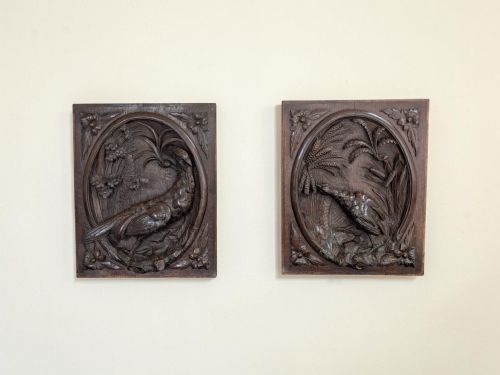
Craftsmen utilised solid timbers such as oak, walnut, and rosewood, shaping panels with deep relief carvings of foliage and game. Brass hardware, iron fixtures, and glass panels integrate into the heavy wooden structures.
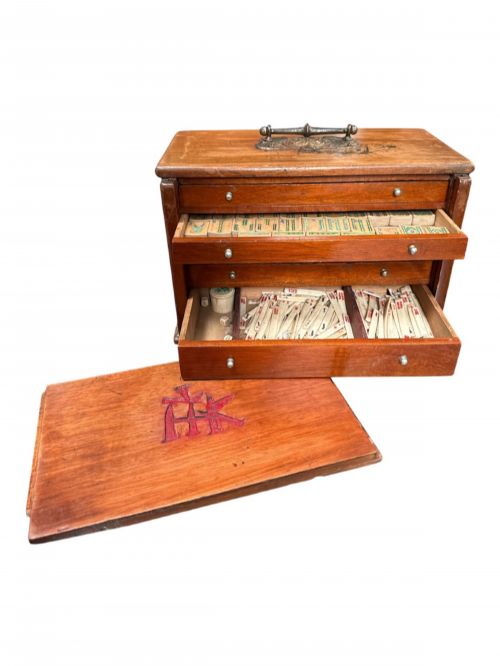
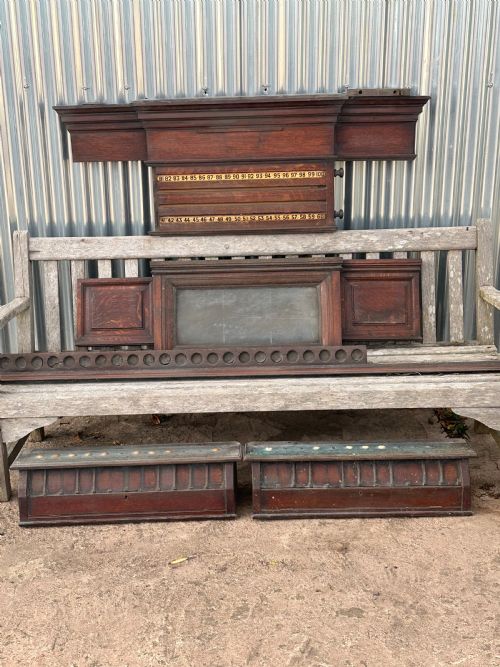
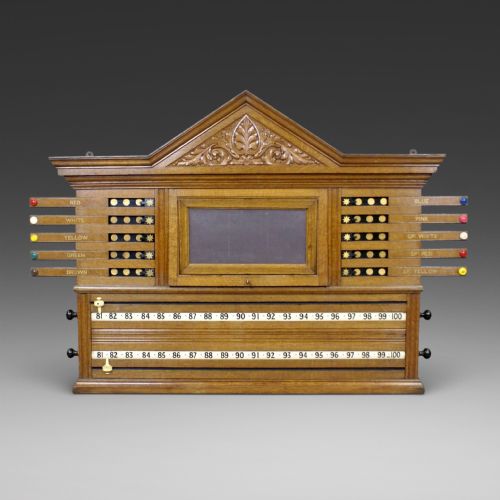
Interior components incorporate specialised fittings like wooden cabinets for mahjong sets and sliding markers for billiard scoreboards. Detail work relies on traditional hand-carving techniques applied to dense hardwoods.
The furniture forms span French hunting sideboards, Chinese mahjong sets in wooden boxes, and English billiard scoreboards.
What varies in quality
The standard of a carved game cabinet rests upon the crispness of the timber relief work and the structural integrity of the wood. Pieces featuring deeply articulated scenes display greater artisan investment than plain surfaces.
Original fitted interiors and intact brass or bone markers distinguish superior examples from altered or simplified housings. The selection of dense oak or figured walnut also elevates the presence of the piece.
Thurston and Co
The Carved Game Cabinet Glossary
- Buffet de corps
- A tall, two-tiered French sideboard or storage cupboard. It provides substantial enclosed shelving behind heavy wooden doors.
- Games compendium
- A fitted box or cabinet holding multiple tabletop pastimes. These containers organise diverse pieces within compartments.
- Scoreboard
- A wall-mounted or freestanding indicator for keeping tally during billiards or snooker. Sliding indicators and wooden panels track the points.
- French Renaissance revival
- A nineteenth-century stylistic movement reviving sixteenth-century French design motifs. It employs heavy carved ornamentation and architectural symmetry.
Carved Game Cabinet: Frequently Asked Questions
What fits inside a carved game cabinet?
These pieces accommodate various items depending on their specific form, ranging from billiard markers to fitted compartments for tile games and compendiums.
Larger sideboard formats provide broader storage for household items alongside dedicated provisions for leisure equipment.
Where were these cabinets made?
The available selection shows origins primarily in France and England, reflecting distinct regional tastes in leisure furniture.
French pieces often display heavy hunting motifs, while English examples frequently comprise scoreboard cabinets and rosewood compendiums.
How do I date a game cabinet?
Dating relies on examining the timber species, construction methods, and stylistic indicators such as Victorian or Edwardian design traits.
Makers' attribution marks or specific hardware details like brass and bone components also help establish the production period.
Are scoreboard cabinets still functional?
Many scoreboards retain their original sliding wooden markers and brass fittings, allowing them to function just as they did originally.
They also serve effectively as decorative wall panels when mounted in rooms dedicated to recreation.