


Henri II Cabinet
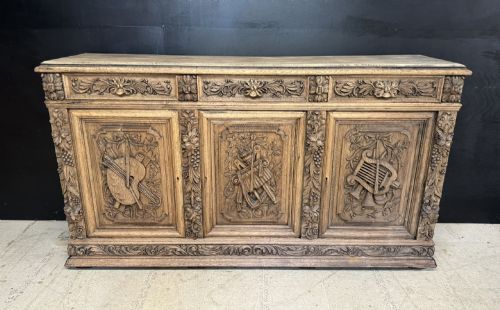
These heavy oak and walnut pieces carry the ornate carving of the French Renaissance Revival, giving a room architectural presence.
Henri II Cabinet
A henri ii cabinet brings the dense ornamentation of sixteenth-century French design into nineteenth-century interiors through substantial sideboards, bedside tables, and cupboards.
Most examples found here date from the nineteenth century, including specific periods like eighteen-eighty and eighteen-ninety, and embrace styles such as French Hunt Style and Renaissance Revival.
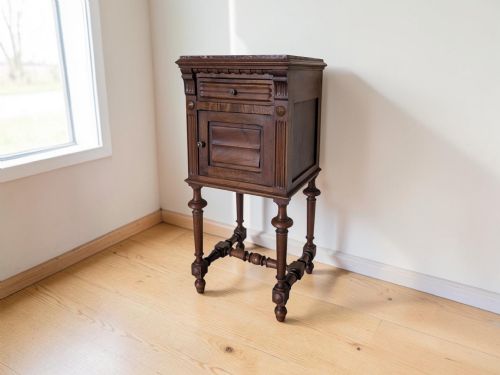
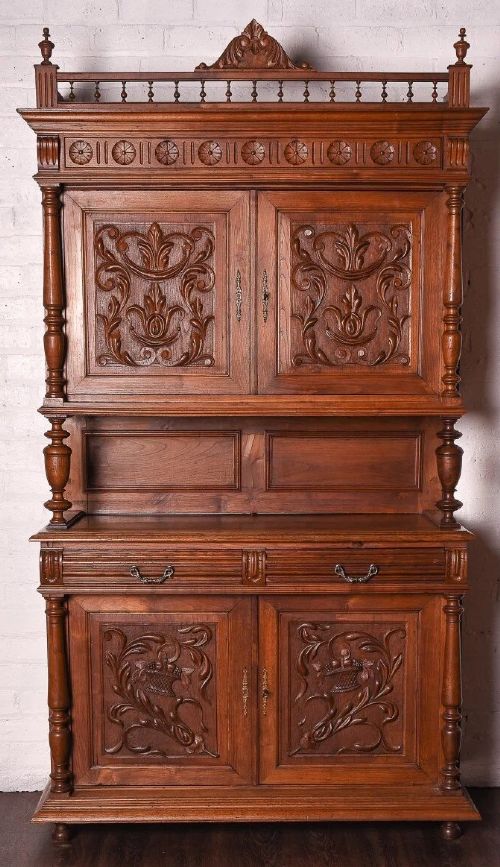
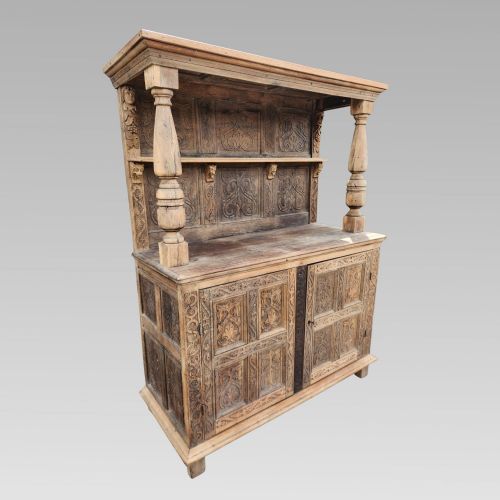
Forms range from tall buffet de corps and kitchen dressers down to compact night tables and bedside cabinets, all sharing heavy timber construction.
Materials and construction
Makers built these pieces primarily from solid oak and walnut, utilising rich timber that supported deep, intricate relief carving.
Construction details incorporate functional iron and brass hardware alongside marble surfaces, while turned elements like barley twists shape the uprights and supports.
Several game cupboards feature carved woodland quarry, ensuring dinner guests are watched over by perpetual wooden pheasants.
Assessing craftsmanship
Quality rests upon the depth and precision of the carved decoration, distinguishing boldly sculpted game motifs and architectural panels from simpler, flatter surfaces.
The choice of primary timber and the integration of auxiliary materials such as marble tops and detailed brass fittings separate standard utility items from monumental buffet pieces.
The Henri II Cabinet Glossary
- Buffet de Corps
- A large two-part French sideboard or cupboard featuring an upper and lower section with substantial doors. These monumental pieces served to display silver and store provisions in wealthy dining rooms.
- Barley Twist
- A spiral turning resembling a twisted rope, used to shape wooden columns and table legs. This decorative turn became popular during the seventeenth century and returned strongly in nineteenth-century revivals.
- Renaissance Revival
- An eclectic nineteenth-century architectural and furniture style drawing on sixteenth-century classical motifs. It utilises heavy cornices, caryatids, and complex strapwork.
- Hunt Style
- A decorative sub-genre within French furniture featuring carved game, hunting horns, and woodland foliage. These motifs adorned cupboards and sideboards intended for dining spaces.
Henri II Cabinet: Frequently Asked Questions
What is a henri ii cabinet?
A henri ii cabinet is a nineteenth-century furniture piece inspired by sixteenth-century French Renaissance design. These items include sideboards, bedside tables, and tall cupboards.
They are characterised by substantial timber construction in oak or walnut, heavily decorated with relief carvings, architectural mouldings, and turned elements.
How were these cabinets used?
These pieces served practical storage and display functions in nineteenth-century homes, varying by their specific form. Large sideboards and buffet de corps held dining provisions and tableware.
Smaller bedside cabinets and night tables provided enclosed storage beside a bed, keeping personal items close at hand.
What woods were used?
Carpenters relied primarily on oak and walnut for these cabinets, selecting dense hardwoods suitable for deep carving. Walnut offered a smooth, rich grain for intricate figural work.
Oak provided exceptional strength for larger buffet structures and was frequently carved with robust geometric and botanical panels.
How do I date a cabinet?
Dating relies on stylistic markers, materials, and documented production periods recorded in nineteenth-century examples. Most pieces reflect Victorian tastes and French revival movements from the middle and late decades of the century.
Specific dates or narrower spans, such as eighteen-eighty or eighteen-ninety, appear when construction traits and historical records align.