





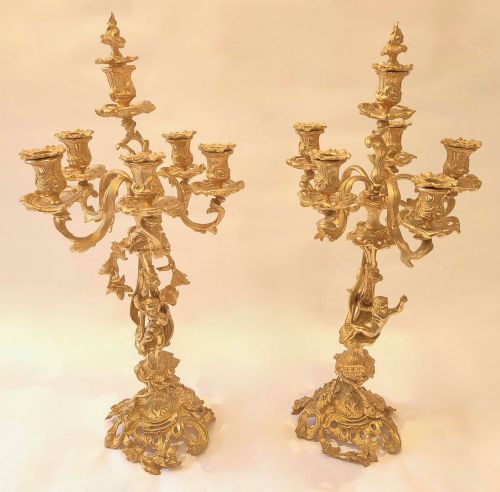


French Putti Candlestick
A french putti candlestick brings figurative sculpture into lighting, pairing winged cherubs with cast metal and stone bases.
French Putti Candlestick
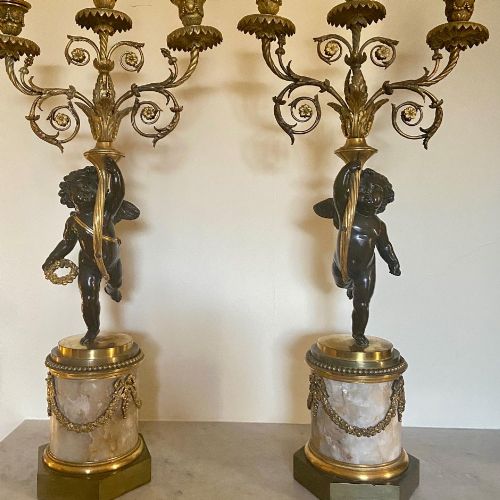
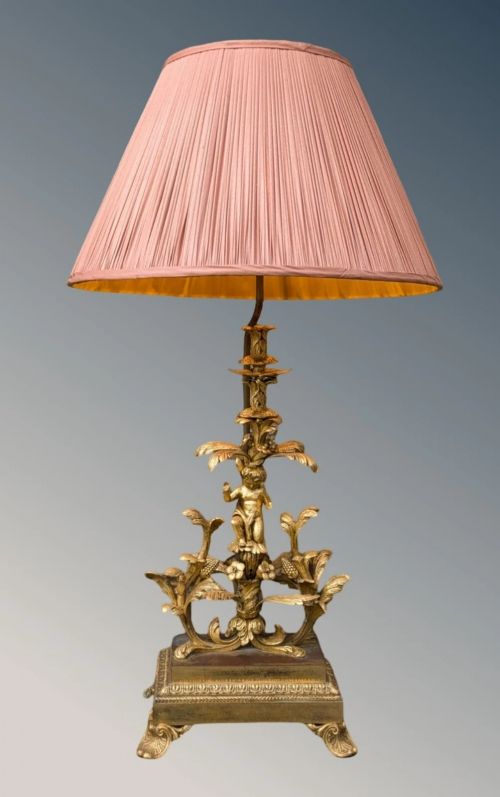
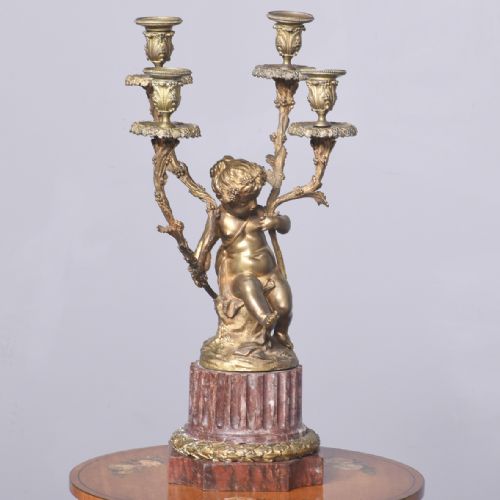
A french putti candlestick depicts winged cherubs supporting sockets for candles, emerging most frequently during the nineteenth century in various revival aesthetics. These pieces combine cast metal figures with stone components like marble and fluorspar, taking the form of single candlesticks or multi-light candelabra.
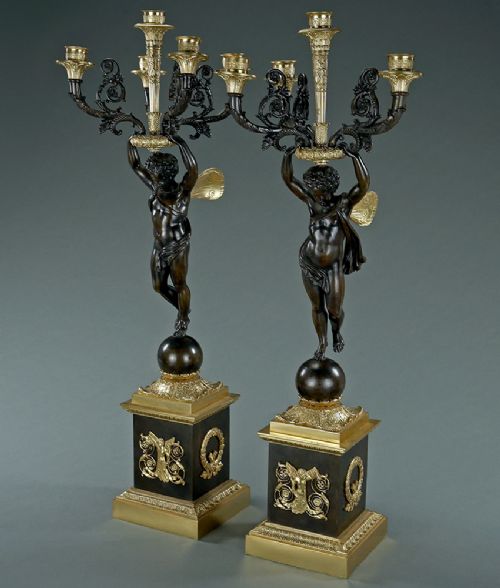
The designs draw heavily upon historical French idioms such as Louis XVI style, Empire, and Rococo Revival. Figures appear either in patinated bronze, bright ormolu, or gilt bronze, often mounted upon rectangular or circular plinths.
Makers and designers of the period adapted classical motifs to create table lights and desk pieces. Examples range from simple single-branch holders to large five-light candelabra featuring dancing or winged cherubs.
Materials and Construction
Foundry workers utilised bronze, brass, or spelter for the figures and fittings, employing lost-wax or sand-casting methods to achieve detailed cherub forms. Ormolu and gilt finishes added bright golden surfaces through mercury gilding or electroplating, contrasting against darker patinated bronze.
Structural bases frequently incorporate white or coloured marble, occasionally paired with minerals like fluorspar. Metal components are secured to these stone plinths using threaded pins and bolts, supporting the weight of multi-branch arms.
Dancing cherubs frequently juggle candle sockets with apparent disregard for wax drips.
Craftsmanship and Detail
The refinement of the casting defines the grade of a piece, separating sharp, hand-chased feather and facial details on the putti from softer, mass-produced surfaces. Heavier metal gauge and substantial marble plinths indicate higher production standards.
Integration between the metal figures and the stone bases reveals the maker's care, alongside the preservation of original gilding and patination across the bronze and ormolu surfaces.
Francois Redmond·Claude Clodion
The French Putti Candlestick Glossary
- Putti
- Plural of putto, representing plump, winged male infants often depicted in classical art and sculpture. They serve as the primary figurative support in these lighting designs.
- Ormolu
- Finely ground high-carat gold applied to a bronze base using a mercury amalgamation process or later electroplating. This technique creates a rich golden finish characteristic of French decorative arts.
- Fluorspar
- A colourful halide mineral sometimes utilised for decorative bases and columns. It provides a striated, semi-translucent counterpoint to cast bronze.
- Candelabra
- A branched candlestick holder designed to support multiple candles simultaneously. Many examples feature removable arms to convert between single lights and branched configurations.
- Patinated Bronze
- Metal treated with chemical solutions to produce a darkened, stable surface colour. This finish highlights the anatomical contours of the cherub figures.
French Putti Candlestick: Frequently Asked Questions
How do I clean a gilt bronze candlestick?
Dust surfaces gently with a soft dry brush to protect the delicate metallic finish. Avoid chemical polishes that strip historical ormolu or gilt layers.
Keep moisture away from any integrated marble or stone bases to prevent staining.
Were these pieces originally wired for electricity?
These objects were produced exclusively for wax candles during the eighteenth and nineteenth centuries. Conversion to table lamps often occurred later in their lifespan.
Original sockets and wiring paths vary depending on subsequent modifications.
How can I tell nineteenth century pieces apart?
Stylistic cues point towards specific decades, such as the classical symmetry of Louis XVI revival or the heavier ornamentation of Second Empire pieces. Material combinations like patinated bronze with fluorspar also suggest specific periods.
Casting sharpness and assembly methods further differentiate production dates.
Where should I place a candelabra?
These decorative objects suit mantelpieces, sideboards, or large desks where their height and reflective metal surfaces catch the light. Ensure they rest on stable, level furniture due to their combined bronze and stone weight.
Position them away from direct heat sources to protect the underlying materials.