



Gold Bronze Candleholders
Gold bronze candleholders bring warmth and classical elegance to a room, ranging from simple brass stems to elaborate French ormolu candelabra.
Gold Bronze Candleholders
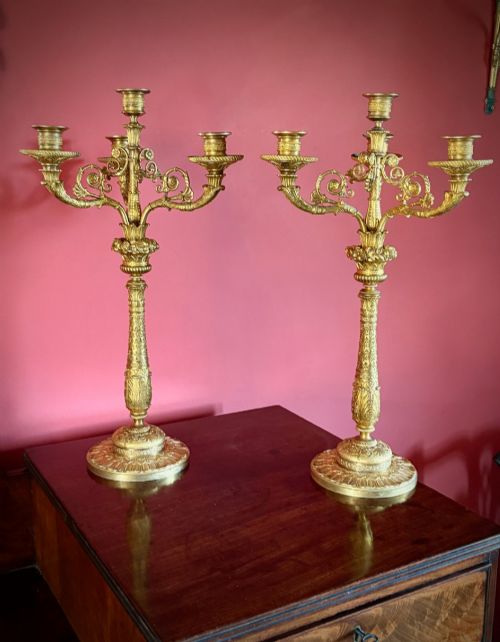
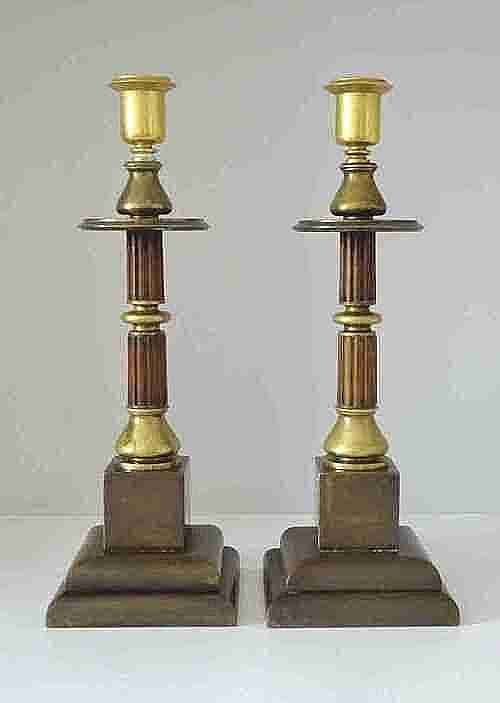
When searching for gold bronze candleholders, collectors encounter a diverse range of objects designed to hold tapers and pillar candles safely on tables, mantels, and walls. The selection includes single candlesticks, multi-arm candelabra, and fitted wall sconces produced across Europe during the eighteenth and nineteenth centuries.
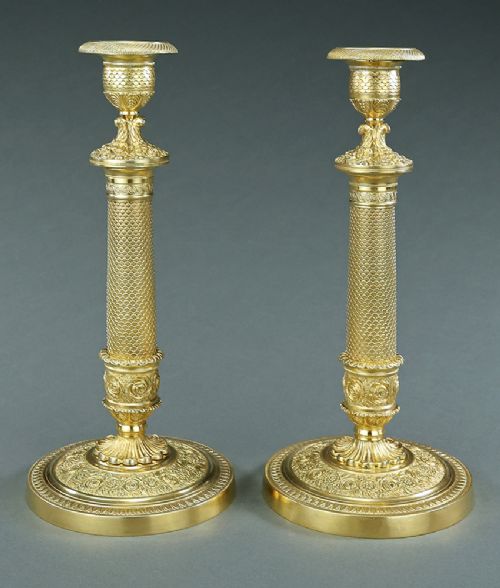
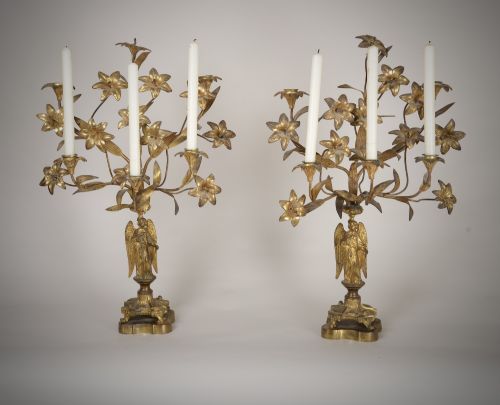
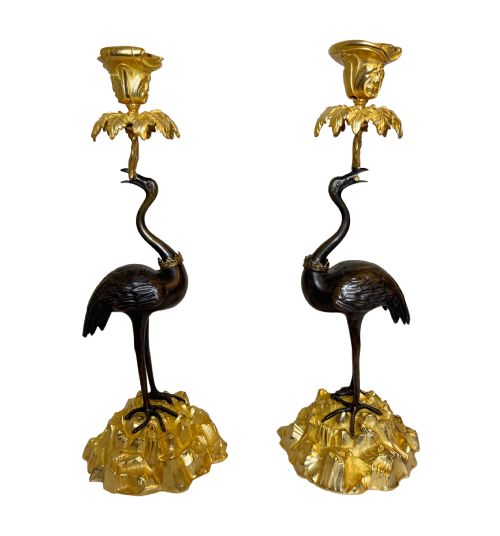
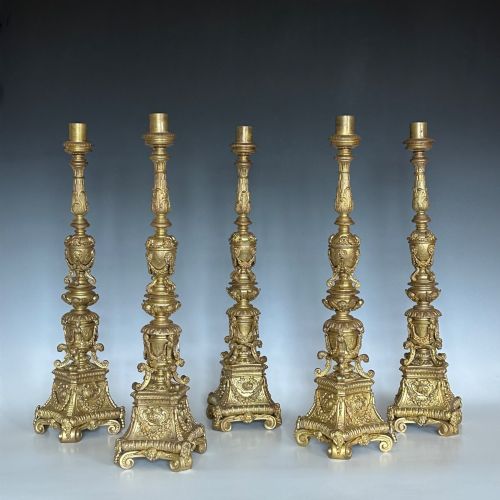
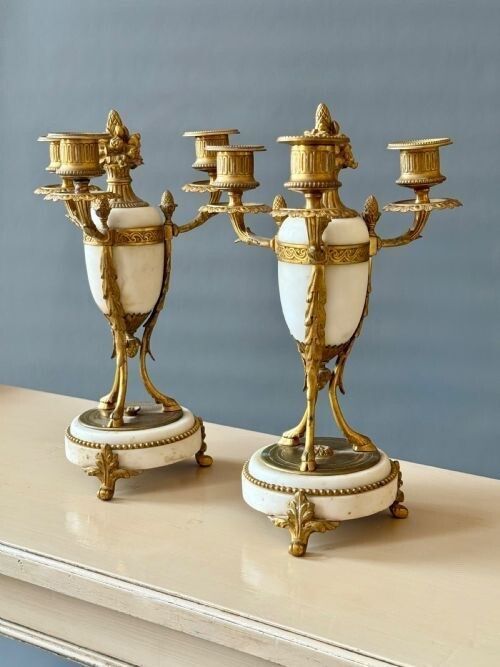
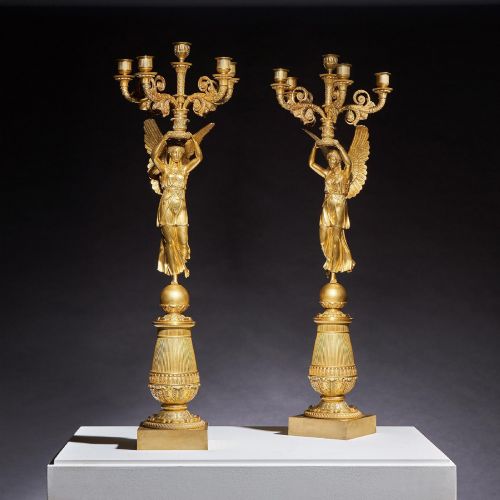
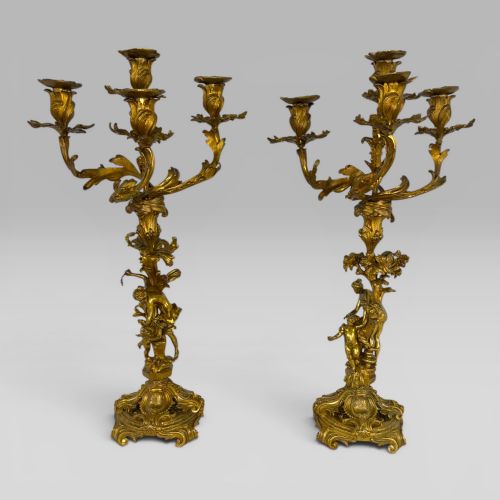
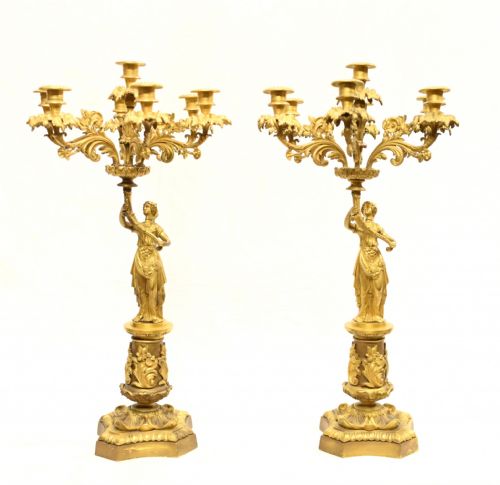
The pieces most frequently met on this page originate from France and Britain, spanning periods from the late eighteenth century through the Victorian era and into the early twentieth century. Common forms incorporate classical figures, cherubs, and animal motifs such as dolphins, flamingos, and storks, often paired with contrasting bases of white marble or porphyry.
Stylistic influences vary widely, taking cues from Louis XVI, French Empire, Rococo Revival, Gothic Revival, and Neoclassical designs. Buyers will find both diminutive single candlesticks intended for intimate spaces and large, multi-branch candelabra created for formal reception rooms.
Materials and technique
The manufacture of these objects relies heavily on the casting of bronze, brass, and gilt metals through traditional foundry methods. Artisans applied mercury gilding or modern electroplating techniques to achieve the characteristic bright golden surface known as ormolu.
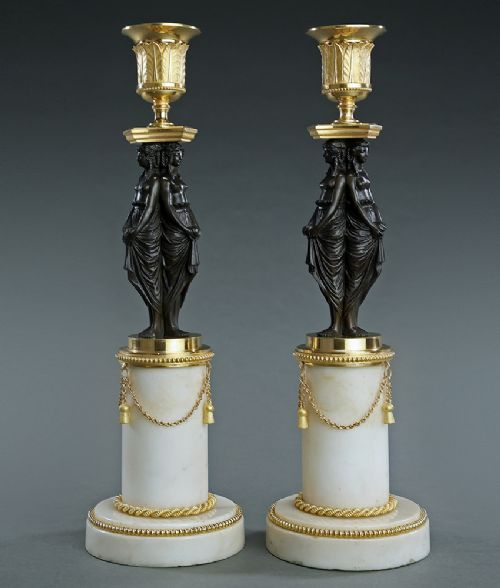
Many items combine cast gilt bronze with patinated dark bronze to create tonal contrast in drapery, foliage, and figures. Stonework elements, including white marble and porphyry, are turned and polished separately before being fitted with threaded metal rods to secure the bronze components.
Listings feature items from the 18th Century through to 1910, incorporating materials such as marble, porphyry, patinated bronze, and gilt brass.
Determining quality
Weight and structural integrity also separate tiers of quality, with finer pieces employing heavier gauges of metal and secure, tight joints between individual components. The integration of high-grade materials like genuine white marble or porphyry bases indicates a higher standard of manufacture.
Pierre Philippe Thomire·Rabiat·Claude Clodion·Galle
The Gold Bronze Candleholders Glossary
- Ormolu
- A term denoting finely cast and chased gilt bronze, widely used in French decorative arts to imitate solid gold. The finish is achieved through the application of gold leaf or mercury amalgam onto a bronze base.
- Candelabra
- A branched lighting fixture designed to hold multiple candles simultaneously from a single central stem. They often feature removable upper branches to allow conversion into simple candlesticks.
- Patinated bronze
- Bronze that has been chemically treated to produce a dark brown, green, or near-black surface colour. This dark finish provides visual contrast against bright gilt bronze mounts.
- Caryatid
- A sculpted female figure serving as an architectural support in place of a column. In these pieces, they form the central stem of the candlestick.
- Grand Tour
- A traditional trip through Europe undertaken by upper-class young men during the eighteenth and nineteenth centuries. Souvenirs purchased on these journeys frequently included classical bronzes and architectural mementos.
Gold Bronze Candleholders: Frequently Asked Questions
How do I clean gilt bronze?
Dust the surface gently with a soft, dry microfibre cloth to remove accumulated particles without scratching the delicate metallic finish.
Avoid all commercial metal polishes, abrasive cleaners, and water, as these substances strip away the thin layer of gold ormolu and expose the underlying base metal.
Are these candleholders wired for electricity?
The majority of pieces listed remain in their original form, designed exclusively to hold wax candles for decorative or ambient lighting purposes.
Conversion to electricity is possible through professional rewiring, though many collectors prefer to keep them unaltered to preserve their historical integrity.
How can I tell a nineteenth-century piece from a modern reproduction?
Examine the construction methods visible on the underside, looking for hand-cut threaded screws, sand-cast texture inconsistencies, and natural wear patterns on high points.
Nineteenth-century items typically display heavier metal weight, hand-chased surface details, and patination consistent with age rather than uniform modern chemical treatments.