
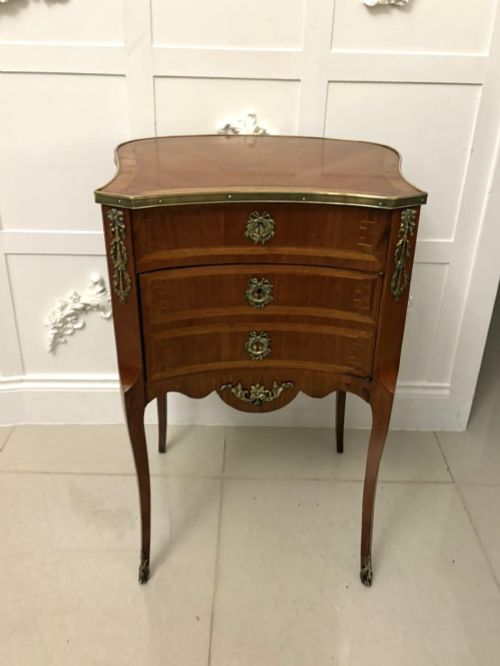
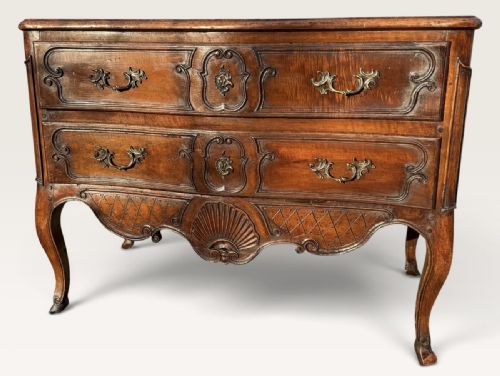
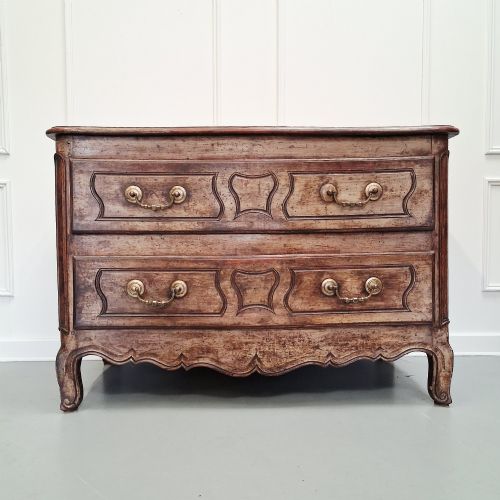
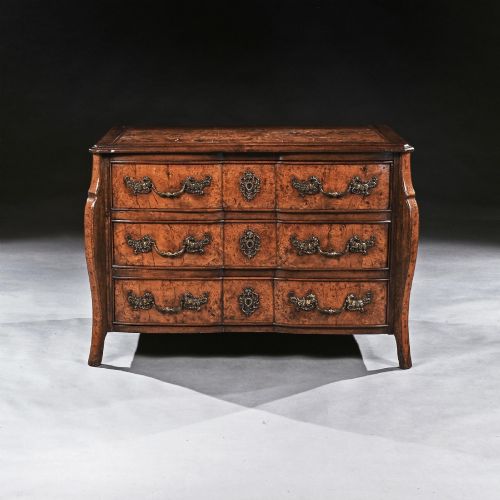
French Provincial Commode Chest
A french provincial commode chest brings regional cabinet-making to the fore, offering generous storage through shaped timber and traditional hardware.
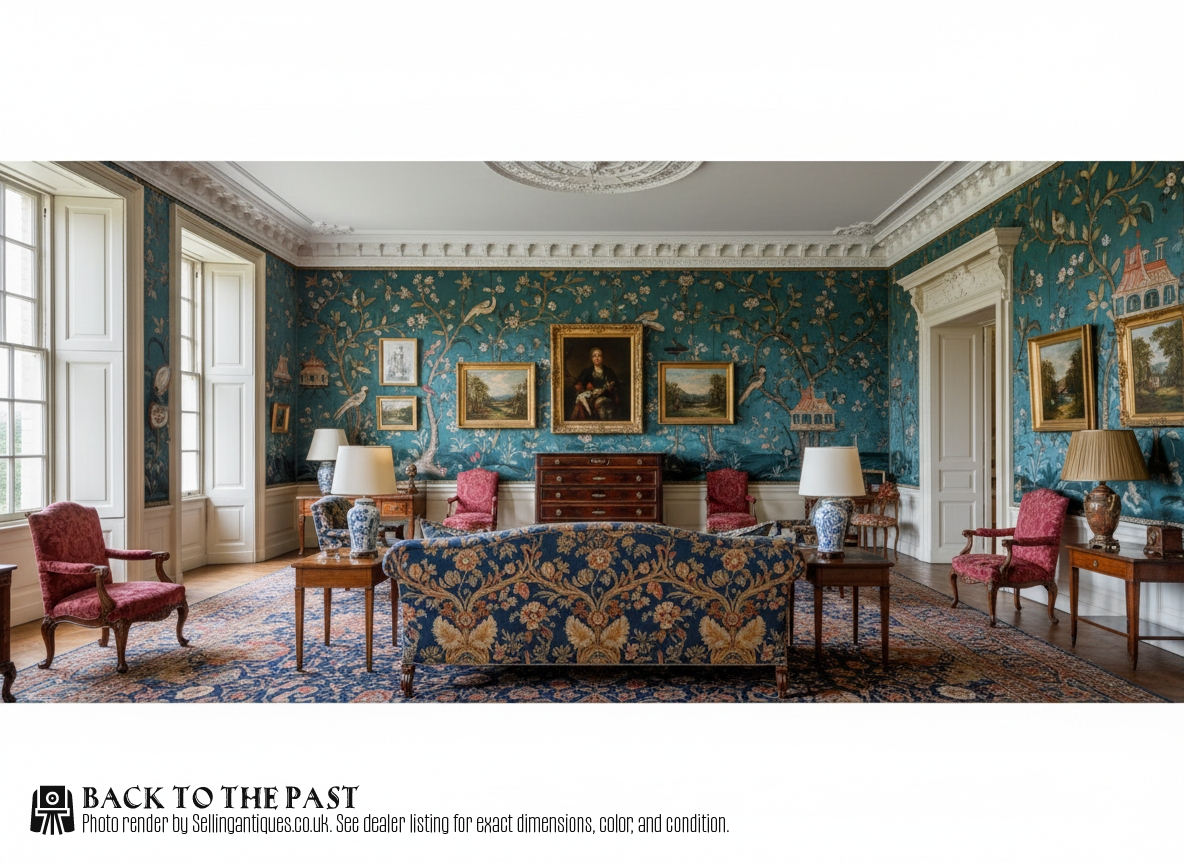
French Provincial Commode Chest
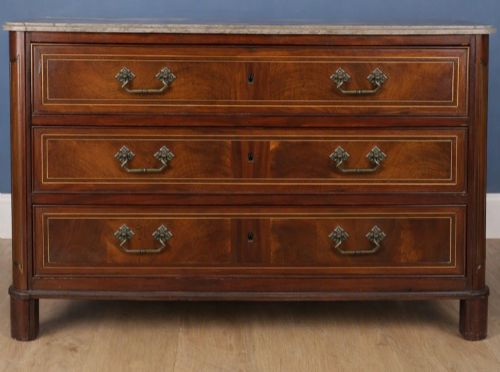
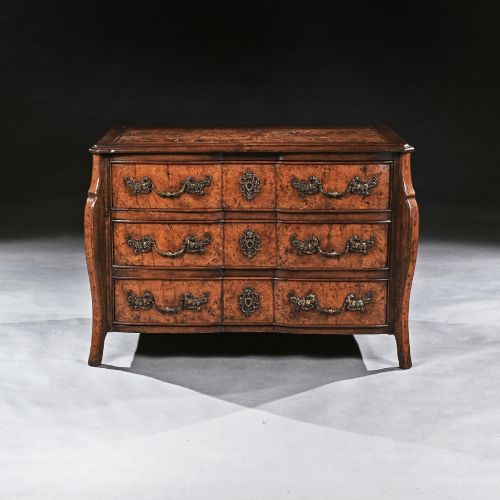
A french provincial commode chest is a low chest of drawers originating from regional France, distinct from courtly Paris pieces by its sturdier proportions and local timber choices. When searching for this phrase, a buyer meets examples spanning the eighteenth and nineteenth centuries, alongside later revival pieces.
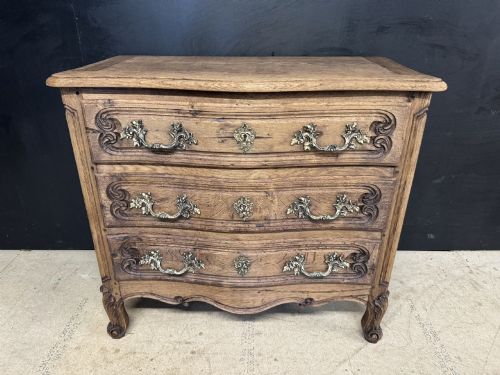
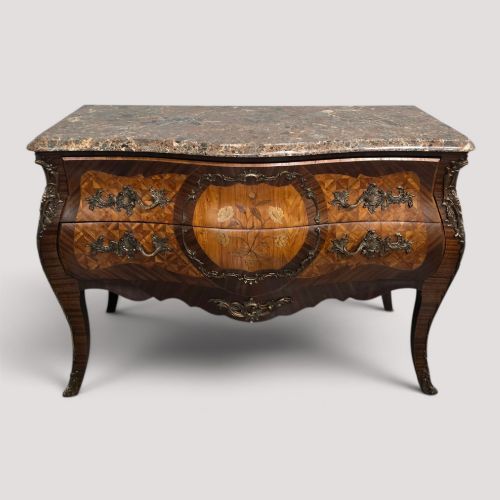
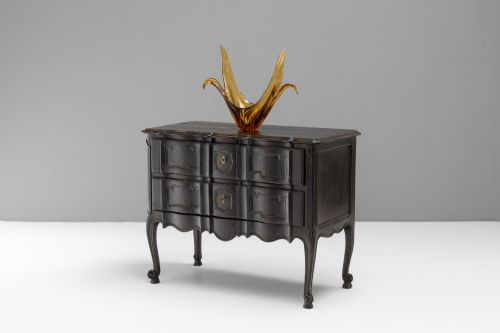
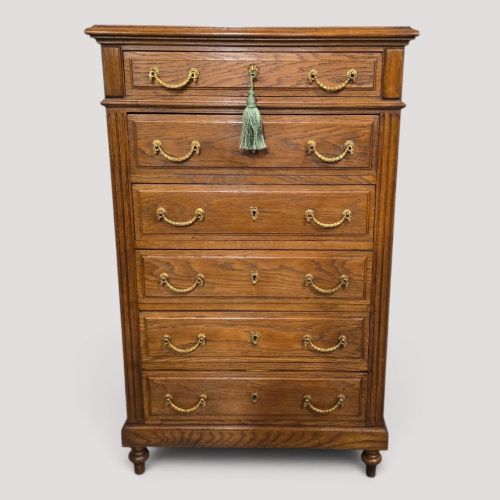
The form encompasses serpentine fronts, bombe profiles, and straightforward rectilinear chests of drawers. Regional variations employ local timbers such as oak, cherrywood, and walnut, frequently topped with fitted marble slabs.
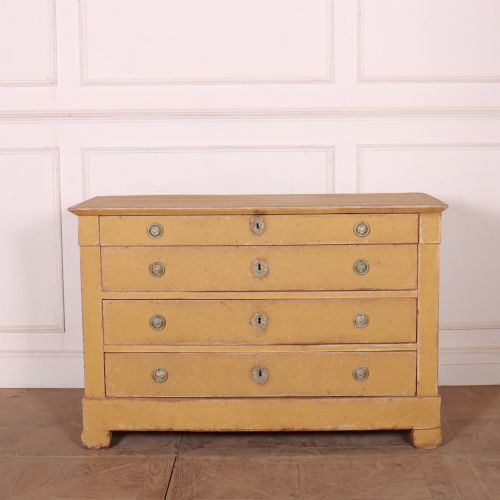
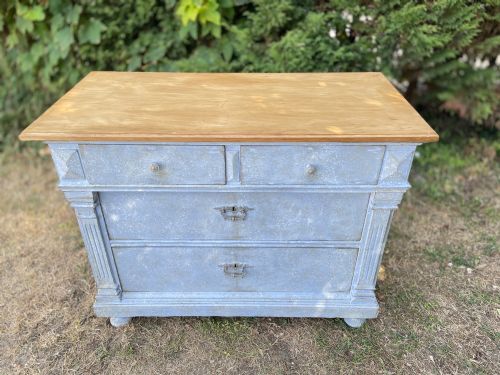
Makers working outside the capital adapted fashionable Louis styles to suit provincial tastes, resulting in pieces that balance decorative flourishes with domestic utility. The inventory leans towards eighteenth-century walnut and cherry examples, alongside nineteenth-century painted and bleached variants.
How they were made
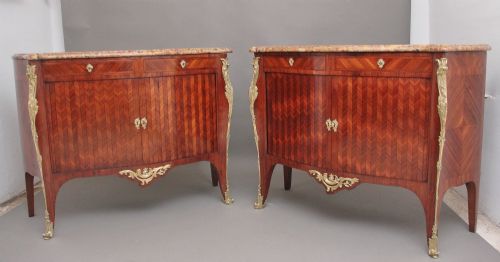
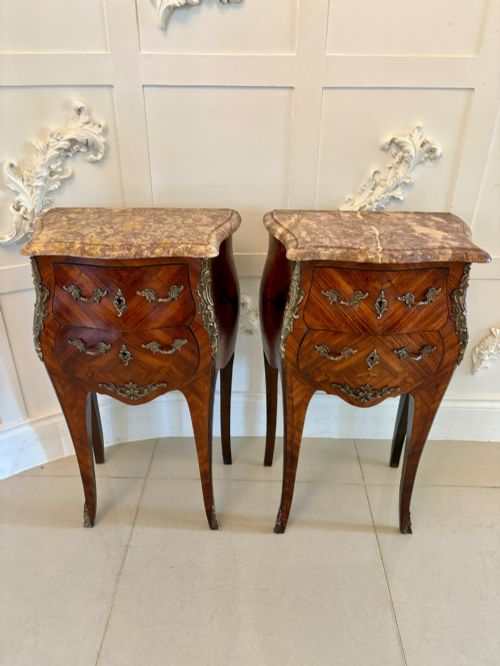
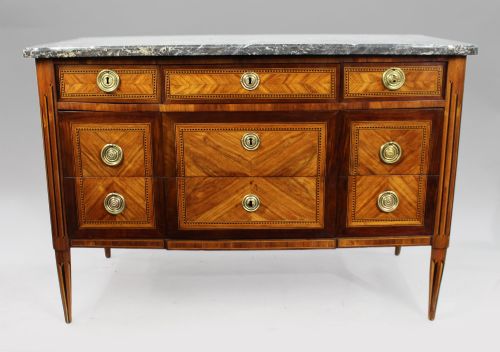
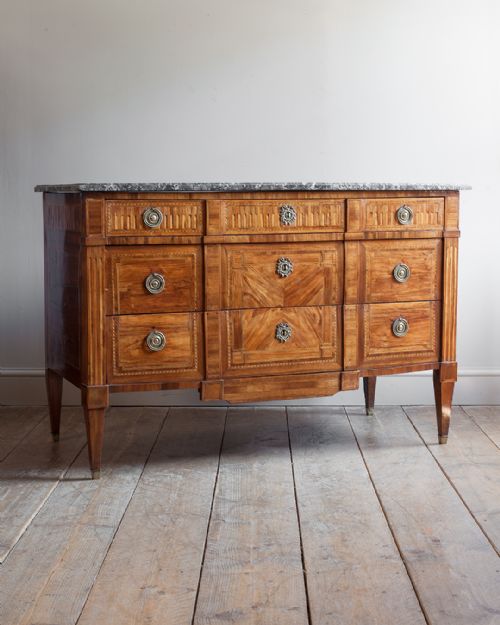
Cabinet-makers constructed these chests using solid regional timbers like oak, walnut, and cherry, often applying decorative veneers such as kingwood, tulipwood, and burr elm in geometric parquetry or marquetry patterns. Carving is typically executed directly into the structural timber rather than applied as separate compo ornaments.
Many chests feature heavy marble tops, ranging from white to grey varieties, cut to follow the serpentine or breakfront contours of the carcass. Brass and ormolu mounts, handles, and escutcheons accent the drawer fronts, secured with traditional joinery methods appropriate to each period.
Listings feature walnut, oak, cherrywood, and painted finishes across eighteenth and nineteenth-century periods.
What varies in quality
Quality rests in the harmony of the timber selection and the crispness of the hand-carving along the apron and drawer rails. Early eighteenth-century examples display fluid lines in shaped walnut or burr elm, whereas lesser pieces rely on mechanical uniformity.
The integrity of the structural carcass and the retention of original marble tops and brass hardware distinguish superior examples. Finer pieces demonstrate precise parquetry alignment and well-fitted drawer construction that survives centuries of use.
The French Provincial Commode Chest Glossary
- Bombe
- A swelling, outward-curved profile found on the front and sides of certain commodes. This exuberant shape requires advanced woodworking skill to construct from solid timber or veneer.
- Serpentine
- A front edge shaped with a central concave curve flanked by two convex sweeps. It creates a fluid, undulating movement across the drawer fronts.
- Parquetry
- Geometric wood-mosaic work used to decorate surfaces with repeating patterns of contrasting timbers. Craftsmen arrange small veneer tiles to create visual depth.
- Marquetry
- The art of applying pieces of veneer to a structural structure to form decorative pictures or floral designs. It differs from parquetry through its pictorial complexity.
- Ormolu
- Gilded bronze used for mounts and decorative handles on finer commodes. The technique involves applying a mercury-gold amalgam to cast bronze.
French Provincial Commode Chest: Frequently Asked Questions
How do I identify an eighteenth-century piece?
Eighteenth-century examples typically display hand-cut dovetails, pegged joinery, and patinated timber surfaces developed over generations. The proportions tend to be robust yet elegant, reflecting period design.
Look for authentic wear patterns around the drawer pulls and natural timber movement that machine-made reproductions cannot replicate.
How should I care for a marble top?
Marble tops require gentle cleaning with mild soap and water, avoiding acidic substances like vinegar or citrus that etch the polished stone. Use coasters and mats to prevent staining.
Treat the supporting wooden carcass separately with appropriate wax to maintain the finish without damaging the adjoining stone edge.
Where do I place a commode in a modern home?
A commode functions effectively as a hallway console, a living room sideboard, or a bedroom storage chest. Its decorative front adds visual weight to plain architectural spaces.
Ensure the room humidity remains stable to protect aged timbers and delicate veneers from cracking or warping over time.