
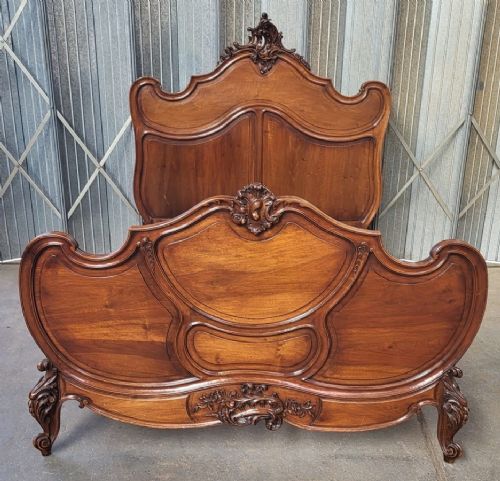


French Provincial Bedstead
A french provincial bedstead brings regional warmth and carved woodwork directly into the bedroom.
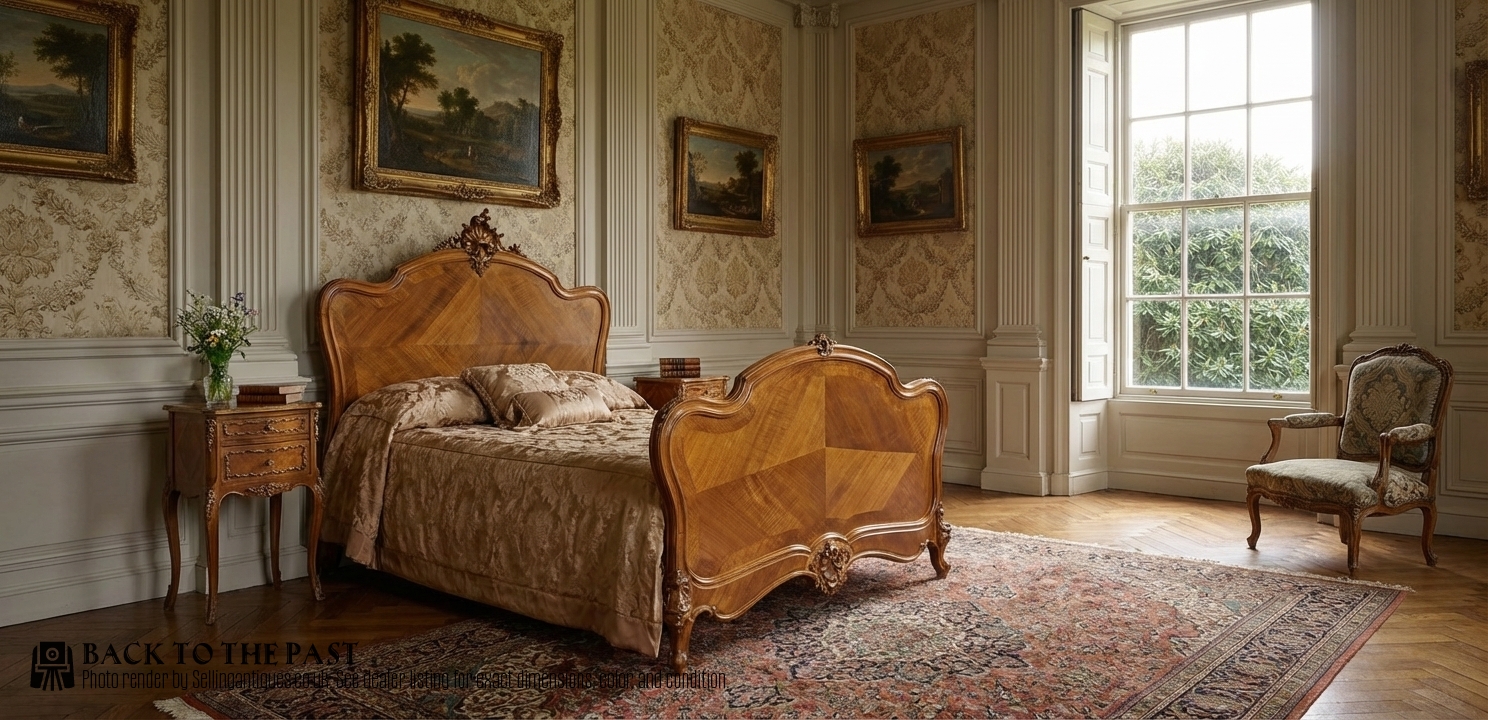
French Provincial Bedstead
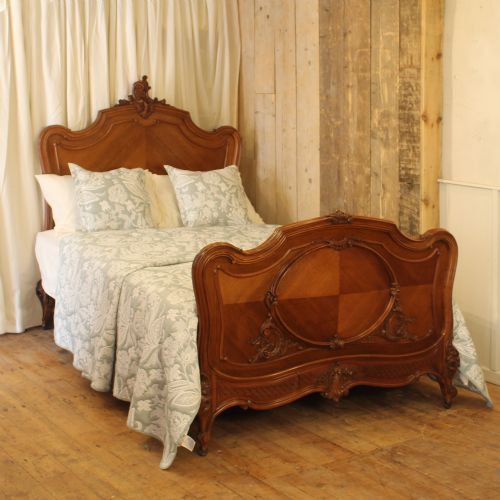
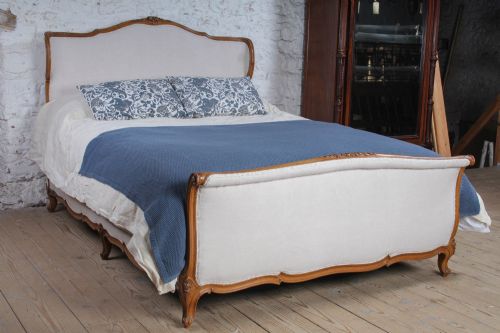
A french provincial bedstead represents the traditional styles and regional forms developed across France outside Paris. These pieces appear in forms such as double beds, king size frames, super king suites, and matching bedside cabinets.
The selection ranges from the 19th Century through the Edwardian era, spanning the 1880s, 1890s, 1900, 1910, 1920, and 1930. Buyers will frequently encounter walnut frames, painted wood finishes, and caned panels.
Design influences draw heavily on Louis XV, Louis XVI, and French Chateau aesthetics. These beds serve as functional centrepieces that anchor traditional and eclectic bedroom schemes alike.

Materials and construction methods
Cabinet makers utilised solid woods including walnut, oak, and general timber for structural integrity and rich grain patterns. Walnut examples often feature intricate hand-carved details along the headboards and footboards.
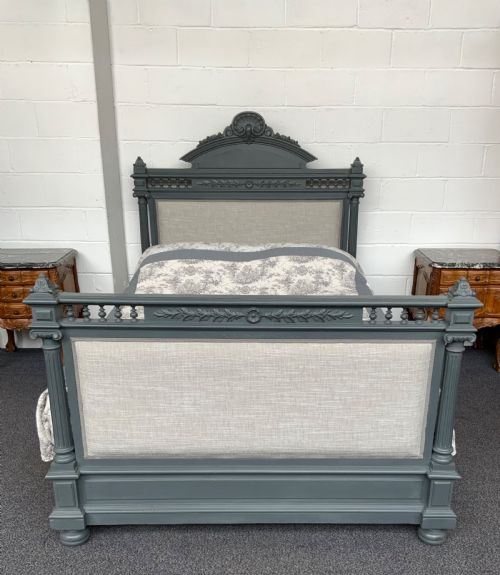
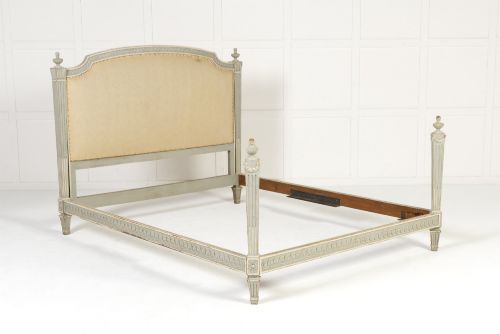
Painted wood and parcel gilt finishes provide decorative surface treatments, frequently applied over a primed wooden base. Caning is woven tightly into wooden frames to create breathable, textured headboards and footboards.
Upholstery fabrics and linen are integrated into padded headboards using traditional tacking methods. Frames are constructed to dismantle into headboards, footboards, and side rails for transport.
French Provincial Bedstead Retail Price Guide 2026
Typical asking prices for french provincial bedstead among the pieces listed under this phrase on Sellingantiques today, from the lower quarter to the upper quarter. They describe what is for sale here now, not the wider market.
Listings span the 19th Century through the Edwardian era, featuring walnut, oak, painted wood, and cane.
Assessing quality in construction and finish
The depth and crispness of the hand-carved woodwork distinguish finer examples from simpler production. Superior pieces display fluid lines in the Louis XV or Louis XVI style without mechanical stiffness.
The integrity of the timber selection impacts the overall weight and durability of the frame. Golden walnut and quarter-sawn oak provide a more substantial presence than softer painted woods.
The quality of applied finishes, whether aged paint, parcel gilt, or natural wood polish, determines the visual depth. Original caning work that remains taut and undamaged adds notable merit.
The French Provincial Bedstead Glossary
- Louis XV Style
- A design characterised by asymmetry, scrolling curves, and naturalistic floral motifs. This style dominates many mid to late 19th-century French bedsteads.
- Louis XVI Style
- A neoclassical design approach featuring straight lines, symmetry, fluted columns, and geometric restraint. It offers a more architectural silhouette than its predecessor.
- Caning
- Woven rattan or similar plant material stretched across wooden frames. It creates light, breathable panels on headboards and footboards.
- Parcel Gilt
- A surface decoration technique where thin layers of gold leaf are applied to specific carved details on a painted or wood ground.
- French Chateau
- A grand decorative style inspired by provincial noble houses. It incorporates heavier proportions and robust carvings.
French Provincial Bedstead: Frequently Asked Questions
What mattress size fits these antique beds?
Many antique French frames deviate slightly from modern standard UK or US mattress dimensions. Custom or bespoke mattresses are frequently required to ensure a proper fit within the wooden side rails.
Buyers should measure the internal width and length precisely before sourcing a mattress. Modern slatted bases can often be dropped inside the frame to support standard sizing.
How do I assemble a wooden bedstead?
Most antique bed frames utilise iron bed bolts or metal-slot brackets to connect the headboard and footboard to the two side rails. Assembly typically requires a simple spanner to tighten the bolts securely into concealed housings.
It is advisable to assemble the bed in its final room position to avoid straining the joints during movement. Checking the diagonal measurements during assembly ensures the frame remains square.
Can painted finishes be cleaned safely?
Painted and parcel gilt surfaces require gentle maintenance to preserve the original decorative layers. Dusting with a dry, soft cloth prevents the accumulation of dirt without risking moisture damage.
Harsh chemical cleaners and modern detergents must be avoided entirely. Professional restoration is recommended if the paint begins to flake or separate from the wood substrate.
Are matching bedside cabinets common?
Complete bedroom suites incorporating matching bedside cabinets and drawers appear occasionally alongside the primary bedstead. These matched pieces share identical painted finishes, walnut tones, and carved motifs.
Finding a complete suite provides a unified decorative scheme for the room. Individual pieces, however, offer greater flexibility when mixing furniture periods.