

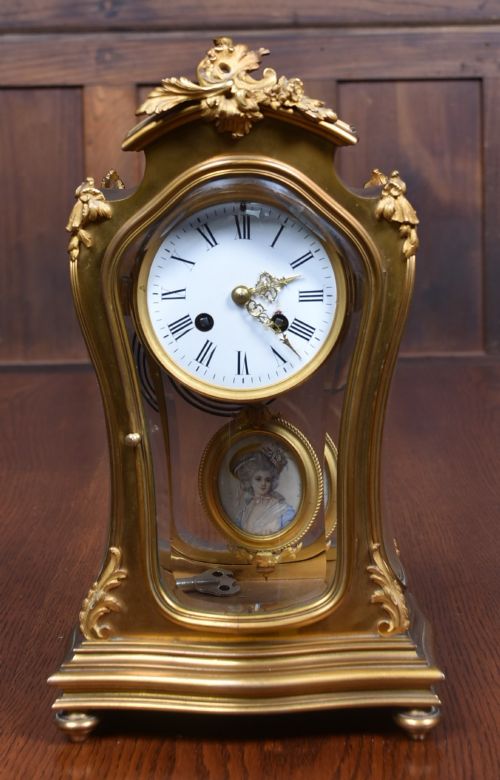
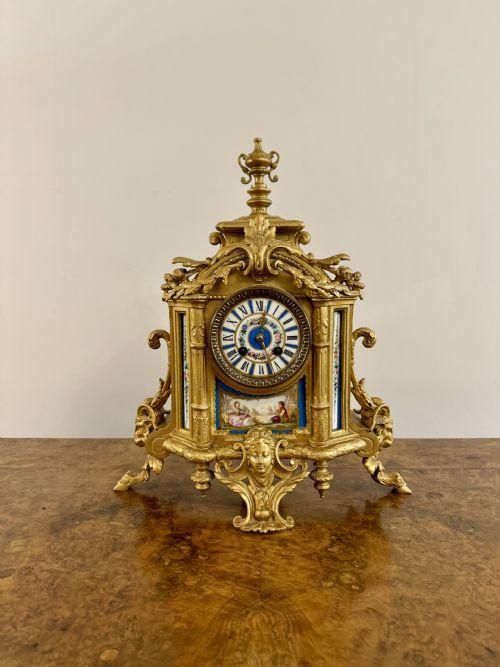

French Porcelain Table Clock
A french porcelain table clock brings together fine ceramic painting and precise nineteenth-century movement housing.
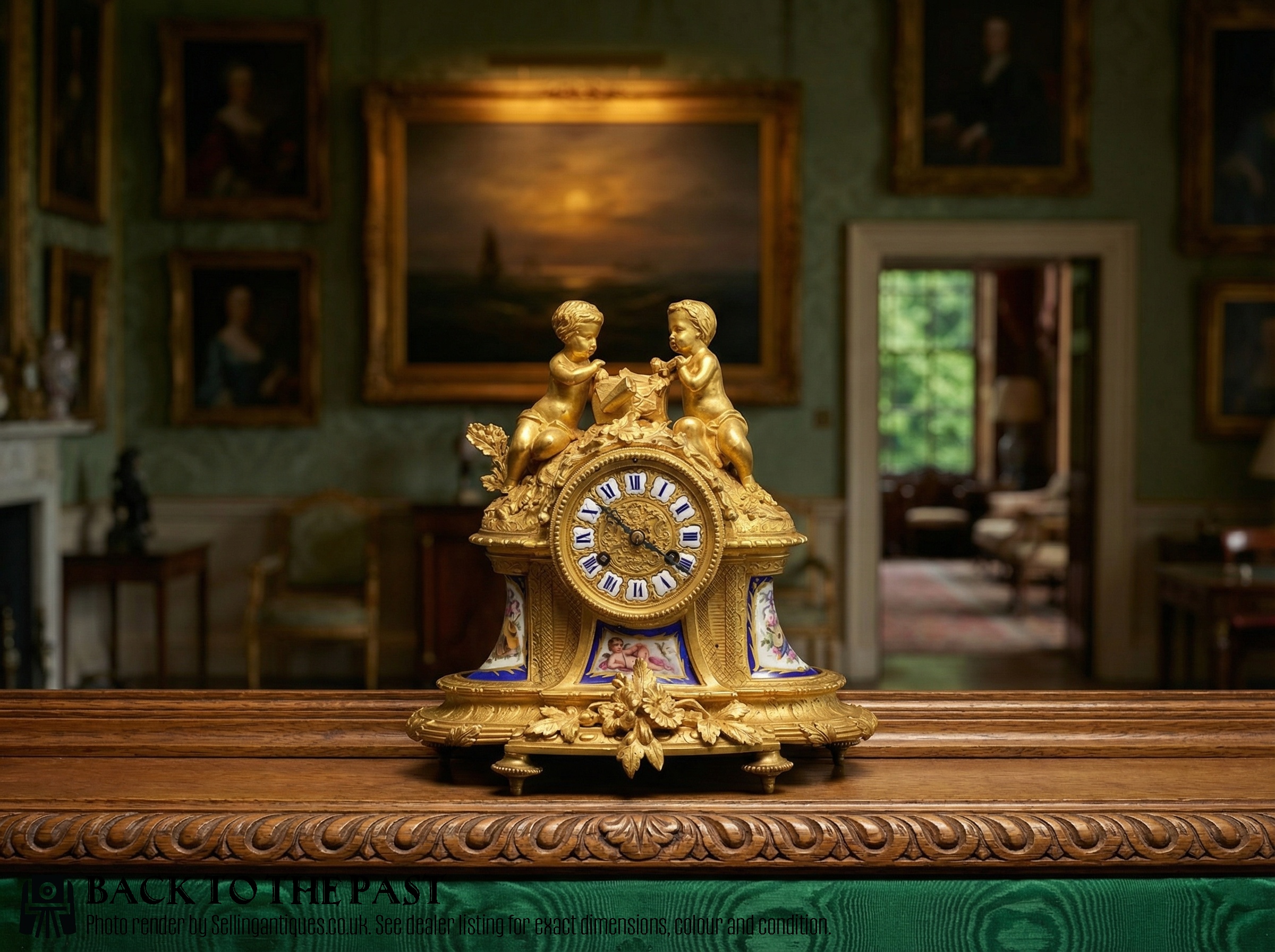
French Porcelain Table Clock
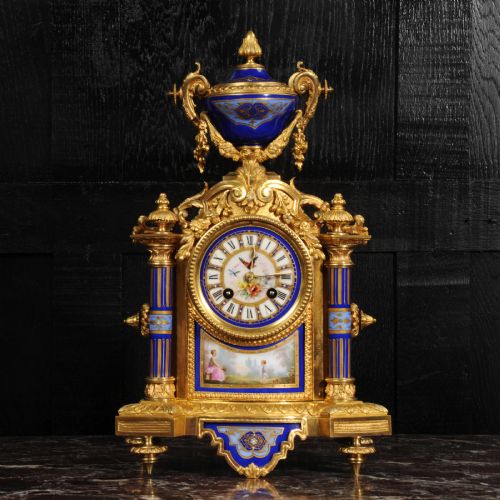
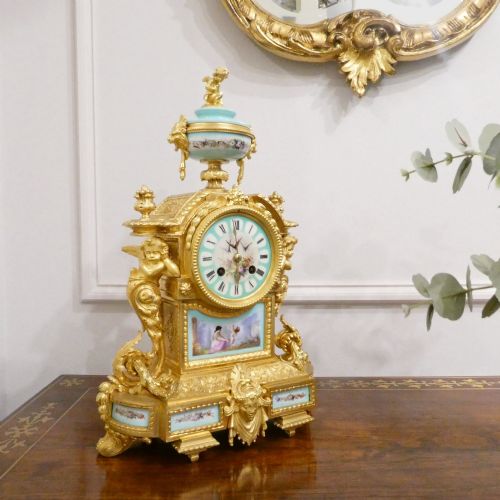
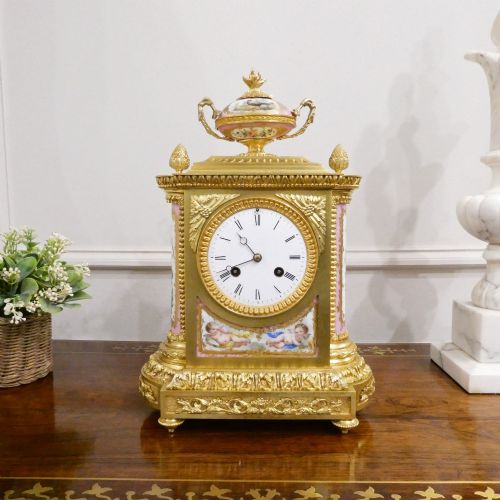
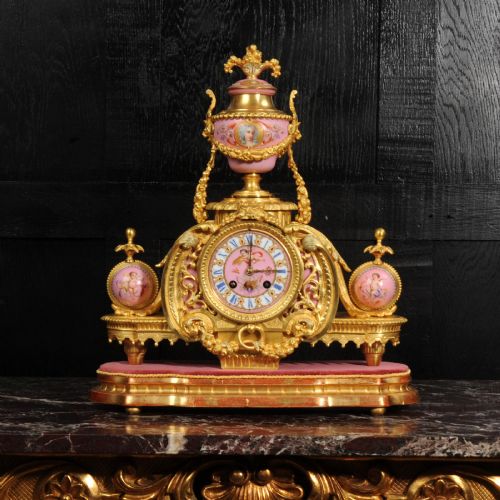
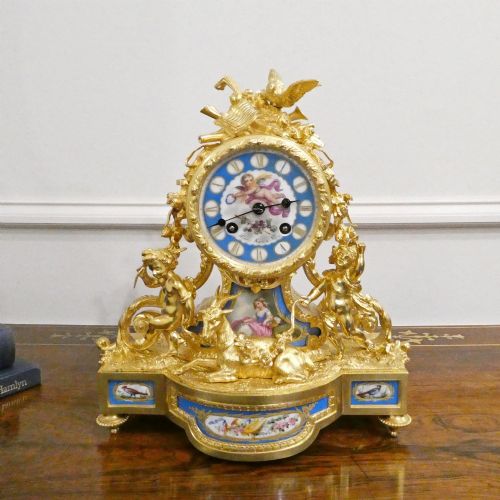
When you search for a french porcelain table clock, you encounter nineteenth-century timepieces that combine ceramic bodies with gilt metal mounts. The examples you meet on this page span the Victorian era, displaying Revival styles such as Louis XVI, Louis XV, and Napoleon III.
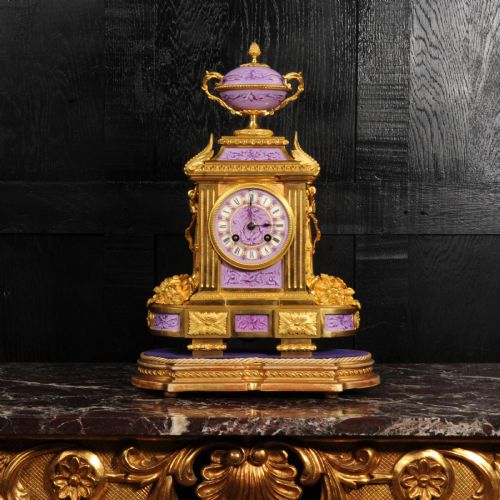
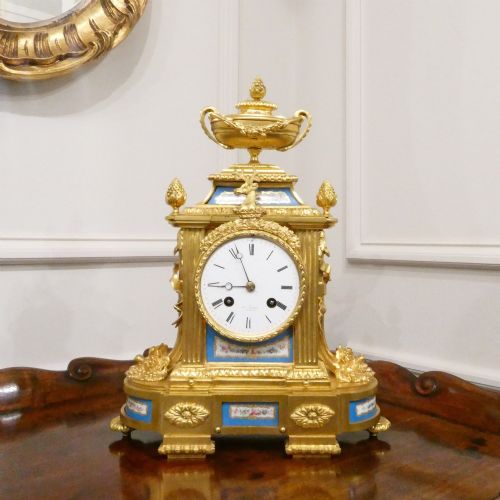
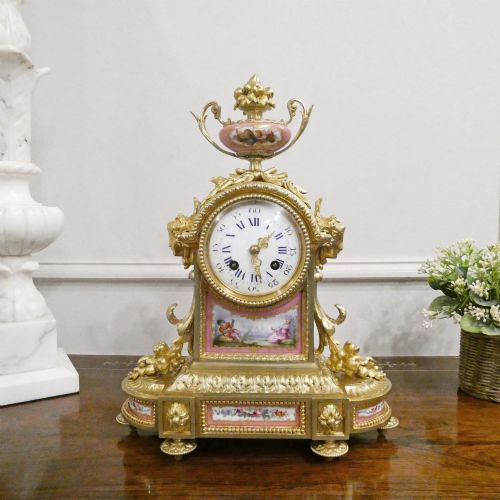
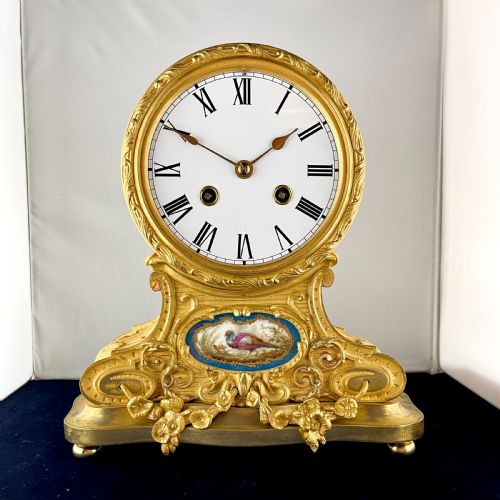
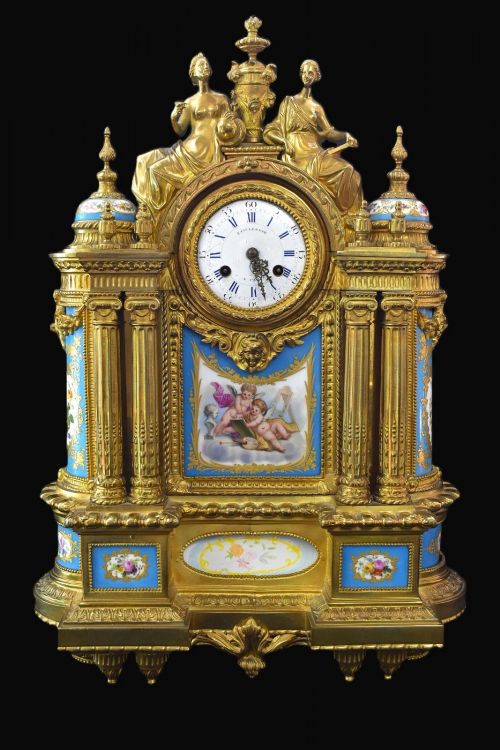
These objects typically take the form of mantel clocks or drum head clocks, often accompanied by hand-painted panels. Makers frequently employed Sèvres style porcelain alongside ormolu and gilt bronze to create imposing decorative items for the interior.
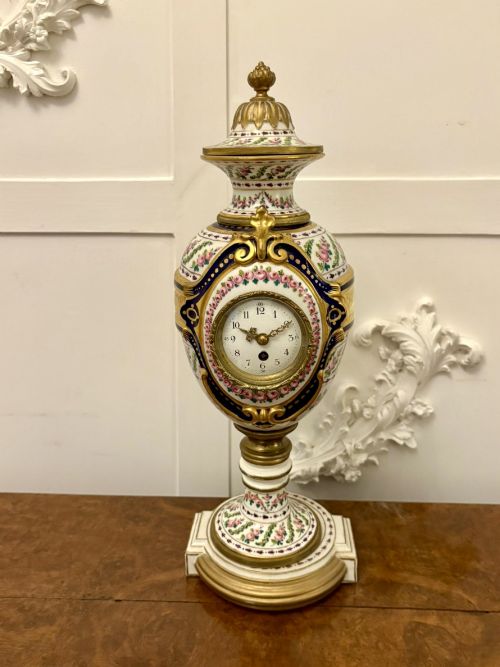
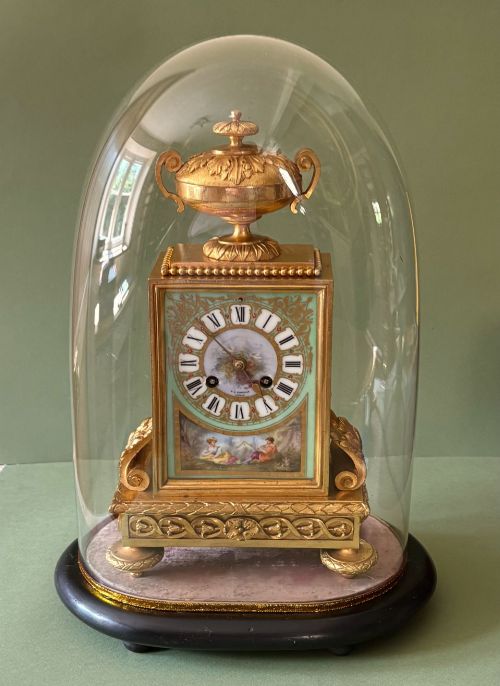
The assortment includes urn-shaped mantle clocks, boudoir pieces, and occasional carriage clocks alongside the standard domestic clock garnitures. Most items originate from the middle and late nineteenth century, reflecting the tastes of the 1850s through to the 1890s.
Materials and Construction
Clockmakers built the structural frames from brass, gilt metal, and gilt bronze, often applying an ormolu finish to the metal components. Porcelain panels and urn bodies were inserted into these frames, frequently decorated with hand-painted scenes or enamel work.
Movements were housed within these mixed-media cases, requiring skilled casting of the bronze and brass alongside delicate ceramic firing. Glass was also utilised to protect dials, while marble occasionally served as a solid base for the heavy bronze structures.
Listings feature movements housed in cases of porcelain, ormolu, gilt bronze, and marble from the Victorian era.
Standards of Execution
The distinction between tiers rests upon the precision of the bronze casting and the artistry of the hand-painted porcelain panels. Clocks bearing signatures from established makers demonstrate superior movement engineering and more refined chasing on the ormolu mounts.
Simpler models rely on standard gilt metal and plain ceramic faces, whereas the finest pieces integrate signed miniatures, intricate putti figures, and comprehensive restoration of the original eight-day mechanical movements.
Japy Freres·Jean-Baptiste Delettrez·Achille Brocot·Henry Marc·Etienne Lenoir·PH Mourey·DROCOURT·LE ROY & FILS
The French Porcelain Table Clock Glossary
- Ormolu
- A technique of applying finely ground high-carat gold to an bronze object using a mercury amalgamation method. This process gives the metal mounts their characteristic rich, golden lustre.
- Sèvres porcelain
- Ware produced by the historic French royal porcelain factory, celebrated for its fine paste and hand-painted details. It is frequently imitated in nineteenth-century decorative clocks.
- Gilt bronze
- Copper alloy coated with a layer of gold. It provides the heavy, durable framework for many ornate nineteenth-century clock cases.
- Drum head clock
- A timepiece featuring a circular clock case mounted on a pedestal or base. This specific form was popular during the Victorian period.
- Clock garniture
- A set comprising a mantel clock flanked by matching decorative objects such as urns or candelabra. These sets created a balanced arrangement for a fireplace mantel.
French Porcelain Table Clock: Frequently Asked Questions
How do I wind my clock?
Most nineteenth-century mechanical movements require a key to tension the springs through the dial holes.
Take care not to over-wind the mechanism, as this can damage the internal springs.
What periods do these clocks cover?
The pieces span the nineteenth century, with particular concentrations in the Victorian decades from the 1850s to the 1890s.
Styles predominantly follow French Rococo and Louis XVI revivals popular during Napoleon III's reign.
Where should I place a porcelain clock?
These heavy mantel clocks require a stable, level surface such as a fireplace mantel or a sturdy sideboard.
Keep them away from direct sunlight and draughts to protect the delicate enamel dials and gilt finishes.
How do I identify maker signatures?
Maker names and movement stamps are typically engraved on the brass backplate of the internal mechanism.
Some pieces also feature artist signatures on the hand-painted porcelain panels or miniature portraits.