
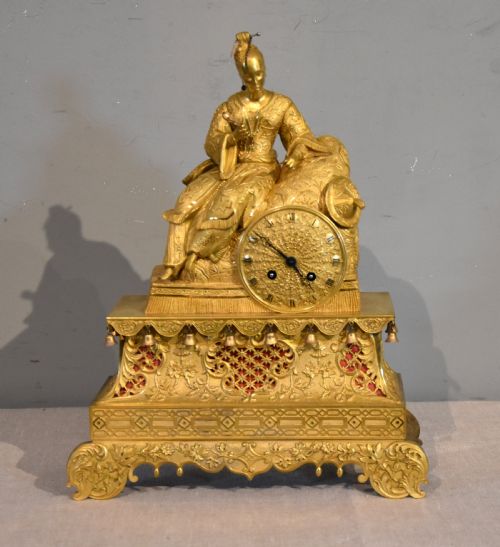
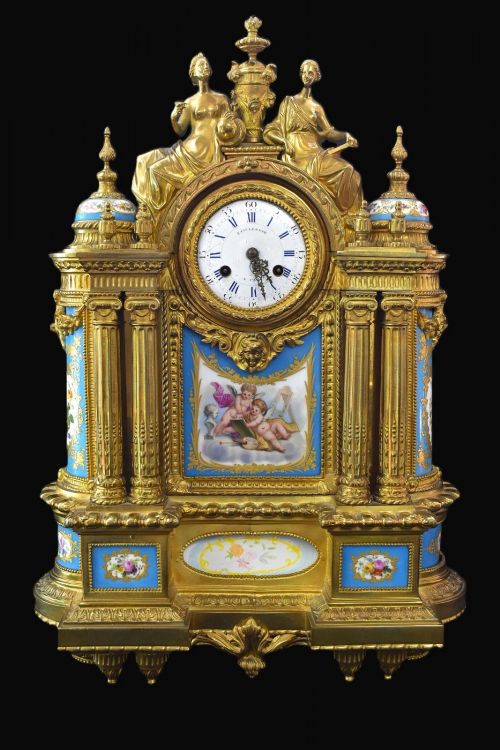
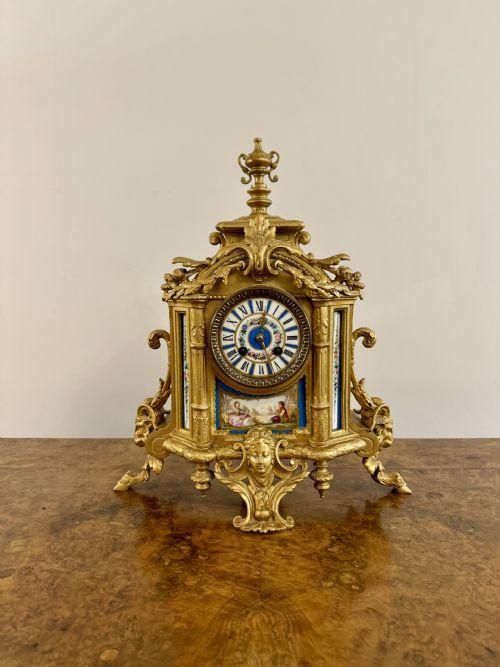


Gold Ormolu Shelf Clock
A gold ormolu shelf clock brings sculptural weight and precise nineteenth-century mechanics to a mantelpiece, combining gilt metal with enamel dials.
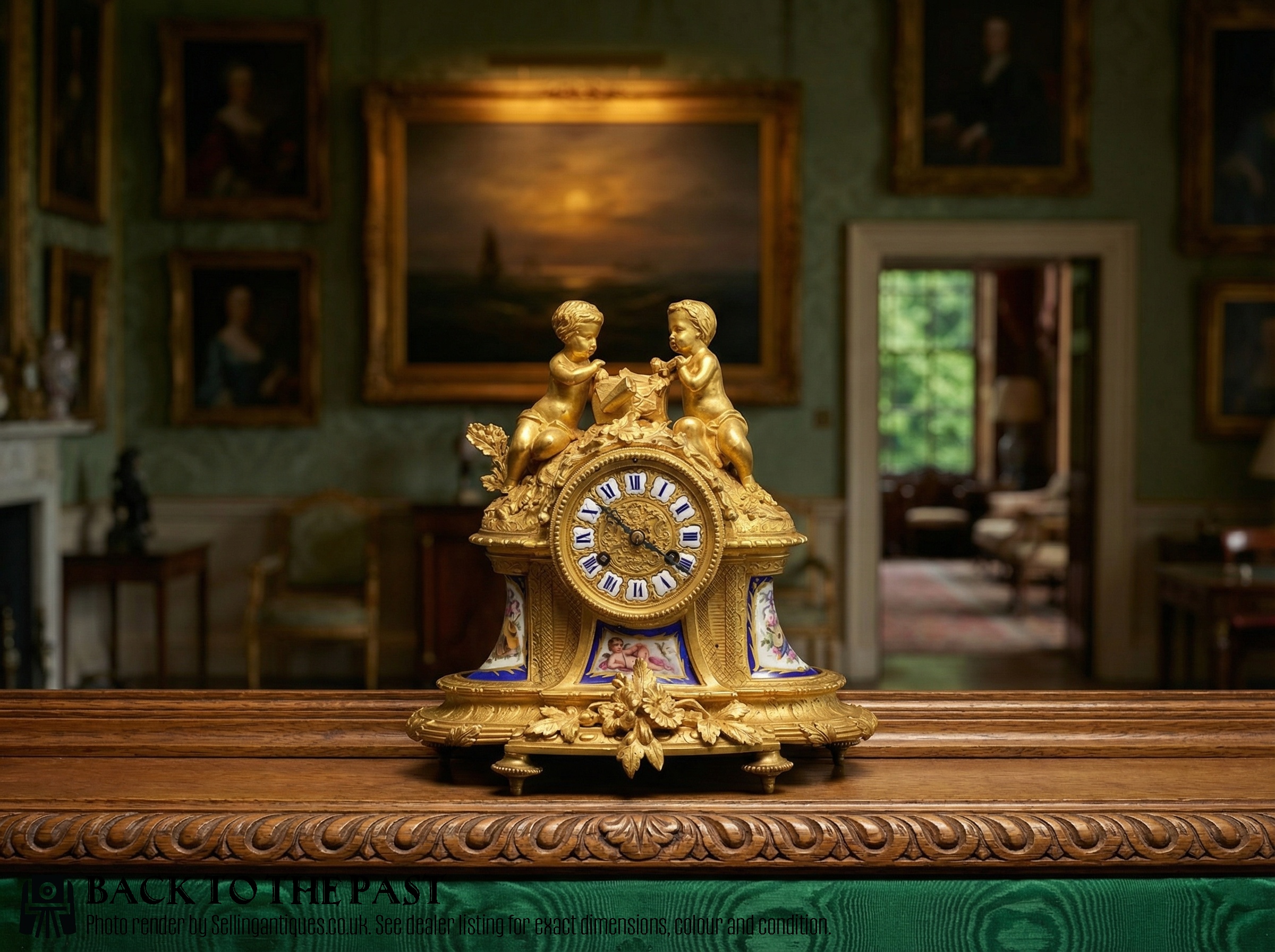
Gold Ormolu Shelf Clock
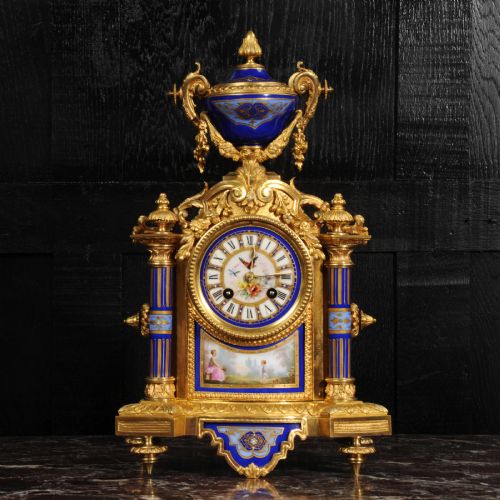
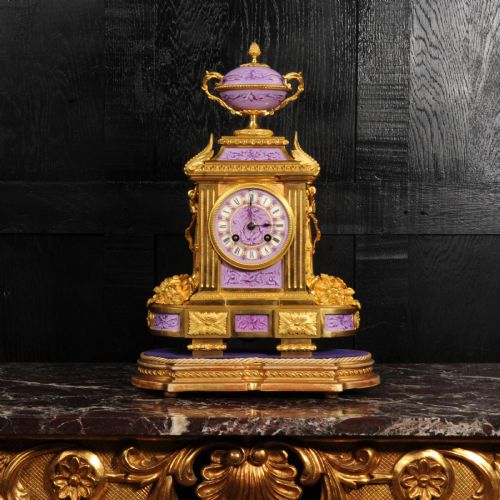
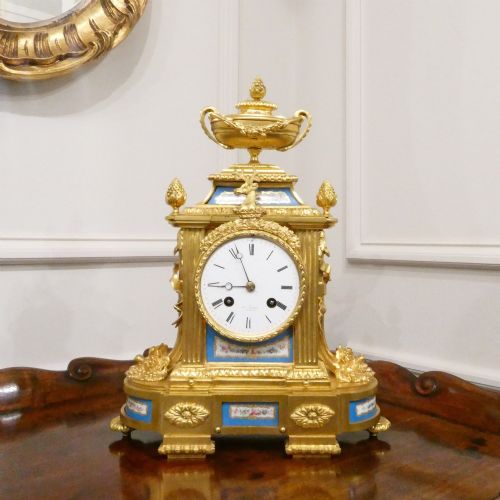
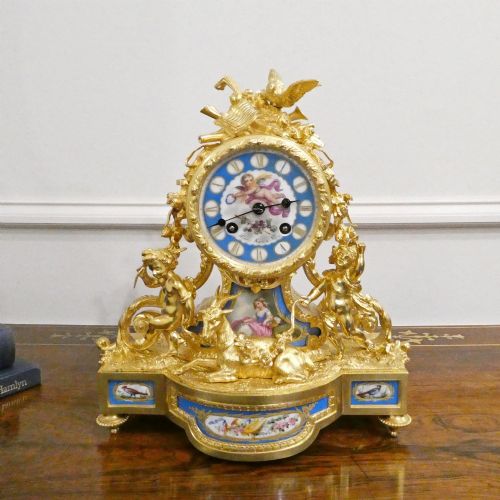
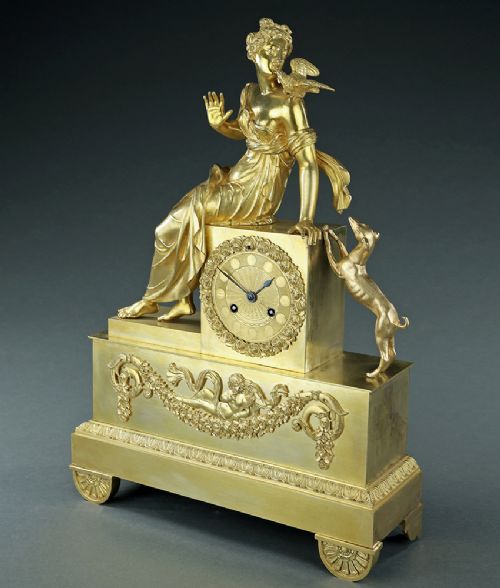
A gold ormolu shelf clock sits upon a mantel or bracket, functioning as both a decorative centrepiece and a timekeeper. The pieces found here span the eighteenth, nineteenth, and early twentieth centuries, drawing heavily on Regency, Victorian, and French revival styles.
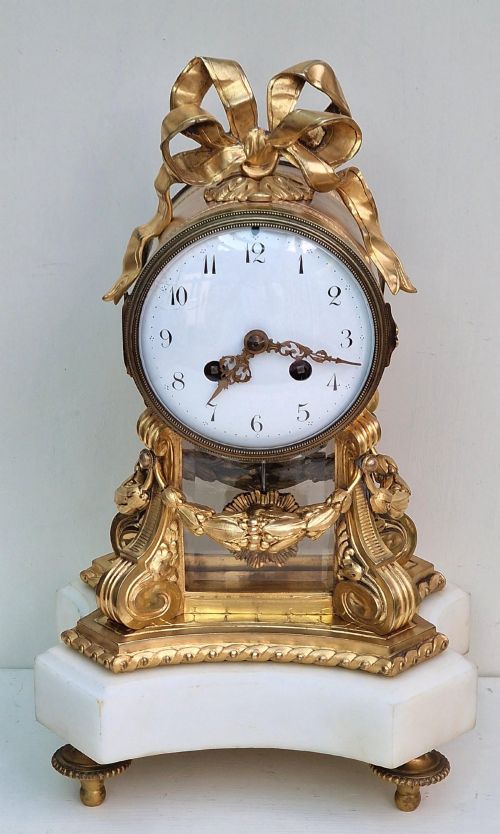
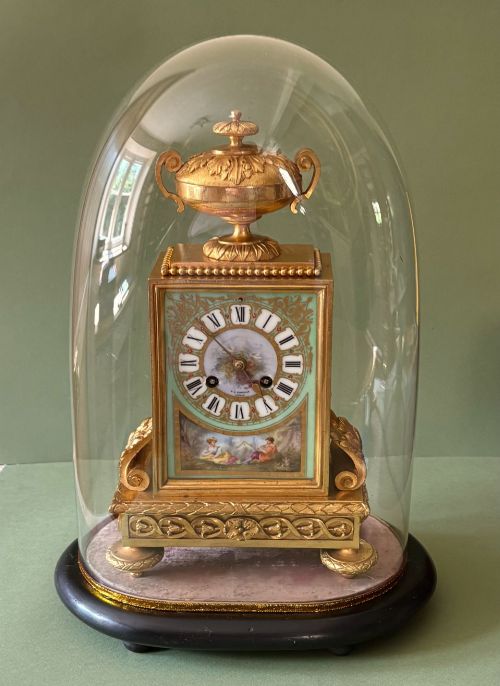
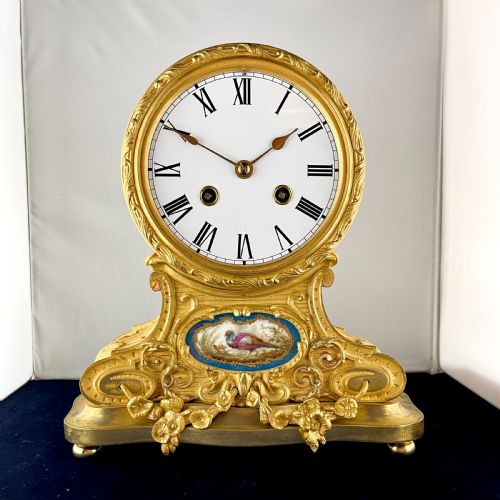
Most examples originate from French workshops, taking the form of mantel clocks or portico clocks. They frequently incorporate porcelain plaques, marble bases, and figural or architectural bronze mounts.
Materials and construction
Maker workshops built these objects using cast bronze finished with mercury gilding or modern electroplating to create the characteristic ormolu surface. Structural elements often combine white marble, glass panels, and brass alongside the primary metalwork.
Dial faces utilise fired enamel with painted numerals, while internal movements rely on precision brass gear trains. Decorative panels draw on Sèvres porcelain traditions, hand-painted with floral or pastoral scenes.
Listings feature 19th Century, Regency, Victorian, and 18th Century periods alongside materials such as ormolu, gilt bronze, marble, and porcelain.
Evaluating craftsmanship
The crispness of the bronze casting defines the upper tier of these timepieces, where chased details remain sharp and deep rather than soft or smoothed over. Heavier gauge metalwork and substantial marble plinths indicate higher production standards.
Movement quality separates standard pieces from exceptional ones, marked by signed backplates from known makers and integrated fusee or striking mechanisms that maintain reliable performance.
Japy Freres·Achille Brocot·Henry Marc·Etienne Lenoir·Samuel Marti·William Hardy London·Phillipe H. Mourey
The Gold Ormolu Shelf Clock Glossary
- Ormolu
- A method of applying finely ground high-carat gold to a bronze object using a mercury amalgam. This technique produces a warm, durable metallic lustre found on nineteenth-century French cases.
- Fusee
- A conical pulley used in mechanical clocks to maintain even drive force as the mainspring unwinds. This mechanism improves timekeeping accuracy across the duration of the wind.
- Champlevé
- An enamelling technique where troughs are dug into the metal surface and filled with vitreous paste before firing. It appears frequently on late nineteenth-century clock dials and bezels.
- Portico clock
- A architectural clock design supported by four freestanding columns above a rectangular base. These examples often pair white marble with gilt bronze mounts.
- Enamel dial
- A metal face coated with fused glass powder and fired to create a smooth, white background for painted numerals. They require careful handling to prevent chipping.
Gold Ormolu Shelf Clock: Frequently Asked Questions
How do I wind a shelf clock?
Insert the appropriate key into the winding arbor on the dial face and turn it gently clockwise until resistance is felt. Care must be taken not to overwind the mainspring.
Most mechanical movements require a weekly wind to maintain consistent operation. Pendulum adjustment levers behind the glass door allow for fine-tuning timekeeping speed.
Where should I place my clock?
These timepieces suit sturdy mantelpieces, bookcases, or dedicated wall brackets where vibration is minimal. Level placement ensures the pendulum swings evenly without catching.
Direct sunlight and damp environments should be avoided to protect the enamel dials and preserve the gilt bronze surfaces.
How do I identify French revival styles?
Louis XVI style pieces display symmetry, straight architectural lines, and classical urn motifs. Louis XV and Rococo revival pieces favour asymmetrical scrolling foliage, natural curves, and shell forms.
Empire style clocks incorporate military trophies, eagles, and figures referencing classical antiquity.
What maintenance do these movements require?
Periodic professional servicing keeps the brass gear trains functioning properly by removing old oil and dust accumulation. Pendulum clocks must remain plumb to keep correct time.
Dusting should be done using a dry, soft brush to avoid scratching the ormolu finish or damaging fragile enamel components.