


French Porcelain Ornaments
French porcelain ornaments bring domestic interiors sculptural figures, busts, and cassolettes shaped by nineteenth-century revival styles.
French Porcelain Ornaments
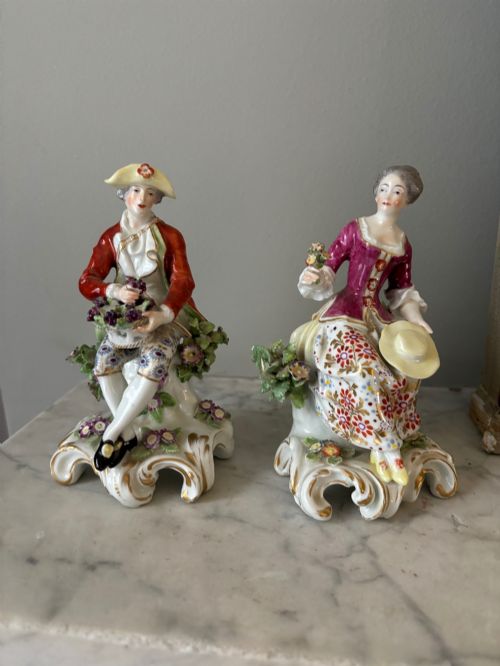
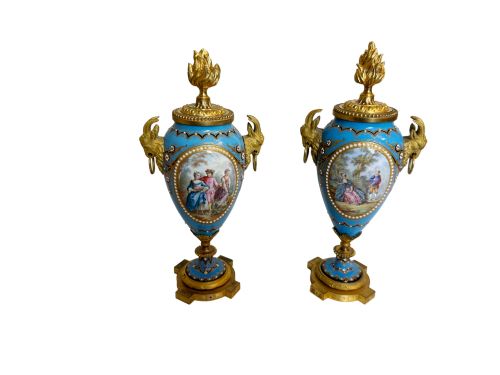
French porcelain ornaments comprise a varied selection of sculptural objects designed for display, including figurines, pairs of figures, busts, cassolettes, and decorative ewers. When exploring french porcelain ornaments, a buyer encounters forms rooted in eighteenth-century models alongside nineteenth-century interpretations of Rococo Revival, Louis XVI style, and Victorian tastes.
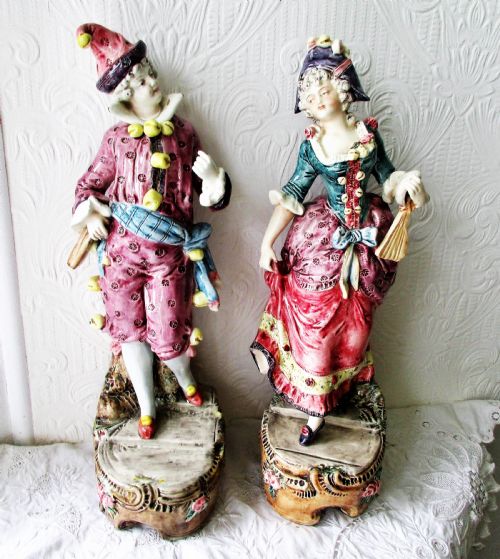
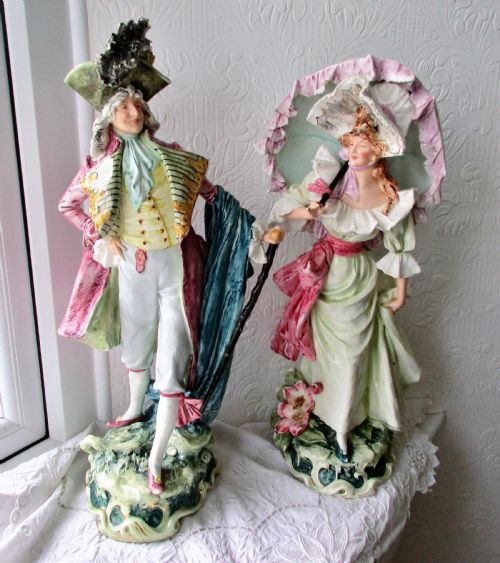
The objects frequently depict human subjects, ranging from allegorical figures and seasonal series to shepherdesses, street sellers, and historical personages such as Marie Antoinette. Many examples survive in matched pairs, produced for mantelpieces and decorative placement within period interiors.
Production spans the nineteenth century, from the eighteen-fifties through to nineteen-hundred, with makers replicating or drawing inspiration from earlier factories like Chelsea, Derby, and Chantilly. Alongside glazed porcelain, items rendered in unglazed bisque porcelain and earthenware appear regularly across the selection.
How they were made
Surface decoration relied on enamel painting, gold leaf, and gilding applied over the glaze to highlight garments and structural borders. Bisque porcelain received no glaze, leaving a matte, marble-like surface texture suited to classical busts and intimate figural groups.
Among the historical subjects, nineteenth-century ceramic dwarves with unexpected expressions gaze out from miniature plinths.
What varies in quality
The standard of modelling defines the finer examples, where facial expressions, hand positions, and drapery folds retain crisp definition rather than softening during the moulding process. Painting skill also separates standard production from superior pieces, particularly in the delicate application of enamel colours and the precision of hand-applied gilding.
Attribution to documented makers or specific historic factories influences the character of a piece, as leading Parisian workshops maintained rigorous standards in body preparation and kiln firing. The survival of original pairing, minimal restoration, and crisp factory marks further distinguish the execution of individual ornaments.
Edme Samson·Vion and Baury·Letu and Mauger·Eugene Clauss
The French Porcelain Ornaments Glossary
- Bisque porcelain
- Unglazed white ceramic body fired to produce a matte, tactile finish resembling marble. It is frequently employed for classical busts and detailed figural sculptures.
- Cassolette
- A decorative ornamental vase or vessel designed with a reversible lid that functions as either a solid cover or a burner. These pieces often feature enamel and gilt highlights.
- Soft-paste
- An early type of porcelain body composed of clay and glass frit, fired at lower temperatures than hard-paste. It yields a warm, slightly translucent appearance found in mid-eighteenth-century French pieces.
- Ewers
- Decorative pitchers featuring handled bodies and flared spouts, often produced as ornamental display objects rather than functional vessels. They appear within nineteenth-century revival groups.
- Gilding
- The application of gold leaf or powdered gold onto the surface of porcelain to accentuate borders, garments, and architectural details.
French Porcelain Ornaments: Frequently Asked Questions
What are french porcelain ornaments?
French porcelain ornaments are decorative sculptural objects, including figurines, busts, cassolettes, and ewers, produced mainly during the nineteenth century. They draw heavily on earlier Rococo and neoclassical styles.
These pieces reflect historical revival movements in France and England, capturing subjects from allegorical figures to everyday street vendors.
How do I identify a nineteenth century piece?
Nineteenth-century ornaments often bear specific factory marks, characteristic enamel palettes, or revival styling typical of the period from eighteen-fifty to nineteen-hundred. Examining the base and the crispness of the modelling helps determine the era.
Many workshops during this time reproduced eighteenth-century Chelsea or Derby styles, blending historical forms with Victorian manufacturing techniques.
What is bisque porcelain?
Bisque porcelain is unglazed ceramic fired to a matte, white finish that highlights fine sculptural details without the interference of shiny glaze. It was widely used for portrait busts and classical figures.
Because the surface is porous and unsealed, cleaning requires care to avoid staining the delicate matte texture over time.
Were these figures meant to be used?
Most of these porcelain objects served purely as decorative ornaments for mantelpieces, drawing rooms, and cabinets rather than functional tableware. Cassolettes and ewers sometimes doubled as scent burners or decorative vessels.
Their primary purpose was visual display, often arranged in pairs or symmetrical groupings within period interiors.