


French Porcelain Clock Garniture
A french porcelain clock garniture combines a central timepiece with matching side ornaments, bringing nineteenth-century display tables to life with painted ceramics and gilt metal.
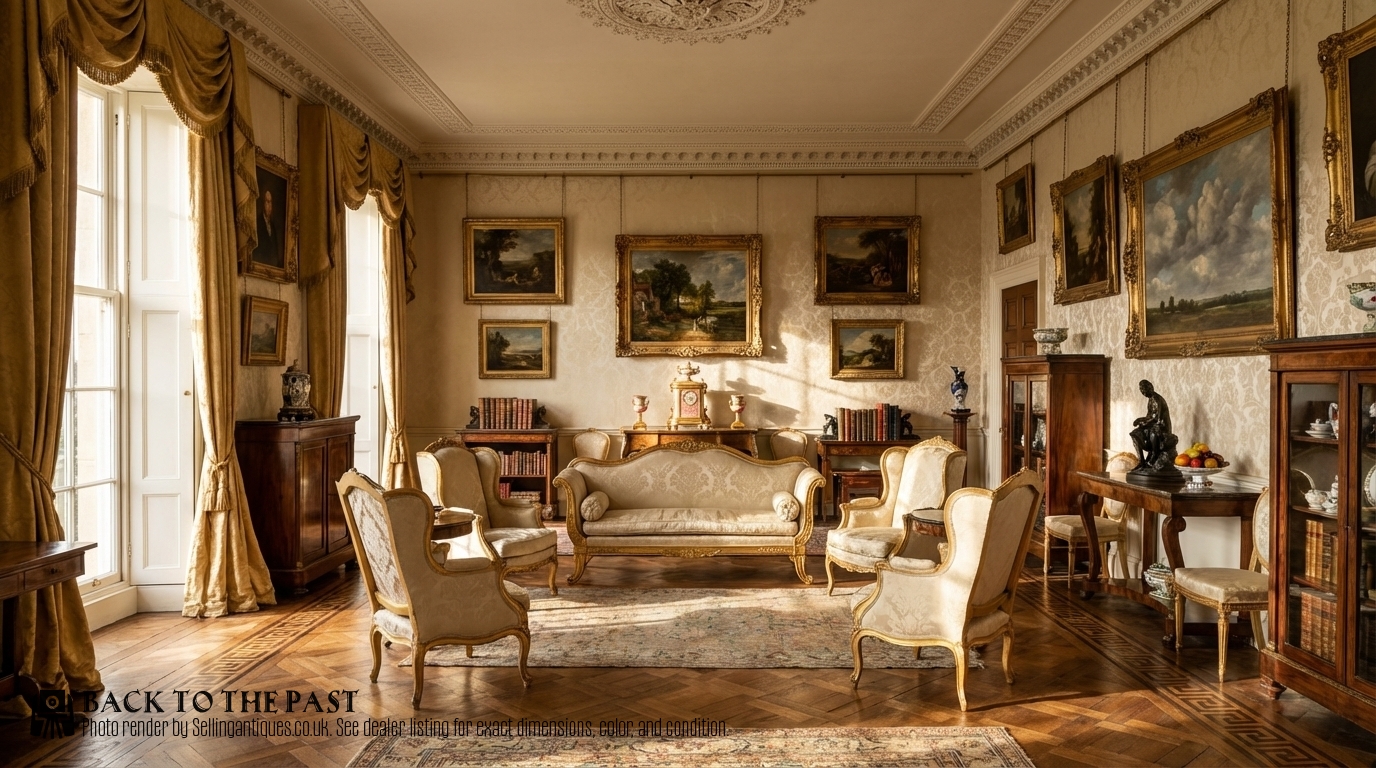
French Porcelain Clock Garniture
A french porcelain clock garniture consists of a mantel clock accompanied by matching side pieces such as vases or urns, forming a unified decorative set for a room. These groupings emerge predominantly from nineteenth-century workshops, reflecting periods from the Victorian era to the Belle Epoque.
The ceramics take various structural forms, including traditional mantel clocks, lyre-shaped timepieces, and three-piece garniture sets protected under glass domes. Surviving examples frequently display revival influences, notably French Rococo, Louis XVI, and Sevres style aesthetics.
Buyers encounter sets utilising painted panels alongside distinct regional traditions, ranging from Berlin and Meissen factories to Parisian studios. The matching side ornaments complete the symmetrical arrangement intended for a drawing room or mantelpiece.
Quality Variations
Distinctions in quality rest upon the crispness of the gilt metal mounts and the finesse of the hand-painted porcelain panels. Superior pieces exhibit deeply chased ormolu and finely detailed ceramic artistry rather than simple mass-produced casting.
The coherence of the three-piece set dictates overall desirability, as matching side ornaments that echo the exact palette and form of the central clock elevate the visual harmony of the grouping.
Current selections span the nineteenth century, featuring periods from eighteen-fifty to nineteen-hundred alongside Victorian and Belle Epoque styles.
KPM Berlin·Meissen·VINCENTI of PARIS
The French Porcelain Clock Garniture Glossary
- Garniture
- A set of matching ornamental objects designed to be displayed together on a mantelpiece or sideboard. The primary piece is usually a clock flanked by matching vases or urns.
- Ormolu
- A gold-coloured bronze alloy used for decorative mounts on furniture and clocks. It provides a bright, durable metallic finish that frames porcelain panels.
- Bleu de Roi
- A deep, rich royal blue ceramic glaze developed in eighteenth-century France and frequently utilised on decorative porcelain. This vibrant colour serves as a background for gilt detailing.
- Lyre Clock
- A timepiece shaped like the ancient musical instrument, featuring an open-frame body often constructed from porcelain or metal. These symmetrical clocks form a distinct silhouette within garniture sets.
- Cloisonne
- An enamelwork technique where thin metal strips are soldered to a metal base to create compartments filled with coloured paste. These decorated sections integrate into the clock or garniture assembly.
French Porcelain Clock Garniture: Frequently Asked Questions
What is included in a complete set?
A standard garniture comprises a central mantel clock accompanied by a matching pair of side vases, urns, or candelabra. Together they create a balanced decorative arrangement.
Historically, these three-piece sets were designed to sit centrally on a mantelpiece or console table, creating a symmetrical focal point for the interior.
How do I distinguish Sevres style from factory work?
Pieces executed in the Sevres style generally feature soft-paste porcelain aesthetics, rich blue grounds, and elaborate gilt bronze mounts. They draw inspiration from the famous French royal manufactory.
Distinguishing factory marks, painted signatures, and the precision of the ceramic body help identify whether an item originates from a specific European pottery or follows a broader stylistic tradition.
Where should I place a garniture set?
These sets suit wide mantelpieces, credenzas, or dedicated display tables where all three components can stand together securely. Proper spacing allows the central clock and its matching side pieces to be viewed as a single composition.
Because many sets include delicate glass domes or protruding ormolu mounts, stable and protected placement prevents accidental knocks to the vulnerable ceramic edges.
How do I date these nineteenth-century pieces?
Dating relies on observing the stylistic markers, such as Rococo Revival curves or later Belle Epoque ornamentation, alongside the types of metal casting and dial construction utilised. Inscribed movement makers or factory stamps offer precise chronological markers.
The materials themselves, including the presence of onyx bases or specific enamel dial techniques, also point towards distinct decades within the Victorian era.