

French Pendant Chandelier
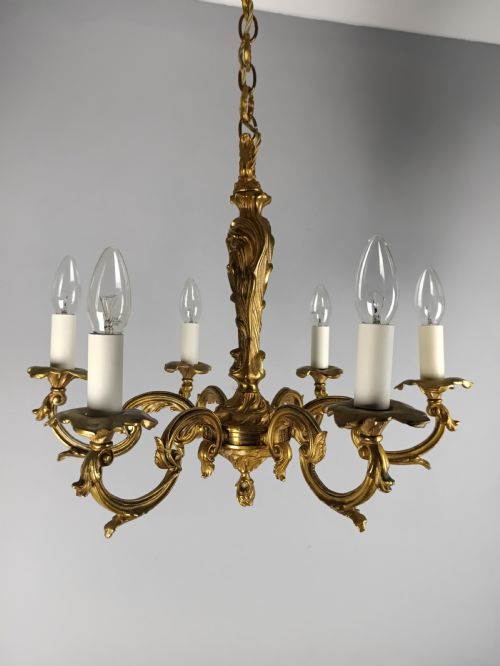
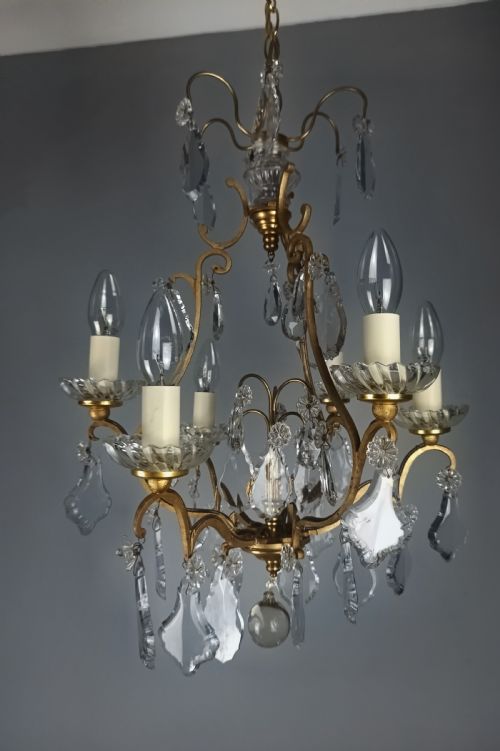
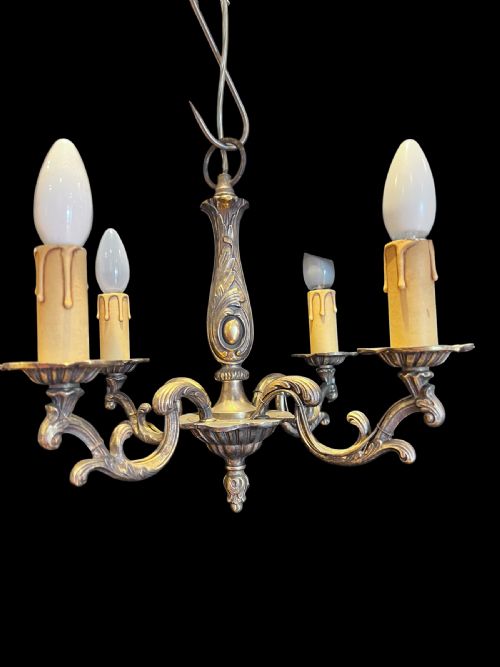
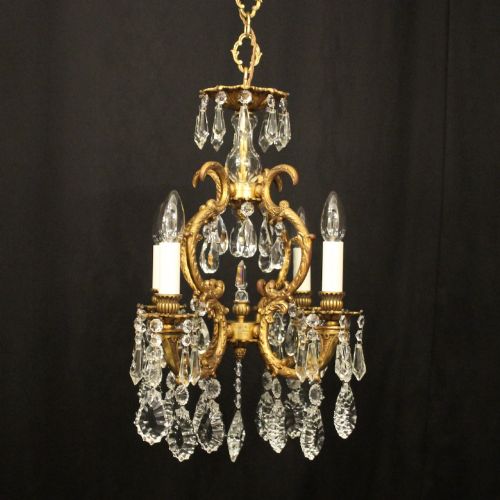
A french pendant chandelier brings striking illumination and decorative presence to a room, drawing the eye upward with intricate metalwork and glass.
French Pendant Chandelier
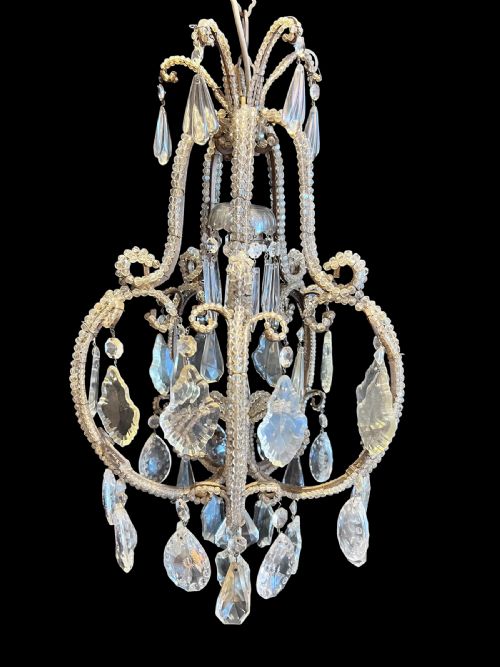
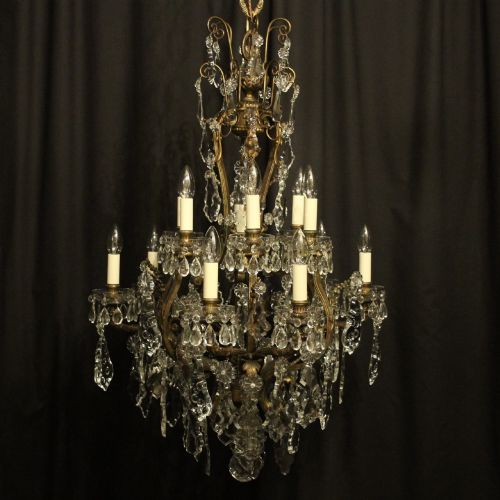
A french pendant chandelier gathers light from multiple bulbs or candles within a suspended frame, casting illumination downward and outward across a space. Buyers seek these fixtures for their distinct period character, often incorporating ornate metal frameworks and hanging crystal elements.
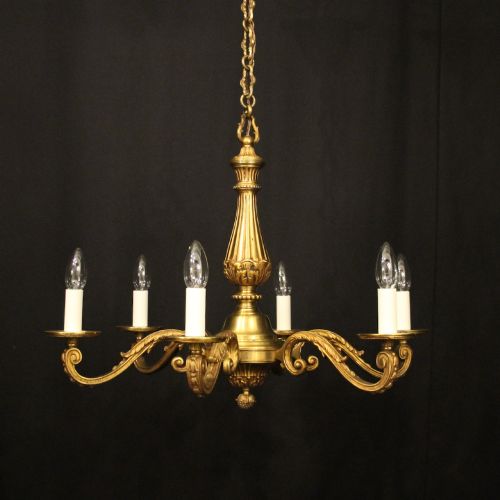
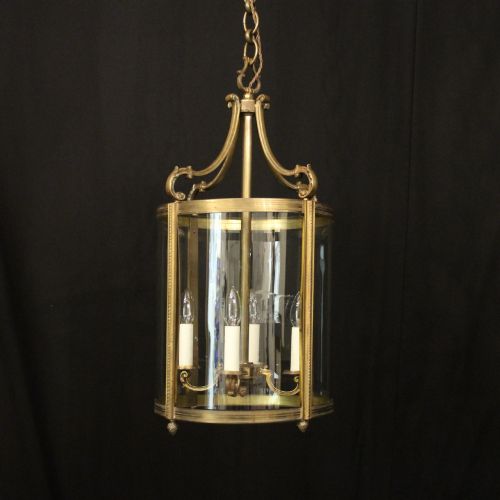
The selections on this page span several decades and styles, ranging from 19th-century bronze models to 1930s glass globe pendants and birdcage designs. Common forms include multi-light chandeliers, basket fixtures, tent and waterfall configurations, and hall lanterns intended for entryways and reception rooms.
Most examples originate from the late nineteenth century through the early twentieth century, encompassing Edwardian pieces alongside French Chateau, Rococo, Empire, and Art Deco interpretations. The prevalence of gilt bronze, brass, and cut glass reflects the decorative preferences of these periods.
Materials and Construction Techniques
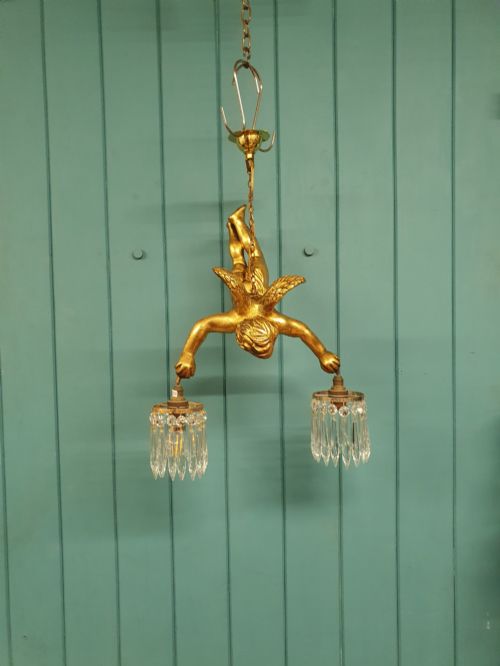
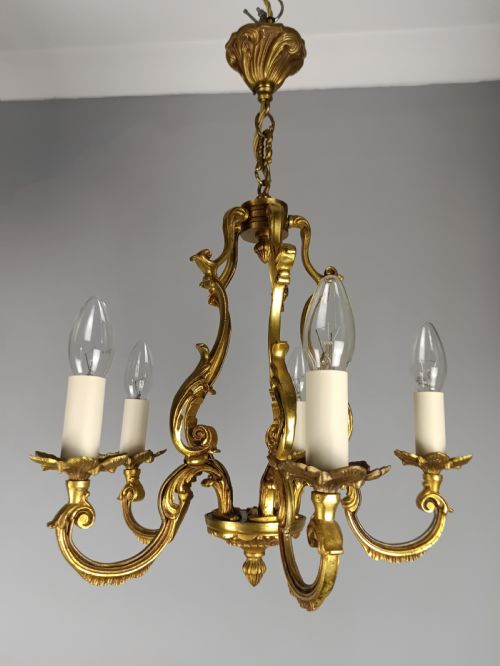
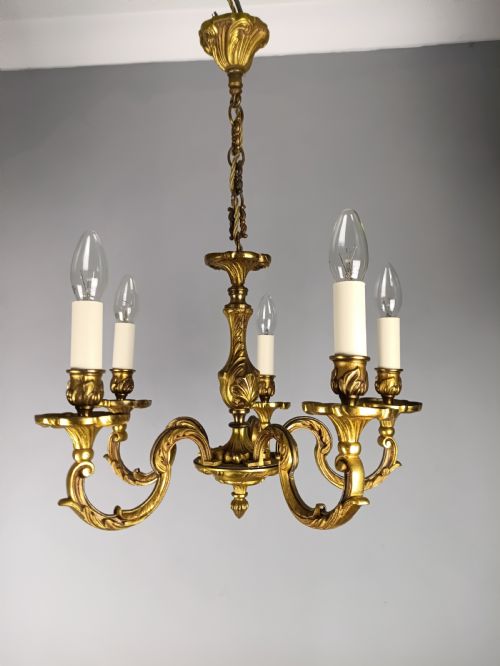
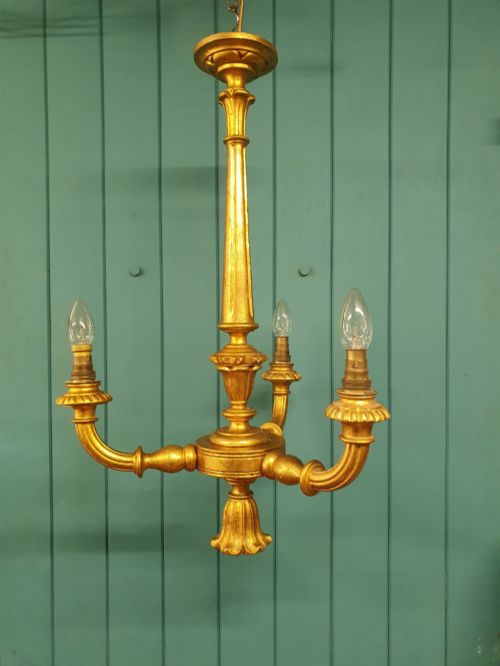
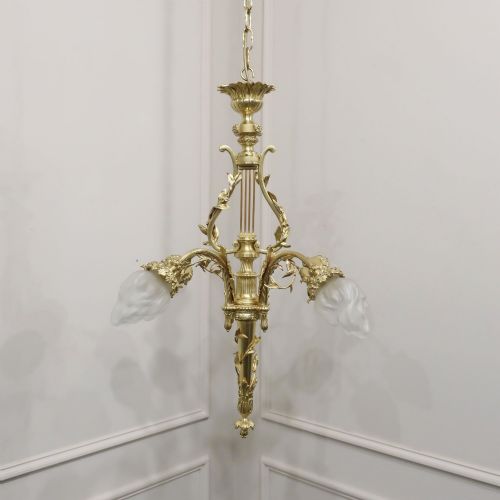
Construction relies heavily on metals such as brass, bronze, and gilt spelter, shaped into frames, arms, and decorative mounts. Gilding and patination are applied to metal surfaces to create rich metallic finishes, while toleware and carved giltwood introduce alternative textures and floral motifs.
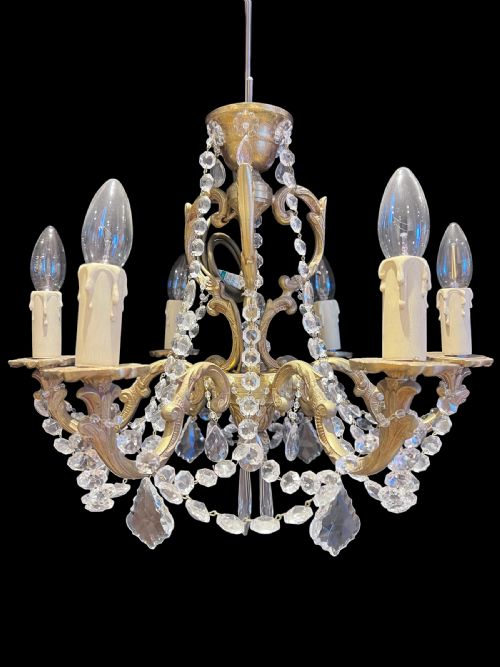
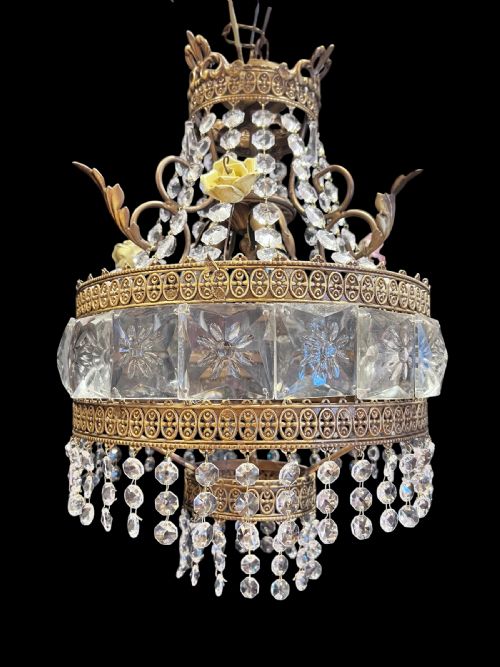
Lighting assemblies incorporate glass and crystal components, including cut glass pendants, crystal lustres, beaded strands, and spiked configurations that refract light. Certain fixtures integrate ceramic flowers or glass globes to soften the illumination and add colour to the design.
Periods represented span from the nineteenth century through the 1950s, encompassing Edwardian and Art Deco designs.
Factors of Distinction in Lighting
The refinement of the cast metal framework dictates the visual weight and artistic merit of a fixture. Finely chased bronze mounts and intricate gilt detailing elevate a piece above standard cast brass alternatives.
The clarity and cut of the crystal elements determine how light disperses through the room. Hand-cut glass spikes, multifaceted beads, and substantial crystal lustres create superior refractive brilliance compared to plain pressed glass.
Émile-Jacques Ruhlmann
The French Pendant Chandelier Glossary
- Gilt bronze
- Metal cast and coated in a thin layer of gold. It provides a warm, durable finish that resists tarnishing over decades.
- Tent and waterfall
- A lighting configuration featuring an upper canopy of beads arranged in a tent shape, descending into a cascading curtain of crystal drops.
- Hall lantern
- An enclosed ceiling-hung light fixture designed primarily for corridors and entrance halls. These often feature glazed panels held within a metal frame.
- Plafonier
- A ceiling-mounted lighting fixture positioned close to the surface rather than suspended on a long chain or drop.
- Spike chandelier
- A vertical lighting format incorporating upward-pointing glass or crystal spikes around a central axis.
French Pendant Chandelier: Frequently Asked Questions
What rooms suit a french pendant chandelier?
These fixtures fit well in dining rooms, living spaces, and entrance halls where overhead illumination serves as a central design element. Their decorative frameworks complement traditional and eclectic interiors alike.
Lower ceilings benefit from compact plafoniers or hall lanterns, while high ceilings accommodate multi-armed chandeliers and expansive tent and waterfall configurations.
How do I determine the period of a chandelier?
Stylistic cues point toward specific eras, such as clean geometric lines for Art Deco pieces or ornate scrolling foliage for Rococo revival models. Examining the manufacturing materials and metal patination also helps narrow down the decade.
Listed pieces span from the nineteenth century through the 1950s, with Edwardian and 1920s examples appearing frequently across the selection.
Are these lights wired for modern use?
Many antique light fixtures require rewiring or professional adaptation to meet current electrical standards and safety codes. Buyers should consult an electrician regarding installation and bulb compatibility.
Original lamp holders and wiring are frequently replaced during restoration to ensure safe daily operation in a modern home.
What is the difference between a chandelier and a hall lantern?
A chandelier suspends multiple branching arms designed to hold exposed or shaded bulbs in open air. It projects light widely across a room.
A hall lantern encloses the light source within glazed panels or a structured metal cage, concentrating the beam and protecting the flame or bulb from drafts.