





French Pedestal Desk
A French pedestal desk offers a grand writing surface built over twin banks of drawers, bringing classical proportion and refined timber to a study.
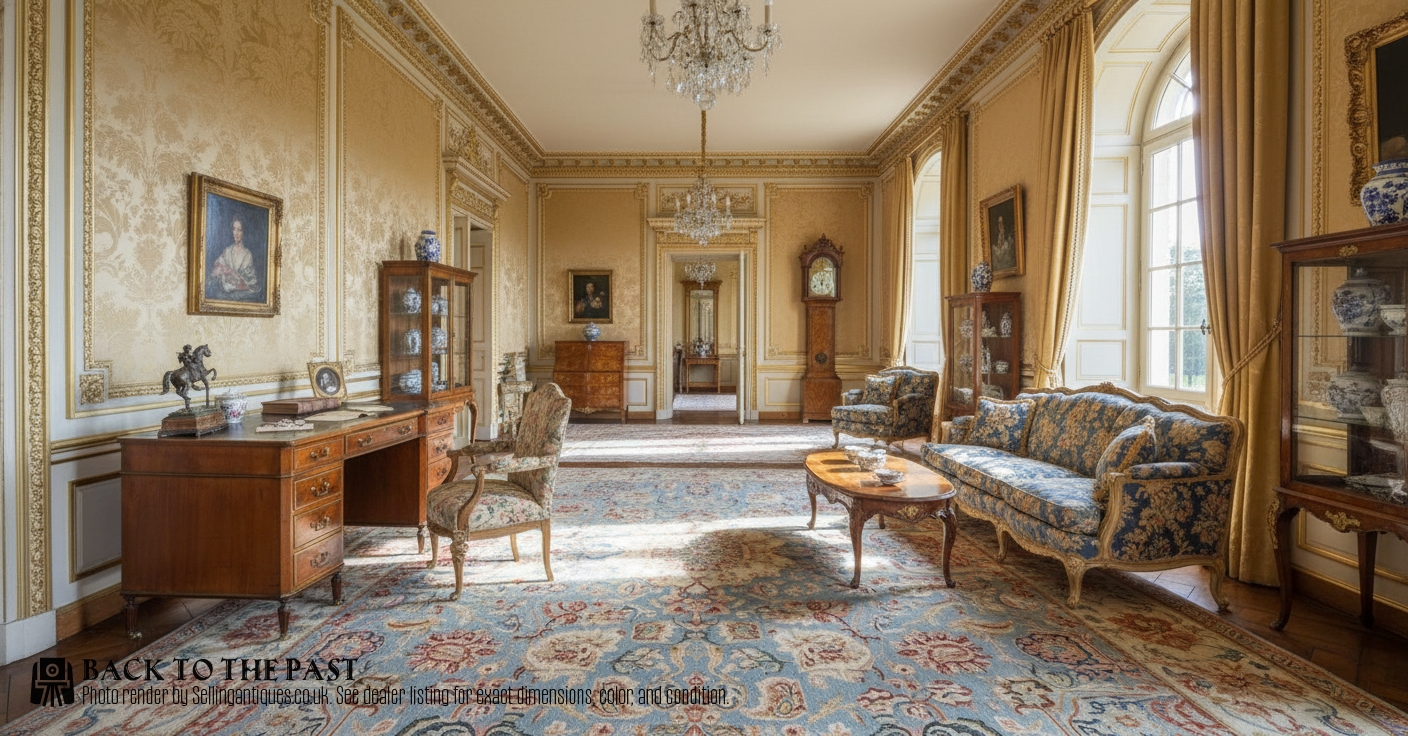
French Pedestal Desk
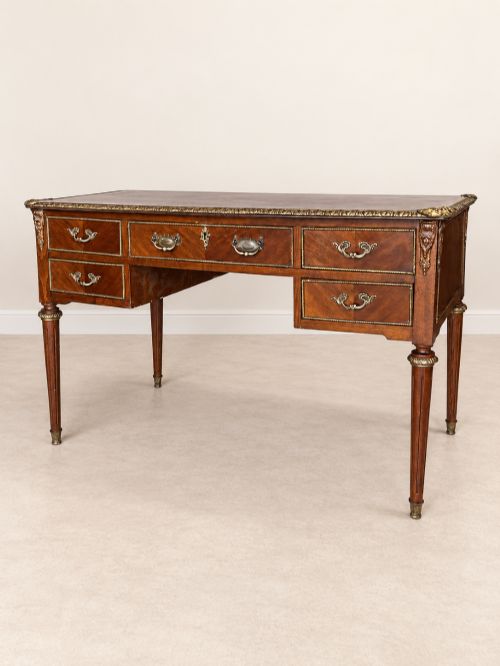
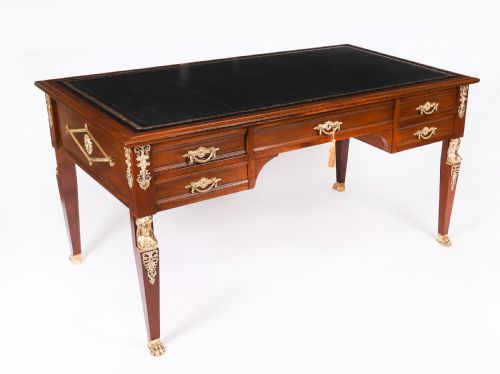
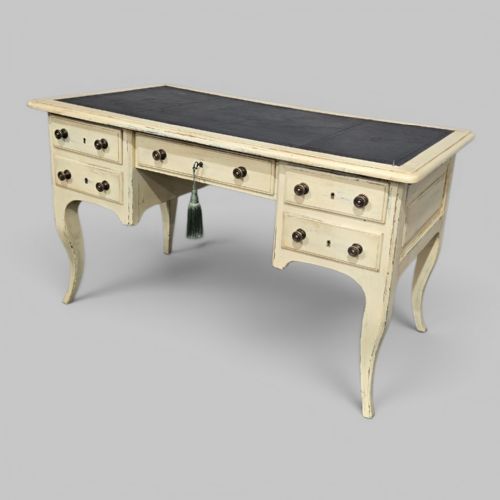
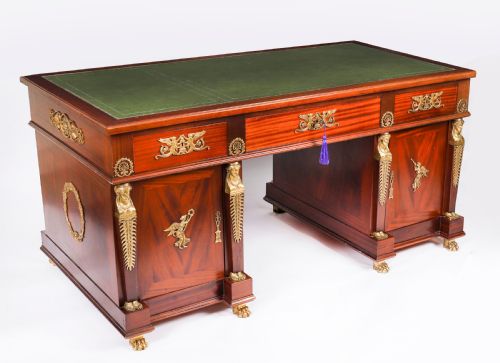
A French pedestal desk provides a substantial writing surface supported by two independent banks of drawers or cupboards, often termed a bureau plat when freestanding or a partners desk when fitted for two users. These pieces emerge in styles ranging from French Empire and Directoire to Louis XVI, Art Deco, and Victorian revivals, drawing on centuries of cabinet-making tradition.
The versions most frequently met on this page span the nineteenth and twentieth centuries, incorporating woods such as mahogany, walnut, oak, and rosewood. Examples frequently feature inset leather writing surfaces alongside classical brass or ormolu mounts, reflecting the formal requirements of European studies and offices.
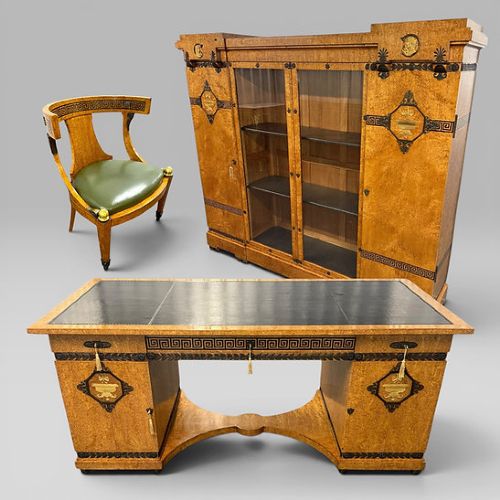
Earlier interpretations display clean neoclassical lines and rich veneers, while later twentieth-century variants introduce streamlined Art Deco geometry and exotic timbers like ebony macassar. Whatever the period, each French pedestal desk balances architectural presence with practical storage capacity across the twin pedestals.
Materials and Construction Techniques
Makers construct the carcase of a French pedestal desk using dense structural timbers like mahogany, oak, or walnut, applied with fine veneers or left as solid polished surfaces. Drawer linings and interior dividers employ secondary woods shaped with traditional joinery methods to ensure long-term stability.
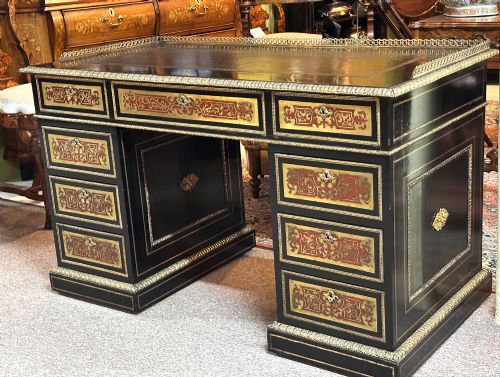
Decorative embellishment relies on cast ormolu and brass mounts fixed to corners and drawer fronts, alongside intricate brass stringing or boulle work inlaid directly into the wood. Leather inserts, often tooled with gilt borders, provide a durable and contrasting writing plane on the upper surface.
French cabinet-makers integrate classical architectural vocabulary into the framing, utilising fluted columns, bronze sabots, and patinated ebonised finishes. Surface finishing involves French polishing or oiling to accentuate the natural grain of the rosewood, mahogany, or burr walnut.
Listings feature French pedestal desks spanning the 18th, 19th, and 20th centuries, executed in mahogany, oak, walnut, rosewood, and ebonised wood.
Evaluating Construction and Ornament
Quality in a French pedestal desk rests on the crispness of the cast ormolu mounts and the precision of the brass inlay, where hand-chased detail distinguishes finer workshops from mass production. The depth and figure of the timber veneer, whether mahogany, burr walnut, or rosewood, set the visual standard for the piece.
Structural integrity reveals itself in the smooth operation of the pedestal drawers, the quality of the secondary timbers used inside, and the original condition of the inset leather top. Pieces retaining matched grain patterns across the pedestals and sides demonstrate greater consideration during the initial cabinet-making process.
Mercier Frères·Étienne Kohlmann·Viardot
The French Pedestal Desk Glossary
- Ormolu
- Gilded bronze applied as decorative mounts, feet, and handles on furniture. Makers cast and chase these metal elements by hand to achieve sharp architectural definition.
- Boulle work
- An intricate marquetry technique combining tortoiseshell and brass inlay developed in France. It creates elaborate, shimmering surface patterns across the timber carcase.
- Partners desk
- A large pedestal desk designed with drawer and cupboard access on both sides simultaneously. This configuration allowed two individuals to work opposite each other.
- Ebonised wood
- Timber treated with a dark stain or finish to imitate ebony. This technique gained popularity in nineteenth-century French furniture for its stark visual contrast against metal mounts.
French Pedestal Desk: Frequently Asked Questions
What is a French pedestal desk?
A French pedestal desk is a large writing table supported by two distinct pedestals containing drawers or cupboards. It provides an impressive centrepiece for a study while offering ample concealed storage.
These pieces combine decorative metal mounts and fine timber veneers, following design traditions established across various French stylistic periods from the empire to art deco.
How do I care for the leather top?
The leather writing surface requires gentle cleaning with a damp cloth and occasional treatment with suitable leather balm to prevent drying. Avoid harsh chemicals or excessive moisture.
Protecting the surface from direct sunlight helps preserve the colour and the gilded tooling found along the borders of older desks.
Were these desks used by two people?
Certain large formats, known as partners desks, feature drawers and kneeholes accessible from both the front and the reverse. These were built for shared office spaces or professional use.
Standard pedestal desks position drawers on one side only, facing the primary user while the reverse remains panelled or finished flat.
How can I tell the period?
Stylistic indicators such as neoclassical columns, ormolu mounts, or geometric art deco lines help determine the era of manufacture. Wood selection and construction methods offer further clues.
Nineteenth-century examples often favour mahogany and walnut with rich bronze mounts, whereas twentieth-century pieces introduce exotic veneers and modernist silhouettes.