



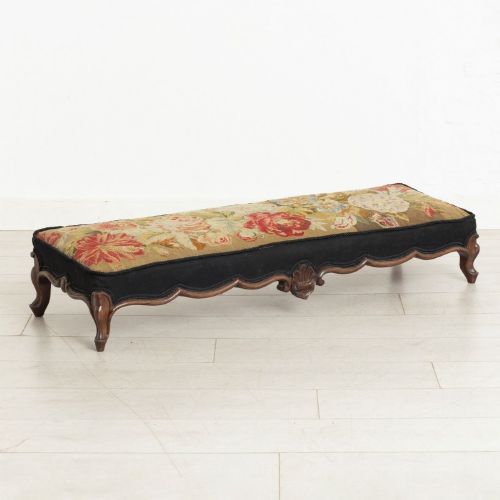


French Padded Footstool
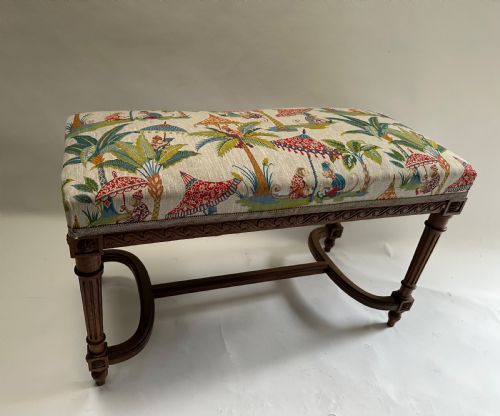
These french padded footstool examples bring period seating to a room, combining carved wood frames with traditional upholstery.
French Padded Footstool
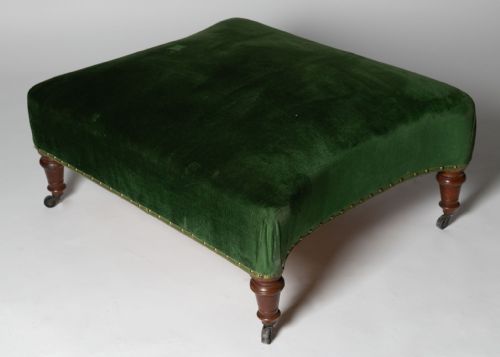
A french padded footstool provides low seating or leg support, appearing in various forms across nineteenth century and Victorian periods. Buyers seeking a french padded footstool will encounter low footstools, large centre stools, and rocking gout stools designed for domestic comfort.
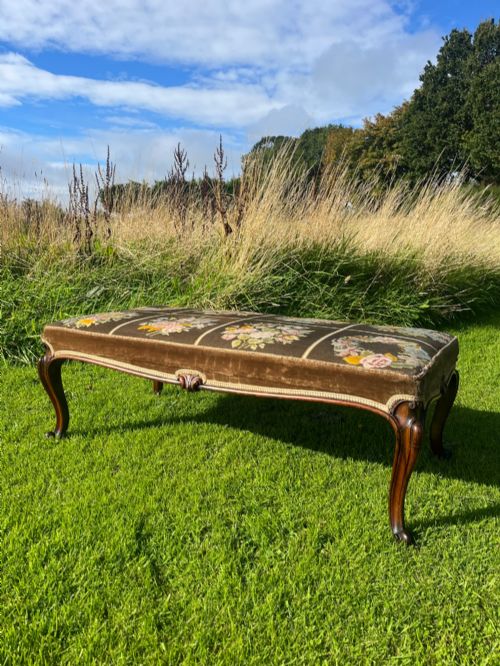
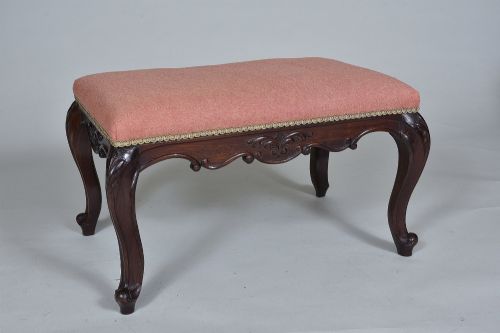
The selection ranges from simple mahogany frames to elaborate giltwood and walnut pieces influenced by Louis XIV and Rococo revival styles. Most examples date from the nineteenth century, featuring cabriole legs and traditional textile or velvet upholstery.
How they were made
Frames rely on timbers such as walnut, mahogany, and rosewood, alongside carved giltwood and painted finishes. Artisans shaped these woods into cabriole legs and decorative structures using hand carving techniques.
Padded surfaces utilise traditional textile coverings, including velvet and needlework upholstery, secured to the wooden bases to create comfortable seating.
French Padded Footstool Retail Price Guide 2026
Typical asking prices for french padded footstool among the pieces listed under this phrase on Sellingantiques today, from the lower quarter to the upper quarter. They describe what is for sale here now, not the wider market.
Some nineteenth century examples include rocking mechanisms specifically built to soothe tired feet during long evenings.
What varies in quality
The standard of wood carving separates simpler items from superior pieces, particularly on giltwood and walnut frames where depth and detail in the ornamentation dictate the level of craftsmanship. Hand-carved decorative elements show greater precision than standard production work.
The choice of materials and the preservation of original fabric or gilding influence the overall character of each piece. Finer examples maintain crisp lines in their structural timber and integrated upholstery work.
The French Padded Footstool Glossary
- Cabriole leg
- A furniture leg that curves outward and then tapers inward, finishing in a small foot. This form appears frequently on nineteenth century seating.
- Giltwood
- Wood that has been coated with gold leaf or a gold-coloured finish. It provides a decorative surface on formal nineteenth century frames.
- Centre stool
- A large freestanding stool designed to sit in the middle of a room rather than against a wall. These pieces often feature substantial walnut or mahogany construction.
- Gout stool
- A specialised footstool, sometimes rocking, designed to support feet affected by medical conditions. They offer an adjustable angle for rest.
French Padded Footstool: Frequently Asked Questions
What is a french padded footstool used for?
These pieces function as low seats or footrests in a traditional interior.
Larger versions also serve as centre stools in principal rooms.
How do I date a nineteenth century stool?
Dating relies on timber selection, carving style, and upholstery methods.
Revival styles and specific wood types help place pieces within the Victorian era.
Are these stools sturdy enough for daily seating?
Solid wood frames in walnut and mahogany provide reliable structural support.
Construction quality determines their suitability for regular use.
What styles are common among these stools?
Victorian and French revival designs dominate the available selection.
Pieces frequently display Rococo or Louis XIV influences through carved ornamentation.