
French Ormolu Mount
French ormolu mount pieces bring gilded cast bronze detail to nineteenth-century cabinet work, tables and vitrines, lending interiors tactile presence and historical depth.
French Ormolu Mount
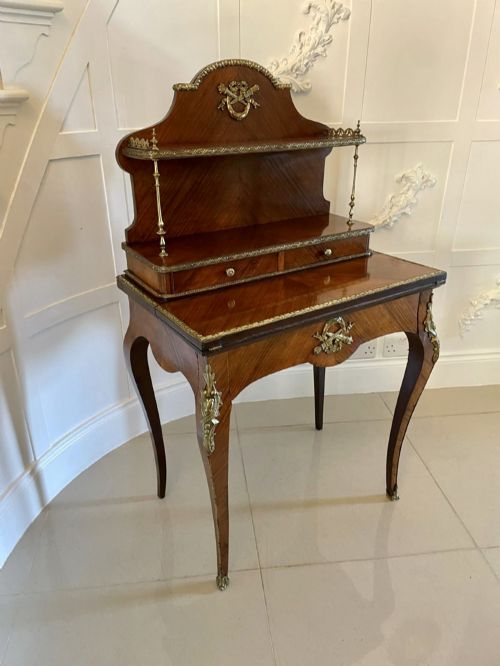
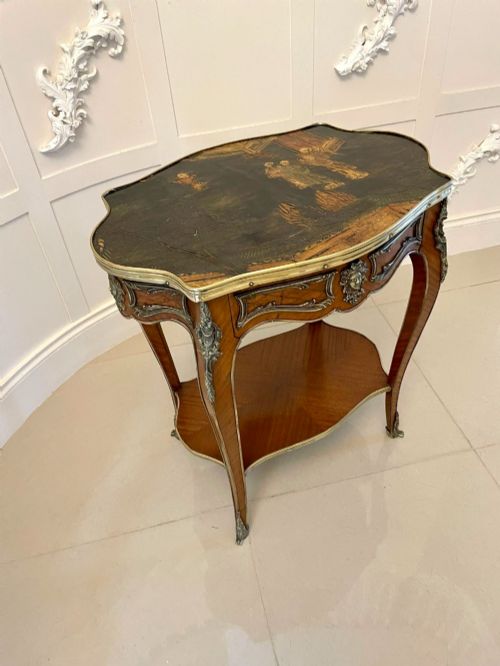
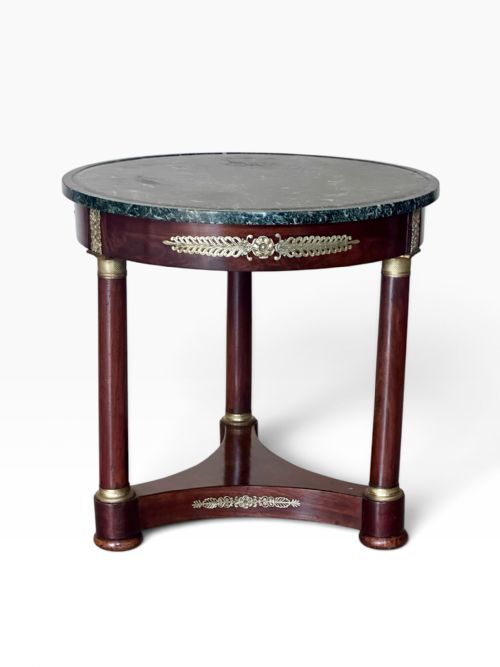
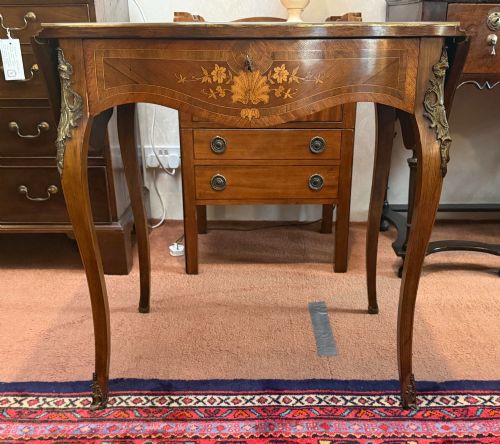
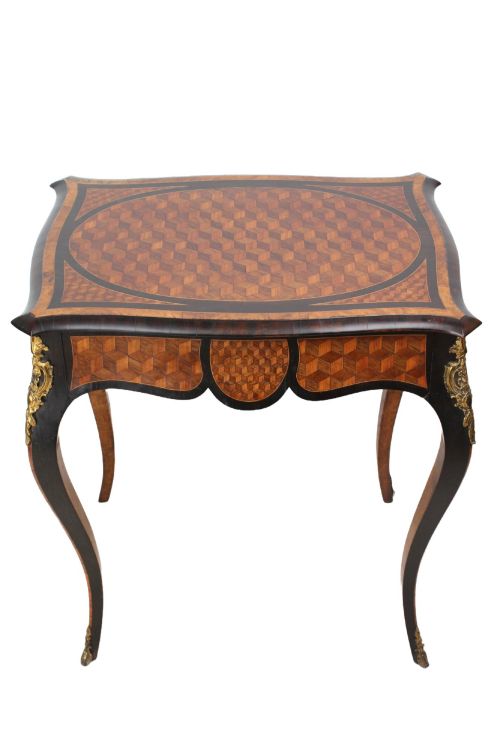
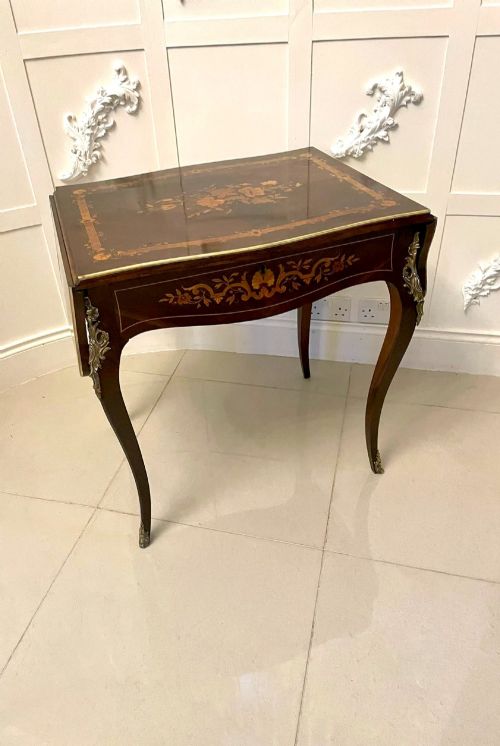
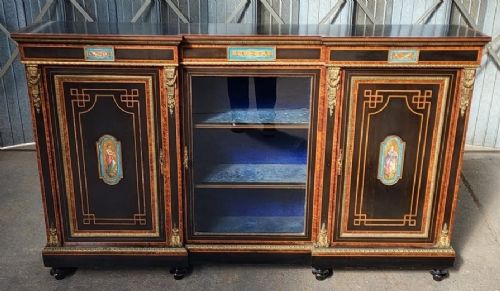
When searching for a french ormolu mount, you encounter furniture and decorative objects where gilded bronze mounts accent structural corners, key escutcheons and framing edges. These pieces predominantly date from the nineteenth century, spanning Victorian revivals, Empire designs and Louis XV styles.
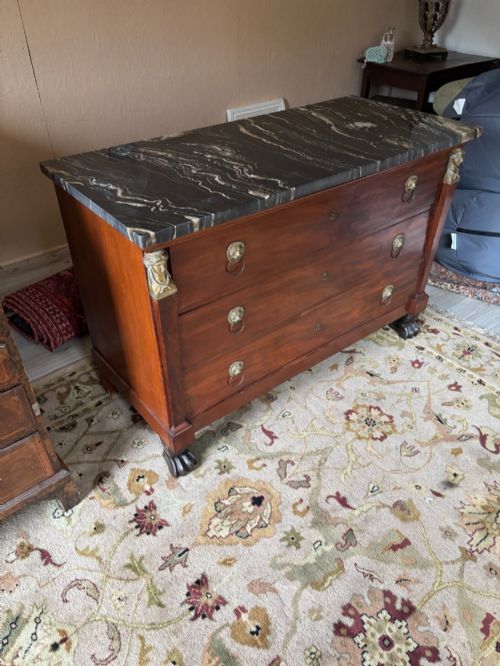
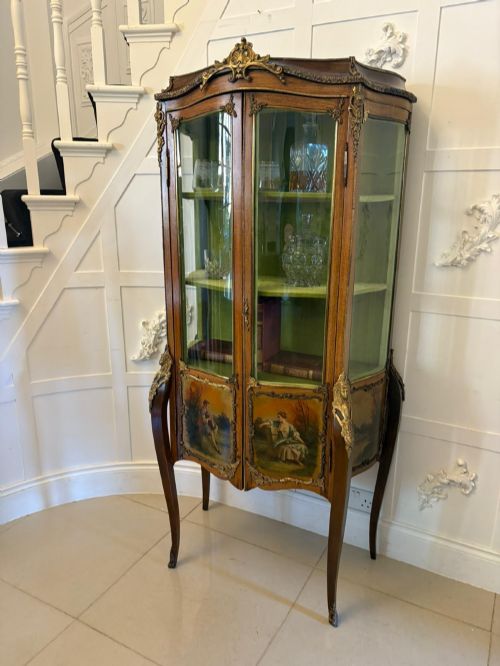
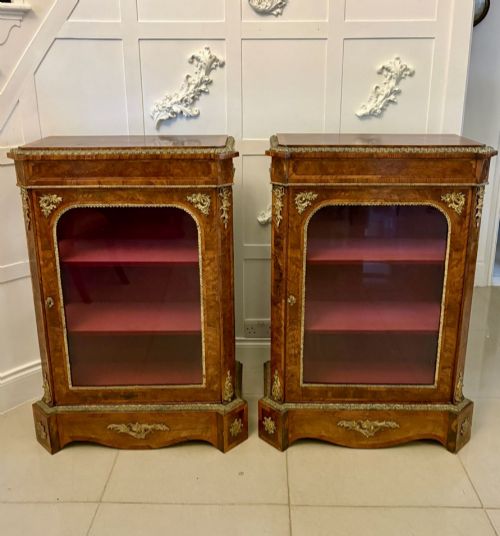
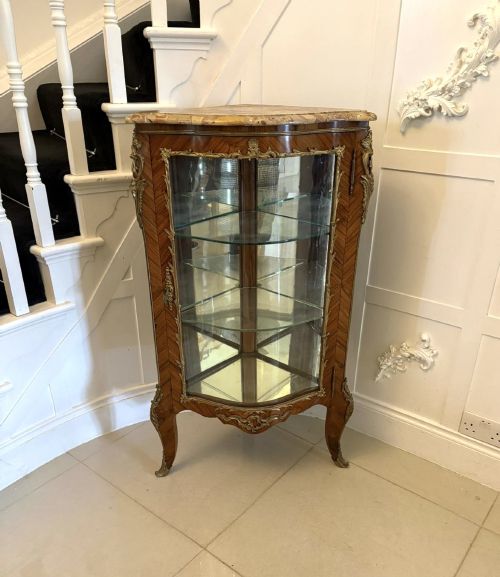
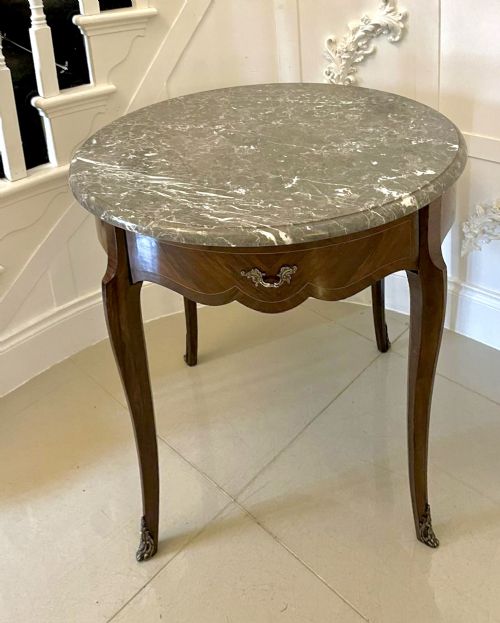
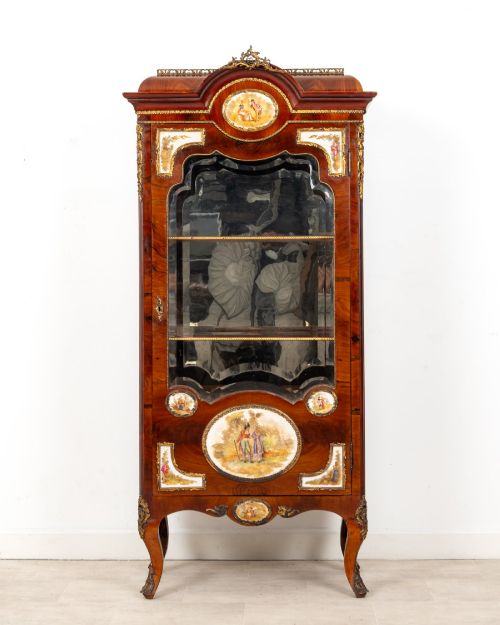
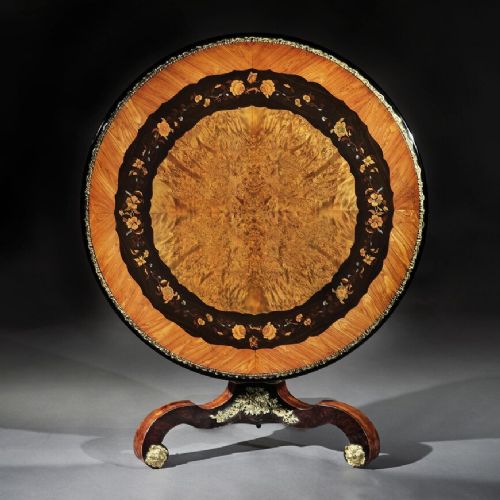
The most common forms on this page include freestanding centre tables, writing desks, marble-topped commodes and vitrine display cabinets in kingwood, walnut and mahogany. Cabinets and credenzas frequently pair these gilt mounts with marquetry, parquetry or Vernis Martin panels.
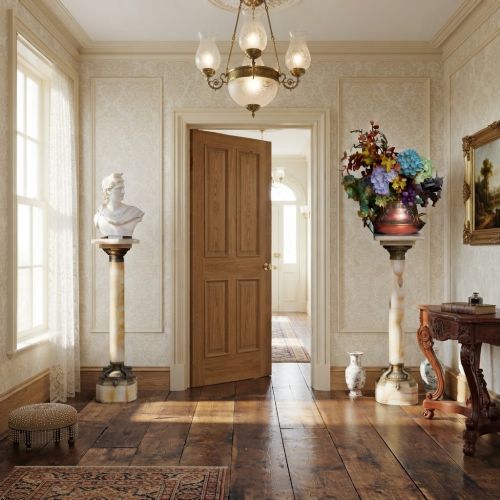
Beyond cabinetry, the category encompasses smaller decorative objects such as porcelain vases, jardinière urns, onyx columns and clock sets accented with the same cast metal details. These works reflect nineteenth-century French taste for historical revivalism and elaborate interior ornamentation.
How They Were Made
Craftsmen built these pieces using dense carcases of mahogany, walnut or oak, overlaid with decorative veneers of kingwood, rosewood and satinwood arranged in geometric parquetry or floral marquetry patterns. Marble tops in white, Carrara or coloured varieties were frequently fitted to commodes, side tables and display cabinets.
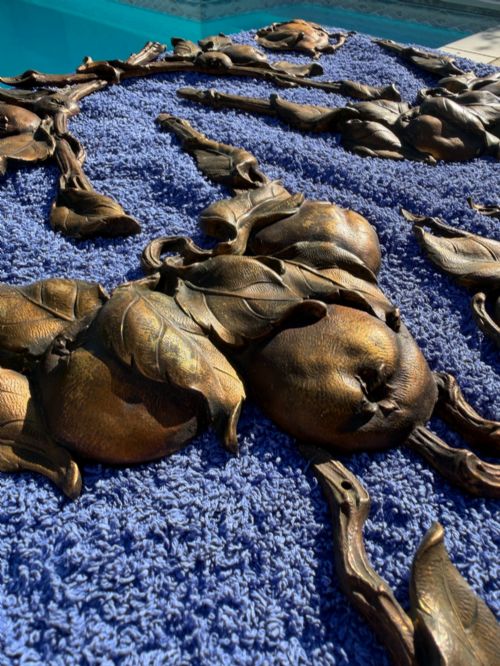
The signature mounts were produced by casting bronze into detailed decorative forms, which were then chased by hand to sharpen the motifs before undergoing mercury gilding or electroplating to achieve the distinctive ormolu surface. These gilt bronze elements were secured to the wooden frames or marble edges with specialised screws and pins.
Among the tables and cabinets sits a huge French leather model of a Doberman Pinscher wearing an elaborate ormolu-mounted collar.
What Varies in Quality
The standard of an ormolu mount depends on the crispness of the hand-chasing after casting, where sharper leaf and scroll details indicate superior workshop output. Lower tiers feature softer, shallower surface definition with visible casting seams.
Cabinetwork quality reveals itself in the precision of the veneer matching, the complexity of the underlying marquetry and the weight of the carcase timbers. Finely constructed pieces maintain rigid joints and use substantial marble slabs rather than thin stone overlays.
Edward Holmes Baldock·Poix Blin·JAS Shoolbred·Jacques Bircklé
The French Ormolu Mount Glossary
- Ormolu
- Gilt bronze applied as an ornament to furniture and decorative objects. The technique involves treating cast bronze with a gold amalgam to create a durable, golden surface finish.
- Marquetry
- Decorative veneer work forming pictures or patterns by assembling small pieces of different coloured woods. It was widely utilised on eighteenth and nineteenth-century French case pieces.
- Vernis Martin
- A type of simulated Japanese lacquer developed in France during the eighteenth century and imitated in later revival furniture. The finish uses multiple translucent varnish layers to achieve a glossy depth.
- Commode
- A low chest of drawers, often fitted with a marble top and prominent gilt bronze mounts. These pieces served as primary storage and display surfaces in formal rooms.
- Vitrine
- A glass-fronted display cabinet designed for showing porcelain and small collectibles. They frequently incorporate curved glass panels and elaborate ormolu framing.
French Ormolu Mount: Frequently Asked Questions
What periods do these pieces come from?
The pieces listed largely originate from the nineteenth century, encompassing Victorian interpretations, Empire designs and Louis XV revivals. Certain items date from the Edwardian era and the early twentieth century.
Maker attributions and stylistic markers help place individual works within specific decades, though many follow traditional French cabinet-making designs established a century earlier.
How were ormolu mounts attached to furniture?
Mounts were cast to fit the exact contours of wooden panels, table corners and marble edges. Craftsmen secured them using small brass screws driven through pre-drilled holes in recessed areas of the metal.
This method ensured the gilt bronze decorations remained flush against the wood or stone without disrupting the visual lines of the piece.
How do I care for marble and gilt bronze?
Marble surfaces benefit from regular dusting and prompt cleaning of spills to prevent staining, using mild soap and water rather than acidic cleaners. Gilt bronze mounts require gentle dusting with a dry microfibre cloth.
Avoid commercial metal polishes on ormolu, as abrasive substances can strip away the delicate historical gilding layer.
Where were these cabinets and tables placed?
Freestanding centre tables and desks occupied the middle of large reception rooms, finished with decorative veneer on all sides. Vitrines and credenzas stood against walls to display porcelain collections and books.
Smaller occasional tables and bedside cabinets were positioned in parlours and private chambers to hold lamps and decorative accessories.