


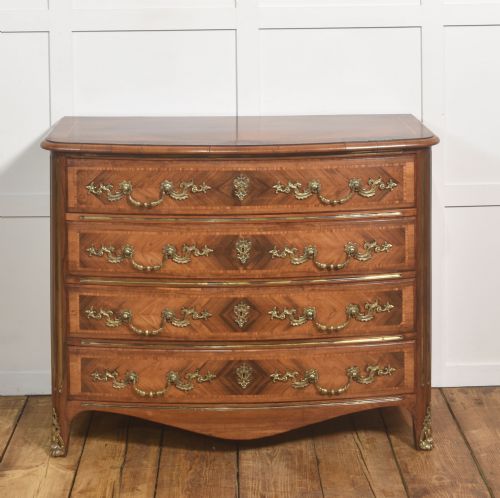
French Ormolu Cabinet
When searching for a french ormolu cabinet, collectors seek the opulent gilt-bronze mounts and fine marquetry typical of nineteenth-century revival design.
French Ormolu Cabinet
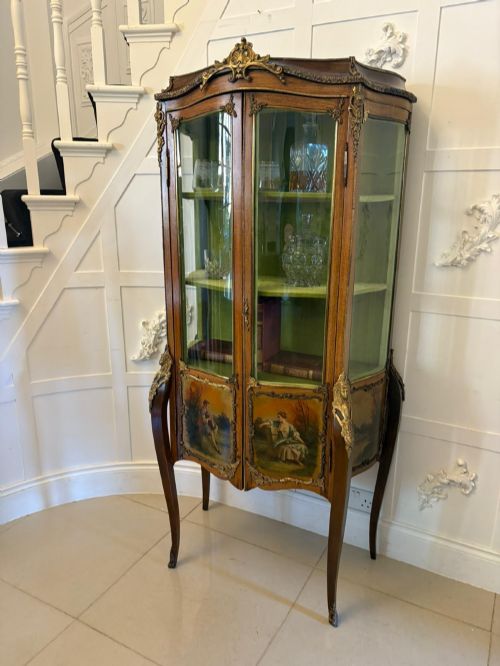
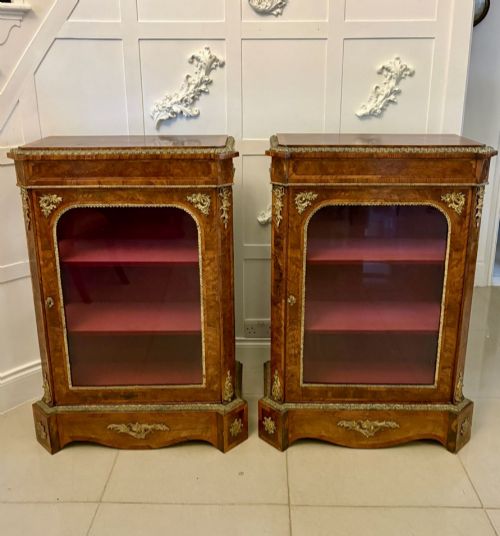
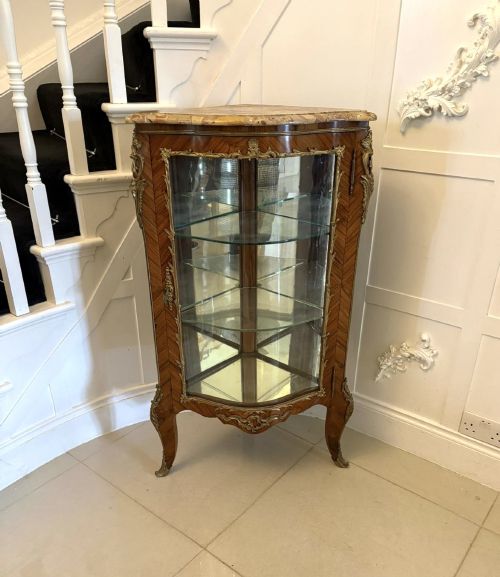
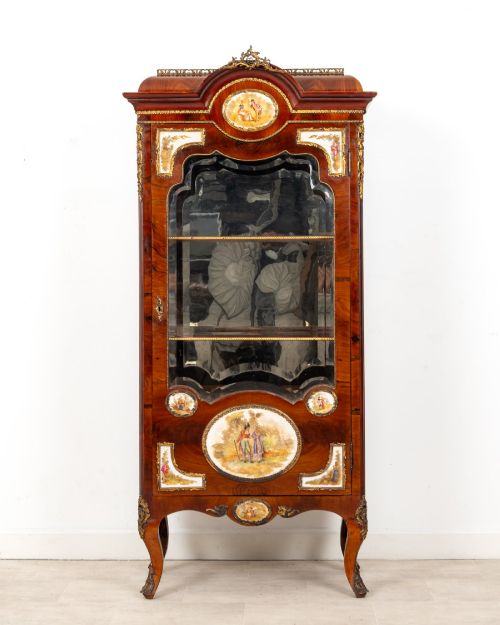
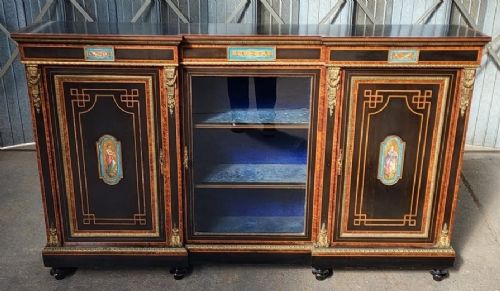
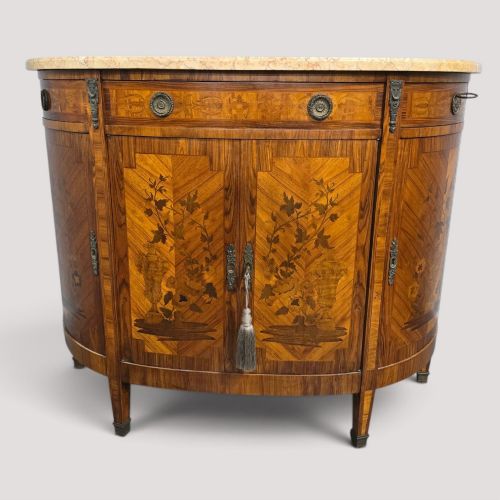
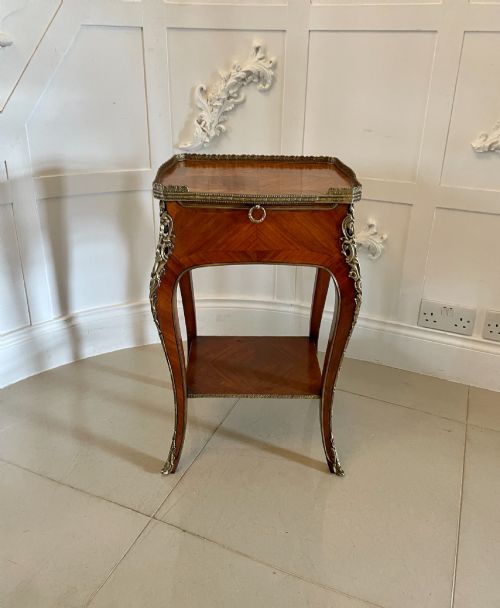
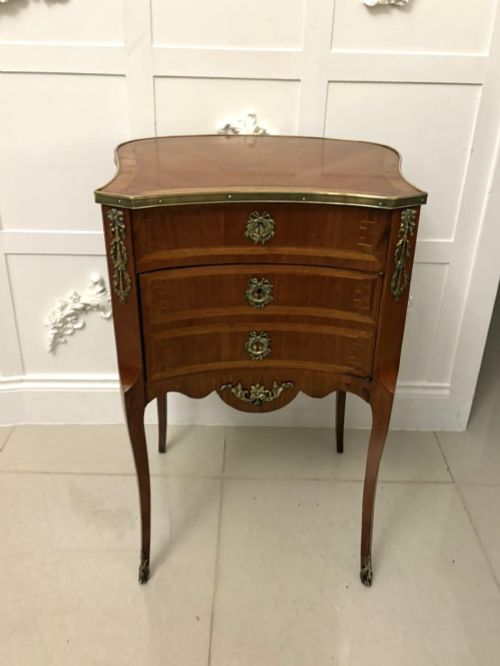
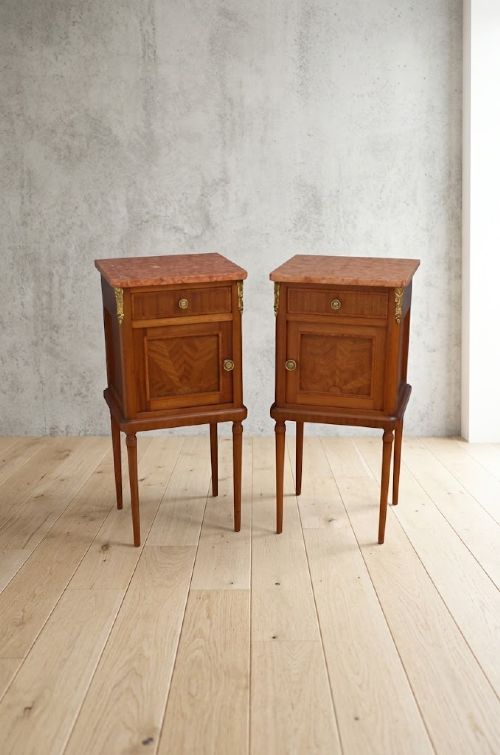
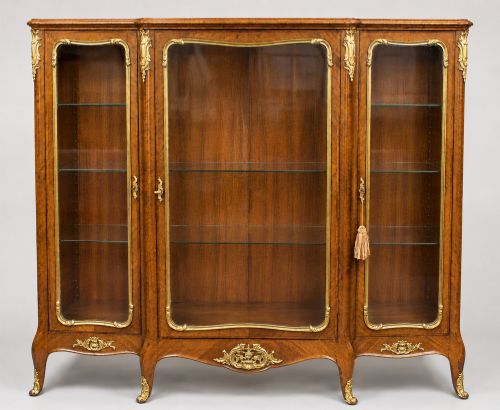
A french ormolu cabinet encompasses a range of high-status furniture forms designed for display and storage, predominantly originating from the nineteenth century and the revival periods. Pieces on this page span display cabinets, vitrines, credenzas, side cabinets, and commodes, each integrated with cast bronze enrichments. The aesthetic draws heavily on Louis XV and Louis XVI design vocabulary, translating eighteenth-century court opulence into nineteenth-century domestic interiors.
The most common formats encountered include glass-fronted vitrines for porcelain and curiosities, alongside solid-door side cabinets and marble-topped commodes. Kingwood, walnut, and mahogany form the primary carcass woods, frequently decorated with complex floral marquetry or ebonised finishes. These items served as focal points for formal reception rooms, combining utility with an emphatic display of wealth and taste.
How They Were Made
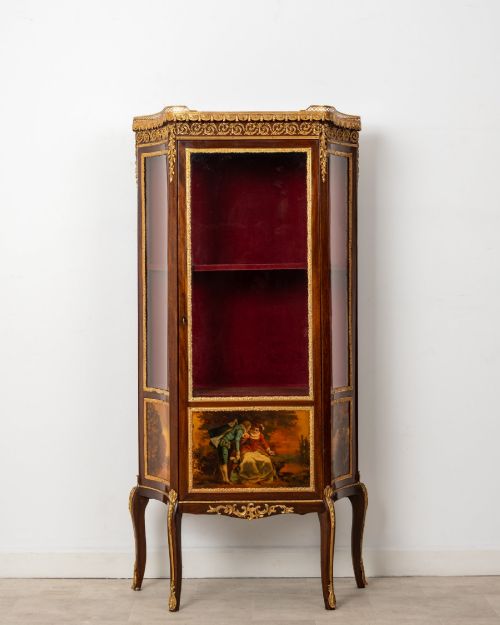
Construction relies upon dense cabinet timbers such as kingwood, rosewood, walnut, and mahogany, often employed as veneers over secondary pine or oak carcases. Marquetry panels utilise contrasting woods cut into intricate geometric or floral patterns, sometimes enhanced by hand-painted Vernis Martin panels. Marble tops, typically in white or rouge varieties, are selected for thickness and fitted directly to the upper surface of commodes and side cabinets.
Ormolu, or gilt bronze, is cast, chased, and fire-gilded before being mechanically fixed to the corners, feet, and aprons of the furniture. The mounts accent the structural lines of the cabinet, requiring precise chiselling by hand to achieve crisp relief and varied matte and polished finishes.
Some miniature vitrines were built strictly to show off a single tea cup.
What Varies in Quality
The standard of an ormolu mount depends entirely on the depth of the hand-chasing and the purity of the gilding after casting. Superior pieces display sharp articulation in the acanthus leaves and scrolling motifs, whereas inferior examples present soft, muddy details resulting from worn or secondary moulds. The weight and thickness of the bronze itself signal the maker's investment in materials.
Timber selection and marquetry execution further divide the range, with tight, faultless grain matching and delicate shading separating standard production pieces from workshop masterpieces. Carcase integrity, original marble slabs, and surviving signed bronze signatures or maker stamps elevate the standing of individual furniture items.
Jacques Bircklé·François Linke·H. J. Hatfield & Sons·Maison Krieger·Henry Dasson
The French Ormolu Cabinet Glossary
- Ormolu
- Gilt bronze used for decorative mounts and furniture garnitures. The technique involves applying a mercury-gold amalgam to cast brass or bronze and heating it to drive off the mercury.
- Vitrine
- A glass-panelled display cabinet designed for porcelain and small valuables. These pieces often feature mirrored backs and glass shelves to maximise light exposure.
- Marquetry
- Inlay work using thin slices of wood, shell, or ivory to form pictorial or geometric designs on a carcase. Craftsmen arrange contrasting natural grains to create depth and shadow without paint.
- Vernis Martin
- A simulated Japanese lacquer technique developed in eighteenth-century France and revived later. It uses multi-layered resin varnishes, often over painted pastoral scenes.
- Commode
- A low chest of drawers or cabinet designed for formal rooms. They frequently feature serpentine fronts and heavy marble tops.
French Ormolu Cabinet: Frequently Asked Questions
What is a french ormolu cabinet used for?
These pieces were built to display prized porcelain, silver, and curiosities within formal drawing rooms and salons. The glass-fronted vitrines and open shelves allowed owners to exhibit their collections safely behind locked doors.
Today, they function similarly in domestic interiors as statement storage units or display surfaces. Collectors use them to anchor period rooms while housing books, ceramics, or glassware.
How do I identify Louis XV style?
Louis XV style furniture is characterised by asymmetric curves, cabriole legs, and naturalistic rococo motifs such as scrolling foliage and C-scrolls. The overall silhouette avoids straight lines in favour of flowing, serpentine contours.
On cabinets, this translates into bowed glass fronts, sweeping apron mounts, and cartouche-shaped panels. The ornamentation aims for lightness and grace rather than rigid symmetry.
Are the marble tops original?
Original marble tops generally fit flush to the cabinet carcase with matching edge profiles, such as a ogee or thumb-moulded edge, that align with the woodwork underneath. They often show age-appropriate weathering or minor surface scratches consistent with the body of the piece.
Replacements can sometimes be detected by abrupt thickness variations, mismatched stone types for the period, or poor seating against the wood frame. Examining the underside can reveal old mortar or fixing beds that confirm period attachment.
How do I care for ormolu mounts?
Ormolu mounts require gentle dusting with a soft, dry microfibre cloth to prevent the accumulation of grit in the crevices. Avoid all commercial brass cleaners and abrasive polishes, as these will strip away the historic fire gilding.
If the metal requires deeper cleaning, consult a professional conservator to address verdigris or heavy oxidation safely. Keeping the furniture out of direct sunlight also protects the underlying wood veneers and lacquered panels.