

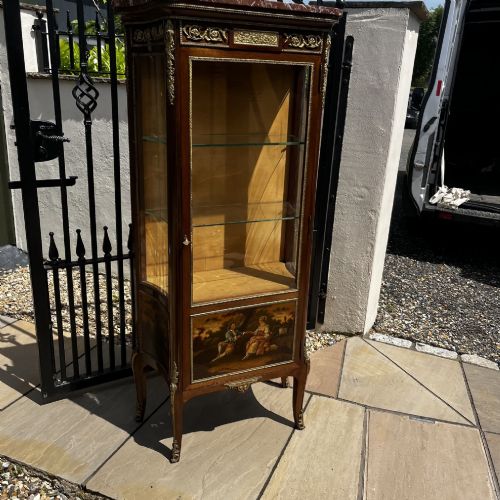


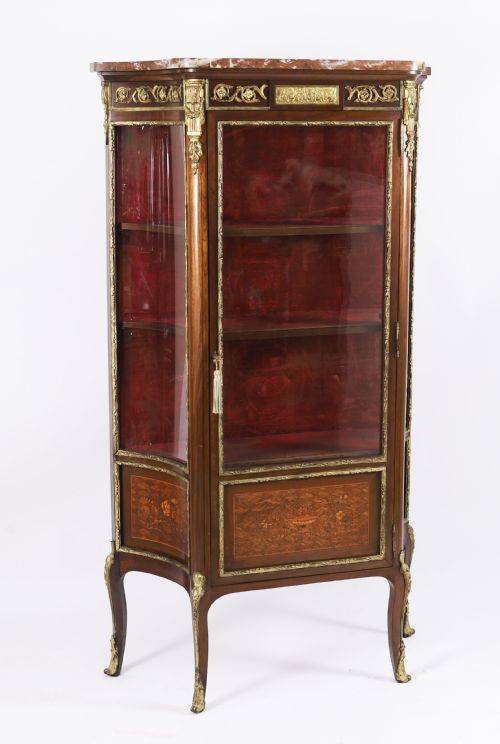


Gilt Bronze Mahogany Cabinet
A gilt bronze mahogany cabinet brings French revival grandeur into a room, pairing rich timber with opulent metal mounts.
Gilt Bronze Mahogany Cabinet
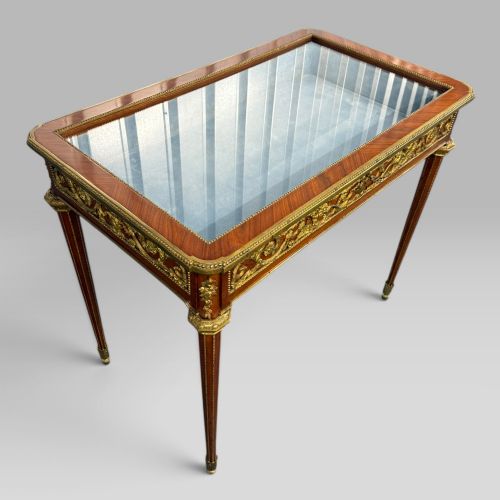
A gilt bronze mahogany cabinet encompasses sophisticated French case furniture designed to display valuables or store precious items securely. When searching for a gilt bronze mahogany cabinet, you meet numerous vitrines, commodes, and display cabinets that follow classical continental designs.
The pieces on this page span the nineteenth century and revival periods, often taking the form of glazed vitrines or side cabinets. Makers borrowed heavily from earlier royal aesthetics, translating eighteenth-century models into elaborate nineteenth-century creations.
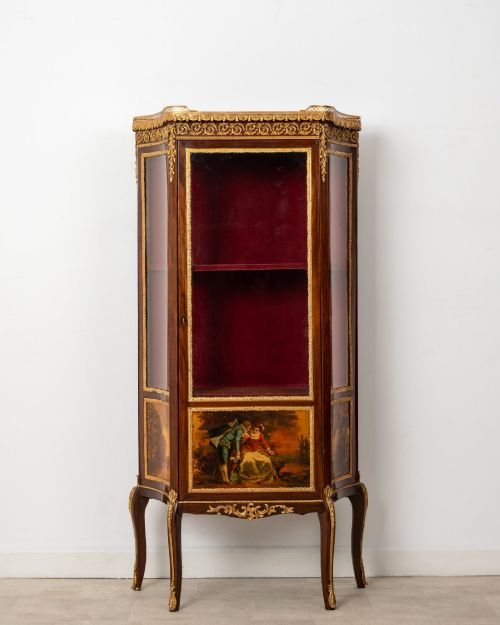
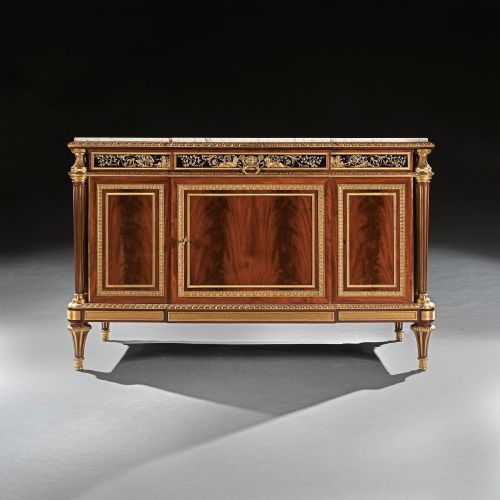
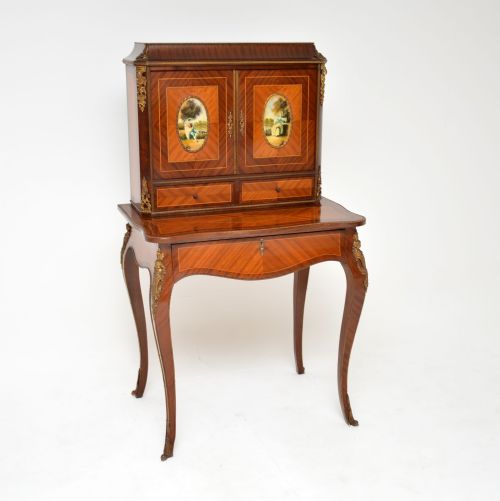
Mahogany forms the primary timber body across these examples, frequently embellished with rich parquetry, marquetry, or painted Vernis Martin panels. Ormolu and gilt bronze mounts frame the timber surfaces, accentuating corners, locks, and friezes.
Materials and construction
Cabinetmakers constructed carcass frames from dense mahogany, sometimes laying down intricate geometric parquetry or floral marquetry veneers. Selected pieces incorporate marble tops and delicate glass panels to enclose display spaces.
Gilt bronze and ormolu mounts were cast, chased, and fire-gilded before being secured to the timber with precise brass screws. Painted Vernis Martin lower panels often display classical pastoral scenes in layered translucent varnishes.
Gilt Bronze Mahogany Cabinet Retail Price Guide 2026
Typical asking prices for gilt bronze mahogany cabinet among the pieces listed under this phrase on Sellingantiques today, from the lower quarter to the upper quarter. They describe what is for sale here now, not the wider market.
Listings combine mahogany timber with ormolu, gilt bronze, marble, and glass across nineteenth-century and Edwardian periods.
Factors of distinction
Quality rests heavily upon the crispness of the gilt bronze chasing and the depth of the fire-gilding. Superior mounts exhibit sharp relief and intricate detail rather than soft, flat casting.
The refinement of the mahogany carcass, the tightness of the marquetry or parquetry joints, and the balance of the proportions dictate the standing of an individual piece.
François Linke·Henry Dasson·Paul Sormani·Jean-Henri Riesener·Maison Krieger
The Gilt Bronze Mahogany Cabinet Glossary
- Ormolu
- Gilded bronze used for decorative mounts on furniture. The technique involves applying a mercury and gold amalgam to cast bronze before heating.
- Vernis Martin
- A simulated Japanese lacquer developed by the Martin brothers in eighteenth-century France. It uses multiple coats of varnish to achieve a translucent, polished finish over painted scenes.
- Parquetry
- Geometric mosaic woodwork used for decorative veneer surfaces. Craftsmen arrange small pieces of contrasting timber veneers into repeating patterns.
- Vitrine
- A glass-fronted display cabinet designed for porcelain, curiosities, or books. These pieces rely on large glazed panels to showcase contents from multiple angles.
- Marquetry
- Inlaid woodwork forming pictorial or decorative designs using various tinted veneers. The technique requires precise cutting of thin wood sheets to fit flush into a background ground.
Gilt Bronze Mahogany Cabinet: Frequently Asked Questions
What periods do these cabinets represent?
These pieces predominantly date from the nineteenth century, drawing heavily on earlier French royal styles such as Louis XV and Louis XVI. Many examples reflect later nineteenth-century revivals alongside Edwardian interpretations.
Craftsmen looked backward to eighteenth-century court aesthetics, reinterpreting historical designs with contemporary nineteenth-century manufacturing methods and materials.
Where should I place a vitrine?
A glazed vitrine suits a drawing room, formal dining space, or hallway where natural light can illuminate its glass shelves and interior contents. Freestanding versions allow viewing from multiple angles.
Keep such cabinets away from direct sunlight to protect interior items and sensitive timber finishes from fading or thermal stress.
How do I identify Louis XVI style?
Louis XVI pieces display straight tapering legs, neoclassical symmetry, and restrained geometric proportions. Mounts often incorporate classical motifs like ribbons, urns, and acanthus leaves.
This aesthetic contrasts sharply with the curved lines and asymmetrical flourishes typical of earlier Louis XV revival furniture.
What is Vernis Martin?
Vernis Martin is a decorative lacquer finish developed in France to imitate Asian lacquerware. It involves meticulous layering of resin varnishes over painted panels.
Cabinets featuring this technique typically display delicate pastoral scenes on the lower panels beneath the main display section.