



French Oak Wall Mirror
A french oak wall mirror brings substantial presence to a room through deep grain, heavy carved timber and aged glass.
French Oak Wall Mirror
A french oak wall mirror is a sturdy hanging looking glass framed in solid timber, frequently decorated with deep relief carving. Most examples encountered here date from the nineteenth century, spanning provincial styles to grand chateau designs.
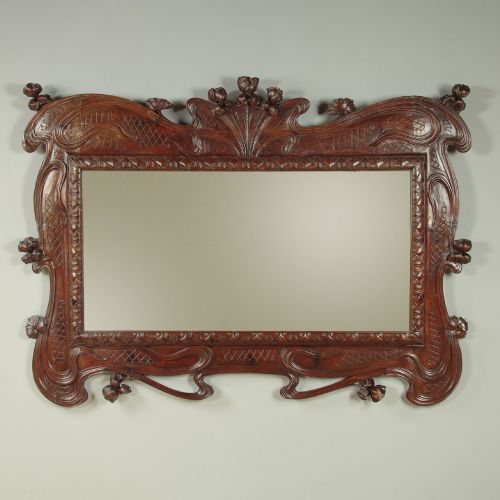
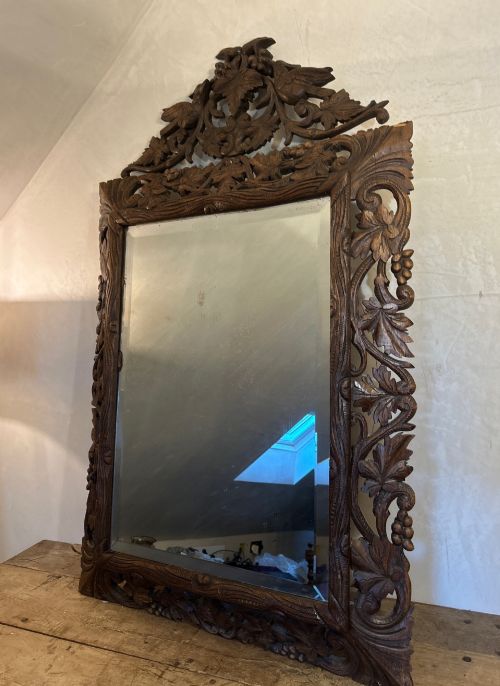
The selection ranges from large overmantel mirrors to simpler cushion frames and fret-cut panels. Many pieces display regional French characteristics, including carved flowers, crests and side columns.
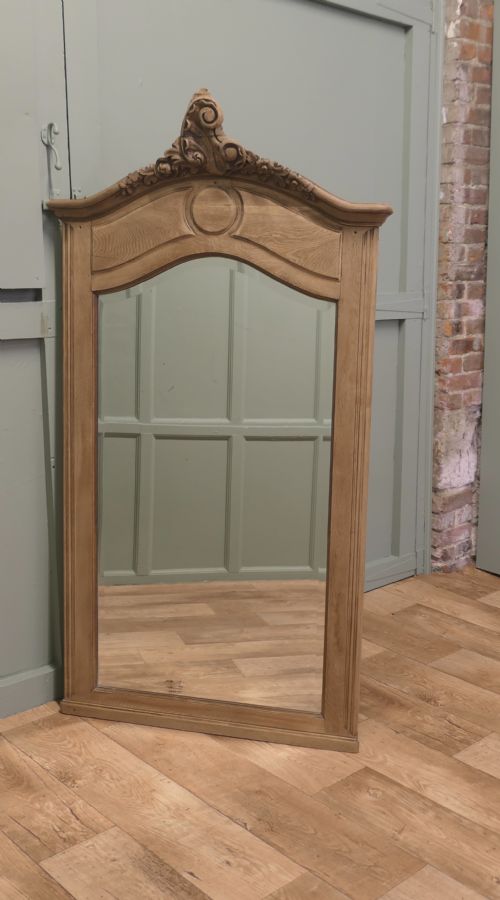
Makers utilised heavy oak stock, often left natural, scrubbed, bleached or parcel-gilt. These pieces were built to anchor a room, whether hung above a mantelpiece or mounted in a hallway.
How they were made
Craftsmen built these frames using thick solid oak timbers joined at the corners with traditional methods to support heavy glass. Carvers then worked directly into the dense wood, rendering floral motifs, scrolling leaves and architectural columns by hand.
Surfaces received various treatments according to fashion and origin, including bleaching, scrubbing, painting or adding gesso and gold leaf accents. Original mirror plates were bevelled or flat, set securely into deep rebates behind the wooden frame.
One past mirror came carved with a basket of flowers, proving that nineteenth-century French artisans loved a bit of botany.
What varies in quality
The depth and crispness of the wood carving distinguish superior frames from plain workshop output. Sharp undercutting in floral swags and well-defined mouldings show the hand of a skilled carver rather than mechanical production.
The condition and age of the glass plate matter greatly. Original mercury or early silvered plates showing natural oxidation and soft foxing hold more character than later clear replacements.
The French Oak Wall Mirror Glossary
- Overmantel mirror
- A large horizontal looking glass designed specifically to hang above a fireplace mantel. These pieces often feature architectural framing to match interior panelling.
- Gesso
- A plaster-based mixture applied to wood frames to create a smooth surface for gilding or painting. It accepts fine detail work before leaf application.
- Scrubbed oak
- A timber finish achieved by washing and brushing the wood to remove dark varnishes and reveal the pale, raw grain underneath. This treatment became popular in nineteenth-century country pieces.
- Fret cut
- A technique where thin timber is pierced and shaped with a fretsaw to create delicate openwork patterns. It adds lightness to heavier oak frames.
- Parcel-gilt
- A decorative method where only specific raised portions of a carved frame are covered in gold leaf. This technique highlights particular details against the darker oak background.
French Oak Wall Mirror: Frequently Asked Questions
How do I hang a heavy oak mirror safely?
These frames carry significant weight due to the dense timber and thick glass. Use heavy-duty wall anchors secured directly into masonry or wall studs rather than relying on standard picture hooks.
Ensure the hanging wire or brackets attached to the back of the frame are robust and professionally installed to bear the load permanently.
Are the mirror plates original?
Many nineteenth-century pieces retain their original glass, which often exhibits gentle foxing, dark speckling and slight distortion. These signs of age confirm authenticity and provide a softer reflection than modern glass.
Replacement plates are sometimes fitted if the original silvering degraded beyond use, which changes the visual clarity of the piece.
How do I care for bleached or scrubbed oak?
Raw and bleached timber finishes require minimal moisture to prevent staining the open grain. Dust the carved areas gently with a soft dry brush and avoid applying standard liquid furniture polishes.
Keep the mirror away from direct heat sources and damp environments to protect both the wooden frame and the silvering on the glass plate.
What is the difference between provincial and chateau styles?
Provincial mirrors display simpler, rustic charm with regional floral carvings and scrubbed or painted surfaces suited to country homes. They focus on utility and local craftsmanship.
Chateau and revival styles feature grander proportions, elaborate crests, gilding and architectural details designed for formal drawing rooms and high-ceilinged interiors.