



French Oak Console Table
A french oak console table brings sturdy timber and practical proportions to an entrance hall or living space.
Identifying these pieces
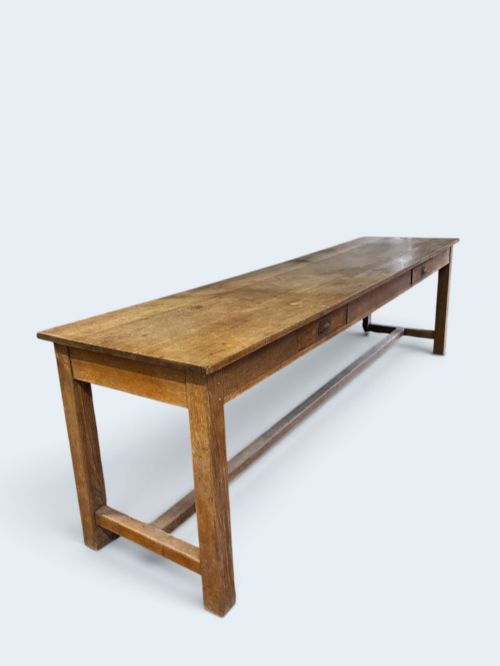
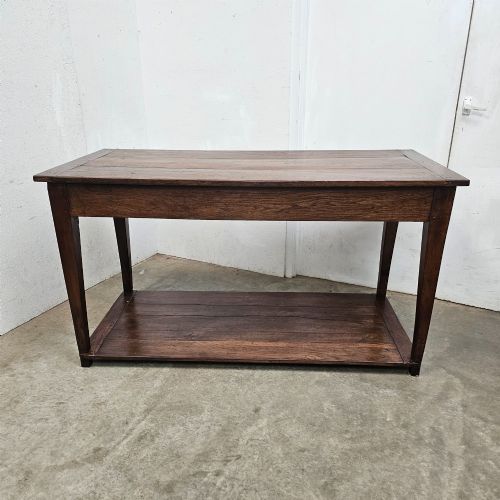
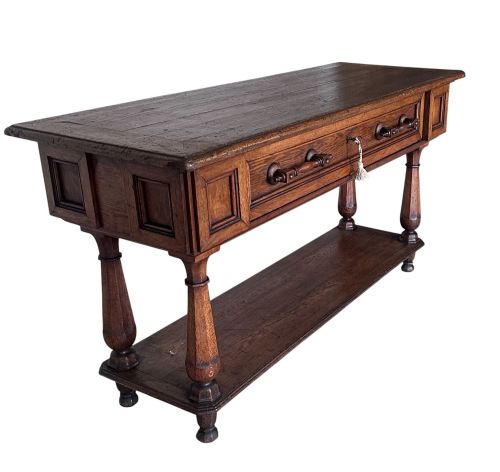
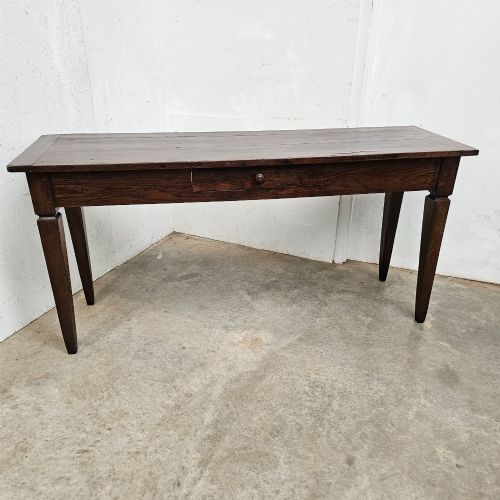
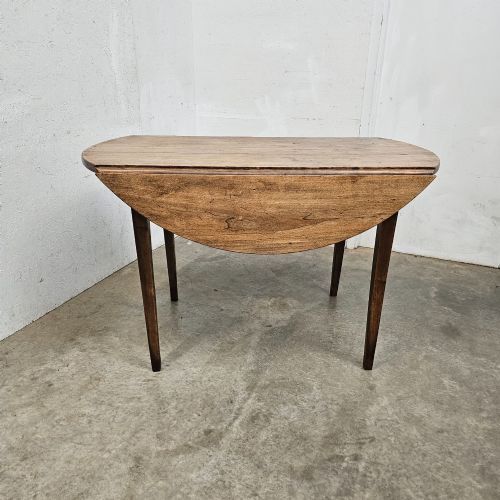
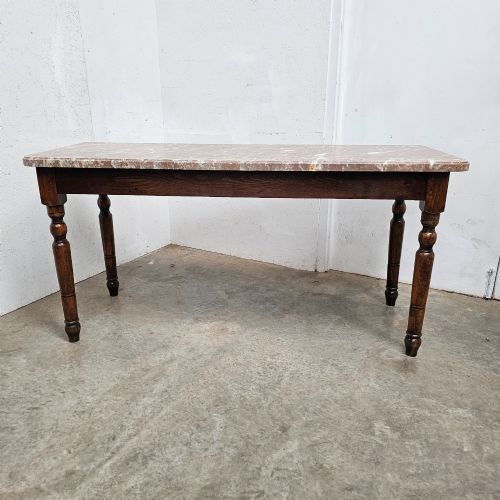
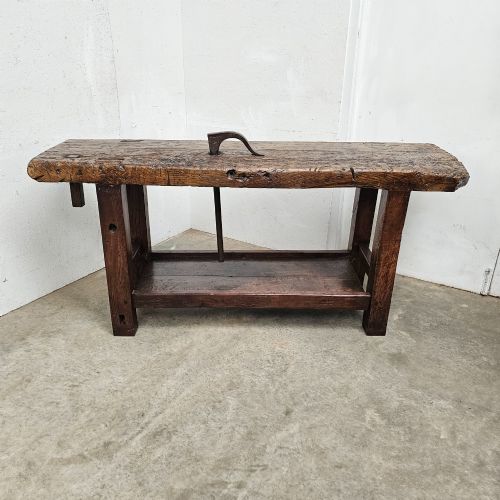
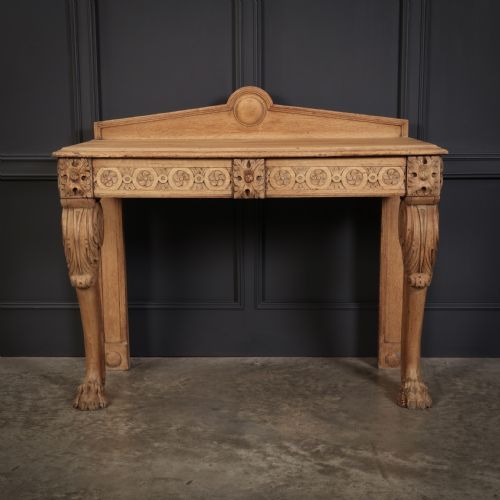
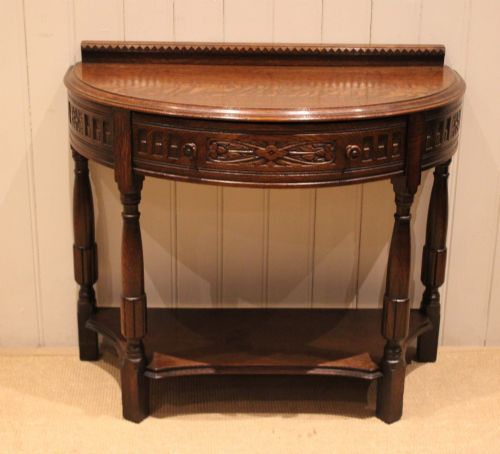
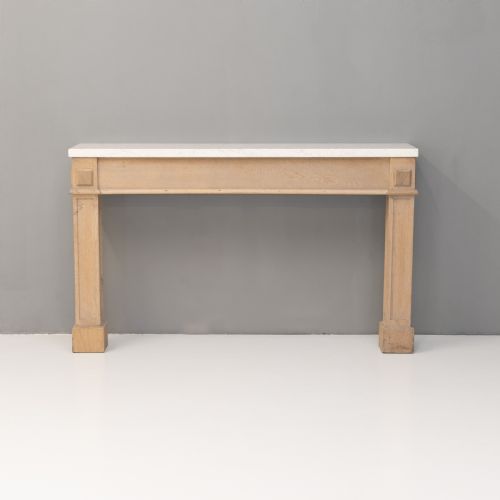
A french oak console table appears in several distinct regional and period styles across the listings, including French Provincial, French Country, Neoclassical Revival, and Art Deco. These tables function as hall, serving, or work tables, occasionally featuring two tiers or a potboard beneath the main surface.
Most examples date from the nineteenth century, with occasional pieces from the Edwardian era and nineteen thirty, alongside earlier eighteenth-century survivals in the archive. Forms range from rustic primitive designs to carved demi-lune shapes and grander serving tables originating from regions such as Alsace.
Materials and construction
Solid oak provides the primary structural timber for these pieces, sometimes complemented by poplar or secondary woods in vernacular worktables. Metal hardware typically consists of brass mounts and fittings where drawers or drop leaves are present.
Surfaces receive various finishes recorded in the evidence, spanning natural scrubbing, liming, bleaching, and historic painted treatments. Carving appears on select provincial and neoclassical revival frames, whilst simpler rustic forms rely on plain joined construction.
Retail Price Guide 2026
Typical UK retail prices for french oak console table, calculated from the Sellingantiques database of over a million retail prices indexed since 2003. This retail price guide relies exclusively on Sellingantiques data; no external sources or auction records are used, so the figures do not describe the wider market.
Distinguishing quality
Quality rests in the harmony of timber selection and the restraint of the carving, where pieces from the nineteenth century show crisp hand-tooling rather than mechanical repetition. Regional origin and original surface treatments, such as untouched scrubbed or bleached finishes, distinguish standard utility items from finer formal examples.
Structural integrity in joints and the presence of integrated lower shelves like potboards elevate domestic tables into more substantial architectural furniture. The distinction between a simple rustic worktable and a designed neoclassical revival piece alters the character of the grain and the execution of the mouldings.
The French Oak Console Table Glossary
- Demi-lune
- A half-moon shape used for console tables designed to stand flush against a wall. This form allows the table to occupy minimal floor space whilst providing a display surface.
- Potboard
- An open lower shelf incorporated into the base of a table, traditionally used for storing pots and kitchen utensils. It adds structural rigidity to the legs.
- Bleached oak
- Timber treated with chemical agents to lighten the natural dark tone of mature oak. This finish became popular for achieving a pale, understated domestic aesthetic.
- French Provincial
- A style originating from regional cabinetmakers outside Paris, combining practical utility with regional interpretations of fashionable urban curves. It avoids excessive ornamentation in favour of sturdy proportions.
Frequently Asked Questions
Where do I put a console table?
These tables find a natural home in entrance halls, narrow corridors, or behind sofas where surface space is required without blocking movement. Their shallow depth allows them to sit flush against walls in rooms of modest proportions.
In dining spaces or kitchens, taller variants serve effectively as serving tables or auxiliary workspace surfaces.
How do I care for antique oak?
Maintain timber surfaces by dusting with a dry cloth and avoiding silicone-based polishes that build up over time. Natural wax applied sparingly preserves the dry, scrubbed, or polished finish typical of these tables.
Keep oak furniture away from direct heat sources and strong sunlight to prevent timber movement or surface cracking.
What is a potboard base?
A potboard is a low slatted or solid shelf fixed near the floor between the legs of a table. It provides stability to the frame while offering open storage.
Historically, kitchen and dairy tables utilised this shelf to keep heavy earthenware off damp flagstone floors.
How do I identify a worktable?
Worktables usually display utilitarian construction details, heavier tops, and occasionally secondary timbers like poplar alongside the primary oak. They were built for practical labour in farmhouses or domestic settings rather than formal reception rooms.
Multi-tiered structures or integrated drawers often distinguish these versatile utility pieces from standard console tables.