
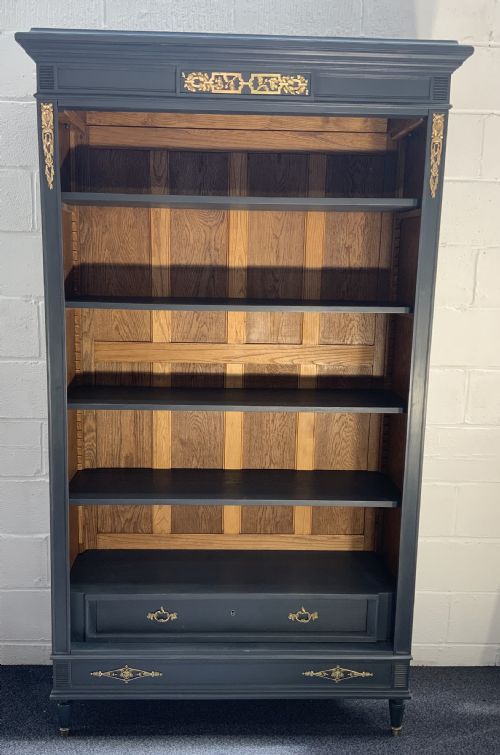


French Neoclassical Bookcase
These French neoclassical bookcase pieces bring architectural balance and disciplined mahogany or satinwood storage to a room.
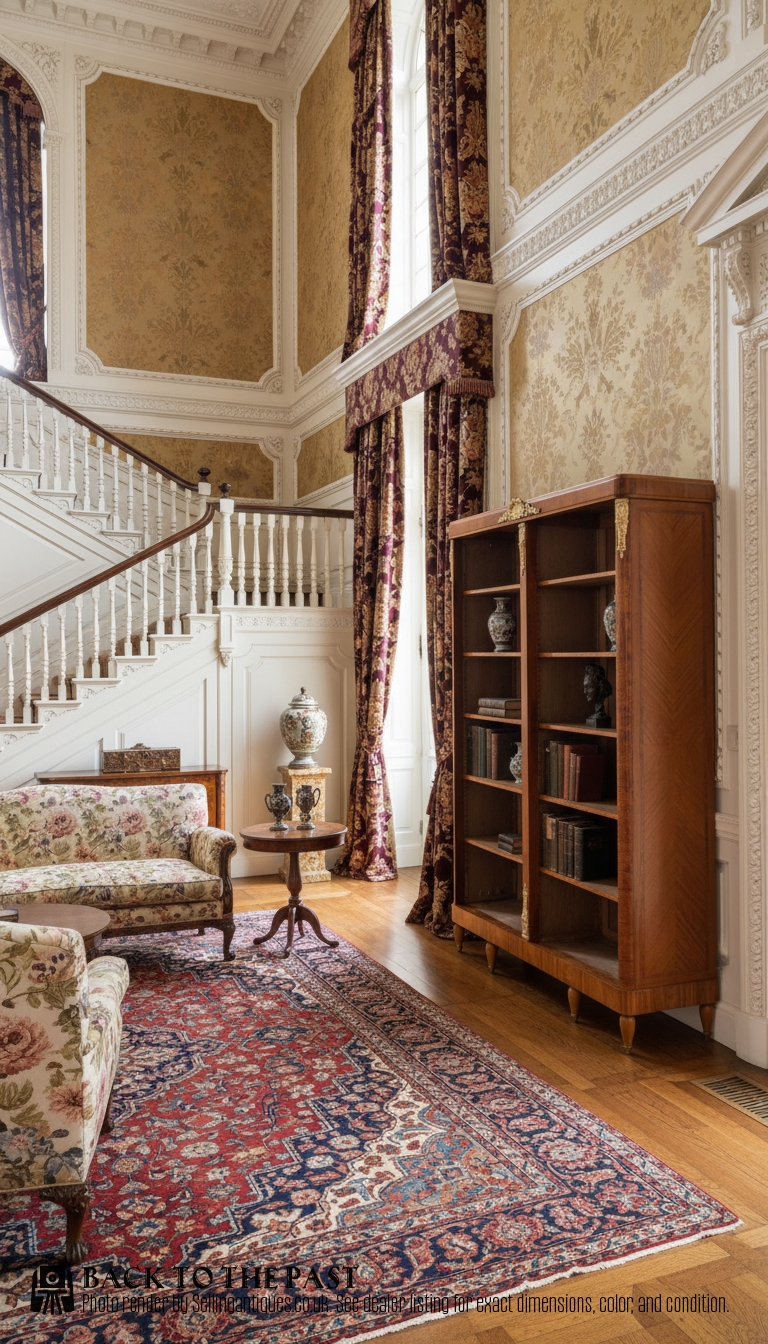
French Neoclassical Bookcase
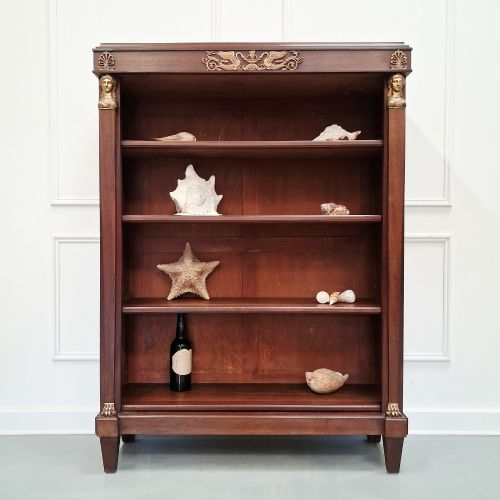
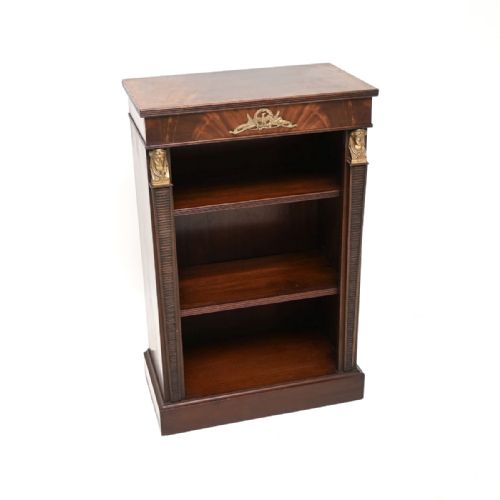
A french neoclassical bookcase brings together refined storage forms such as open bookcases, display cabinets, and breakfront side cabinets. The selection spans the nineteenth century up to nineteen thirty, drawing on revival styles including Louis XVI, Directoire, and Empire.
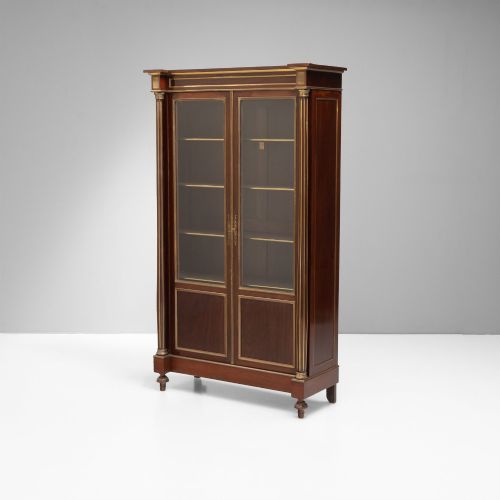
The dominant material format is mahogany, frequently enriched with satinwood, ebonised finishes, or painted surfaces. Buyers encounter both glazed vitrines and open shelved configurations intended for orderly collections.
How they were made
Construction relies heavily on mahogany and satinwood timber carcases, occasionally paired with oak or finished with ebonisation and painted coats. Cabinetmakers shaped these woods into upright storage forms requiring stable joinery for tall frames and heavy shelving.
Decorative embellishment is applied through cast brass and ormolu mounts, alongside gilt details and glass panels for vitrines. These metal elements define the neoclassical aesthetic by framing doors, cornices, and structural angles.
Listings feature mahogany, satinwood, oak, and ebonised timber paired with brass and ormolu mounts.
What varies in quality
Quality rests in the precision of the timber selection, from figured mahogany to polished satinwood, and the crispness of any painted finish. Cabinetwork that maintains structural integrity across tall bookcases demonstrates superior workshop standards.
The definition and weight of brass or ormolu mounts set apart finer examples, as do glazed panels and integrated hardware. Where mounts are cleanly cast and fitted flush to the wood, the piece reflects higher execution.
Mercier Frères
The French Neoclassical Bookcase Glossary
- Vitrine
- A glass-fronted display cabinet designed for porcelain or books. The style uses transparent panels to protect contents while allowing visibility.
- Ormolu
- Gilt bronze mounts applied to furniture for decorative contrast. This technique gives metallic highlights to mahogany and satinwood surfaces.
- Breakfront
- A piece of furniture where the central section projects forward from the sides. This configuration creates visual depth in large cabinets.
- Directoire
- A transitional French style bridging Louis XVI and Empire periods. It relies on clean architectural lines rather than excessive ornamentation.
French Neoclassical Bookcase: Frequently Asked Questions
What is a french neoclassical bookcase?
A french neoclassical bookcase is a refined storage piece characterised by classical proportions, rectilinear forms, and restrained ornament. These cabinets often feature mahogany, satinwood, or painted surfaces accented by brass mounts.
They appear in formats ranging from open shelving units to glazed vitrines and breakfront side cabinets. The style looks back to ancient architectural motifs adapted for nineteenth-century and early twentieth-century interiors.
How do I date these bookcases?
Dating relies on examining the timber construction, hardware, and stylistic revival markers visible across the piece. Examples on this page span from eighteen eighty through to nineteen thirty, encompassing Empire, Directoire, and Louis XVI revival influences.
Clues emerge in the choice of secondary woods, the casting quality of brass or ormolu mounts, and whether the finish is ebonised, painted, or polished mahogany. Comparing these details against known period characteristics narrows the timeline.
Where were these cabinets placed?
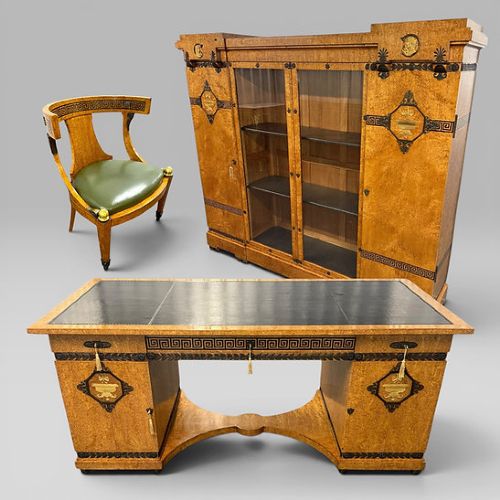
These cabinets served primarily in studies, libraries, and formal reception rooms to house bound volumes and display collections. Office sets incorporating desks and matching cabinets indicate domestic workspaces for the elite.
Open bookcases allowed immediate access to working libraries, while glazed vitrines and side cabinets kept delicate volumes and objects safe behind glass. Their formal facades suited public rooms just as well as private studies.
How do I care for mahogany?
Mahogany requires stable indoor humidity levels and protection from direct sunlight to prevent timber movement and fading. Dusting with a soft cloth keeps the polished surface clear without needing abrasive polishes.
Occasional careful application of appropriate wax preserves the sheen on satinwood and mahogany alike. Brass and ormolu mounts should be kept dry to avoid tarnishing the metalwork.