





French Mercury Gilt Clock
These French mercury gilt clocks are striking mantelpieces and timepieces crafted in brass, ormolu, and bronze, bringing period elegance to any room.
French Mercury Gilt Clock
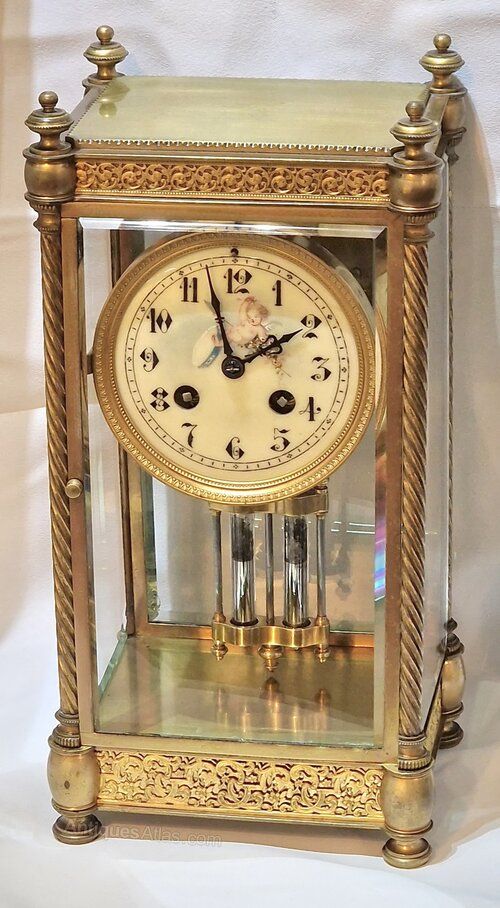
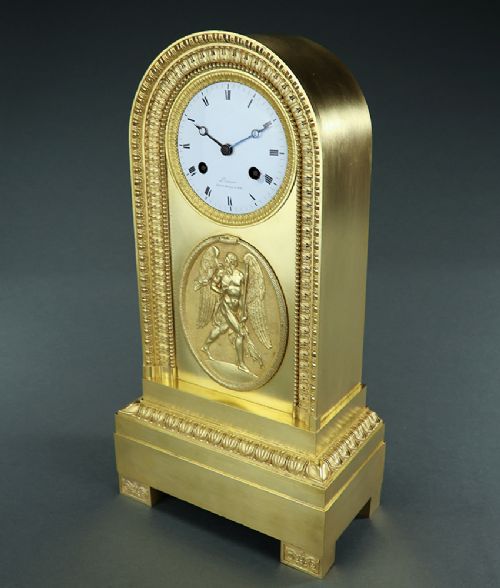
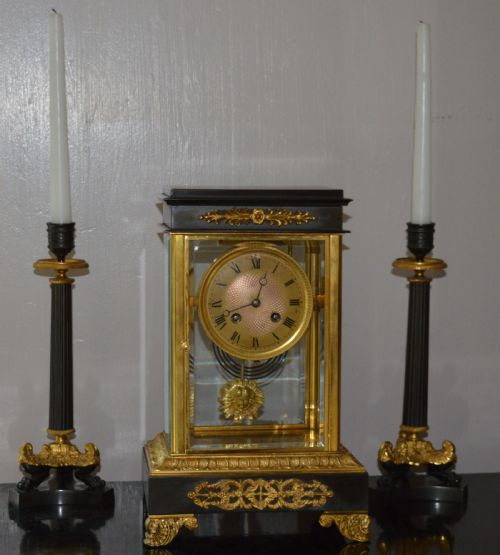
A french mercury gilt clock encompasses mantel clocks and crystal regulators produced across the nineteenth century, including the 1870s, 1880s, 1890s, and the Belle Epoque. These pieces range from four glass mantel clocks with enamel dials and cherub motifs to grand ormolu borne mantel clocks and marble clock garnitures.
Buyers encounter various forms such as bow fronted crystal regulators, oval crystal regulators, and bracket clocks featuring blue enamel panels. Many of these timepieces originate from French workshops, embodying styles from French Empire and Neoclassical to Rococo Revival and Beaux-Arts.
Materials and construction
The makers utilised gilt brass, ormolu, and gilt bronze to form the structural cases of these timepieces, often combining them with glass panels to reveal the internal movement. Dial faces incorporate delicate enamel work, sometimes paired with decorative elements like cherubs.
Bases and secondary structural elements frequently integrate contrasting natural materials such as Sienna marble and slate to anchor the heavy metal cases. These components were assembled by skilled French clockmakers to achieve durable, striking mantel clocks.
French Mercury Gilt Clock Retail Price Guide 2026
Typical asking prices for french mercury gilt clock among the pieces listed under this phrase on Sellingantiques today, from the lower quarter to the upper quarter. They describe what is for sale here now, not the wider market.
Current listings feature pieces spanning the 1870s, 1880s, 1890s, and 1900, incorporating materials such as Sienna marble, slate, enamel, and gilt brass.
Quality factors in these clocks
The sophistication of the case casting and mercury gilding distinguishes the standard of execution, with finer examples displaying crisp chasing and deep, even colour across the bronze or ormolu. Details such as hand-painted enamel dials and specialised movements, including one-year duration mechanisms, elevate a piece above simpler production.
The integrity of the glass panels and the presence of matching garniture sets or signed maker movements also influence the overall standing of an individual clock. Harmony between the marble or slate bases and the metal superstructure completes the evaluation.
Tiffany·Samuel Marti
The French Mercury Gilt Clock Glossary
- Ormolu
- Gilded bronze produced through a mercury amalgamation technique. This historic method yields a rich, durable golden surface.
- Crystal regulator
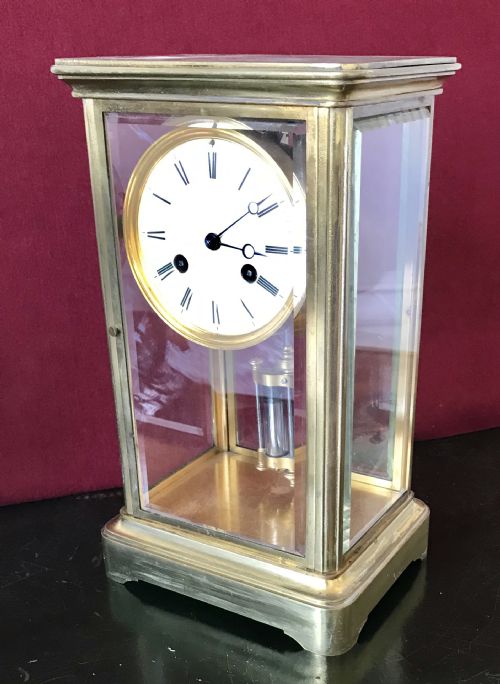
- A mantel clock housed within glass panels on all sides. This design allows the pendulum and movement to be viewed from multiple angles.
- Clock garniture
- A set comprising a central clock accompanied by matching side ornaments. These sets are typically displayed together on a mantelpiece.
- Enamel dial
- A clock face created by fusing powdered glass to a metal substrate at high temperatures. This technique provides a smooth, glossy, and enduring finish.
French Mercury Gilt Clock: Frequently Asked Questions
What is a four glass clock?
A four glass clock is a mantel timepiece enclosed in glass panels on the front, back, and sides. This construction showcases the intricate mechanical movement and pendulum from all directions.
Such designs became particularly popular during the late nineteenth century in France, often featuring polished brass or gilt frames and enamel dials.
How do I date a crystal regulator?
Dating a crystal regulator involves examining the style of the enamel dial, the shape of the brass case, and any maker marks stamped on the movement. Pieces from the 1870s to 1900 often display specific stylistic traits associated with the Belle Epoque and Third Republic.
Maker signatures such as Samuel Marti provide precise chronological markers when matched with serial numbers and exhibition medals stamped onto the backplate.
Where should I place a marble clock garniture?
A marble clock garniture requires a sturdy mantelpiece, sideboard, or large tabletop capable of supporting considerable weight. The central clock sits flanked by its matching side pieces to create a balanced decorative display.
Because these sets incorporate heavy Sienna marble and metal components, stable placement away from high-traffic edges is essential for their preservation.
How do I wind a one year duration clock?
A one year duration clock utilises a specialised movement designed to run for extended periods between windings. Winding typically involves using a specific key to tension the mainspring slowly and carefully.
Consulting the specific mechanical requirements of the movement prevents over-winding and ensures the continued accuracy of the timepiece.