





French Empire Gilt Timepiece
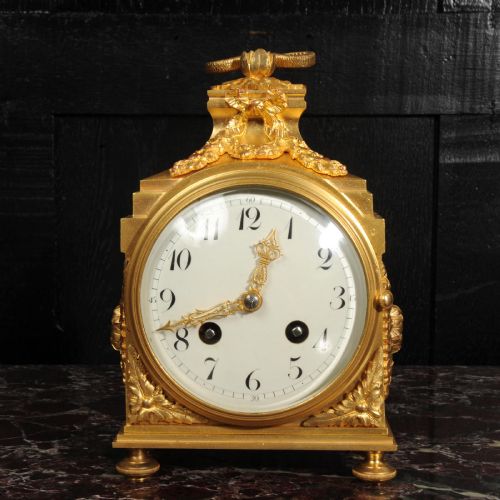
These heavy ormolu pieces bring the sharp lines of a french empire gilt timepiece into a room, offering classical form alongside mechanical precision.
French Empire Gilt Timepiece
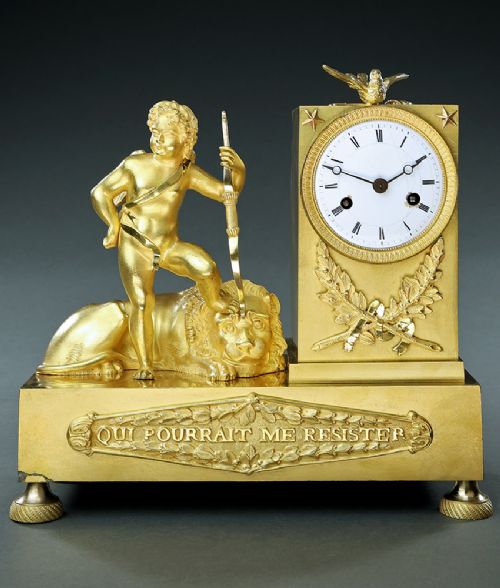
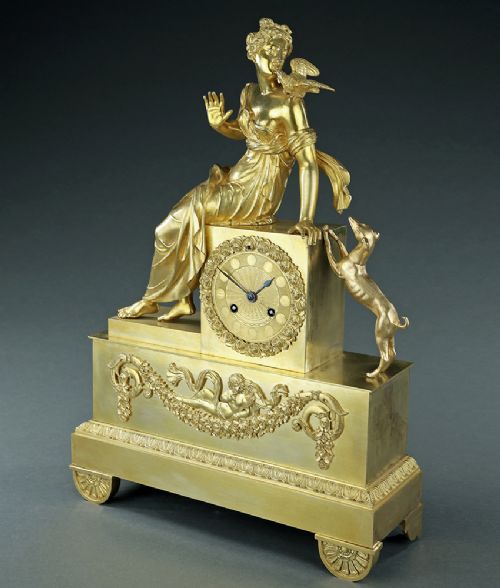
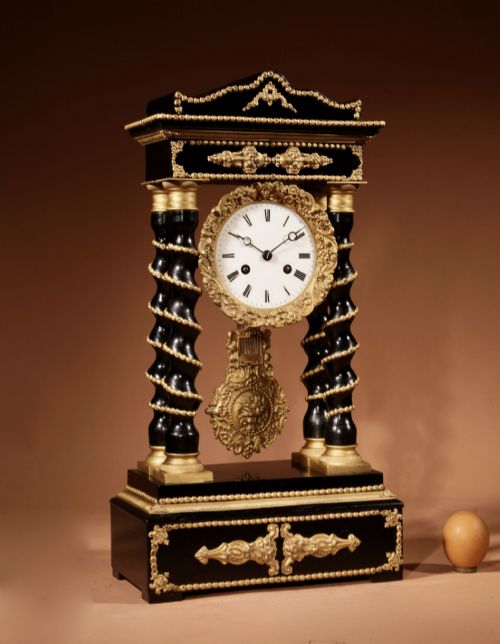
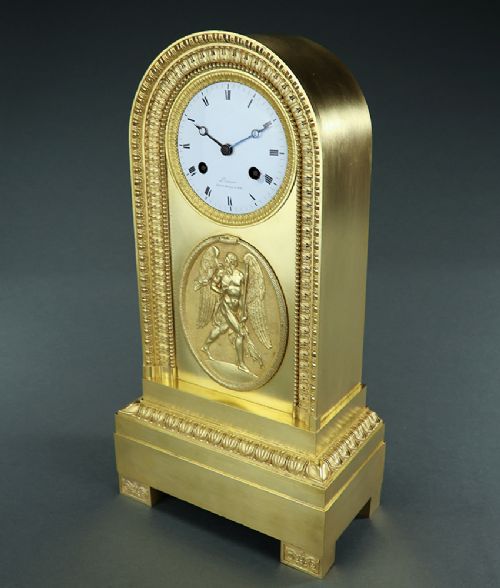
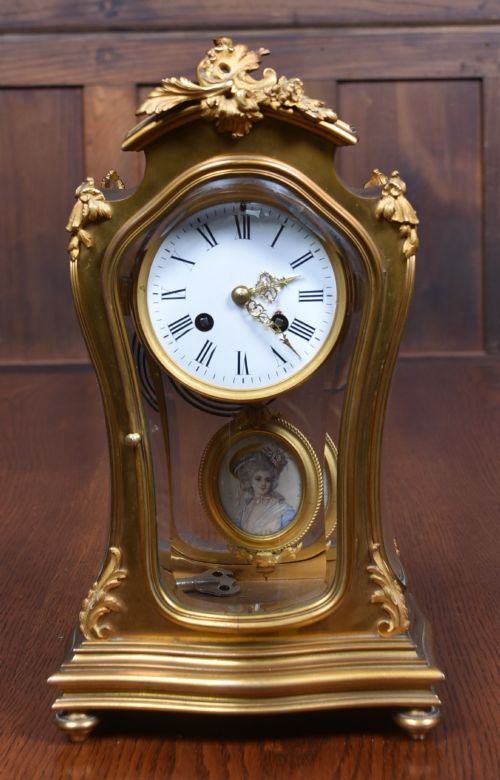
When you search for a french empire gilt timepiece, you examine objects rooted in the nineteenth century, including mantel clocks, portico clocks, and carriage clocks. These items often draw on neoclassical motifs, Egyptian revival themes, and allegorical subjects such as love and fidelity.
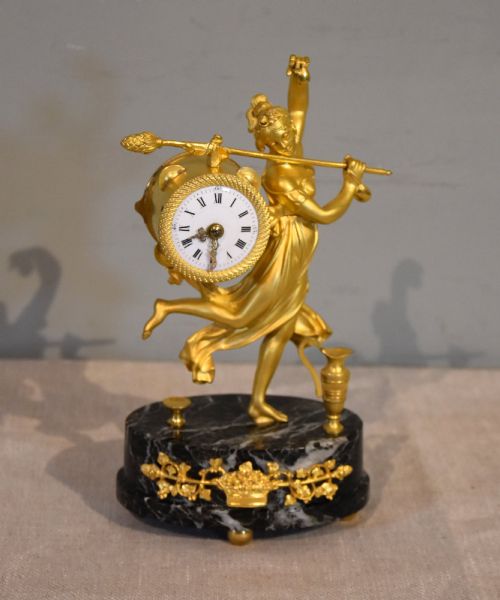
You meet variations spanning marble and mahogany bases, alongside figural compositions featuring lions, goats, and mythological figures. The dominant appearance relies on cast bronze given a rich mercury gilt or ormolu surface.
Makers and horologists stamp movements and dials, linking domestic interiors of the Regency and Victorian eras to Parisian workshops. The typical survival sits firmly in the nineteenth century, reflecting periods of strong neoclassical taste.
Materials and Construction
Craftsmen built these cases using cast bronze or brass, applying an amalgam of gold and mercury known as ormolu to achieve a durable golden sheen. Founders combined this bright finish with patinated dark bronze, adding visual depth to figural scenes and architectural columns.
Dials frequently feature painted enamel on copper, protected by convex glass bezels and driven by brass gear trains. Marble plinths in green or white provide heavy, stable foundations for the towering portico and mantel formats.
French Empire Gilt Timepiece Retail Price Guide 2026
Typical asking prices for french empire gilt timepiece among the pieces listed under this phrase on Sellingantiques today, from the lower quarter to the upper quarter. They describe what is for sale here now, not the wider market.
Some nineteenth-century makers hid bronze poodles and pacing goats inside formal neoclassical scenes, bringing unexpected animals to dignified mantelpiece timepieces.
Assessing Workmanship
The clarity of the chasing separates standard production from superior output, showing how deeply the artisan refined the raw bronze casting after it left the sand mould. Sharp drapery folds, crisp facial expressions, and well-defined hair indicate a higher grade of workshop production.
The movement engraving and signature integration reveal the maker's standing, as signed plates and numbered components denote professional horological pedigree. Heavy cast mounts fastened securely to solid marble or mahogany bases maintain structural integrity better than light, loose assemblies.
Samuel Marti·Ravrio·Pons De Paul·Hessen Paris·Deniere Et Fils·Victor Paillard
The French Empire Gilt Timepiece Glossary
- Ormolu
- A gilded bronze surface created by applying a mercury and gold mixture to cast metal and heating it until the mercury vaporises. This technique produces a warm, lasting lustre characteristic of the period.
- Portico clock
- A tall mantel clock structured like a classical temple with four supporting columns. The pendulum often swings openly within the central architectural space.
- Fusee
- A conical pulley used in clock movements to maintain even driving force as the mainspring unwinds. This mechanism improves timekeeping consistency.
- Garniture
- A set comprising a central clock flanked by matching decorative objects such as vases or candelabra. These sets create symmetrical fireplace mantel displays.
- Pendule d'Officier
- A portable military-style desk clock fitted with a handle and striking movement. Officers carried these during campaigns for reliable timekeeping.
French Empire Gilt Timepiece: Frequently Asked Questions
How do I wind a French mantel clock?
Insert the appropriate winding key into the dial apertures and turn gently until you feel firm resistance from the mainspring. Avoid over-winding to protect the tension of the internal brass springs.
Ensure you keep the key stored safely away from the clock itself. Regular, careful winding preserves the rhythm of the movement.
Why does the clock run fast or slow?
Changes in temperature and the settling of the floor alter the beat of the pendulum. Adjusting the small regulation nut on the pendulum rod corrects the timing.
Move the bob up to make the clock run faster or down to slow it. Small adjustments made over several days achieve accurate timekeeping.
Where should I place a heavy ormolu clock?
Select a sturdy mantelpiece, sideboard, or desk capable of supporting significant weight from marble and bronze. Keep the surface level so the pendulum swings evenly without catching on the case sides.
Avoid placing the piece near direct heat sources or open windows. Stable conditions protect the delicate enamel dial and mercury gilt surfaces.
How do I identify the period of a timepiece?
Examine the stylistic cues of the bronze mounts, such as neoclassical urns, Egyptian motifs, or rococo scrolls. Maker signatures stamped on the backplate or dial provide direct chronological evidence.
Compare the materials, such as ebonised wood or white marble, against known production eras. Consulting movement serial numbers helps narrow down the decade of manufacture.