


French Mechanical Carriage Clock
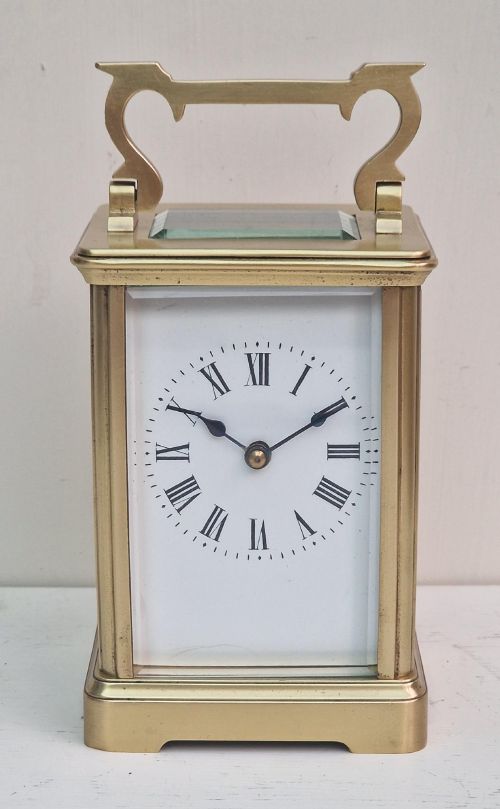
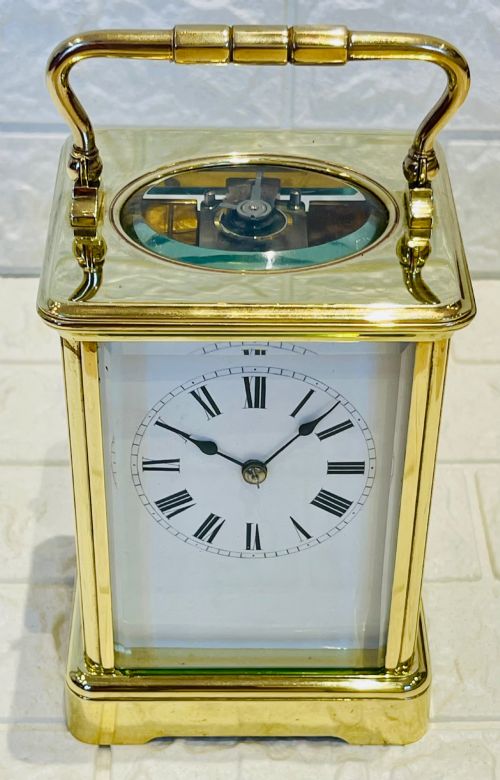
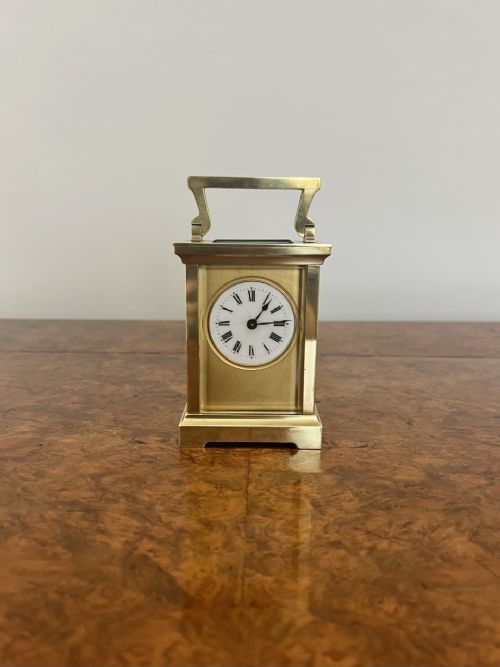
These pieces are french mechanical carriage clock examples, built for travel and timekeeping during the nineteenth and early twentieth centuries.
French Mechanical Carriage Clock
A french mechanical carriage clock combines portability with precision engineering, designed originally for officers and travellers on the move. Most specimens on this page date from the nineteenth century, spanning periods from eighteen fifty through to the Edwardian era.
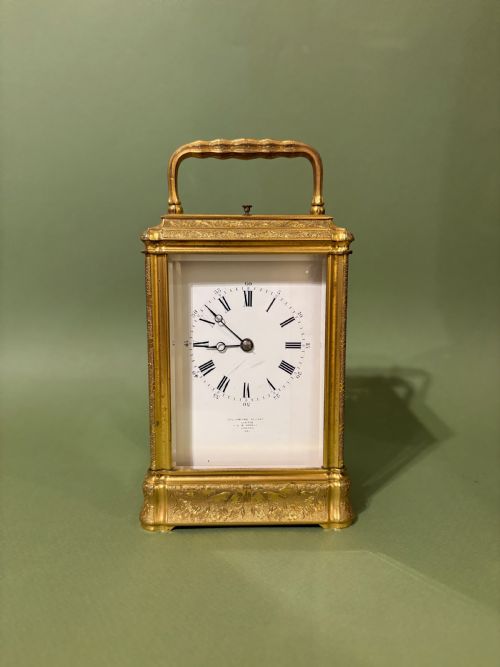
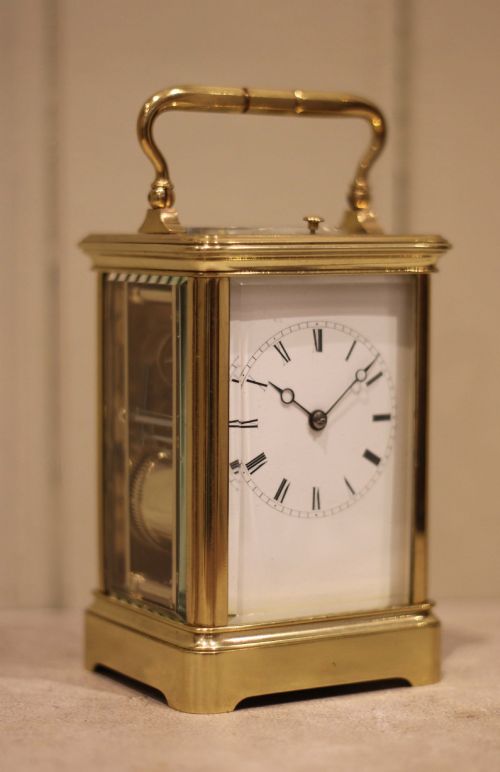
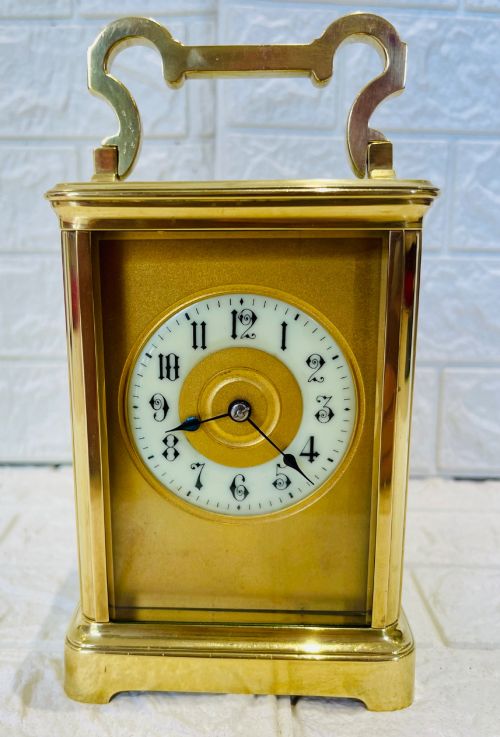
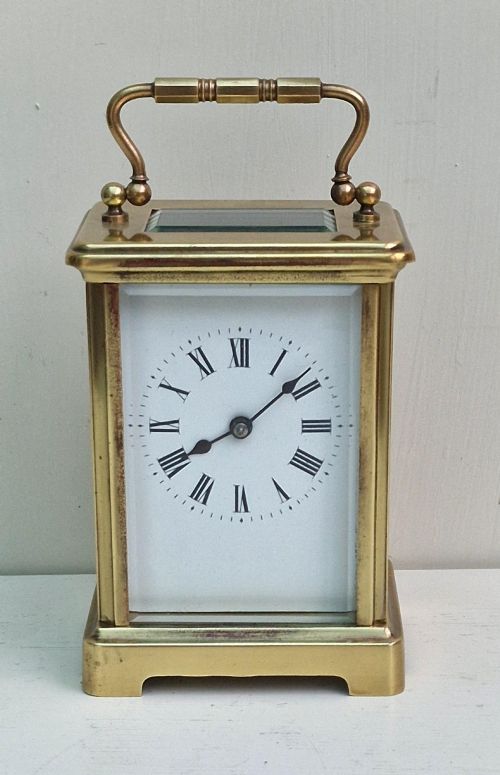
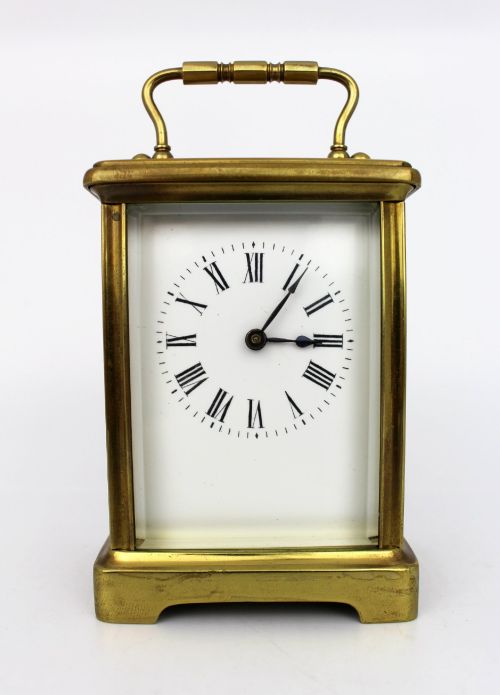
The standard form employs a heavy brass or gilt bronze case glazed on four sides, allowing the escapement and movement to remain visible. Dials are frequently white enamel with Roman numerals, set within protective metal housings.
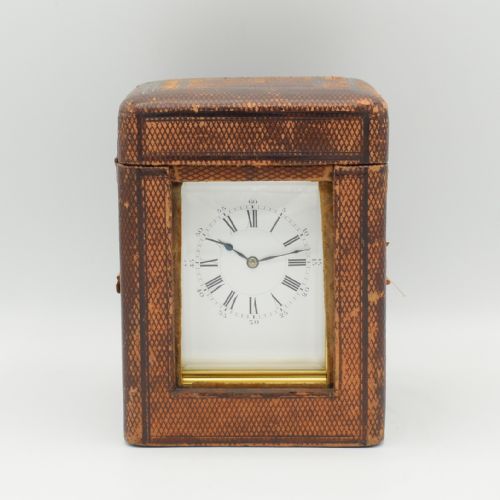
Travel cases in leather frequently accompany these items, protecting the delicate metalwork during transit. Variations include miniature formats and striking complications that sound the hours and quarters.
Materials and Construction
Brass forms the structural skeleton of nearly every french mechanical carriage clock, often gilded or polished to a bright finish. Steel components drive the internal spring-driven mechanisms, while bevelled glass panels protect the delicate gear trains.
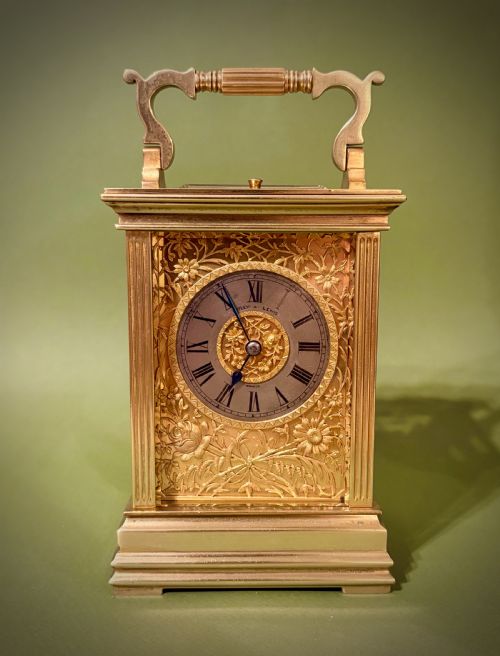
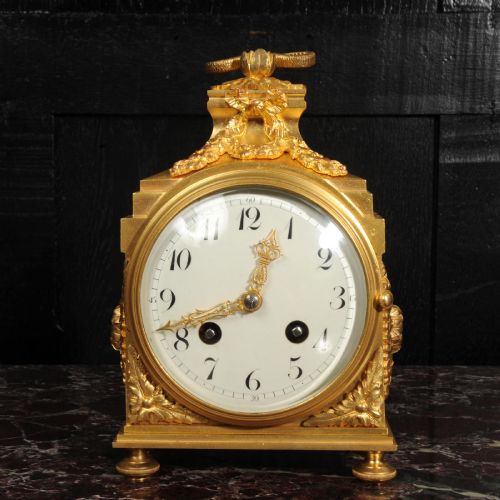
Enamel provides the smooth, contrasting surface for clock faces, fired onto metal substrates to create legible numeral tracks. Gilt bronze and ormolu appear on more elaborate ornamental models from the late nineteenth century.
Travelling Victorians relied on these heavy metal clocks to wake them in drafty hotels, proving that punctuality transcends luggage weight.
Assessing Quality and Craftsmanship
The weight and thickness of the brass case distinguish finer examples from standard production pieces, with heavier castings housing more robust movements. Engraved gilt framing around glass panels indicates higher workshop standards.
Complications such as repeating mechanisms and alarms add mechanical complexity, requiring precise adjustment by skilled horologists. The presence of a signed movement by a known maker elevates the stature of an individual clock.
Henri Jacot·Drocourt Paris·C. Detouche·Paul Garnier·Duverdrey and Bloquel
The French Mechanical Carriage Clock Glossary
- Gorge case
- A stepped brass housing style characteristic of nineteenth-century carriage clocks. This architectural moulding frames the glass panels distinctly.
- Escapement
- The internal mechanism that controls the release of power from the mainspring. Platform escapements allow portable clocks to maintain accuracy while resting on uneven surfaces.
- Striking mechanism
- An internal gear train that sounds the hours or half-hours on a bell or gong. Repeating mechanisms allow the owner to recall the last hour sounded by pressing a button on the case.
- Ormolu
- Finely ground high-carat gold applied to a bronze base through mercury amalgamation or electroplating. This technique gives metalwork a rich, enduring lustre.
- Enamel
- A glassy substance fused to metal at high temperatures to form a durable dial face. Hand-painted markers and numerals are fired directly onto this smooth surface.
French Mechanical Carriage Clock: Frequently Asked Questions
How do I wind a french mechanical carriage clock?
Most movements require a specialised key inserted into arbors located on the underside or backplate of the clock. Turn the key gently until resistance indicates the mainspring is fully tensioned.
Avoid over-winding, as this can strain the internal steel springs and disrupt the delicate gear train.
Why does my clock run fast or slow?
Temperature changes and wear on the escapement can alter the rate at which the balance wheel oscillates. A small regulation lever visible near the top of the movement allows minor speed adjustments.
Moving the indicator towards the designated slow or fast marker corrects the timing over a twenty-four hour period.
What is the purpose of the travel case?
Original leather-covered wooden cases protected the polished brass and glass panels from the bumps and knocks of nineteenth-century journeys. These fitted cases often feature glass viewing windows so the dial remains visible while closed.
Retaining the travel case adds historical context to the piece and preserves its exterior finish.
How can I tell the difference between periods?
Earlier models from the mid-nineteenth century frequently feature simpler brass framing and plain white enamel dials. Later Victorian and Edwardian examples often incorporate more ornate gilt decoration, complex striking trains, and platform escapements.
Maker signatures stamped on the backplate also help date the movement accurately.