
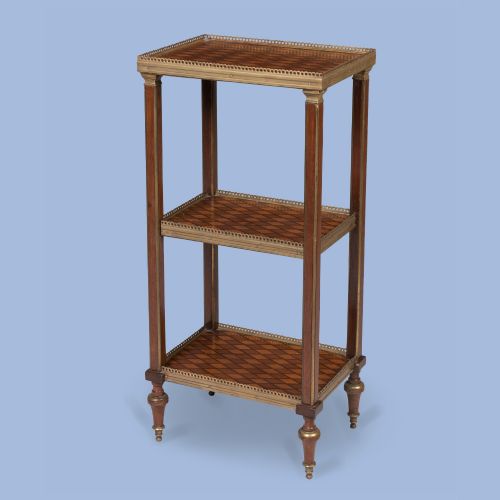
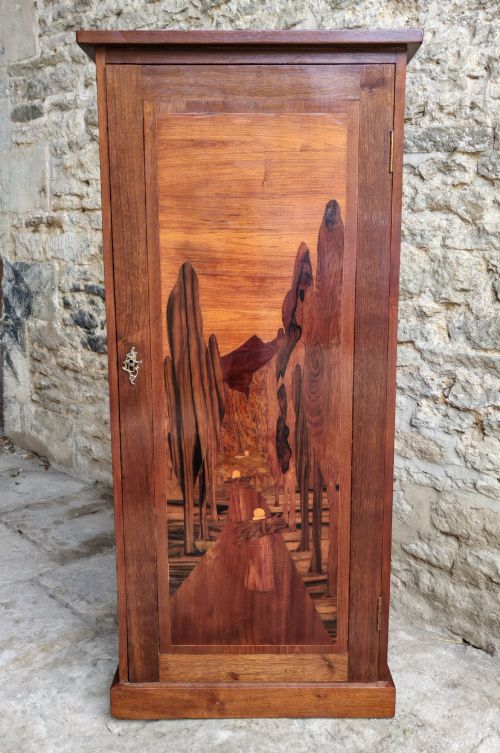
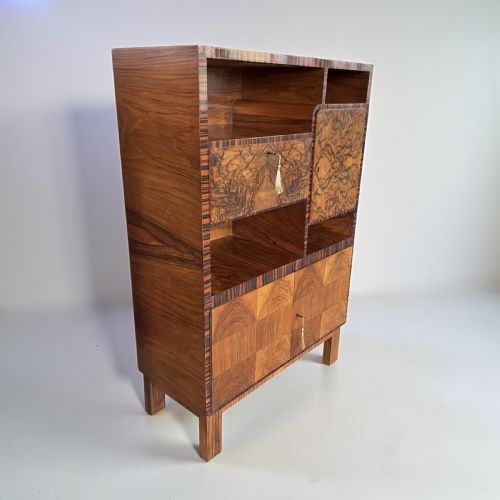


French Marquetry Stand
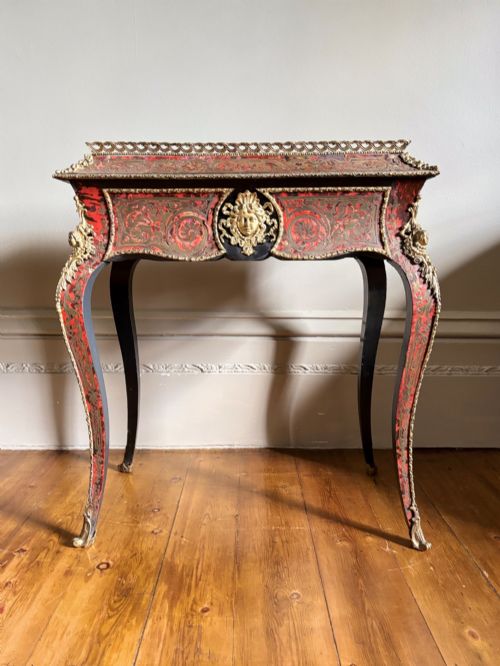
A french marquetry stand brings patterned timber and gilt mounts together to hold plants, display objects or rest drinks.
French Marquetry Stand
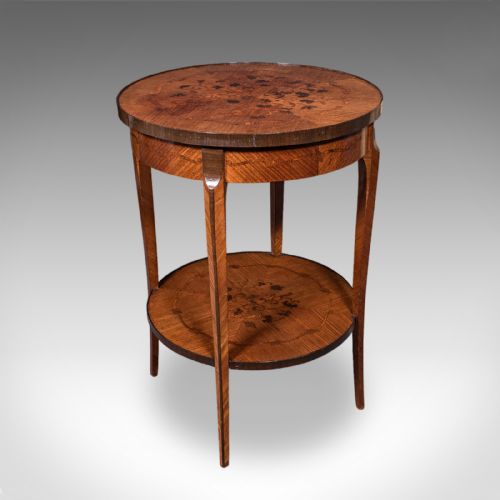
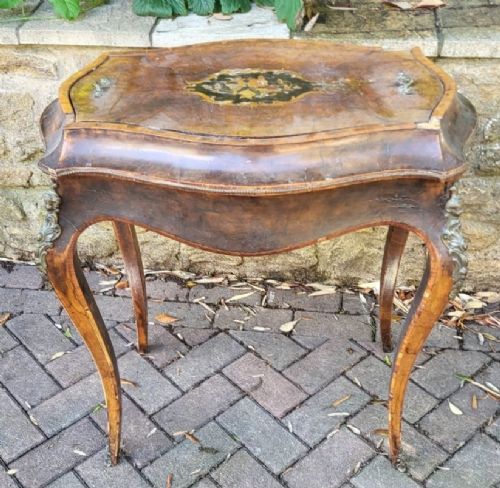
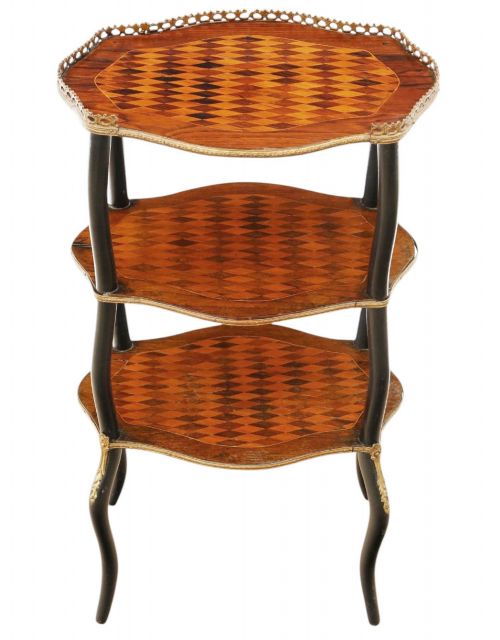
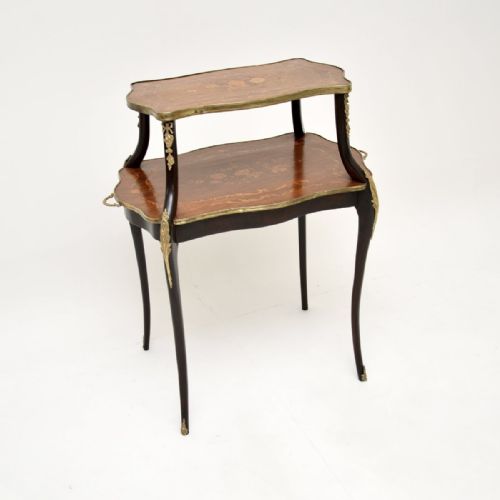
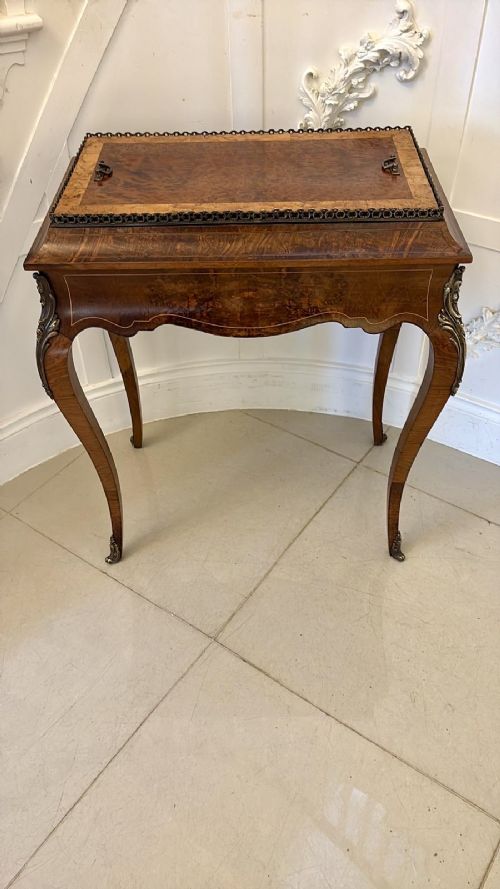
A french marquetry stand typically takes the form of an etagere, jardiniere table or planter designed for display and utility in a drawing room.
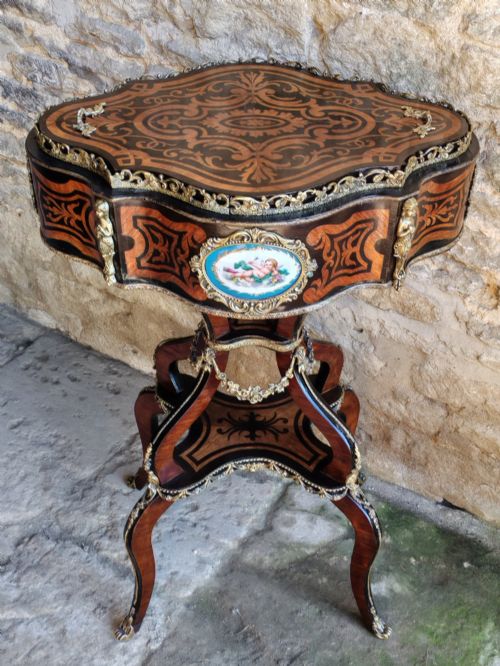
The pieces appearing on this page stretch from the nineteenth century into the twentieth, showing influences from the Napoleon III and Louis XV styles.
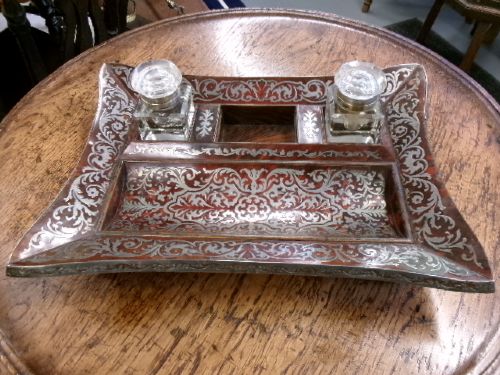
Makers utilised various secondary forms like occasional tables and cabinets on stands to showcase floral inlays and decorative veneers.
Materials and Techniques
Craftsmen built carcases from walnut, kingwood and rosewood, applying contrasting timber veneers cut into delicate floral or geometric marquetry patterns.
Gilt bronze or ormolu mounts frame the edges, while brass inlay adds linear precision to ebonised wood surfaces.
The nineteenth century provides the bulk of the surviving inventory, spanning Napoleon III, Victorian and Louis XV revival styles.
Judging Quality
The distinction between ordinary and superior pieces rests on the crispness of the brass and ormolu mounts alongside the complexity of the timber inlay.
Finer examples display tight floral motifs in varied woods with balanced proportions and carefully fitted components that retain their structural integrity.
Edwards and Roberts
The French Marquetry Stand Glossary
- Marquetry
- A decorative technique where small pieces of wood veneer are assembled into pictorial patterns on a carcase. It differs from parquetry by forming pictures or organic designs rather than geometric grids.
- Etagere
- A set of open shelves for displaying small ornaments and objects. These tiered stands gained popularity during the nineteenth century.
- Jardiniere
- A decorative stand or container intended to hold plants or flowers. Many examples include a metal liner to protect the timber structure from moisture.
- Ormolu
- Gilt bronze mounts applied to furniture edges and corners for decoration. The technique involves applying a mercury-gold amalgam to cast bronze.
French Marquetry Stand: Frequently Asked Questions
What is a french marquetry stand used for?
These pieces served multiple domestic functions in period interiors, frequently holding potted plants, small lamps or decorative ceramics. Their tiered or raised surfaces allowed homeowners to display prized possessions.
Today they function effectively as side tables or plant stands in modern living spaces. Their compact footprints suit corners and narrow hallways where standard furniture might crowd the room.
How do I care for inlaid wood?
Polished wood surfaces require simple dusting with a soft, dry cloth to prevent grit accumulation. Avoid placing antique timber furniture in direct sunlight or near heat sources that can dry the veneer.
Applying a traditional beeswax polish periodically helps maintain the lustre of the timber. Keep moisture away from joints and unsealed edges to protect the delicate marquetry.
How can I tell the period?
Dating relies on examining construction methods, timber choices and decorative vocabulary. Pieces from the nineteenth century often draw heavily on Napoleon III and Louis XV revival styles.
Hardware styles, timber ageing and the presence of specific brass mounts offer further clues to the decade of manufacture. Comparing internal secondary woods helps confirm the era.
What is the difference between marquetry and parquetry?
Marquetry uses varied wood veneers to create pictorial compositions such as floral sprays and ribbon bows. The grain and colour of each piece of timber build the image.
Parquetry arranges geometric wood shapes like cubes or chequers into repeating patterns. Both techniques often appear together on nineteenth-century stands.