


Louis XV Etagere
A louis xv etagere brings tiered French elegance to a room, offering display space with curved lines and decorative mounts.
Louis XV Etagere
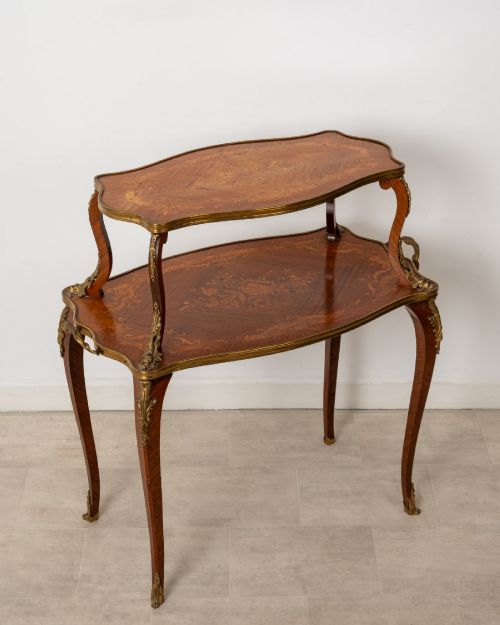
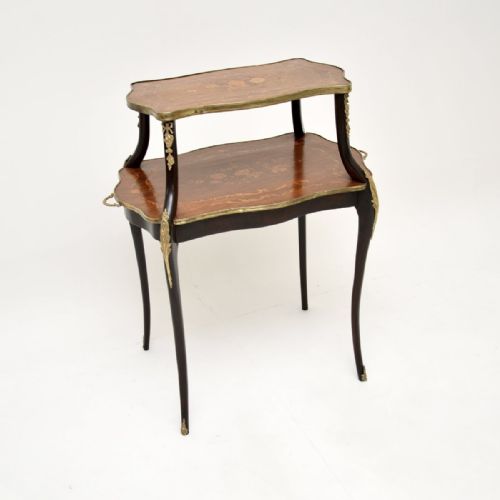
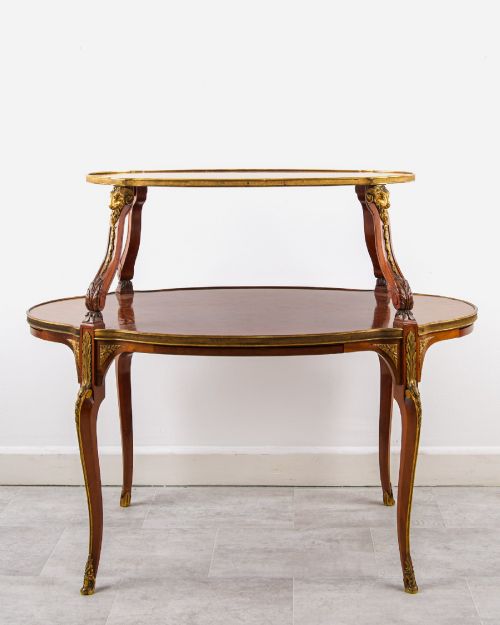
A louis xv etagere typically presents as a multi-tiered table or shelving unit designed for display and small items. These pieces emerge primarily in French revival styles during the nineteenth century, drawing heavily on eighteenth-century Rococo curves.
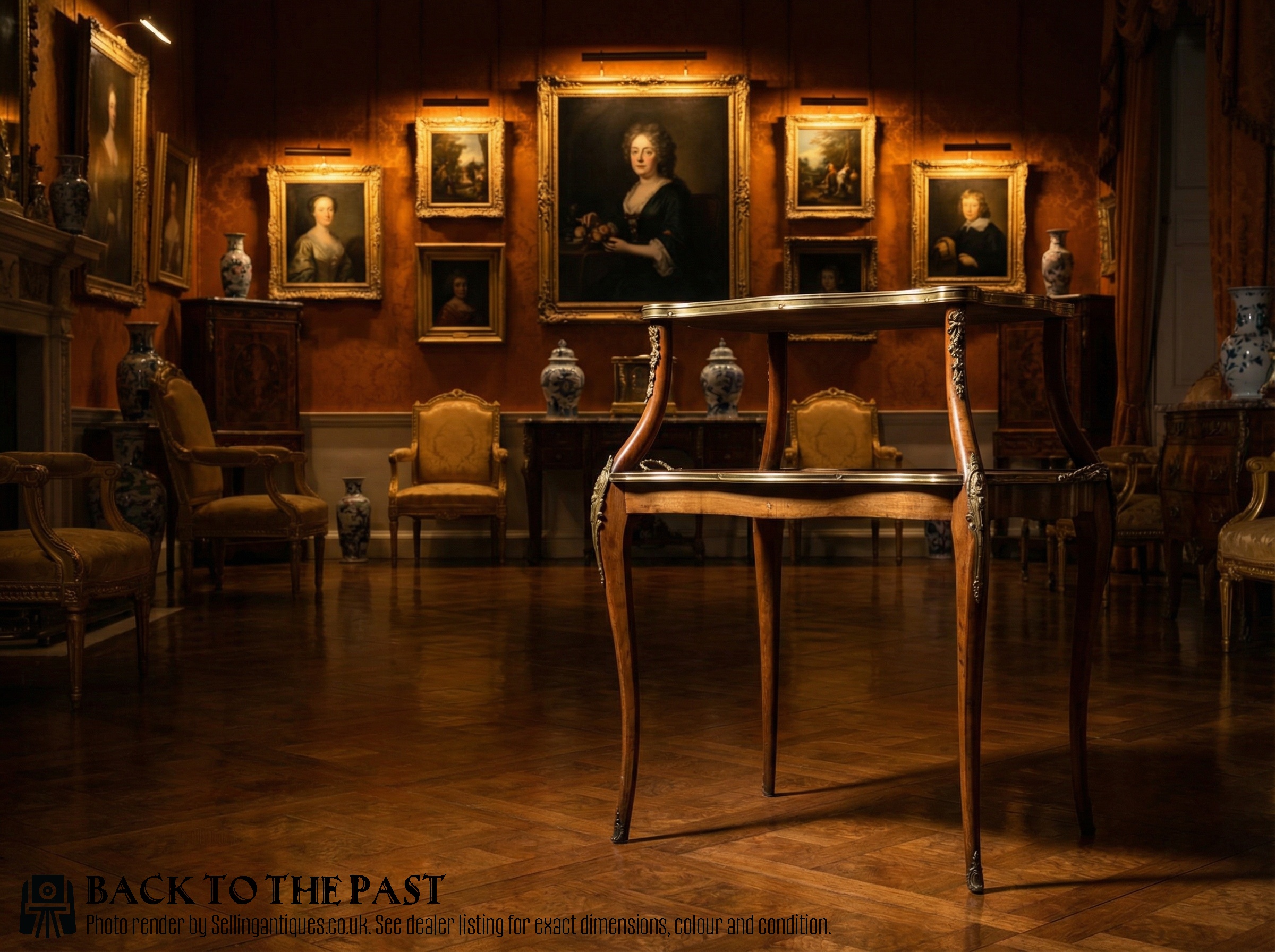
The version most commonly encountered on this page is the two-tier or three-tier table featuring marquetry inlay and curved legs. Makers constructed these tiered tables in walnut, mahogany, and kingwood, often incorporating open shelving alongside occasional table forms.
Originating in French workshops and later reproduced across the nineteenth century, these pieces range from simple occasional tables to elaborate display units with galleried edges. The form serves practical display needs while retaining decorative movement through serpentine outlines.
Materials and construction
Cabinetmakers built the foundational carcase from timbers such as walnut, mahogany, and kingwood, frequently applying detailed marquetry inlay across the surfaces. Floral patterns and geometric designs appear in contrasting woods, secured to the primary structure with animal glues.
Cast bronze and ormolu mounts accentuate the corners, legs, and edges, providing gilded highlights that contrast with the timber. Brass galleries often surround the tiered shelves to retain small objects, while marble inserts occasionally top the surfaces.
Listings feature walnut, mahogany, and kingwood timbers paired with brass and ormolu mounts across nineteenth-century periods.
Distinctions in quality
The refinement of the marquetry inlay and the crispness of the ormolu mounts separate superior examples from standard production. Finely chased bronze details and intricate floral wood veneers indicate skilled workshop output rather than simpler commercial manufacture.
Structural harmony and timber selection also determine the grade of a piece, with richly figured kingwood or plum pudding mahogany demonstrating greater material cost. The fluidity of the curved lines and the integration of the tiers reflect the maker's mastery of the French Rococo idiom.
Maison Bagues
The Louis XV Etagere Glossary
- Étagère
- A piece of furniture consisting of open shelves for displaying small objects or ornaments. These units appear with two or three tiers.
- Marquetry
- Decorative veneer work created by fitting together small pieces of wood, shell, or ivory to form pictorial or geometric patterns. Makers applied these designs to tabletops and shelves.
- Ormolu
- Gilded bronze mounts applied to the corners, feet, and edges of furniture. This technique provides metallic contrast against dark timber surfaces.
- Galleries
- Raised metal or wooden borders fitted around the edges of tabletops and shelves to prevent items from sliding off. They frequently incorporate pierced brass work.
- Rococo Revival
- A nineteenth-century design movement that reinterprets the ornate, asymmetrical curves of the eighteenth-century French style. This aesthetic dominates the tiered tables seen here.
Louis XV Etagere: Frequently Asked Questions
What is a louis xv etagere used for?
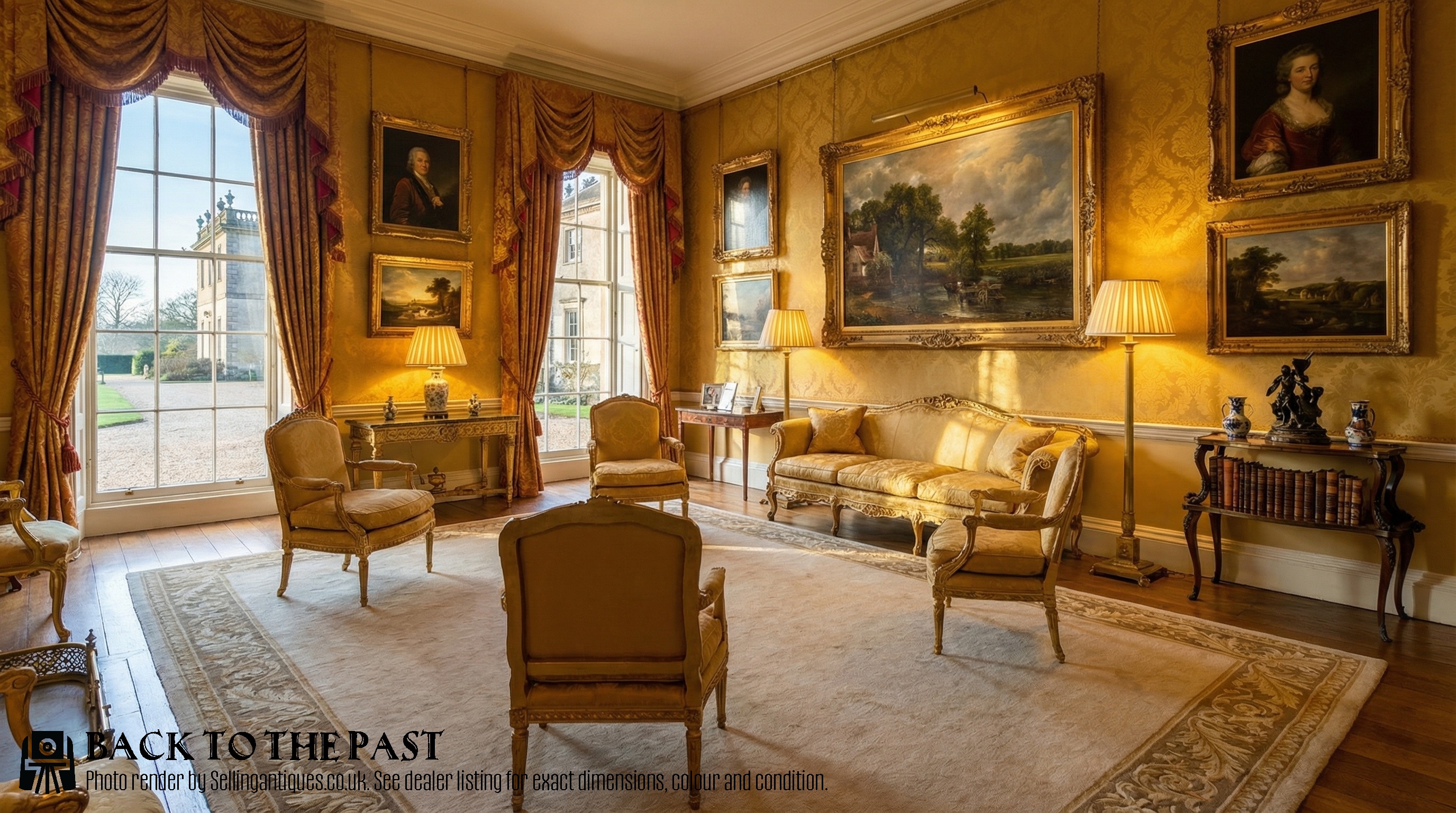
These tiered pieces functioned historically as occasional tables for serving tea or displaying small decorative objects. Today, collectors utilise them in sitting rooms as lamp tables or open shelving units.
The multiple tiers provide vertical display space without dominating a room's floor plan. They suit corners or sofa sides where a standard table lacks sufficient surface levels.
How do I date a louis xv etagere?
Dating relies on examining the timber construction, veneer techniques, and the style of the cast bronze mounts. Most examples on this page date from the nineteenth century during the French revival periods.
Later nineteenth-century pieces often display machine-cut veneers and standardised ormolu casting compared to earlier work. Examining the underside and secondary timbers helps clarify the manufacturing era.
Are these pieces French in origin?
Many pieces originate from French workshops or follow strict French design traditions associated with the Rococo aesthetic. The materials and construction methods mirror Parisian cabinetmaking standards of the nineteenth century.
Cabinetmakers across Europe also produced pieces in the French manner using imported kingwood, walnut, and mahogany. These regional interpretations share the distinctive tiered shelving and curved outlines.
How do I care for a marquetry etagere?
Maintenance requires keeping the timber away from direct sunlight and maintaining stable room humidity to protect the delicate veneer. Gentle dusting with a dry cloth preserves the polished surface without damaging the inlay.
Avoid using harsh liquid polishes on ormolu mounts and marquetry panels. Professional wax applications help nourish the timber over time.