

French Marquetry Sideboard
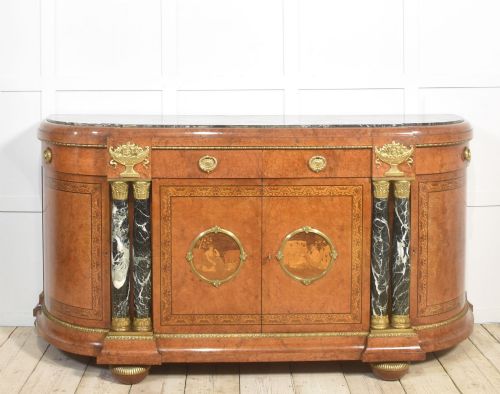
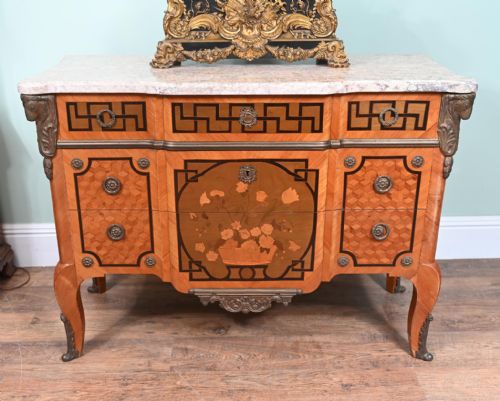
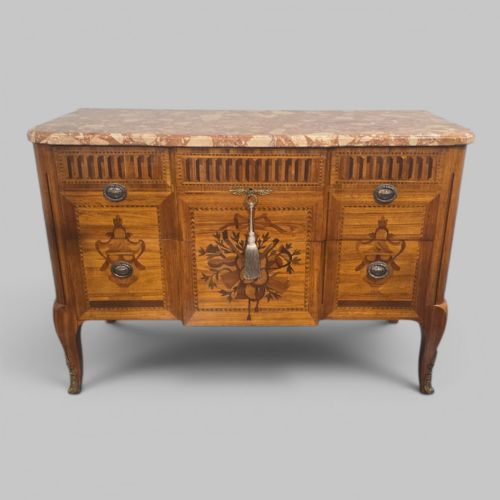
When you search for a french marquetry sideboard, you encounter elaborate nineteenth-century cabinets and commodes decorated in contrasting wood veneers and cast bronze mounts.
French Marquetry Sideboard
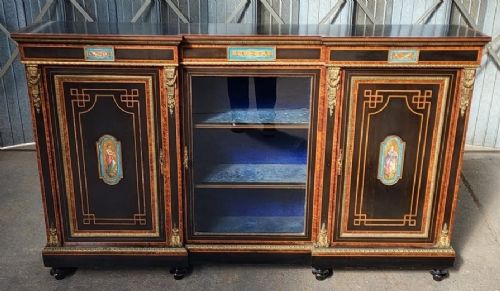
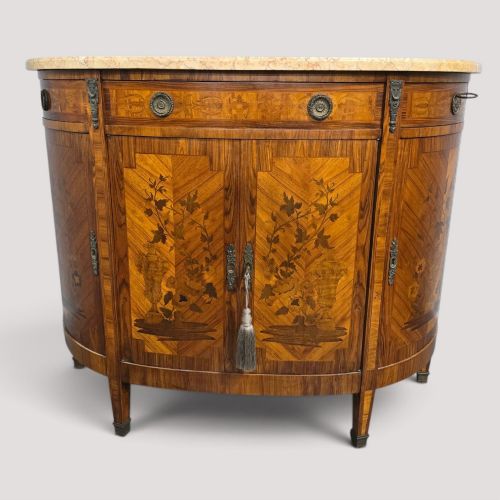
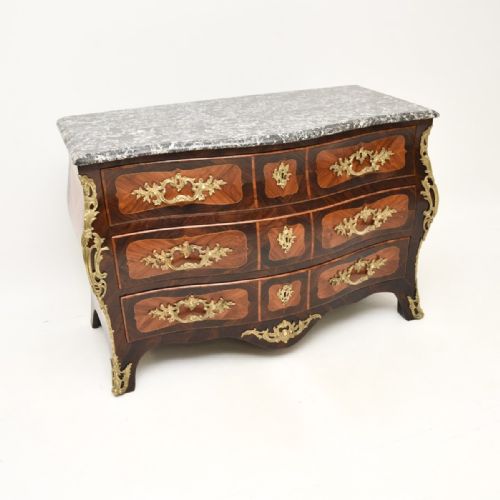
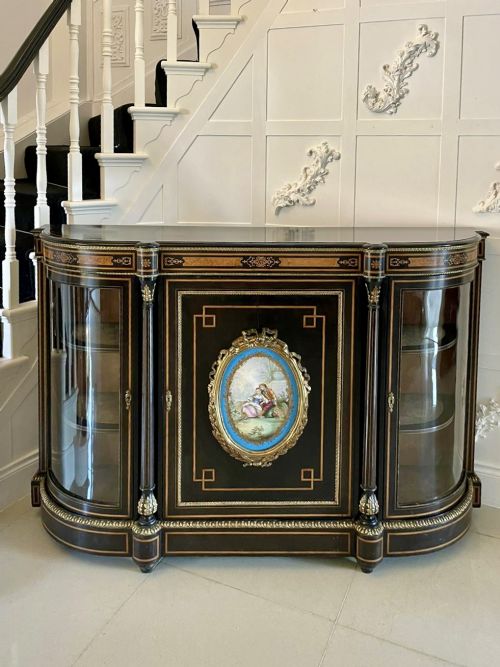
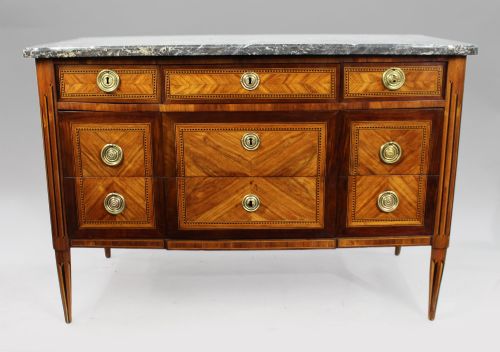
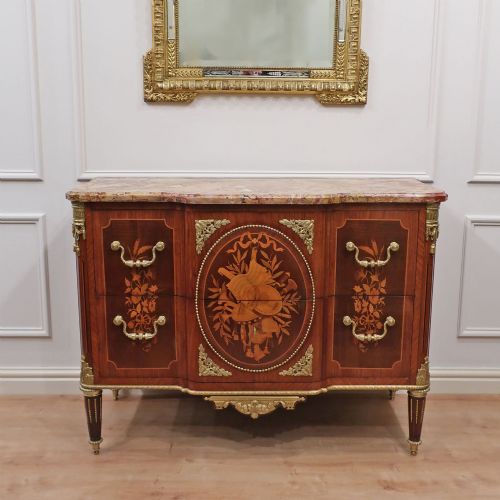
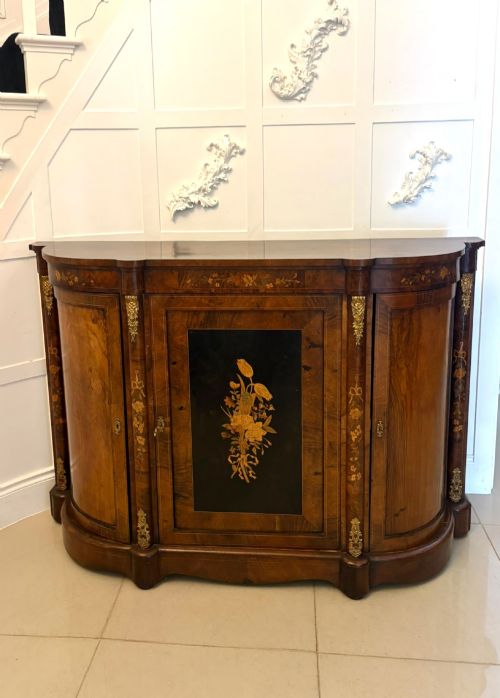
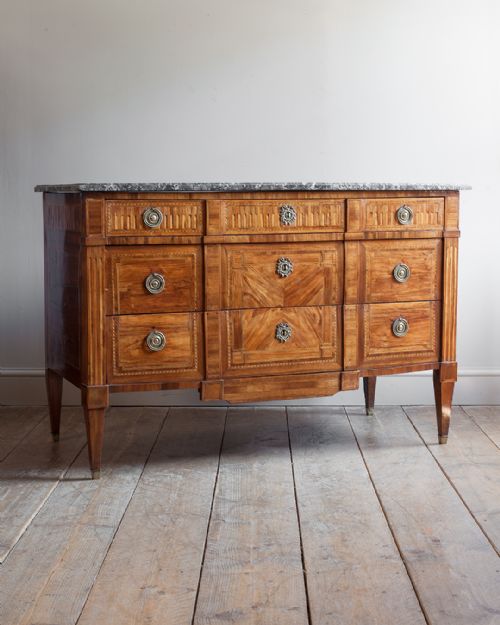
A french marquetry sideboard generally takes the form of a credenza, commode, or side cabinet designed to stand against a wall in a principal room. The examples appearing in these records span the eighteenth century through to the early twentieth century, taking inspiration from the Louis Quinze and Louis Seize repertoires alongside Victorian interpretations.
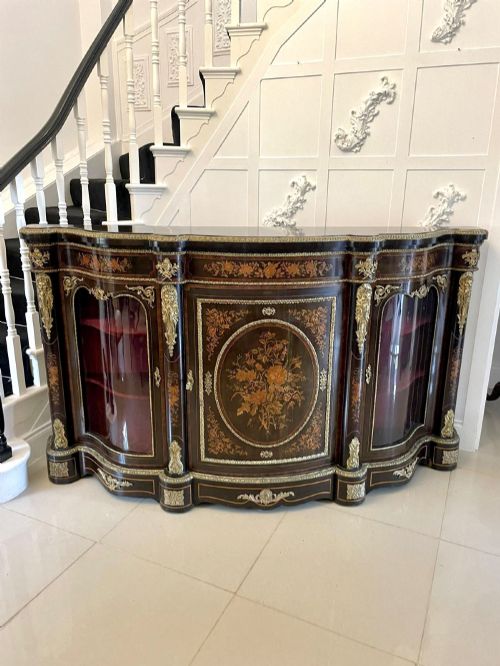
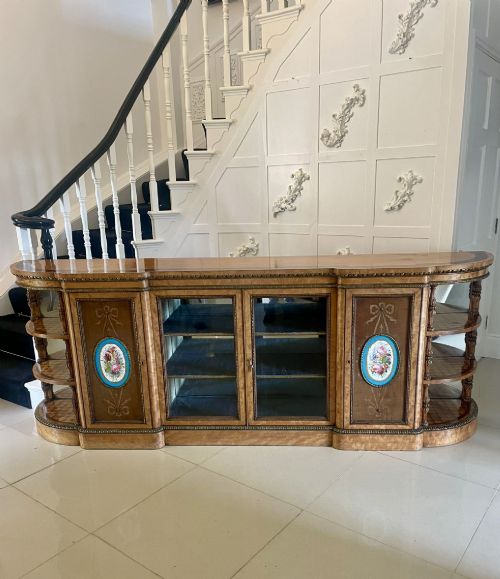
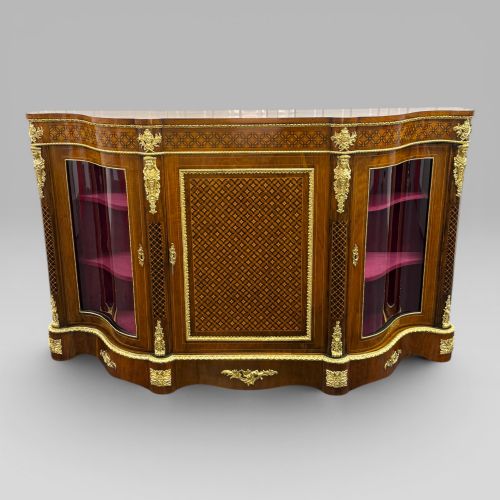
Buyers meet serpentine fronts, demi-lune shapes, and breakfront profiles executed in walnut, kingwood, and ebonised timber. These pieces function as display surfaces and storage units, often topped with imported marble slabs in white or scagliola varieties.
Materials and construction
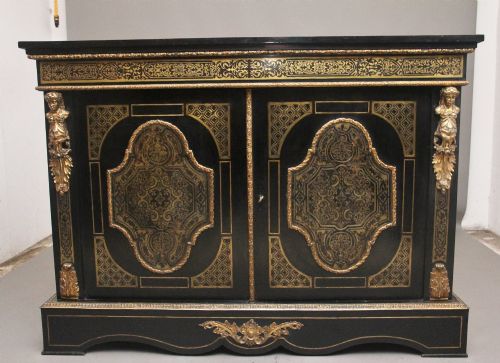
Cabinetmakers constructed carcases from native and exotic timbers, applying intricate floral or geometric veneer patterns across the surface using contrasting species like burr walnut, kingwood, amboyna, and satinwood. Boulle work involving tortoiseshell and brass inlay also appears among the ebonised pieces.
Gilded bronze mounts, known as ormolu, frame the doors, corners, and aprons, while shaped marble tops complete the assembly.
Some nineteenth-century makers hid secret drawers inside the commode carcase for safeguarding intimate correspondence.
Standards of execution
Quality rests upon the crispness of the cast ormolu mounts and the precision of the timber cut within the marquetry panels. Pieces designed for exhibition or high-status commissions exhibit more complex serpentine curves and heavier bronze ornamentation.
The choice of secondary woods inside the drawers and the weight of the marble slab further distinguish standard production items from exceptional workshop output.
Jacques Bircklé·Maison Gagneau
The French Marquetry Sideboard Glossary
- Marquetry
- Decorative veneer work arranged in pictorial or geometric patterns. Craftsmen cut thin slices of different coloured woods and fit them together into a paper-thin puzzle before gluing them to the carcase.
- Ormolu
- Gilded brass or bronze mounts applied to furniture. These decorative elements protect vulnerable corners and add architectural emphasis to the cabinet design.
- Boulle
- A method of marquetry using tortoiseshell and brass. Developed in France, this technique creates a metallic sheen against a dark ground.
- Credenza
- A low side cabinet often featuring glass-fronted side doors and an open or shelved central section. This form gained popularity during the Victorian period for displaying porcelain and ornamental objects.
- Commode
- A low chest of drawers or cupboard on legs. French commodes frequently feature marble tops and bombé or serpentine contours.
French Marquetry Sideboard: Frequently Asked Questions
What is a french marquetry sideboard used for?
These cabinets served historically to store dining silver, linens, or serving dishes while providing a surface to display decorative porcelain and ornaments.
Today they function as focal points in reception rooms, offering enclosed shelving alongside a prominent top surface.
How do I distinguish Louis XV from Louis XVI styles?
Louis XV furniture relies on asymmetrical curves, cabriole legs, and rococo organic motifs like acanthus leaves and scrolls. The later Louis XVI style introduces neoclassical symmetry, straight tapered legs, and geometric or antique architectural details.
Revival pieces from the nineteenth century often blend these elements with heavier proportions.
Are the marble tops original?
Many nineteenth-century and earlier pieces retain their original shaped marble tops, which were quarried to fit each specific carcase profile.
Replacements do occur due to accidental breakage, so examine the underside and the flush fit against the wooden moulding.
How should I clean the ormolu mounts?
Gilded bronze requires gentle dusting with a soft dry cloth to prevent the accumulation of grime in the recessed details of the casting. Avoid abrasive metal cleaners, which strip the thin gold layer from the bronze underneath.