
French Marquetry Chest Drawers
A french marquetry chest drawers brings eighteenth-century elegance into a room through intricate wood veneers and sculptural mounts.
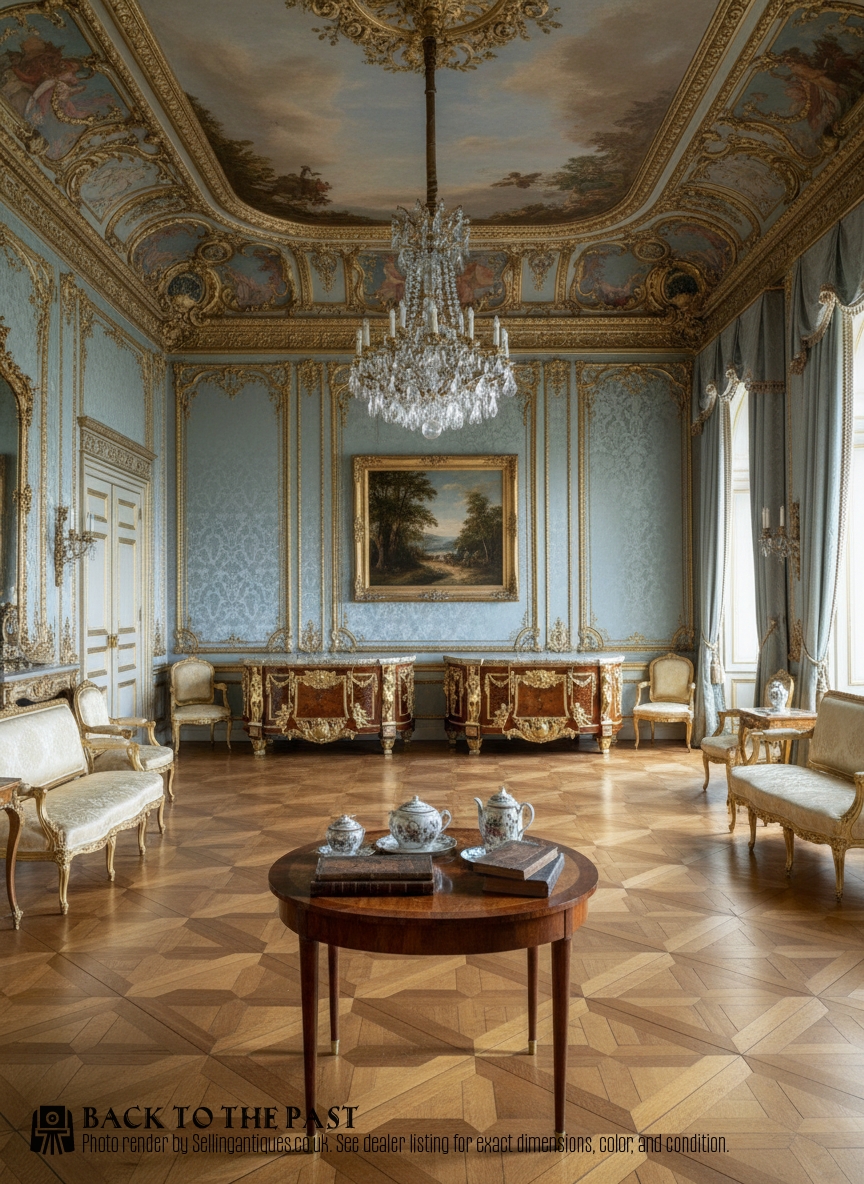
French Marquetry Chest Drawers
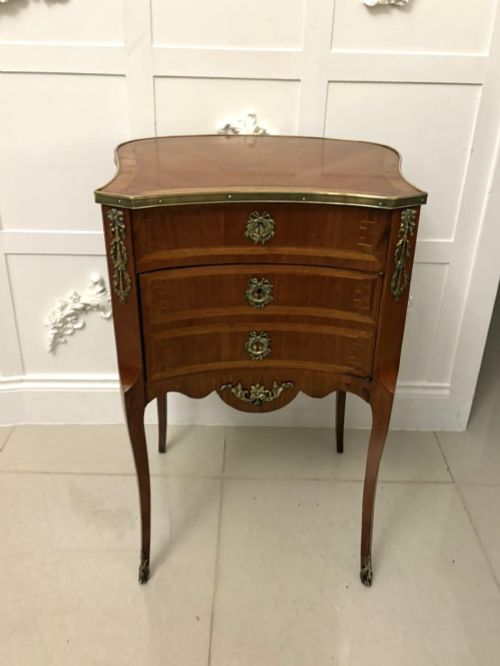
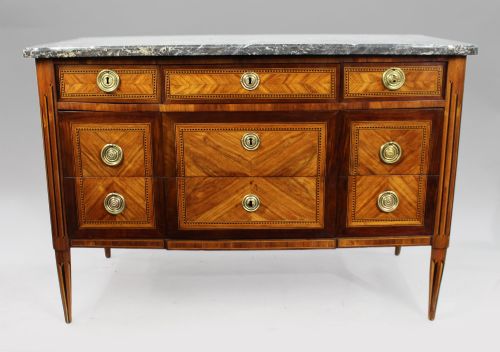
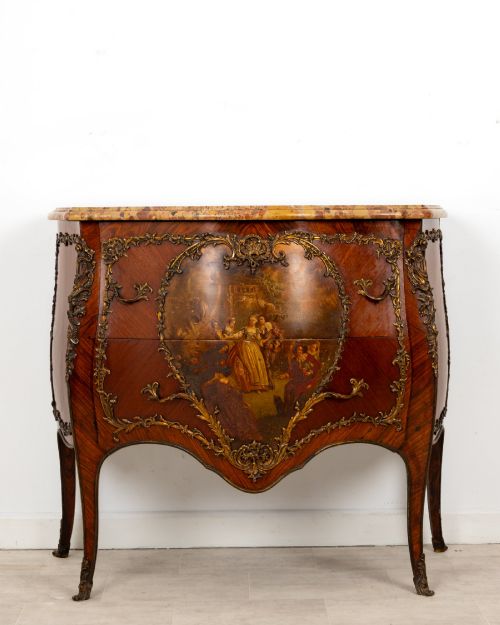
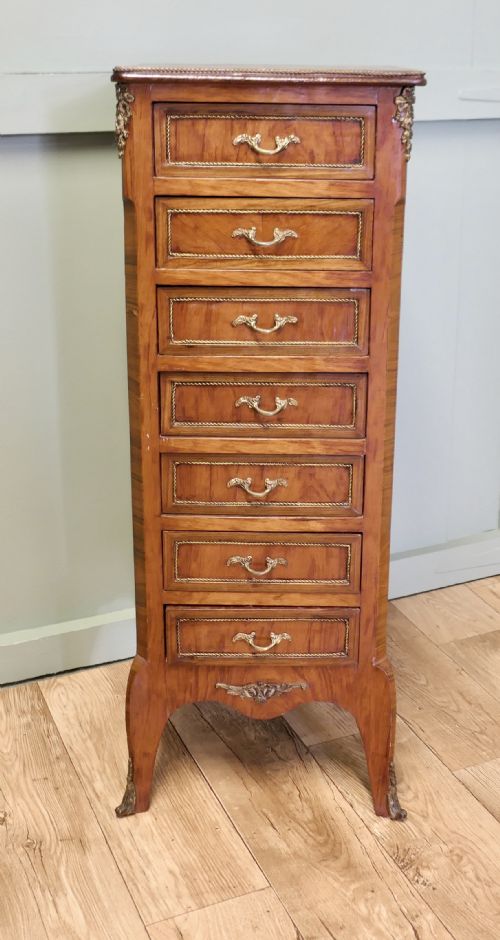
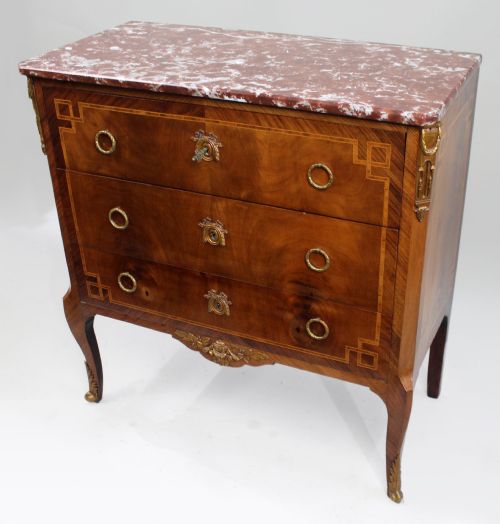
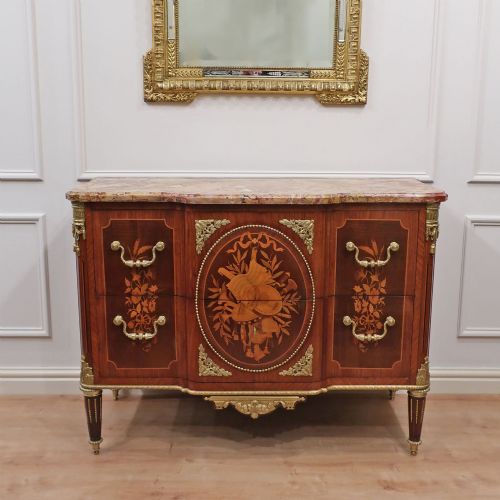
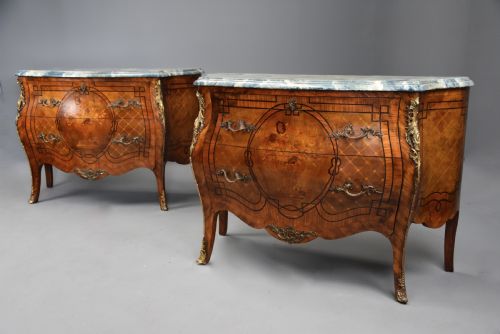
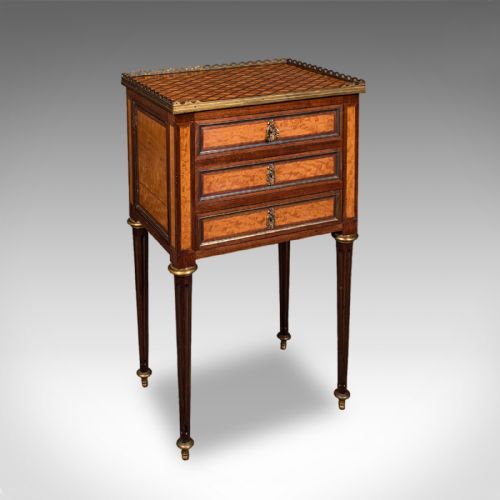
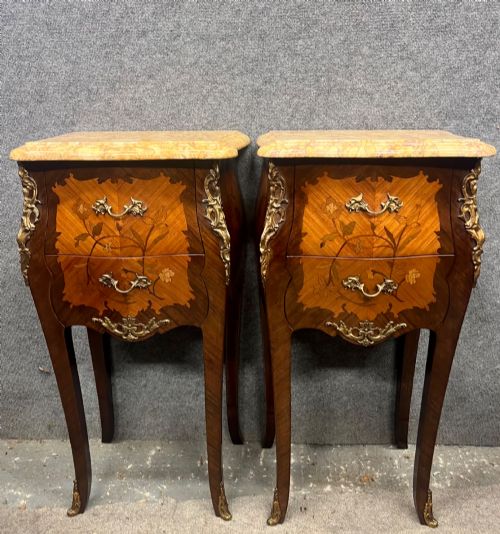
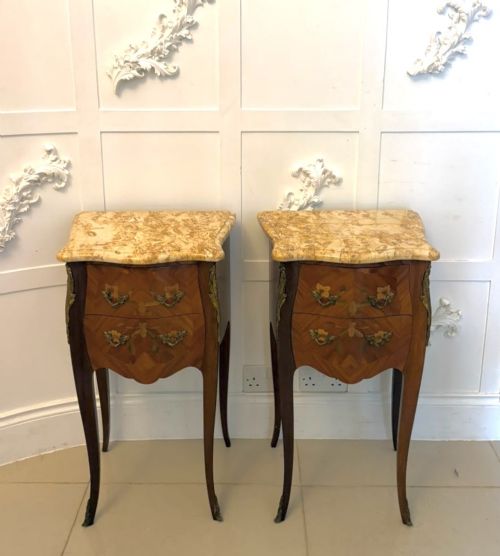
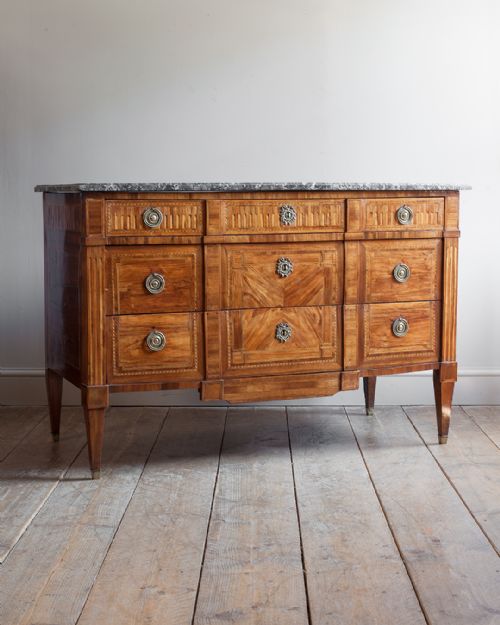
A french marquetry chest drawers covers pieces ranging from grand eighteenth-century commodes to smaller bedside cabinets and tall chests produced during later revival periods.
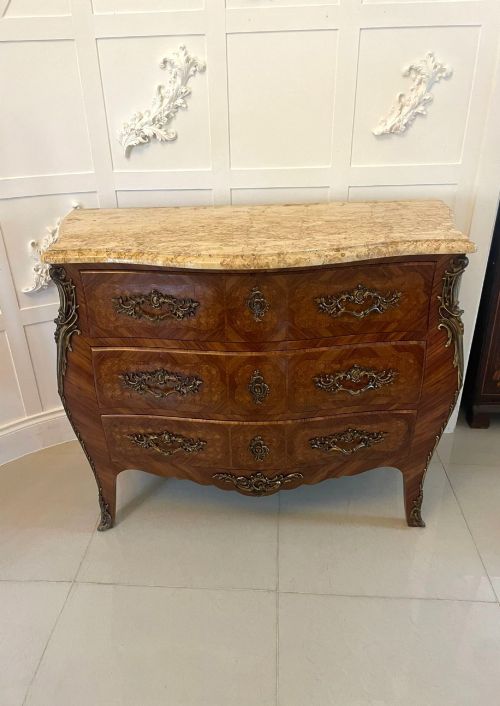
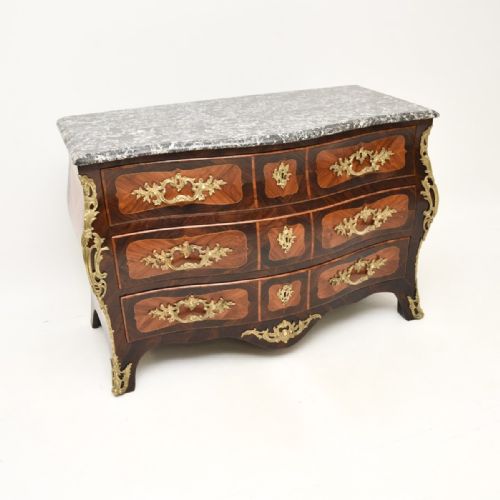
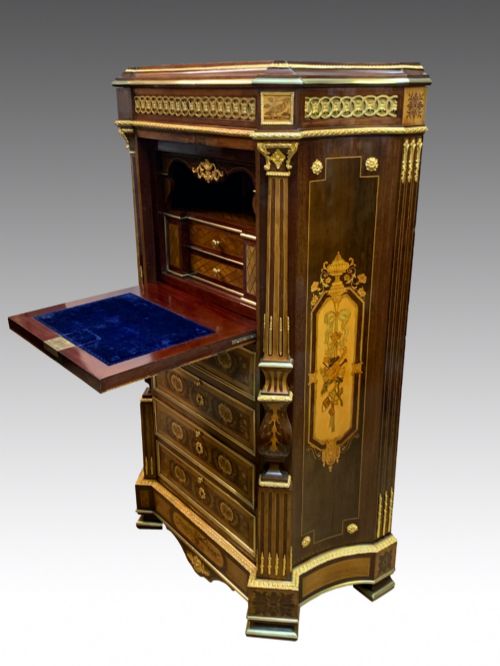
The most common forms encountered on this page are serpentine or bombe commodes alongside pairs of bedside tables, executed in styles drawing upon the reigns of Louis XV and Louis XVI.
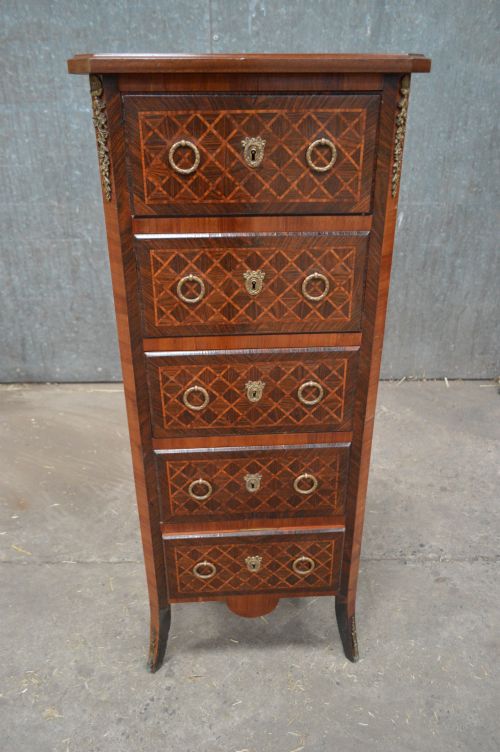
Makers working across the eighteenth, nineteenth, and early twentieth centuries utilised diverse formats including demi-lune cabinets and tall semanier chests.
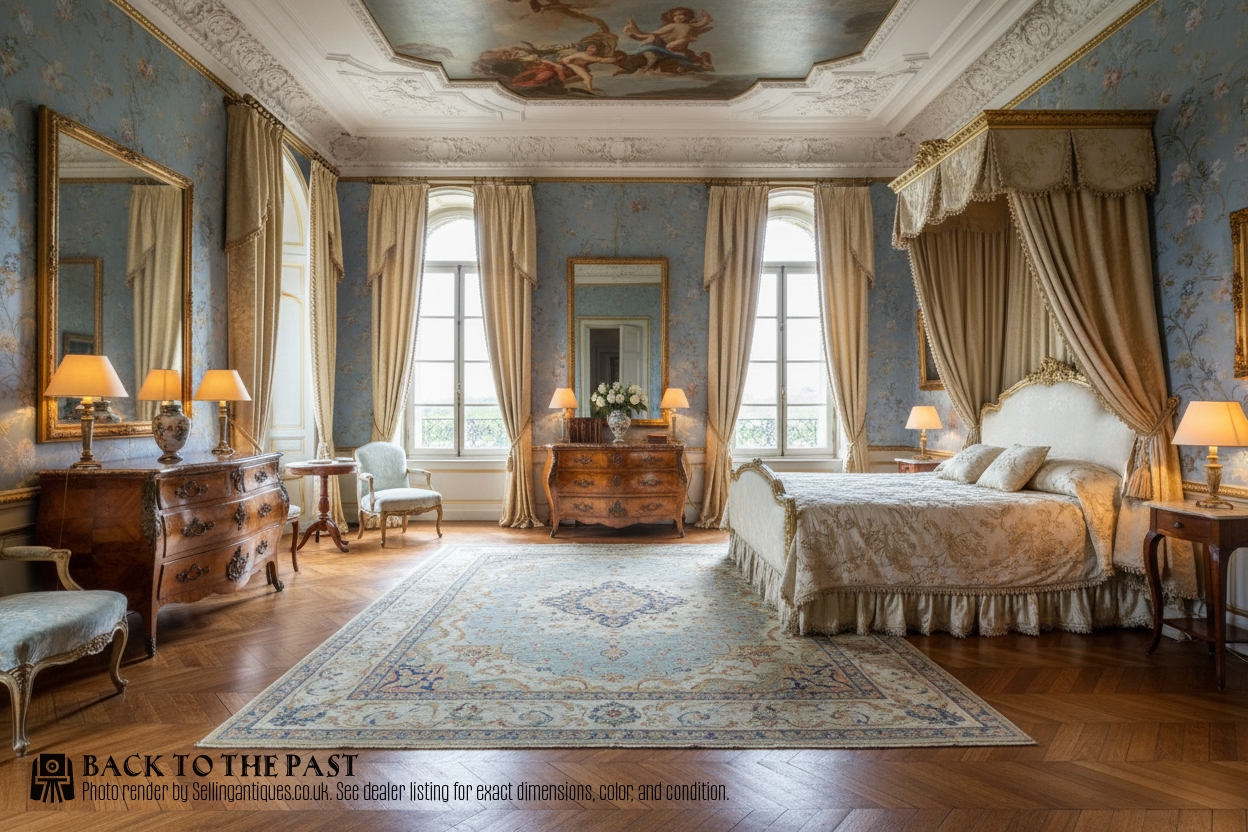
Materials and Technique
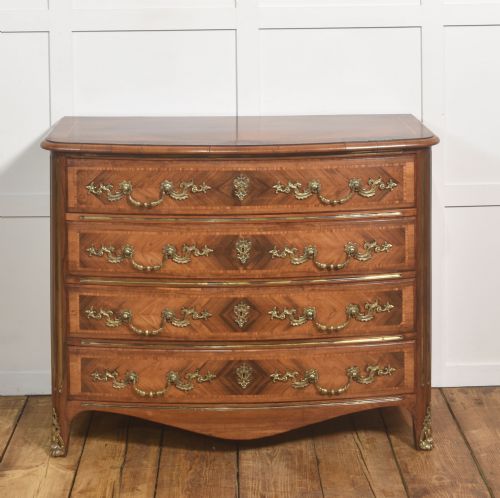
Craftsmen built these carcasses from timbers such as walnut, kingwood, rosewood, and mahogany, applying finely sliced veneers to form pictorial or geometric marquetry and parquetry patterns.
Many examples are finished with shaped marble tops in shades of white or rouge, complemented by cast or chased ormolu, gilt bronze, and brass mounts fixed to corners and handles.
French Marquetry Chest Drawers Retail Price Guide 2026
Typical asking prices for french marquetry chest drawers among the pieces listed under this phrase on Sellingantiques today, from the lower quarter to the upper quarter. They describe what is for sale here now, not the wider market.
Listings feature pieces spanning from the eighteenth century through the nineteenth century and into the 1930s, using walnut, kingwood, rosewood, and marble.
Design and Execution
Quality rests in the precision of the veneer work, where floral or geometric layouts fit seamlessly across curved drawer fronts and sides without gaps.
Finer examples display heavier, more detailed cast bronze ormolu mounts and carefully selected marbles that follow the exact serpentine or bombe contours of the carcass.
Jacques Bircklé·Maison Krieger·Thomas Hache
The French Marquetry Chest Drawers Glossary
- Marquetry
- The art of applying pieces of veneer to a structural carcass to form decorative pictures or designs. This technique defines the visual surface of many commodes.
- Parquetry
- A geometric mosaic of wood veneer arranged in patterns such as cubes or chequers. It differs from marquetry by relying on angular repeats rather than pictorial motifs.
- Ormolu
- Gilt bronze mounts applied to furniture for decorative accent and edge protection. The term describes both the alloy and the gilding process.
- Bombe
- A swelling, bulging contour found on drawer fronts and sides. This curved profile requires high skill in veneer application.
- Commode
- A low chest of drawers, often standing on short legs. These pieces frequently feature marble tops and elaborate mounts.
French Marquetry Chest Drawers: Frequently Asked Questions
How do I date these chests?
Dating relies on combining the stylistic vocabulary, such as Louis XV curves or Louis XVI straight lines, with construction methods visible inside the drawers.
Later revival pieces from the nineteenth and twentieth centuries often employ machine-cut timbers or standardised fittings alongside period motifs.
Are marble tops original?
Most marble tops are original to the pieces, shaped precisely to match the serpentine or bombe contours of the wooden carcass below.
Differences in marble colour, ranging from white to rouge, typically reflect the specific workshop and period of production.
Where were these pieces used?
Larger commodes served as principal storage furniture in grand bedrooms and reception rooms, holding linen or garments.
Smaller bedside cabinets and nightstands functioned as personal companions beside sleeping quarters.
What is the difference between marquetry and parquetry?
Marquetry utilises varied wood veneers to create pictorial scenes, foliage, or floral sprays across the surface.
Parquetry constructs repeating geometric patterns, such as cubes or basket-weave designs, using angled timber pieces.