
French Marble Top Dresser
A french marble top dresser brings heavy stone and figured timber together in a practical storage piece designed for daily use.
French Marble Top Dresser
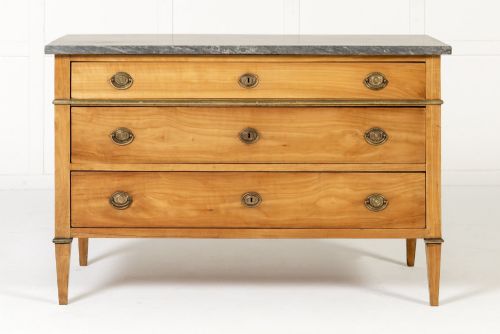
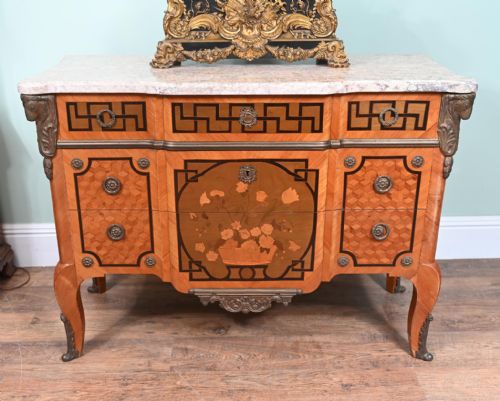
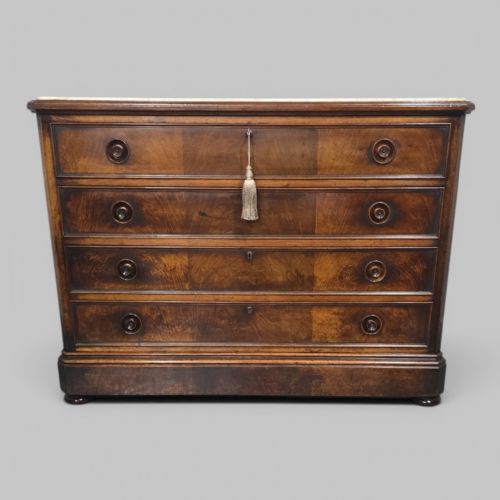
A french marble top dresser appears most frequently as a commode, a chest of drawers, or a washstand originating from the eighteenth and nineteenth centuries. These items combine timber carcases with thick stone slabs to create durable surfaces suited to bedrooms and living spaces.
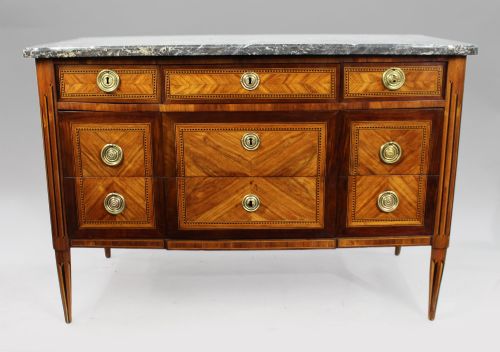
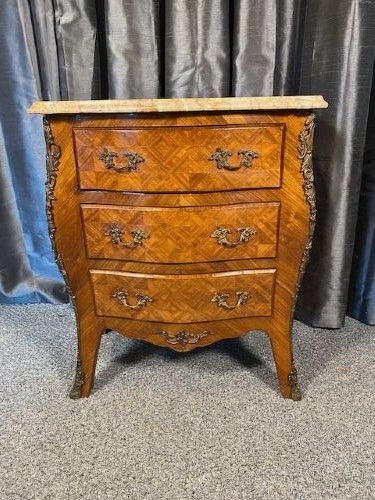
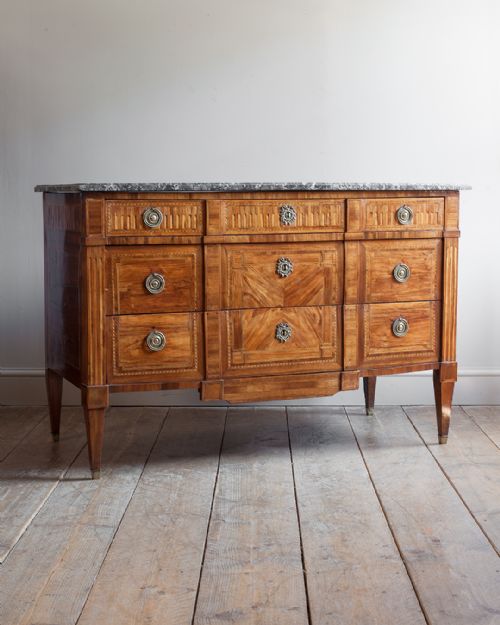
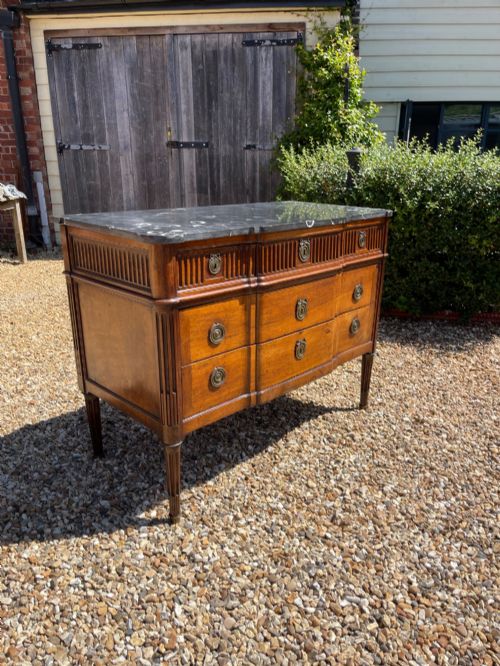
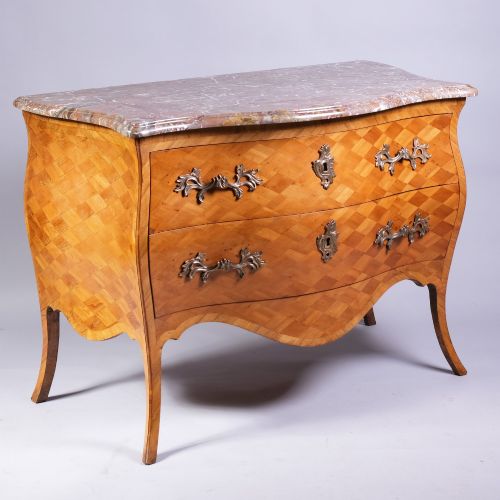
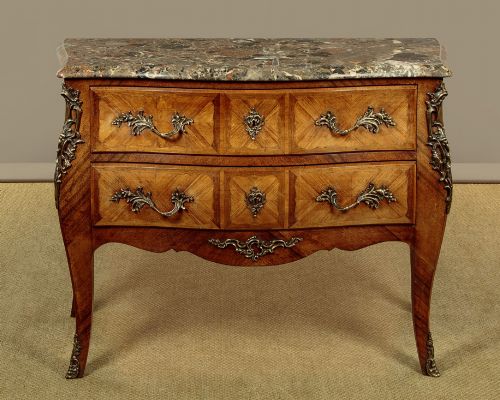
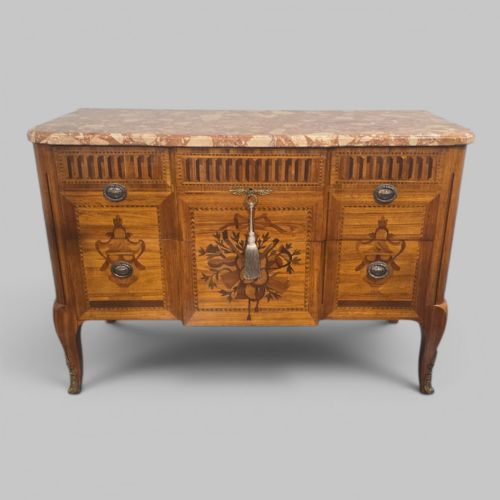
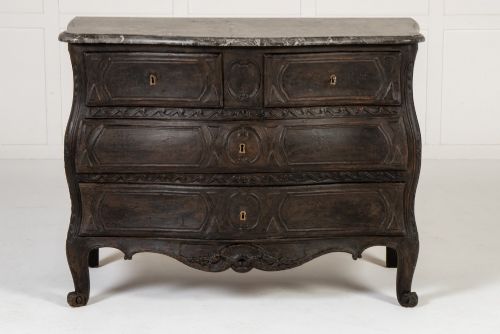
Makers shaped these carcases into straight fronts, serpentine curves, and bombe profiles, drawing upon Louis XV, Louis XVI, and later revival vocabularies. Walnut, mahogany, cherrywood, and oak provide the structural timber underneath intricate parquetry and marquetry panels.
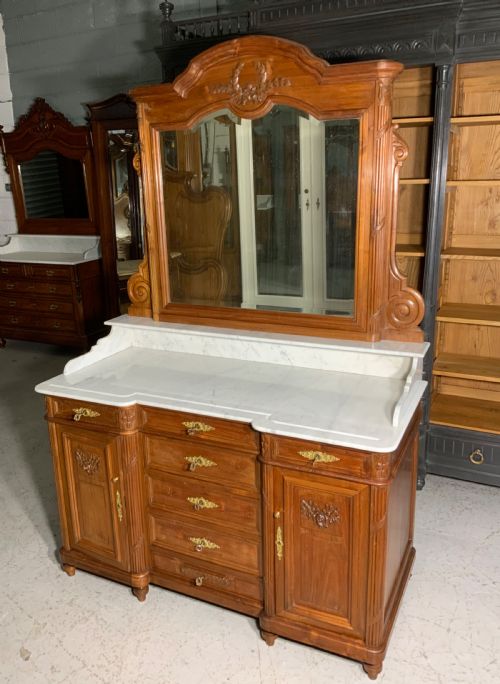
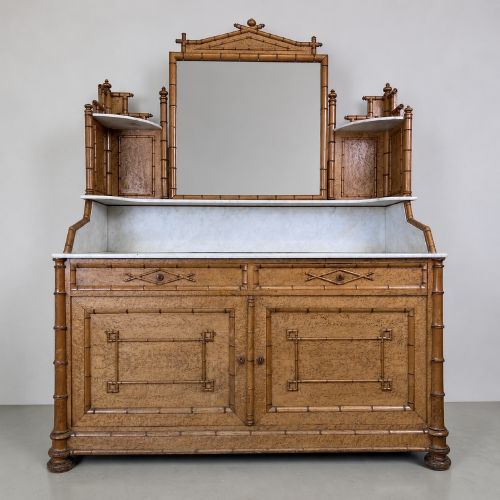
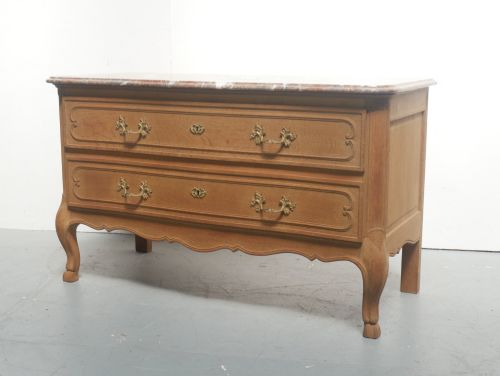
The regional and urban workshops of France produced these items across successive design movements, ranging from early oak pieces to later faux-bamboo and satinwood variants. Buyers encounter both fitted washstands with marble splashbacks and deep-drawer commodes built for linen or apparel.
Construction and materials
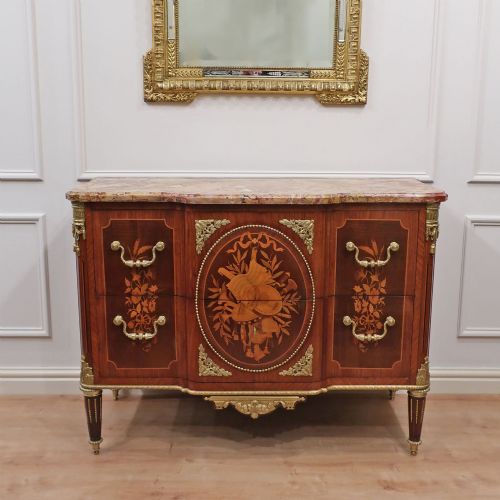
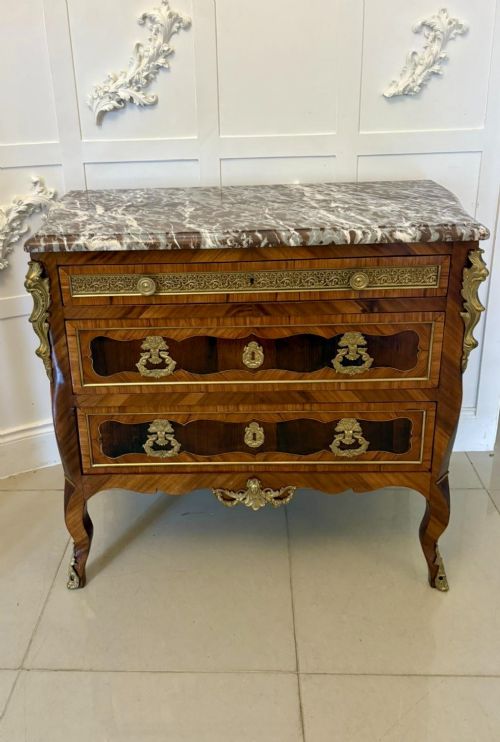
Cabinetmakers joined native and exotic timbers such as kingwood, tulipwood, rosewood, and oak over sturdy carcases using traditional dovetail joints. Surface decoration relies on geometric parquetry, floral marquetry, and contrasting veneer borders.
Slabs of grey or white marble sit unattached or bedded upon the timber top, shaped with moulded edges to match the contour of the commode or washstand below. Gilded bronze and ormolu mounts frame keyholes and accentuate the corners of formal pieces.
Listings feature oak, walnut, mahogany, and cherrywood commodes fitted with grey and white marble surfaces spanning the eighteenth to twentieth centuries.
Evaluating the standard
The relationship between the stone slab and the timber frame dictates the integrity of the piece, particularly where serpentine or bombe contours require precise edge fitting. Original marble slabs that match the exact period and wear pattern of the carcase elevate the standing of the furniture.
The crispness of the marquetry inlay and the retention of fire-gilded ormolu mounts distinguish standard regional production from high-workshop execution. Interior drawer construction, featuring secondary timbers and hand-cut joints, reveals the level of care applied to unseen structural elements.
Mon Krieger
The French Marble Top Dresser Glossary
- Commode
- A low chest of drawers or cabinet developed in France during the seventeenth century. These pieces usually feature wide drawers and stand on short legs.
- Bombe
- A swollen or bulging convex shape used on the front and sides of eighteenth-century and revival commodes. This contour demands advanced veneer work to follow the sweeping curves.
- Ormolu
- Gilded bronze mounts applied to furniture for decoration and edge protection. The technique involves applying a mercury and gold amalgam to bronze before firing.
- Marquetry
- The art of applying thin decorative veneers in wood, shell, or ivory to form pictorial or geometric patterns. Craftsmen cut these elements from contrasting sheets before gluing them to the carcase.
French Marble Top Dresser: Frequently Asked Questions
What is a french marble top dresser?
A french marble top dresser is a heavy timber storage unit, typically a commode or chest of drawers, topped with a thick slab of stone.
These pieces served functional roles in bedrooms and dressing rooms, utilising the stone surface to resist water and cosmetic spills.
How do I clean marble?
Natural marble requires mild, non-acidic soap and warm water to prevent etching on the polished surface.
A soft cloth removes dust without scratching the crystalline structure of the stone slab.
Are the marble tops original?
Many pieces retain their heavy stone tops, though replacements occurred over centuries due to heavy wear and breakage.
Matching the thickness, edge moulding, and weathering of the marble to the timber base helps confirm its age.
How do I date these pieces?
Stylistic cues such as Louis XV curves, Louis XVI straight lines, and specific veneers like kingwood or tulipwood indicate the era of manufacture.
Internal construction methods, including drawer linings and hand-cut joinery, provide further evidence of the period.