
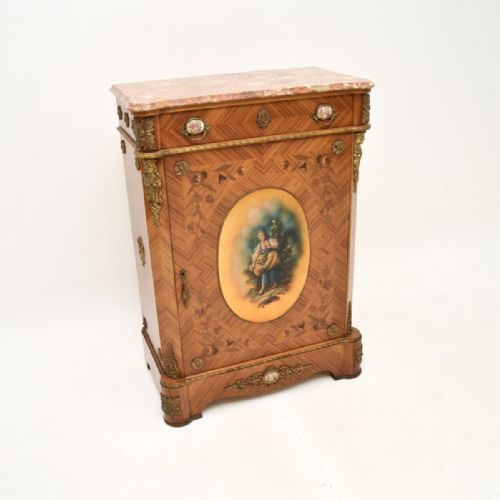


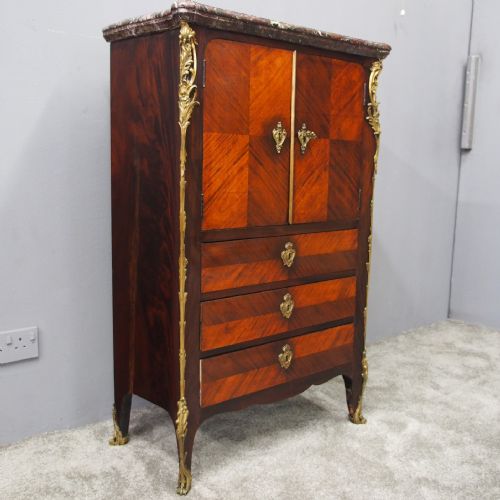

French Marble Top Chiffonier
A french marble top chiffonier brings a striking stone surface and rich timber cabinetry to a room, offering practical display space with continental elegance.
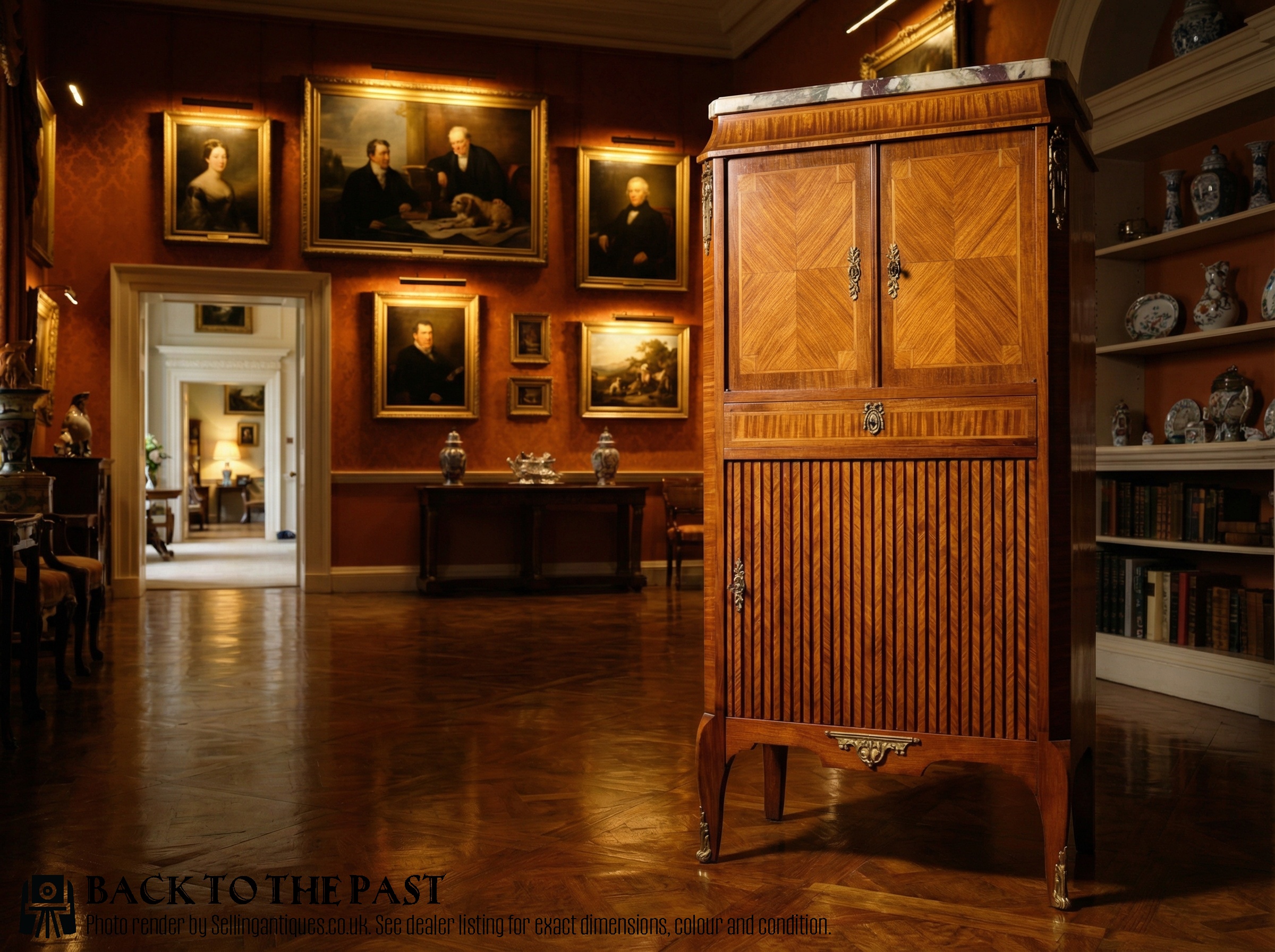
French Marble Top Chiffonier
When you search for a french marble top chiffonier, you encounter low storage furniture that combines stone counters with timber framing. These pieces function as side cabinets, credenzas, and chests of drawers designed for refined interiors.
The versions most likely to appear on this page date from the nineteenth century, including examples from the French Empire and Napoleon III eras, alongside later revivals. They typically feature marble slabs fitted neatly to the top surface above timber doors or drawers.
How they were made
Cabinet makers utilised dense hardwoods such as mahogany, walnut, kingwood, and ebonised wood to build the structural carcass and drawer frames. Marquetry inlays and floral designs often decorate the timber surfaces.
Craftsmen mounted polished marble slabs to the upper surface and adorned the cabinetry with cast brass or ormolu mounts, matching the stylistic tendencies of French Empire and Louis XV designs.
Cabinet materials span mahogany, walnut, kingwood, rosewood, and ebonised wood, frequently paired with fitted marble and brass mounts.
What varies in quality
Quality rests in the selection of timbers and the precision of the marquetry work, where finely figured burr walnut or kingwood elevates the piece. The choice of marble, from plain white to richly veined varieties, also signals the grade of the cabinet.
The refinement of the cast brass or ormolu mounts and the smoothness of the drawer construction distinguish finer examples from standard production. Cabinetmakers who achieved tighter joinery and more ambitious silhouettes created superior furniture.
Leonard Boudin
The French Marble Top Chiffonier Glossary
- Chiffonier
- A low cabinet with drawers or doors, traditionally utilised for storing fine items or serving as a side piece. These often feature the signature marble top.
- Ormolu
- Gilded bronze mounts applied to furniture for decorative effect, frequently seen on French Empire and revival pieces. This technique adds metallic highlights to the timber body.
- Marquetry
- The art of applying thin veneers of various woods to form decorative patterns and pictures on a furniture surface. Floral motifs often appear on these cabinets.
- Ebonised wood
- Timber treated to resemble ebony, creating a dark, uniform finish that contrasts with brass mounts and marble surfaces. This treatment was common during the nineteenth century.
French Marble Top Chiffonier: Frequently Asked Questions
What is a french marble top chiffonier?
A french marble top chiffonier is a low cabinet featuring a fitted stone top and timber construction, designed for domestic storage and display.
These pieces typically date from the nineteenth century and incorporate styles such as French Empire, Louis XVI, and Napoleon III.
How do I identify the period?
Dating relies on observing the timber species, mounting details, and stylistic traits like marquetry or ebonised finishes.
Nineteenth-century examples often display specific revival characteristics or Empire mounts that distinguish them from earlier or later work.
Are the marble tops original?
Most marble tops are original to the pieces, cut and shaped to fit the specific timber carcass of the cabinet.
Checking the fit against the edges of the wood helps determine if the stone belongs to the original construction.
How do I care for the marble?
Marble requires gentle cleaning with mild soap and water, avoiding acidic substances that can etch the polished stone surface.
Regular dusting and careful placement away from moisture will preserve the finish of both the marble and the surrounding wood.