
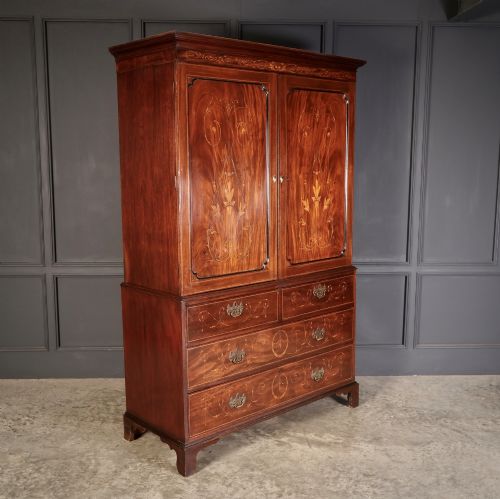
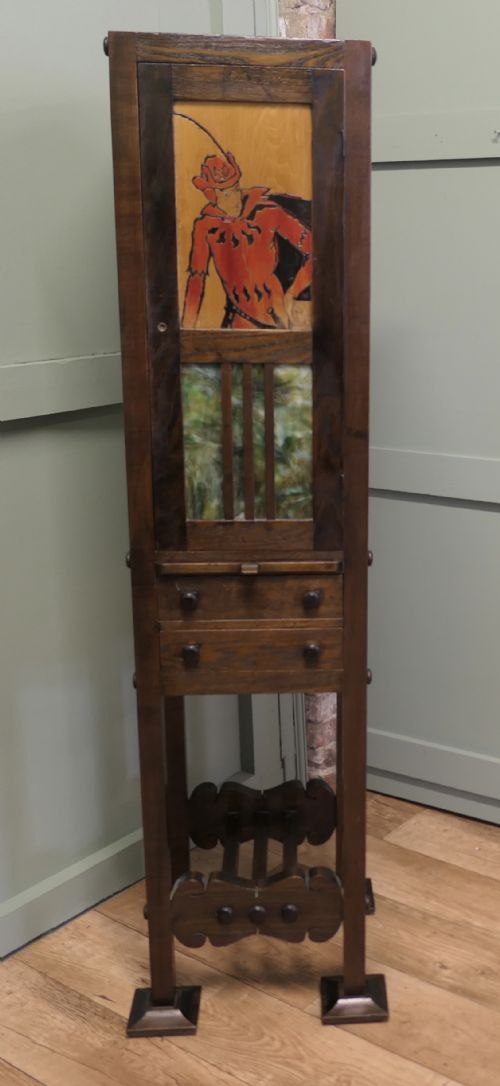
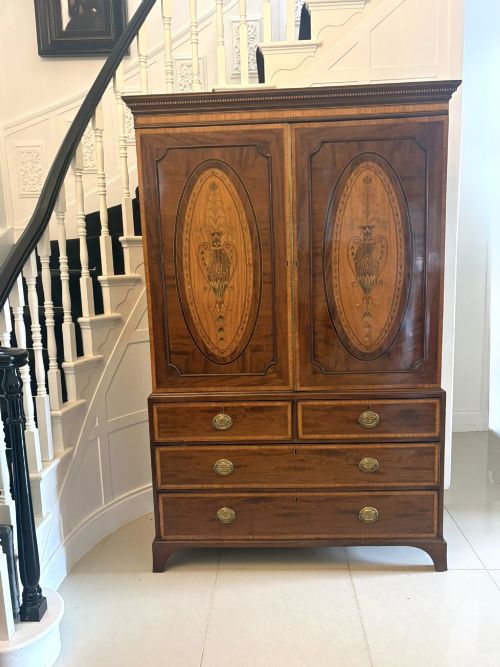
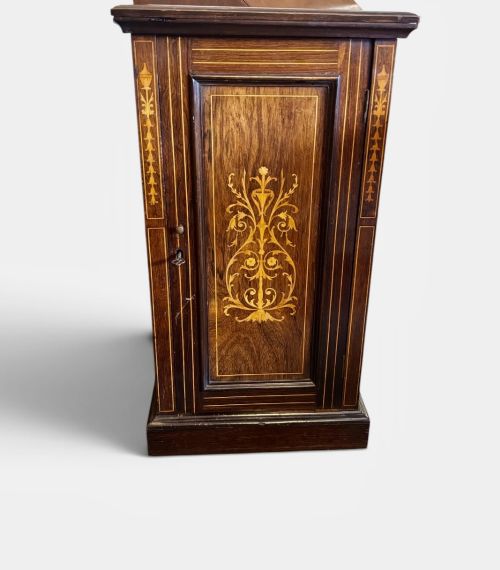




Marquetry Tall Cupboard
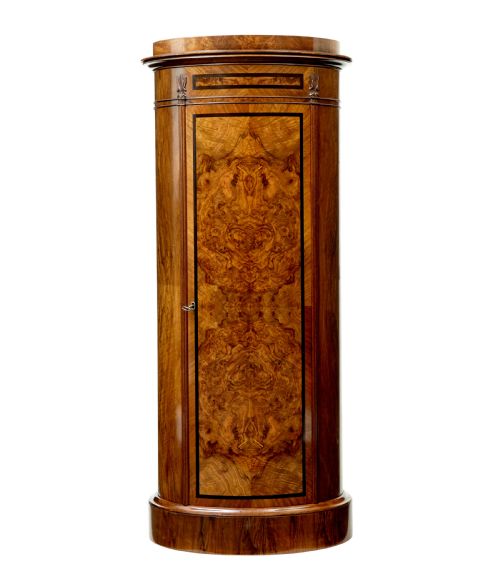
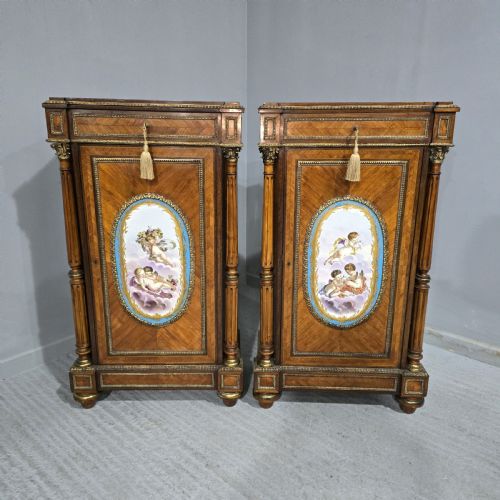
These marquetry tall cupboard examples bring together centuries of intricate woodworking and grand storage, designed to anchor a room with distinct historical character.
Marquetry Tall Cupboard
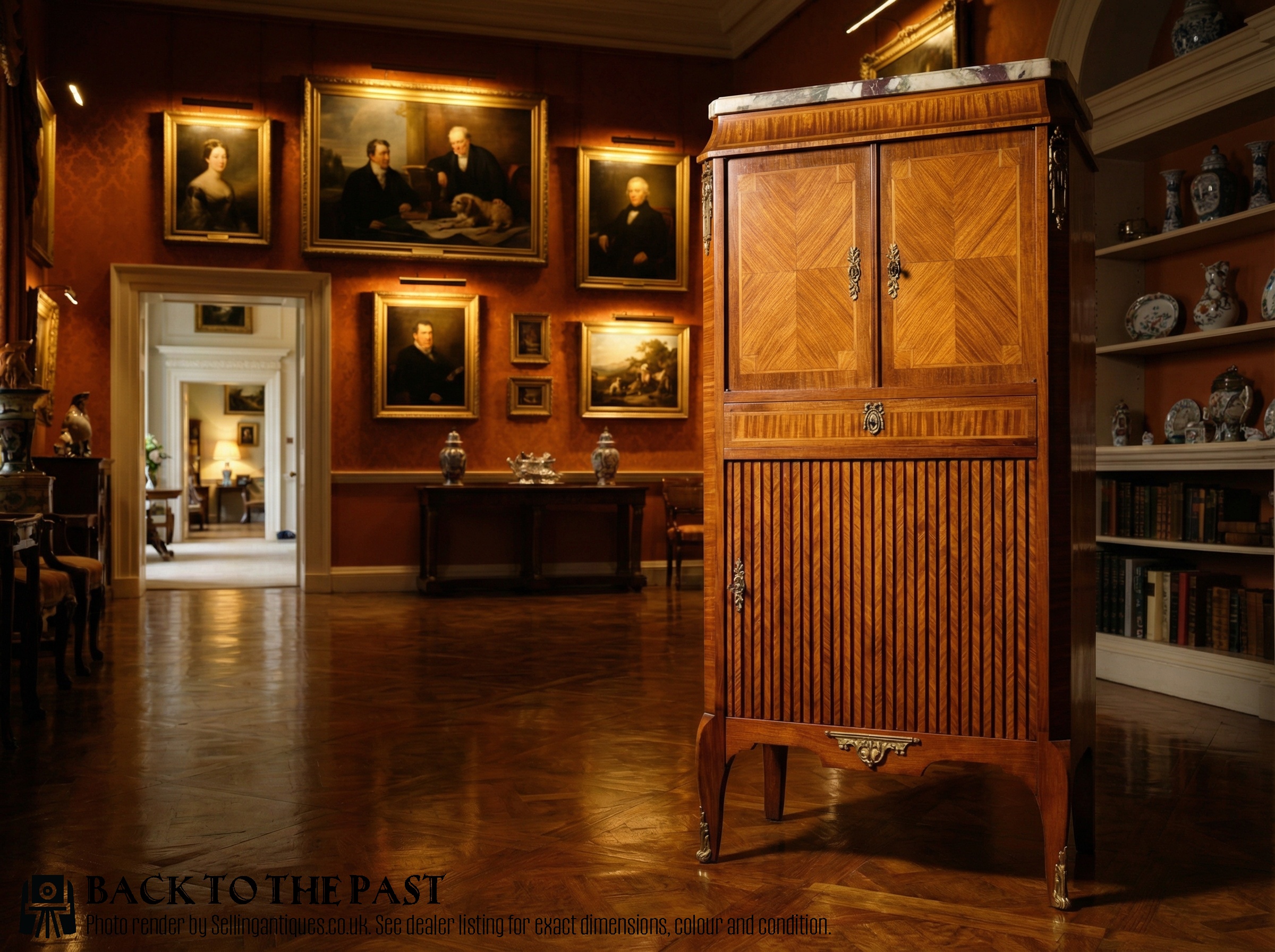
A marquetry tall cupboard sits within a lineage of vertical storage forms spanning Georgian origins, Victorian craftsmanship and Edwardian refinement. When searching for a marquetry tall cupboard, buyers encounter tall pier cabinets, linen presses, corner units and music cabinets that utilise vertical space with decorative ambition.
The pieces appearing on this page stretch across the nineteenth and twentieth centuries, taking in stylistic revivals such as Louis XV and Louis XVI alongside traditional British cabinet making. Walnut, mahogany, rosewood and fruitwood provide the structural carcases for elaborate floral and geometric veneer work.
Makers utilised contrasting timbers to build depth into vertical surfaces, creating functional storage that also served as a focal point in period drawing rooms and bedrooms. The proportions remain consistently tall and narrow, designed to command a corner or wall space without overwhelming the room.
How they were made
Cabinet makers constructed these carcases using solid timbers such as mahogany, walnut and hardwood, applying fine veneers of satinwood, rosewood and burr walnut across the visible surfaces. Marquetry designs were hand-cut from thin sheets of contrasting wood, fitted together like a jigsaw puzzle, and glued to the primary ground.
Brass mounts, ormolu details and glass panels were integrated into specific styles like the Louis XVI revivals and Edwardian display cabinets. Artisans finished these surfaces with French polish or traditional oils, sealing the timber while highlighting the natural grain and the varied tones of the inlaid woods.
Sheet music cabinets hide miniature partitioned shelves inside, originally designed to keep nineteenth-century waltzes crisp and uncreased.
What varies in quality
The distinction between ordinary and exceptional examples lies in the precision of the veneer cutting and the complexity of the marquetry design. Superior pieces feature tightly fitted inlay work where contrasting timbers meet without visible gaps or excessive filler.
Selection of figured woods also dictates grade, with burr walnut, rich mahogany and figured satinwood commanding greater visual depth. The integration of high quality cast brass, ormolu mounts and original glass further separates standard utility pieces from master cabinet work.
Holland and Sons
The Marquetry Tall Cupboard Glossary
- Marquetry
- The art of applying decorative veneer pieces to a structural carcase to form geometric or pictorial patterns. This technique uses varied coloured woods to create contrast.
- Ormolu
- Gilt bronze ornamentation mounted onto furniture pieces during the eighteenth and nineteenth centuries. It adds metallic highlights to wood surfaces.
- Linen Press
- A tall double-door cupboard traditionally used for storing folded clothes and linens on sliding trays. Interiors often incorporate lower chest drawers.
- Satinwood
- A durable, lustrous timber native to India and Ceylon exhibiting a golden yellow sheen. It serves as a primary contrast material in detailed inlay work.
- Pier Cabinet
- A tall, narrow cabinet designed specifically to stand against the wall space between windows. These pieces often feature glass doors for display.
Marquetry Tall Cupboard: Frequently Asked Questions
What is a marquetry tall cupboard used for?
These tall cabinets provide vertical storage for display, books, or household linens depending on the specific internal configuration. They were built to maximise room capacity while offering a decorative surface.
In modern interiors, they function effectively in living spaces or hallways where floor space is limited but height is available.
How do I identify a Victorian tall cabinet?
Victorian pieces frequently employ dense timbers like walnut and rosewood, often featuring dark finishes and robust construction methods. They tend to reflect revivalist tastes or heavy Victorian proportioning.
Examining the interior woodwork and secondary timbers helps confirm the nineteenth-century manufacturing period.
Are Edwardian cabinets different from Georgian ones?
Edwardian examples, emerging around nineteen ten, often display lighter satinwood inlays and more delicate neoclassical proportions. Georgian pieces from eighteen hundred lean towards heavier mahogany and structural restraint.
Comparing the brightness of the inlay and the framing style clarifies the stylistic shift between the two eras.
How should I care for inlaid wood furniture?
Keep these items away from direct sunlight and steady heat sources to prevent the delicate veneers from lifting or drying out. Regular dusting with a soft, dry cloth preserves the French polish.
Avoid using silicone-based polishes which can sink into the porous timber joints and damage the antique finish over time.