

French Marble Top Chest
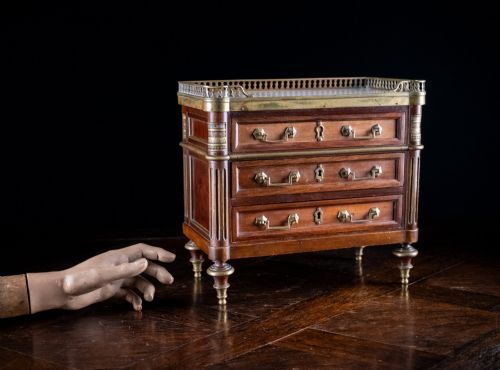
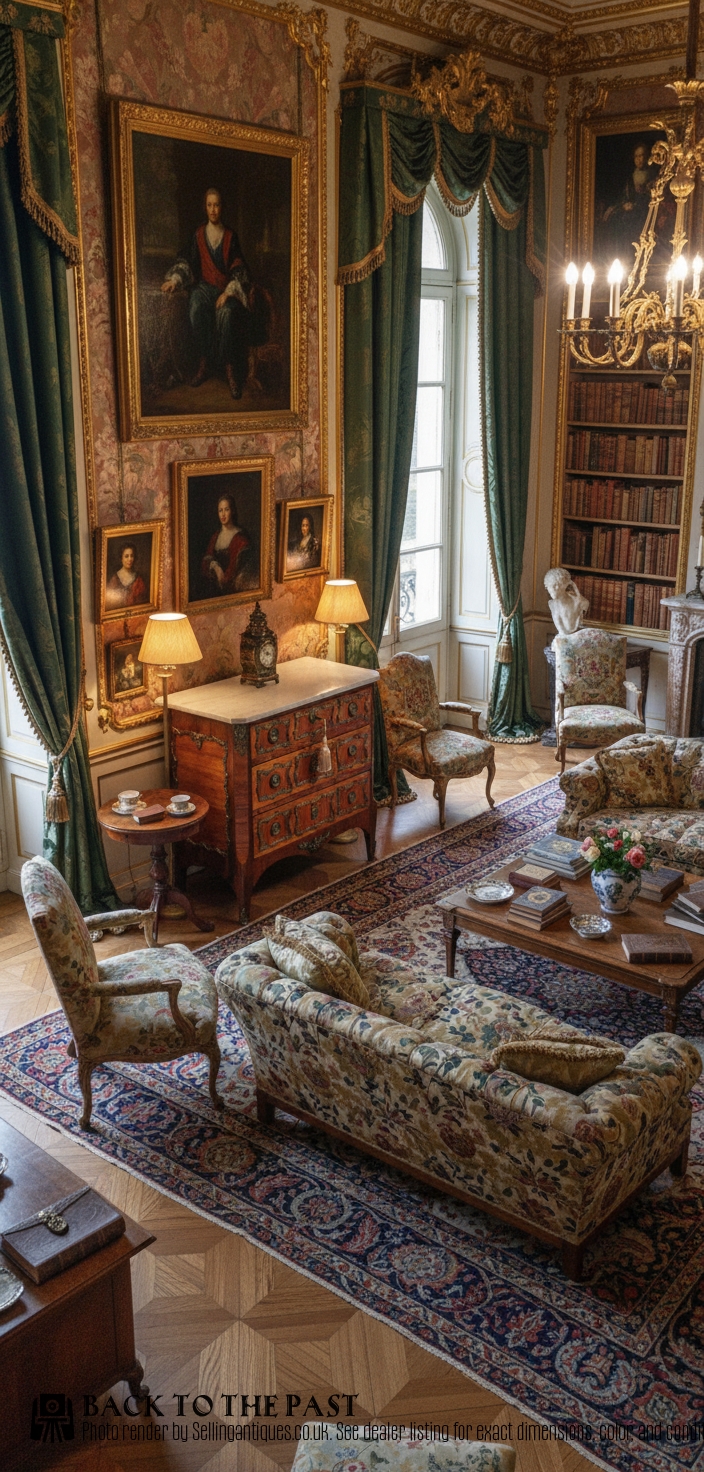
A french marble top chest brings architectural stone and figured timber together in a single piece of furniture designed to anchor a room.
French Marble Top Chest
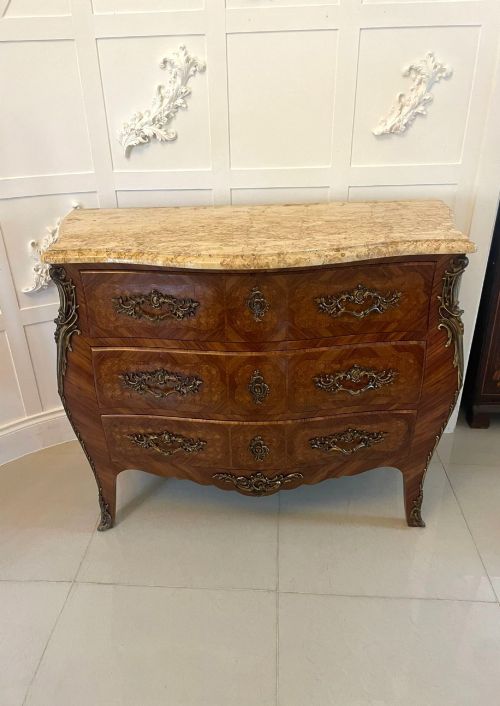
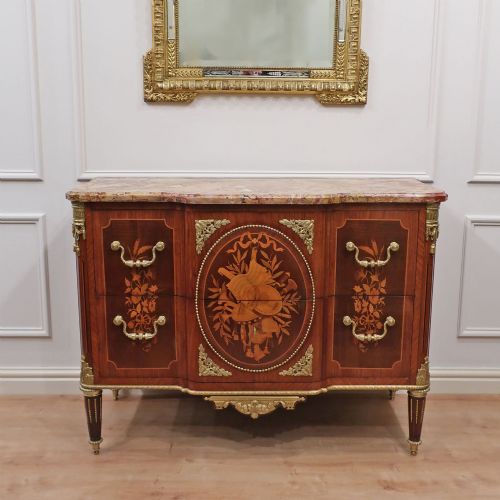
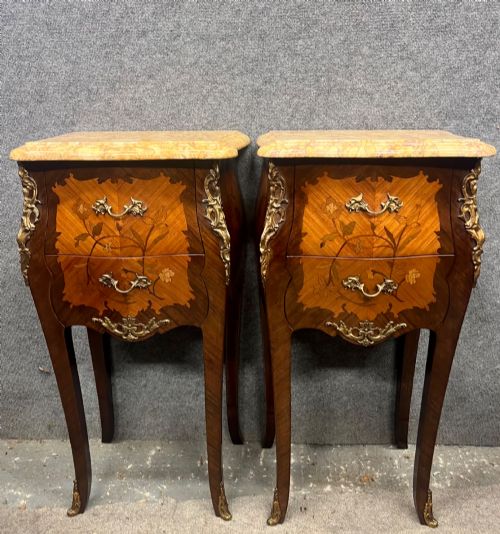
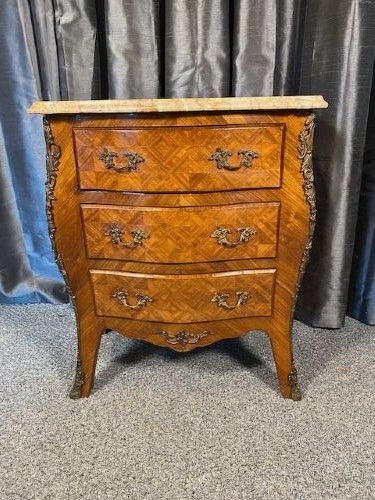
A french marble top chest typically takes the form of a commode, a bedside table, or a diminutive cabinet originating from eighteenth, nineteenth, or early twentieth-century workshops. These pieces balance functional drawer storage with heavy stone slabs cut to follow the contours of the timber carcase below.
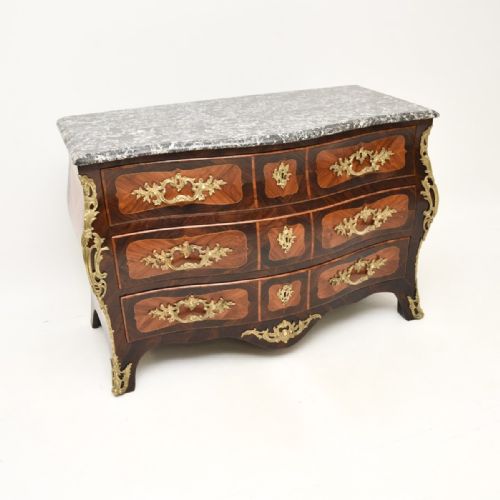
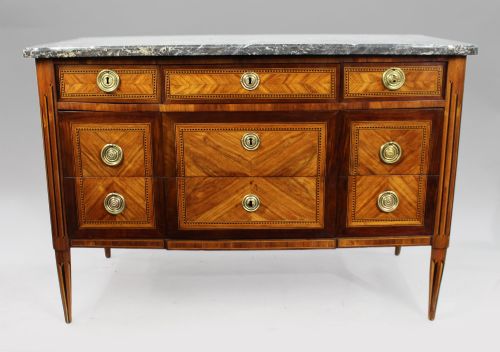
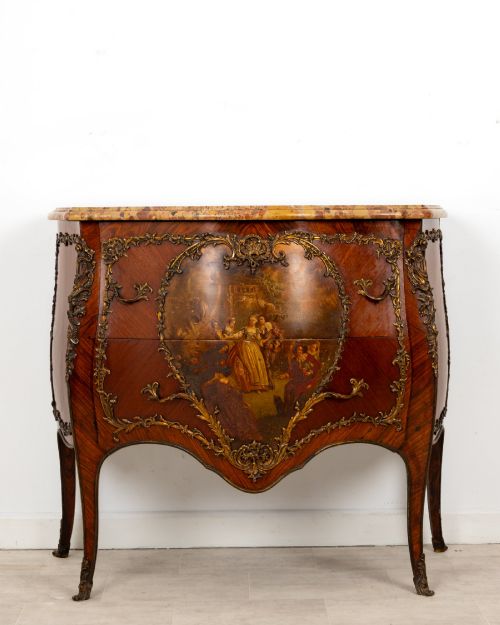
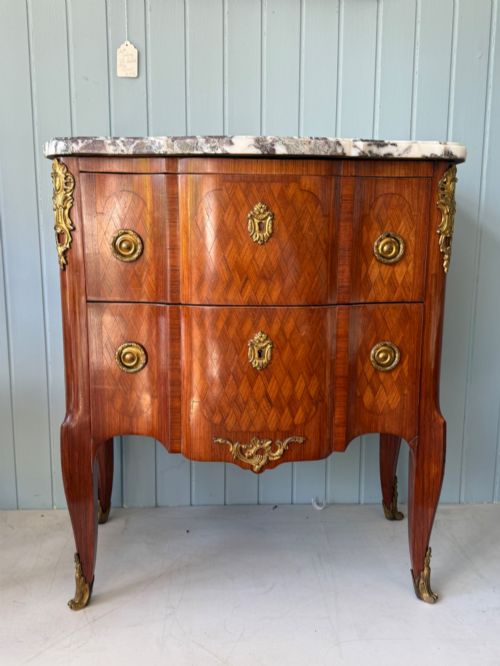
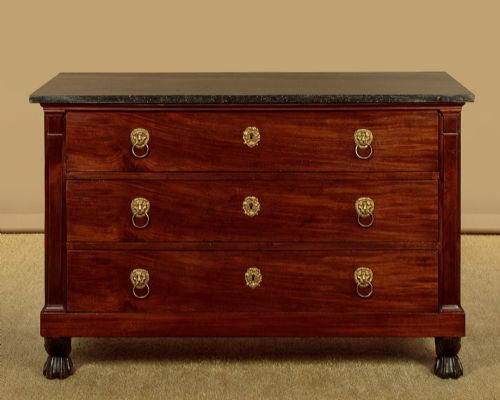
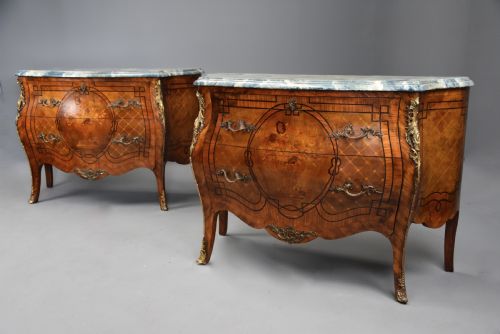
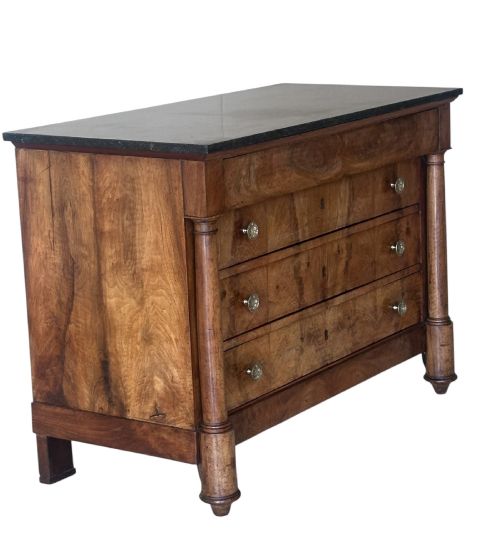
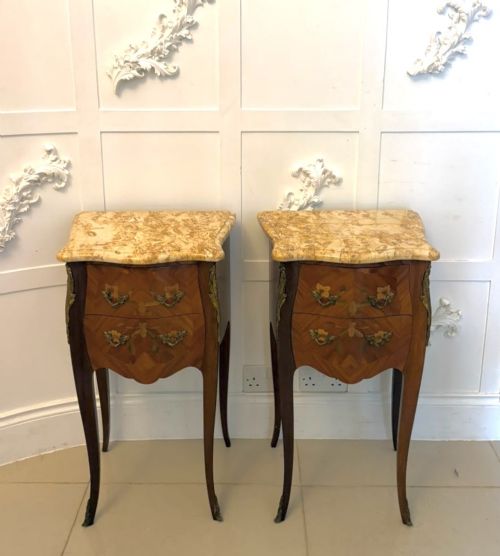
The profile ranges from rectilinear Louis Philippe and Empire carcases to swelling Louis XV bombe shapes and serpentine fronts. Buyers encounter large multi-drawer bedroom pieces alongside compact pairs of bedside cabinets finished with marquetry or parquetry.
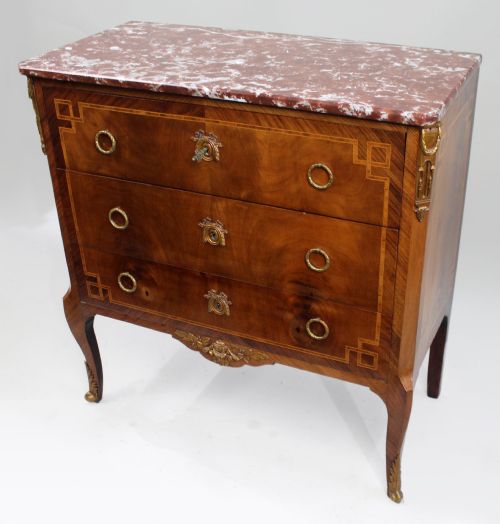
Woods such as walnut, mahogany, cherrywood, and kingwood form the primary structure, often inlaid with contrasting geometric patterns or floral motifs. Regional variations include painted pine and provincial fruitwoods alongside polished Parisian examples.
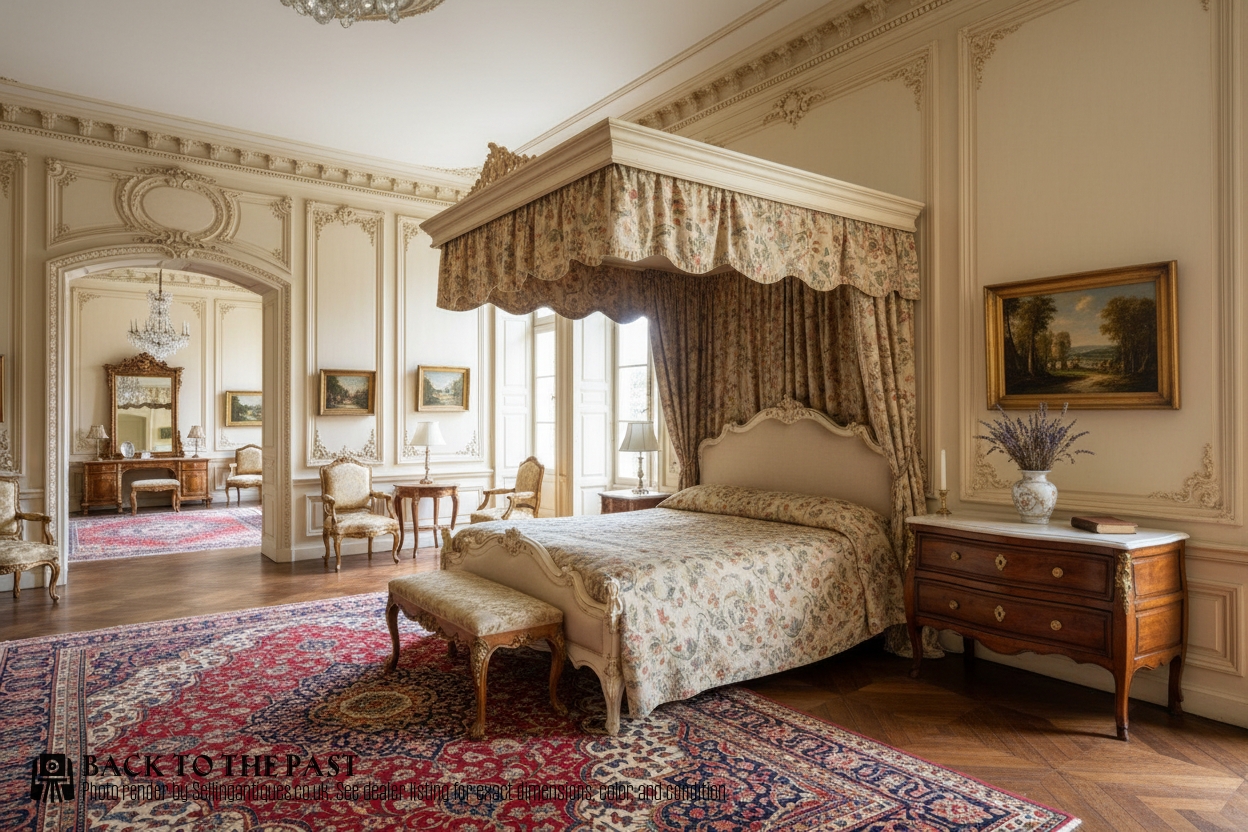
How They Were Made
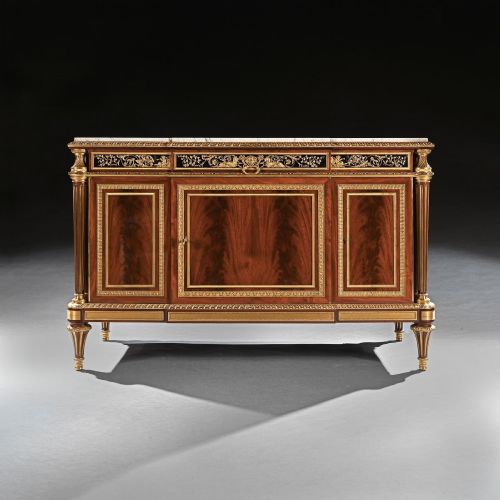
Cabinetmakers constructed the underlying carcase using native and exotic timbers, applying veneer panels in kingwood, walnut, or mahogany arranged in quartered or parquetry layouts. Bronze, ormolu, and brass mounts were cast, chased, and secured to corners, handles, and apron mounts to accent the structural lines.
The heavy marble slabs, sourced in various colours including grey, white, and rouge, were hand-sawn and profiled to match the exact overhang of the commode top, whether straight-edged, rounded, or serpentine. Surface finishes relied on traditional polish applied over timber veneers or painted grounds on provincial pieces.
French Marble Top Chest Retail Price Guide 2026
Typical asking prices for french marble top chest among the pieces listed under this phrase on Sellingantiques today, from the lower quarter to the upper quarter. They describe what is for sale here now, not the wider market.
Listings feature 18th century, 19th century, and early 20th century periods, executed in walnut, mahogany, kingwood, cherrywood, and oak.
What Varies in Quality
Quality rests in the precision of the veneer work and the integration of the bronze or ormolu mounts with the timber carcase. Finer examples display continuous grain matching across drawer fronts and hand-chased metalwork rather than cast repetition.
The selection and thickness of the marble top also distinguish the piece, with well-matched edges and harmonious veining marking superior manufacture. Heavier structural framing and tight drawer joints separate workshop pieces meant for formal reception rooms from utility items.
Jacques Bircklé·Henry Dasson·E. Kahn·Bruneau
The French Marble Top Chest Glossary
- Commode
- A low chest of drawers or cabinet standing on legs, originating in France during the seventeenth century. It serves as the primary form for marble-topped storage furniture.
- Bombe
- A swelling, convex contour on the front and sides of a cabinet or chest. This curved form requires advanced veneer shaping.
- Marquetry
- Patterns formed by inserting contrasting pieces of wood veneer into a prepared ground. Floral and geometric designs are common across eighteenth and nineteenth-century examples.
- Ormolu
- Gilded bronze used for decorative mounts and furniture hardware. It provides metallic contrast against dark kingwood or mahogany surfaces.
- Parquetry
- Geometric mosaic woodwork arranged in repeating patterns such as cubes or chequers. It frequently covers the top and sides of Louis XVI chests.
French Marble Top Chest: Frequently Asked Questions
What is a commode?
A commode is a low chest of drawers or cabinet designed primarily for formal rooms rather than private bedchambers. In French furniture, the term applies broadly to multi-drawer storage pieces finished with decorative veneers.
The inclusion of a stone slab sets these pieces apart from standard timber chests, providing a durable surface for display and daily use.
How do I date a piece?
Dating relies on combining the timber species, mounting style, and structural joinery visible inside the carcase and drawer linings. Earlier eighteenth-century pieces often feature solid oak or walnut framing with hand-cut dovetails.
Revival pieces from the later nineteenth century imitate these earlier forms but employ machine-sawn timbers and standardised brass or bronze hardware fixings.
Are the marble tops original?
Most marble tops match the exact contour and period wear of the timber carcase beneath, having been cut specifically for that frame. Stones vary in tone from dark grey and rouge to white variants.
Inspect the underside of the stone and the upper frame seating to confirm consistent contact and matching integration with the overall design.
How do I care for the surface?
The marble top requires cleaning with mild soap and water, avoiding acidic substances that can etch polished stone surfaces. Timber sections benefit from occasional wax application to preserve the veneer finish.
Place protective felt beneath heavy or damp objects placed on the marble to prevent scratching or staining the stone.