

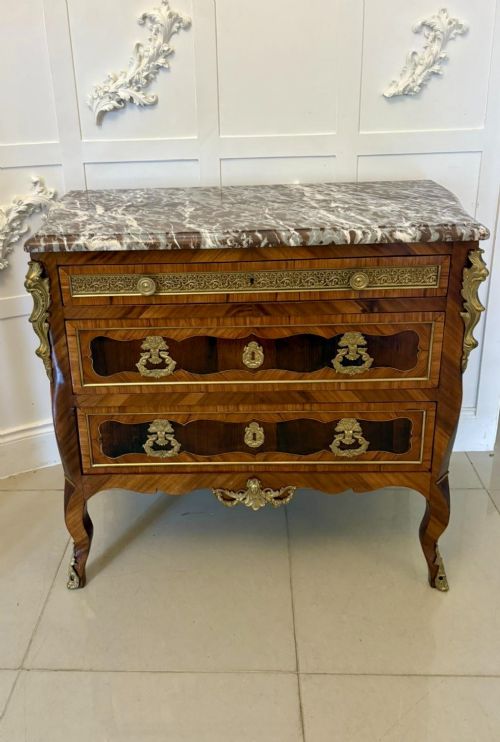
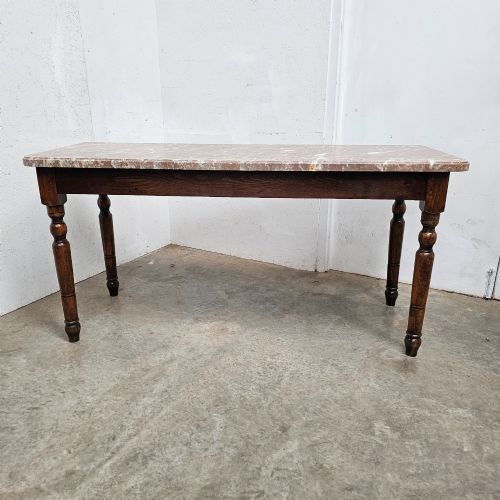
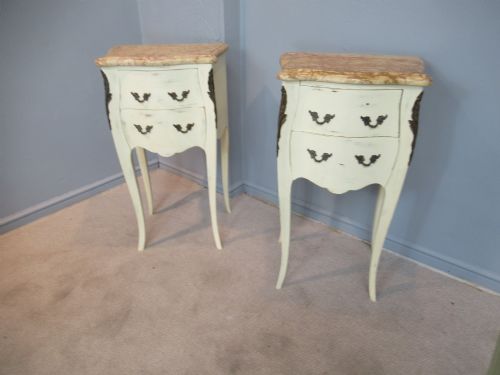
French Marble Sideboard
These pieces of french marble sideboard combine stone tops with wood cabinetry across 18th to 20th-century designs.
French Marble Sideboard
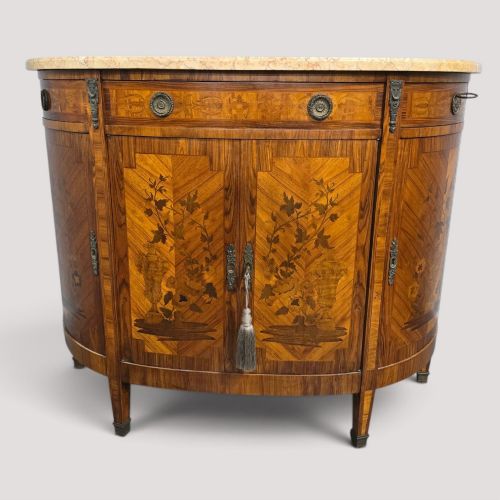
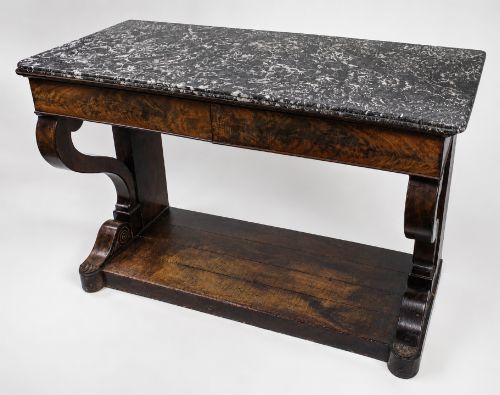
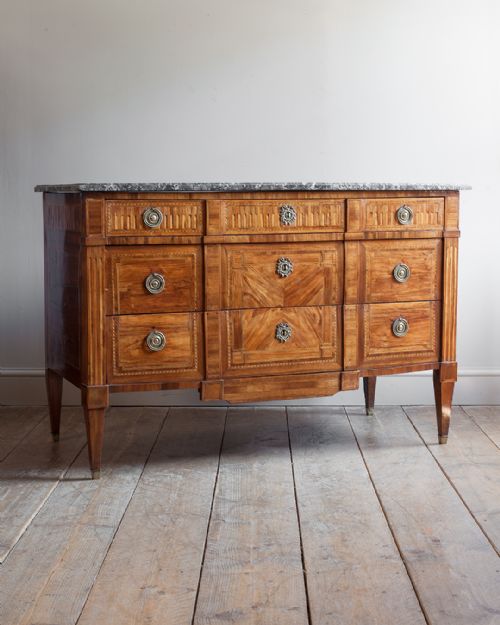
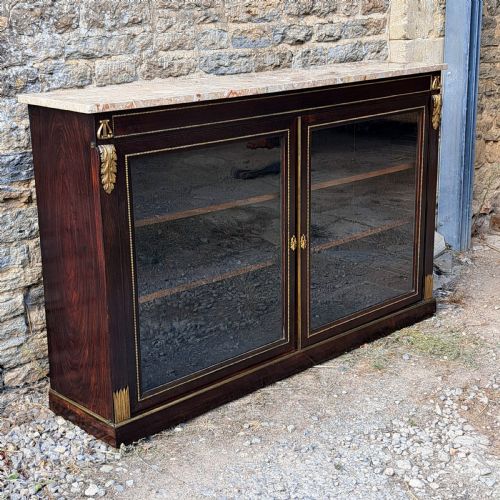
When you search for a french marble sideboard, you examine heavy storage furniture featuring fitted stone surfaces. The selection spans commodes, credenzas, buffets, and console tables designed to hold objects while providing a durable top surface.
You meet pieces originating from the 18th century through to the 1930s, incorporating regional walnut and oak along with imported veneers. Sideboards and commodes from this selection provide deep cabinet space behind doors or drawers beneath the marble.
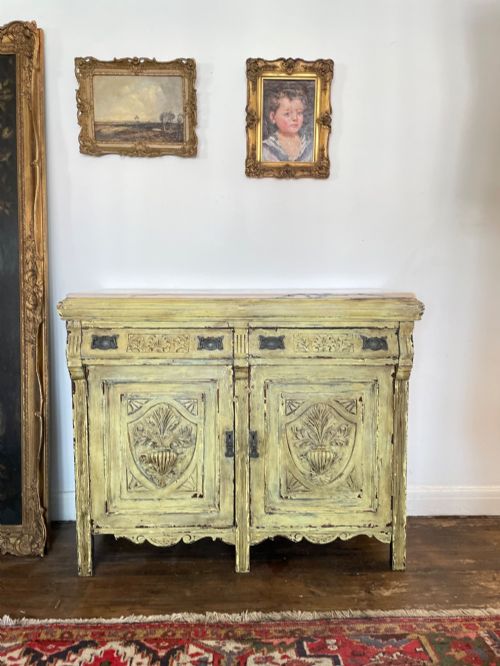
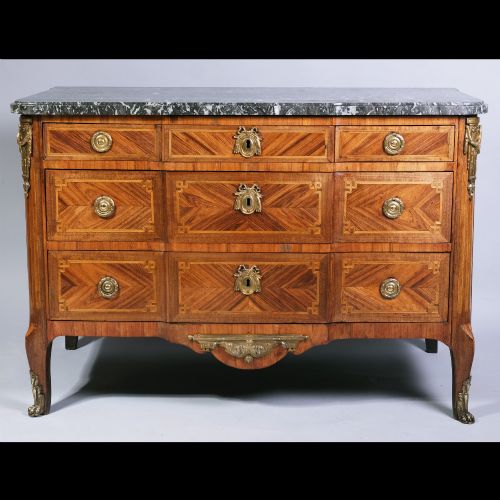
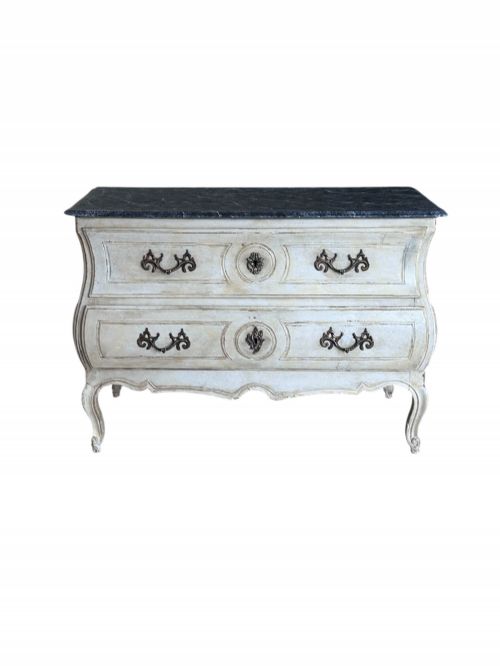
The aesthetic draws heavily from Louis XV, Louis XVI, and Art Deco movements, shifting from ornate rococo curves to clean geometric lines. Walnut, kingwood, and rosewood forms dominate the offerings alongside painted and japanned finishes.
How they were made
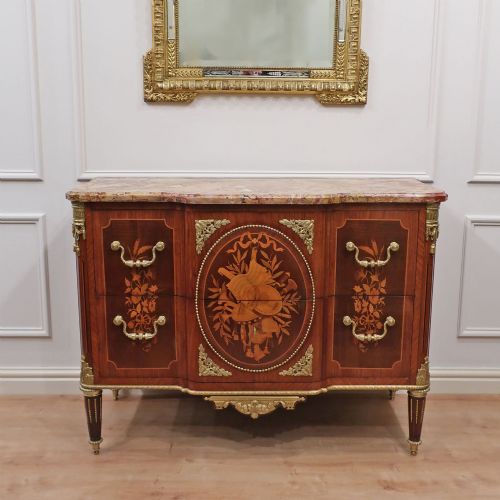
Cabinetmakers constructed carcass frames from solid oak, walnut, or mahogany before applying elaborate decorative veneers. Woods such as kingwood, tulipwood, and rosewood were cut into thin sheets for marquetry and parquetry patterns across the drawer fronts and doors.
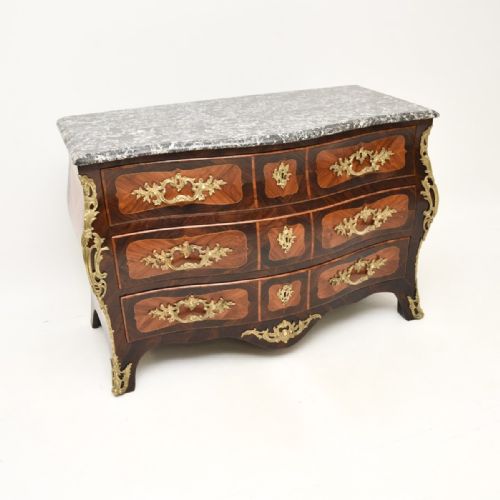
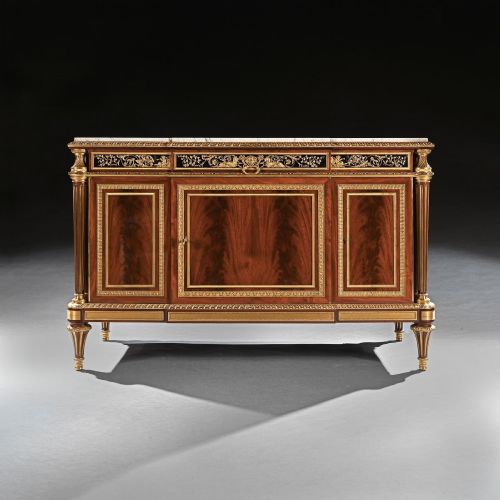
Mounts cast in ormolu, gilt bronze, and brass were affixed to corners, legs, and aprons to accent the structural lines. Heavy stone slabs were then cut, polished, and fitted precisely to the top of each cabinet.
Listings feature walnut, oak, mahogany, rosewood, and kingwood alongside ormolu and brass mounts.
What varies in quality
The distinction between tiers rests on the complexity of the timberwork and the integration of metal mounts. Finely executed parquetry, intricate marquetry inlay, and fire-gilded bronze mounts separate workshop masterworks from simpler provincial storage pieces.
The thickness, colouration, and figuration of the marble slab also dictate standard, alongside the precision with which the stone meets the wooden moulding. Original mounts and untouched timber patination elevate individual examples.
Jacques Bircklé·Henry Dasson·Weisweiler
The French Marble Sideboard Glossary
- Ormolu
- A gilded bronze technique utilising mercury amalgamation, applied to furniture mounts during the 18th and 19th centuries. It gives a bright gold appearance to brassy metal components.
- Marquetry
- The art of applying thin veneers of different woods to a structure to form decorative pictures or geometric patterns. Makers used contrasting tones of rosewood, kingwood, and walnut for visual depth.
- Commode
- A low chest of drawers or cabinet originating in France during the 17th century. These pieces usually feature prominent marble tops and decorative metal mounts.
- Parquetry
- Geometric mosaic woodwork used for cabinet surfaces, constructed from fitted triangular or diagonal veneer blocks. It creates repeating patterns across commode and sideboard tops.
- Credenza
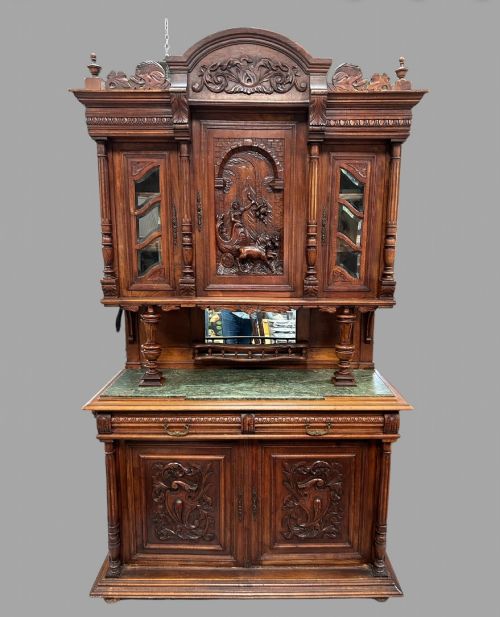
- A side cabinet or sideboard used for serving food or displaying objects. Examples in this category frequently incorporate mirror backs or open display shelving above the marble surface.
French Marble Sideboard: Frequently Asked Questions
How do I clean the marble top?
Use a damp cloth with mild, non-acidic soap to wipe the stone surface clean. Avoid harsh household chemicals or lemon-based cleaners that etch polished marble.
Dry the surface thoroughly with a soft cloth to prevent water spots from forming on older stone.
Are the marble tops fixed in place?
Most marble slabs rest on top of the wooden carcass by their own heavy weight rather than permanent glue. This allows the stone to be removed safely during transport.
Take care when lifting the slab, as antique marble can crack under uneven pressure.
How do I distinguish Louis XV from Louis XVI?
Louis XV pieces feature flowing serpentine curves, cabriole legs, and asymmetrical rococo ormolu mounts. The overall silhouette appears organic and rounded.
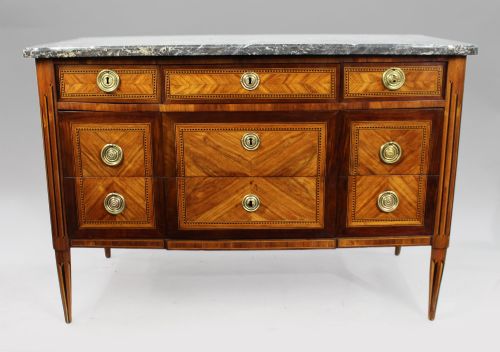
Louis XVI furniture introduces straight tapering fluted legs, rectangular proportions, and symmetrical neoclassical ornamentation.
Can these sideboards support heavy tableware?
The internal wooden shelving and solid carcass frames provide sturdy storage for ceramics, glassware, and heavy dining items. The marble surface easily bears the weight of serving dishes and decorative objects.
Distribute heavy items evenly across interior shelves to maintain structural balance over time.