

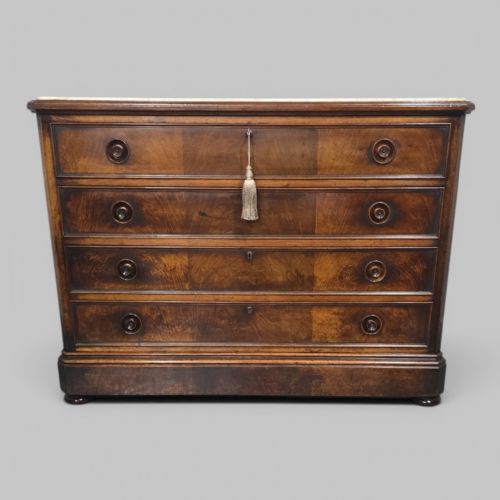
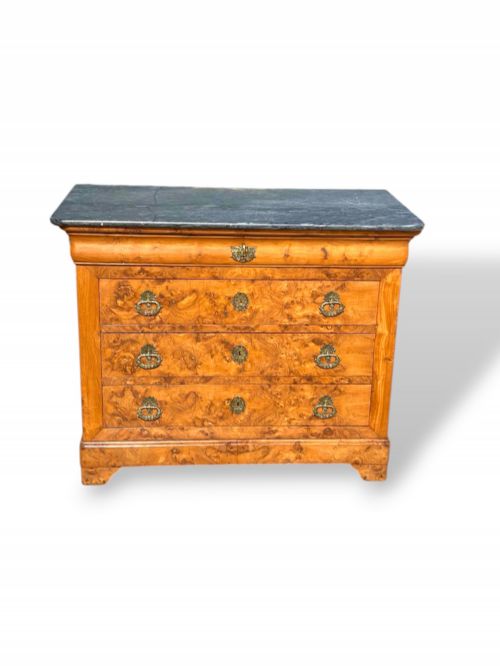
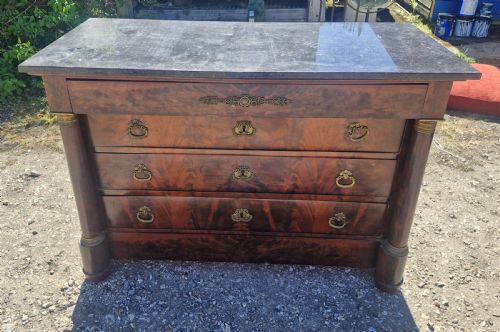


French Louis Philippe Commode
A french louis philippe commode offers generous drawer space beneath a heavy stone surface, combining austere walnut or mahogany timber with quiet utility.
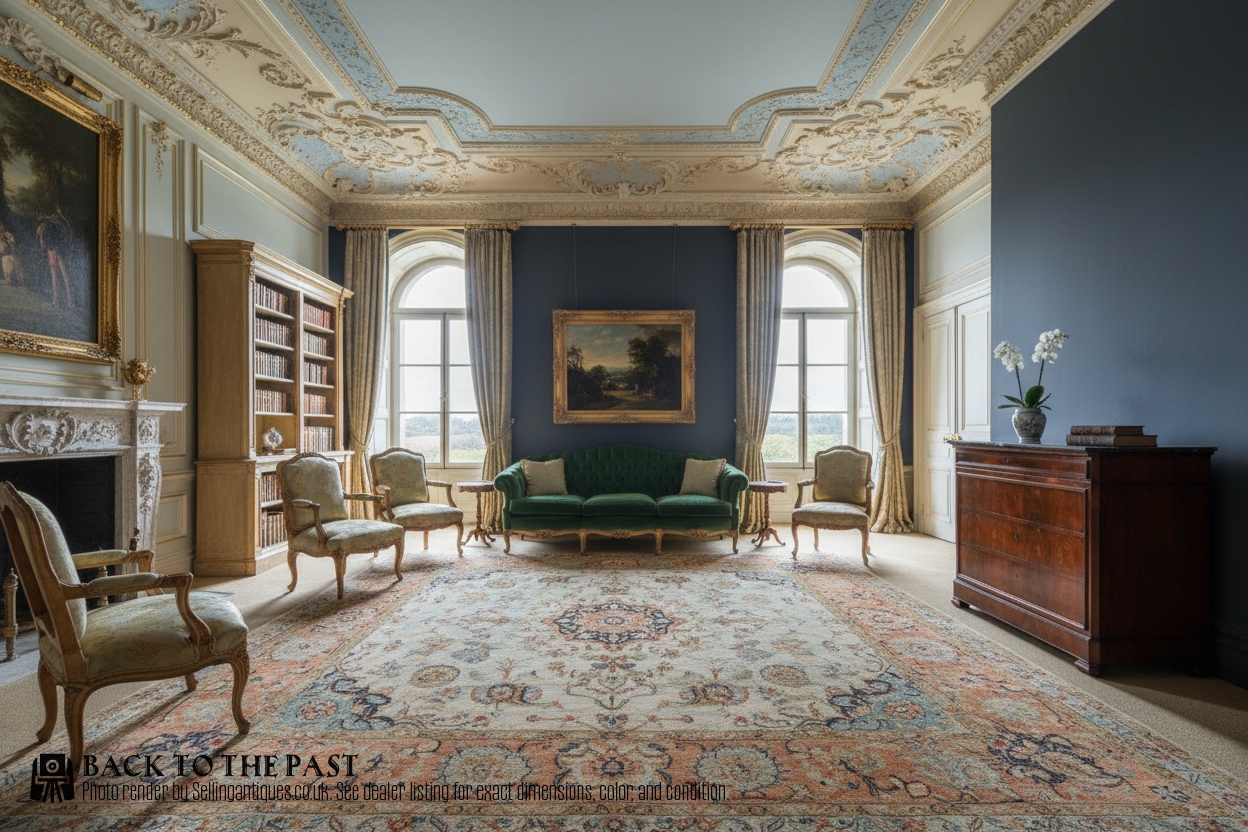
French Louis Philippe Commode
A french louis philippe commode functions as a sturdy bedroom or hallway chest of drawers characterised by clean lines and minimal ornamentation. These pieces originate predominantly from the nineteenth century, spanning decades from eighteen fifty to nineteen twenty.
Materials and Construction
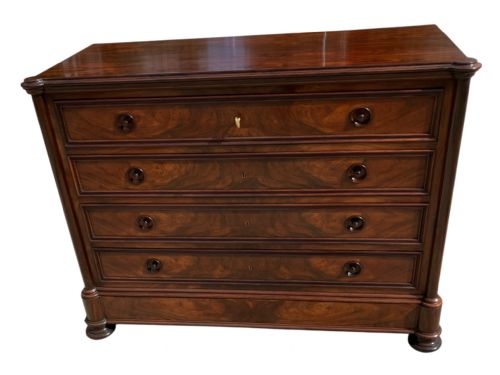
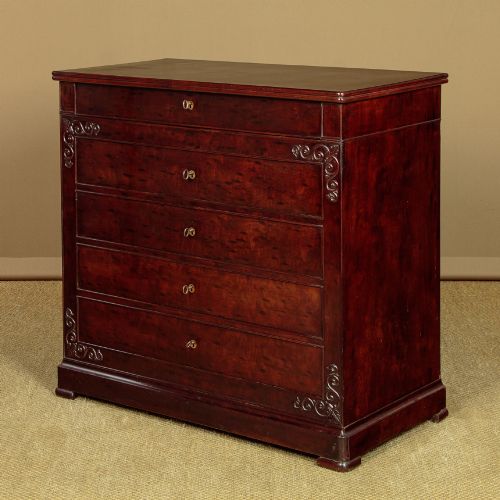
Cabinet makers constructed these chests using solid timber frames overlaid with figured veneers such as flame mahogany, burr walnut, and burr ash. Carpenters utilised brass hardware sparingly, letting the natural grain patterns of the wood provide the primary visual interest.
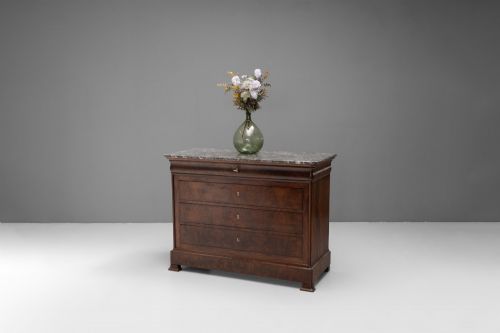
Heavy stone slabs, frequently cut from grey marble, rest directly upon the upper surface of the carcase to provide a durable and cool finish. Drawers slide within a substantial framework built to support considerable weight.
Hidden frieze drawers provide a secret compartment just beneath the heavy marble slab for keeping small valuables safe.
Quality and Execution
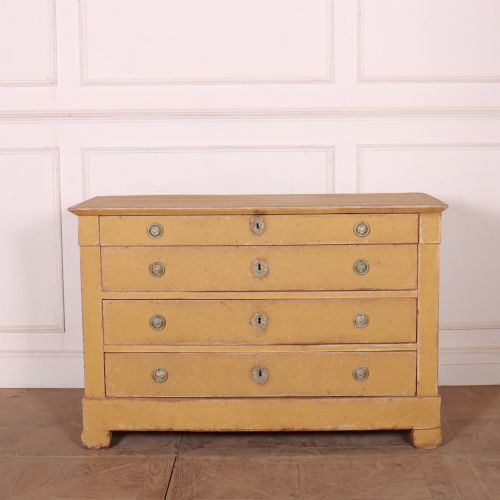
Superior examples display carefully matched veneer grains across the drawer fronts, ensuring the patterns flow symmetrically from drawer to drawer. Lesser specimens rely on plain timber or show less attention to the alignment of decorative wood selections.
The integration of the marble top and the precision of the drawer joinery distinguish finer commissions from standard utilitarian storage. Heavier, well-figured walnut and flame mahogany examples demonstrate superior material selection by the original cabinet maker.
Gomien
The French Louis Philippe Commode Glossary
- Commode
- A low chest of drawers originating in France. This form provides substantial storage capacity while maintaining a height suitable for placement beneath mirrors or paintings.
- Burr Walnut
- Wood harvested from walnut tree growths that produce intricate, swirling grain patterns. Cabinet makers utilised these highly decorative veneers on drawer fronts.
- Flame Mahogany
- Timber cut to reveal a characteristic flickering flame pattern in the grain. This figured mahogany appears on nineteenth century furniture.
- Grey Marble
- A natural stone material used for the protective tops of chests. The dense surface provides a cold, hard-wearing counter.
French Louis Philippe Commode: Frequently Asked Questions
What is a french louis philippe commode?
A french louis philippe commode is a nineteenth century chest of drawers characterised by restrained classical proportions and minimal carving. These pieces typically feature a concealed top drawer and a stone upper surface.
Cabinet makers built them primarily in walnut, mahogany, and ash to serve as functional bedroom furniture.
How do I clean the marble top?
Wipe the stone surface using a soft damp cloth with mild soap and water. Avoid acidic cleaners or harsh chemicals that can etch the marble.
Dry the surface thoroughly after cleaning to maintain the polished finish.
Can I place a heavy lamp on it?
The stone top easily supports lamps, decorative objects, and heavy items without sustaining damage. The solid wood carcase underneath provides a stable base.
Ensure items placed near the edge do not risk sliding off the polished stone.
How do I identify a louis philippe piece?
Look for clean rectangular lines, ogee or flat moulded cornices, and a concealed frieze drawer beneath the top. Ornate carvings are absent in favour of figured wood veneers.
Materials like walnut, mahogany, and grey marble appear commonly across nineteenth century examples.