



French Impressionist Seascape Art
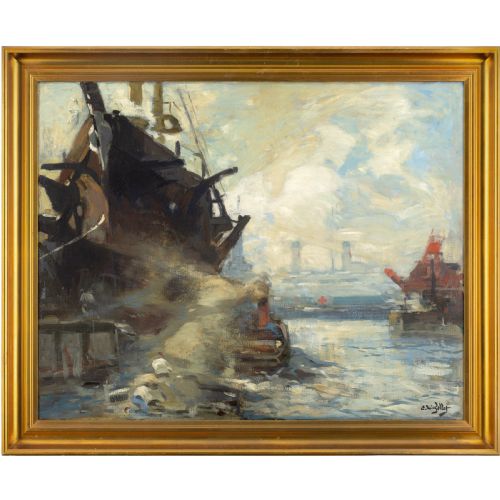
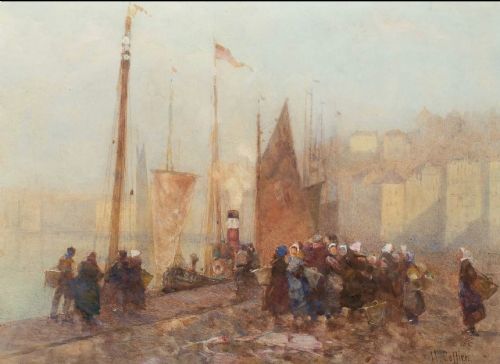
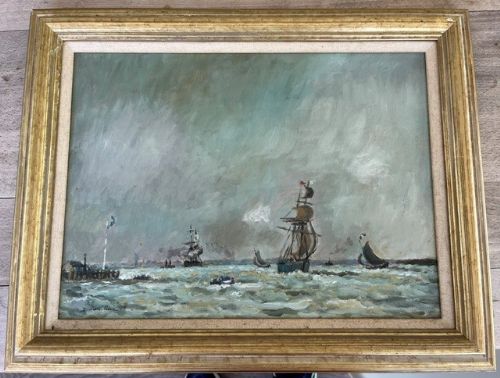
French impressionist seascape art brings coastal light and harbour scenes into a room through oil and watercolour.
French Impressionist Seascape Art
French impressionist seascape art encompasses oil paintings and watercolours depicting coastal views, harbours, and the sea from the late nineteenth century to the mid twentieth century. Buyers encounter coastal scenes from Brittany, Normandy, and the Mediterranean Côte d'Azur.
The works span periods from eighteen seventy to nineteen sixty, capturing fishing ports, sailing yachts, and coastal cliffs through impressionist and post-impressionist lenses. Most pieces originate from the early decades of the twentieth century, rendered on canvas, board, or paper.
Materials and Technique
Artists painted primarily in oil on canvas or board, utilising oil paint to build textured surfaces and impasto layers that capture shifting coastal light. Watercolours on paper appear alongside these oils, offering transparent washes for marine views.
Gilt framing frequently accompanies the paintings, complementing the coastal subjects from regions such as Toulon, Marseille, and Honfleur.
An ocean gypsy sailing yacht shares the waves with wartime hospital ships and quiet Brittany fishing ports.
Evaluating Quality
Quality rests on the fidelity of light capture and brushwork strength, where confident impasto application distinguishes masterly coastal depictions from ordinary harbour studies.
The distinction between a compelling regional view and a weaker composition depends upon the artist's command of maritime atmosphere and colour harmony.
Eugène-Louis Gillot·Hector Caffieri·Erich Mercker·Elisabeth Bardon·Louis Suire·Gustave Vidal·Jean-Baptiste Olive·Raymond Picque·William Lee Hankey·Charles Malfroy·Roger de la Corbiere·Owen Bowen
The French Impressionist Seascape Art Glossary
- Impasto
- Paint applied thickly to a canvas or board, creating a textured surface that stands out from the plane. This technique allows artists to build physical depth in water and sky.
- Post-Impressionism
- An artistic movement extending impressionism while rejecting its limitations, often emphasising more symbolic content or heavier structure. Works in this style show distinct personal approaches to colour and form.
- Watercolour
- Paint consisting of colour pigment suspended in a water-soluble binder, typically applied to paper. It yields transparent luminous effects well suited to coastal light.
- Gilt
- A thin layer of gold applied to wood for framing artwork. Gilded frames provide a traditional border for maritime oil paintings.
French Impressionist Seascape Art: Frequently Asked Questions
What periods do these seascapes cover?
The works span from eighteen seventy through to nineteen sixty, capturing changing artistic movements across several decades.
Most pieces date from the early twentieth century, particularly the nineteen twenties and nineteen thirties.
Which materials were used by the artists?
Painters utilised oil on canvas, oil on board, and watercolour on paper to capture maritime scenes.
Gilt frames frequently enclose these works, preserving the paintings and watercolours.
Where do these coastal views depict?
The scenes focus on French coastal locations, including Normandy, Brittany, and the Mediterranean Côte d'Azur.
Specific settings feature ports, harbours, and coastal cliffs from Marseille, Toulon, and Honfleur.
How do impressionist and post-impressionist styles differ here?
Impressionist works concentrate on capturing transient effects of light and weather upon the sea and shore.
Post-impressionist examples employ more distinct colour choices and structural brushwork to interpret the coastal landscape.