
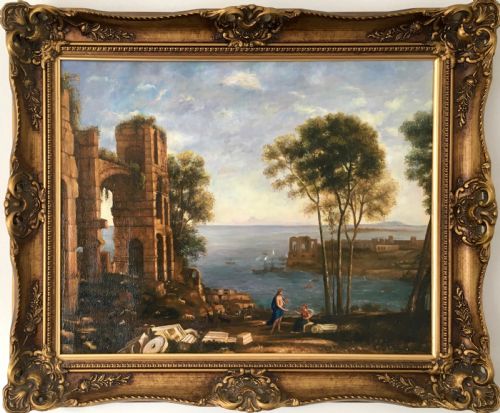
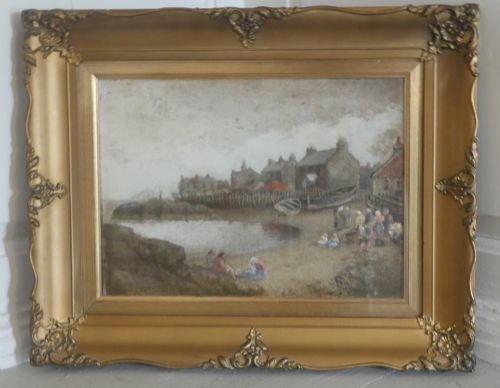
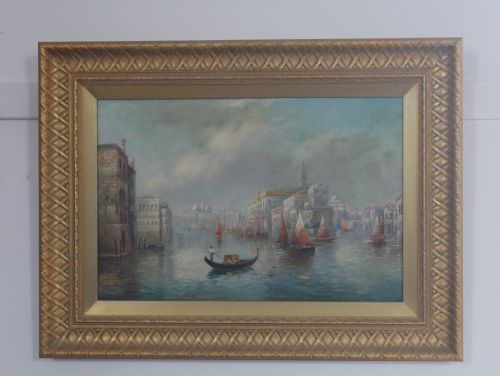
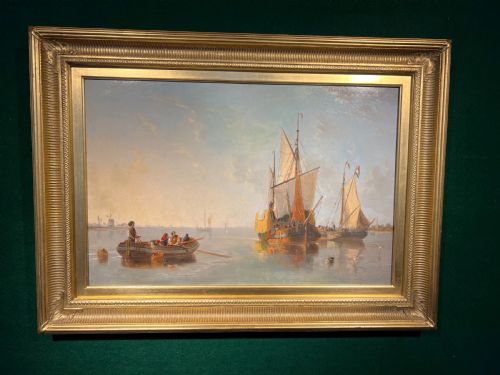
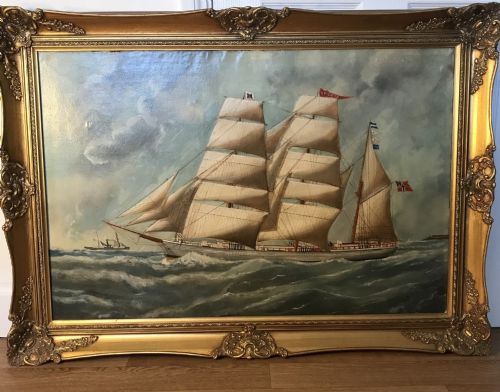
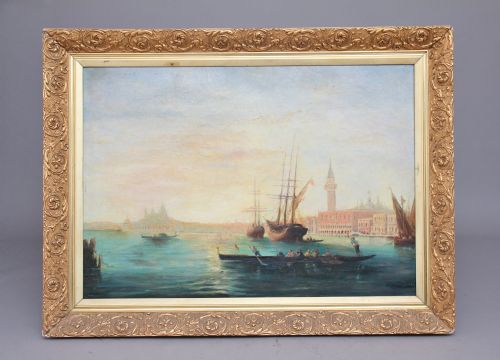
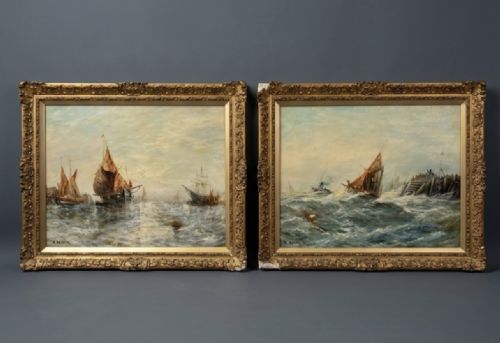
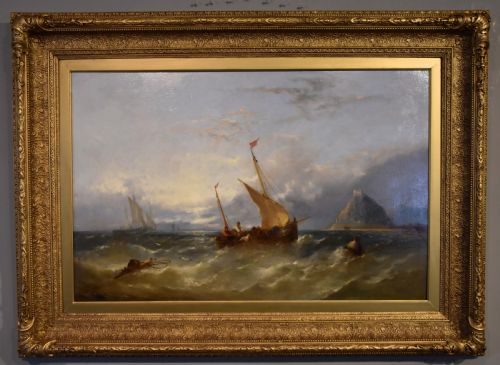
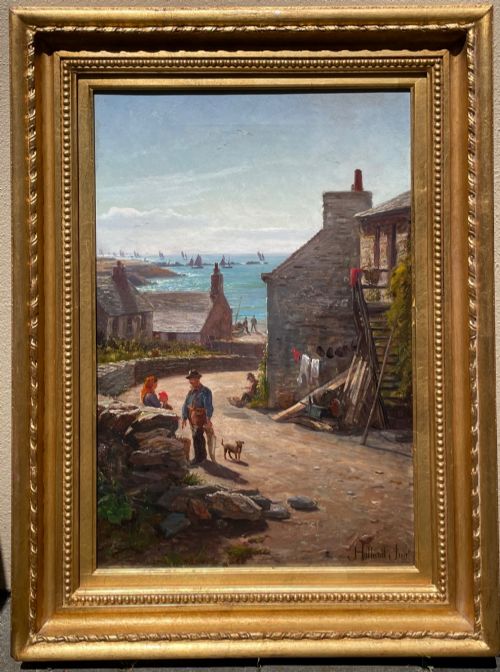
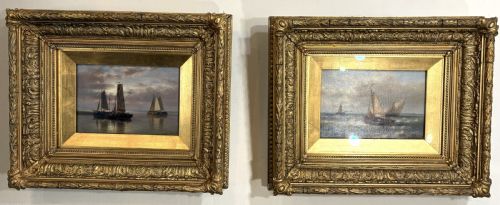


Gilded Framed Seascape Painting
A gilded framed seascape painting brings the movement of open water and historic vessels directly onto the wall.
Gilded Framed Seascape Painting
When you search for a gilded framed seascape painting, you encounter works capturing maritime life, coastal views, and historic shipping across the nineteenth and early twentieth centuries. These artworks frequently portray dramatic shipwrecks, quiet Venetian lagoons, and bustling harbours rendered in oil on canvas or board.
The most common examples on this page date from the Victorian period through the Edwardian era, often framed in ornate, giltwood mouldings that complement the maritime subject matter. Painters from this timeframe focused on coastal topography, open seas, and sailing vessels under changing atmospheric conditions.
Subjects range from British coastal towns like Whitby and Portsmouth to Mediterranean scenes and Dutch coastal waters. Each piece reflects the nineteenth-century fascination with marine art, combining meticulous observation of water and rigging with decorative presentation.
Materials and Technique
Artists painted primarily with oil paint upon stretched canvas or wooden boards, applying layers of pigment to capture the transparency of water and the play of light on clouds. Watercolours on paper also appear, offering lighter depictions of coastal topography.
The framing technique typically involves carved wood finished with gesso and gold leaf, creating a luminous border that isolates and enhances the painted scene. These heavy gilt frames were constructed to protect the canvas while adding visual weight to the artwork.
Listings span the 17th, 19th, and early 20th centuries, featuring oil on canvas, oil on board, and watercolour.
Evaluating Quality
Quality rests in the artist's ability to render the weight of water, the accuracy of rigging on sailing ships, and the handling of atmospheric light. Finer works demonstrate a confident brushwork that distinguishes between choppy coastal spray and calm Venetian canals.
The craftsmanship of the frame also dictates overall standard, with hand-carved giltwood mouldings showing superior depth and detail compared to simpler later replacements. The integration between the painting's palette and the tone of the gilding completes the visual success of the piece.
John Wilson Carmichael·Abraham Hulk I·James Webb·Thomas Bush Hardy·Gustave de Breanski
The Gilded Framed Seascape Painting Glossary
- Giltwood
- Wood that has been coated with a thin layer of gold leaf. This finish provides a bright, reflective border to the artwork.
- Gesso
- A plaster-like mixture applied to wooden frames before gilding. It creates a smooth surface suitable for intricate carving and gold application.
- Marine Art
- Artwork that depicts or draws its main inspiration from the sea, ships, and coastal views. This genre encompasses historical naval battles, shipwrecks, and calm harbour scenes.
- Oil on Canvas
- Pigment mixed with drying oil applied to a woven fabric support. This combination allows for rich colour depth and subtle blending of light.
Gilded Framed Seascape Painting: Frequently Asked Questions
How should I hang a heavy gilt frame safely?
Heavy giltwood frames require secure wall anchors and appropriate picture wire or mirror plates screwed directly into the wooden stretcher or sturdy frame backing. Professional installation ensures the weight is evenly distributed.
Position the artwork away from direct sunlight and strong heat sources to protect both the oil paint and the delicate gold leaf finish from cracking or fading.
How do I identify the period of a maritime painting?
Examine the vessel types depicted, the clothing of any figures on the shore, and the style of the gilt frame. Nineteenth-century works often feature three-masted schooners or specific paddle steamers alongside characteristic Victorian framing techniques.
Signatures, dates, and stretcher construction on the reverse of the canvas also provide reliable clues regarding the exact era of creation.
What subjects are most common in these seascapes?
Common subjects include British fishing boats off coastal landmarks, dramatic shipwrecks near rocky shores, and tranquil Venetian lagoon scenes. Artists frequently documented working vessels such as barques, schooners, and Dutch pinases.
Topographical accuracy was important to nineteenth-century buyers, so many paintings record specific harbours, estuaries, and international ports.