


Original French Coastal Painting
When you search for an original french coastal painting, you encounter maritime scenes rendered across Brittany, Normandy, and the Mediterranean shores.
Original French Coastal Painting
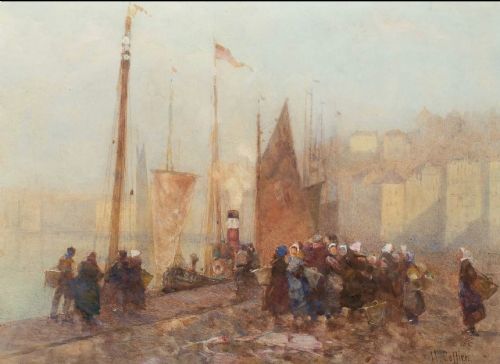
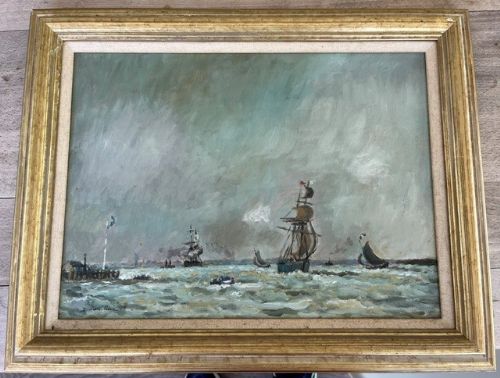
An original french coastal painting captures harbours, cliffs, and fishing ports along the Atlantic and Mediterranean littorals. These works record maritime life, from seaweed gatherers in Brittany to sunlit scenes along the Côte d'Azur.
The selections available here span from the late nineteenth century through to the mid-twentieth century. Works frequently depict specific locations such as Boulogne, Marseille, Honfleur, and Concarneau.
The dominant forms are oil paintings on canvas, board, and wood panel, alongside watercolours and pastels on paper. Framed artwork forms the vast majority of these maritime depictions.
How they were made
Artists painted primarily with oil paint and watercolour, applying pigments to canvas, paper, wood panels, and card. Gilt frames often enclose the finished works, providing structural support and visual definition.
Techniques range from post-impressionist brushwork and fauve colour application to detailed academic watercolours. Painters utilised these varied methods to capture changing light on water and stone.
Materials documented across the listings include canvas, paper, oil paint, watercolour, wood, glass, and gilt.
What varies in quality
The handling of light and atmospheric depth distinguishes accomplished compositions from routine topographical records. Painters who captured the specific glare of the Mediterranean or the muted light of Normandy elevate the medium.
The strength of the provenance and the clarity of attribution influence the standing of a piece. Signed works by documented artists carry distinct weight compared to anonymous school pieces.
Hector Caffieri·Raymond Moritz·Louis Suire·Gustave Vidal·Jean-Baptiste Olive·William Lee Hankey·Charles Malfroy·Roger de la Corbiere·Henri Ottman·Yves Brayer·Paul-Louis Barruel·Charles Euphrasie Kuwasseg·Charles Eyres Simmons
The Original French Coastal Painting Glossary
- Post-Impressionism
- A movement extending beyond impressionism that prioritised symbolic content and expressive use of paint. Artists developed distinct personal approaches to colour and form.
- Fauve
- A style characterised by strong colours and painterly qualities rather than realistic or representational values. The approach emerged in France during the early twentieth century.
- Oil on Canvas
- Pigment mixed with drying oil applied to a stretched woven fabric support. This combination allowed for rich texture and lasting durability.
- Watercolour
- Paint consisting of colour suspended in a water-soluble binder applied to paper. This medium produces translucent washes of tone.
- Gilt
- A thin layer of gold applied to wood or other surfaces to create a decorative finish. Frames often received this treatment.
Original French Coastal Painting: Frequently Asked Questions
What subjects appear in an original french coastal painting?
These works depict harbours, fishing ports, cliffs, and beaches along the French coastline. Common motifs include moored boats, seaweed gatherers, rocky promontories, and coastal architecture.
Scenes frequently focus on specific regions such as Normandy, Brittany, Provence, and the Mediterranean Côte d'Azur.
Which periods do these coastal paintings represent?
The pieces span from the late nineteenth century through to the mid-twentieth century. The selection includes works dated from the eighteen-seventies up to the nineteen-sixties.
Early twentieth-century and interwar periods are particularly well represented among surviving examples.
What materials were used by the artists?
Painters utilised oil paint and watercolour as their primary mediums. Supports include canvas, paper, wood panels, and card.
Many of these works retain their original framed presentation, often featuring gilt wood mouldings.
How do I identify the art styles?
The works reflect movements such as post-impressionism, british impressionism, art deco, and fauve experimentations. Brushwork varies from rapid, expressive strokes to precise watercolour mapping.
Artists focused heavily on recording the shifting light across sea and shore.