
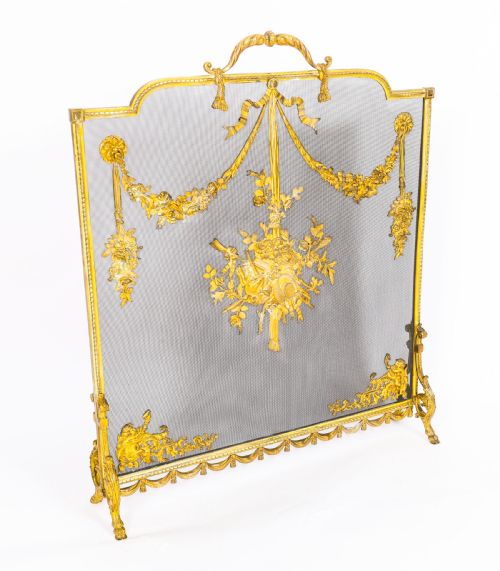


French Hearth Accessories
French hearth accessories bring the warmth and decorative flair of continental salons directly to the fireplace, offering both functional utility and sculptural presence.
French Hearth Accessories
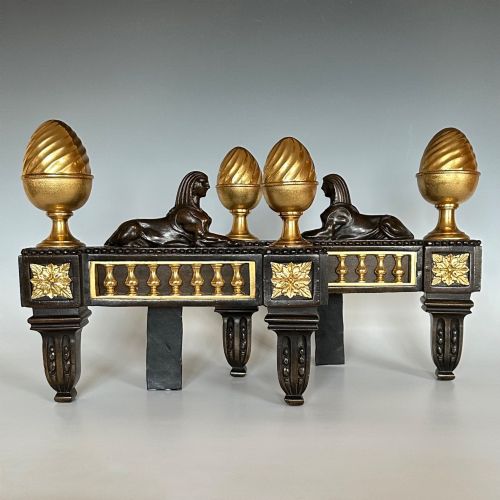
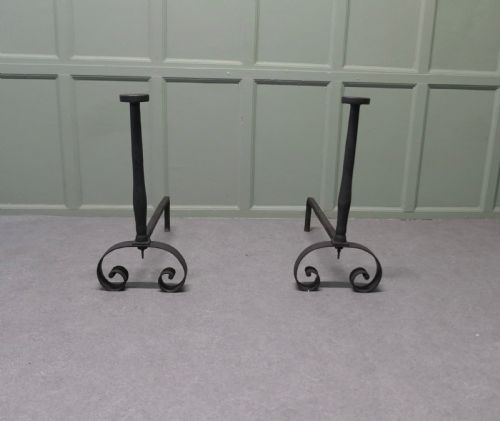
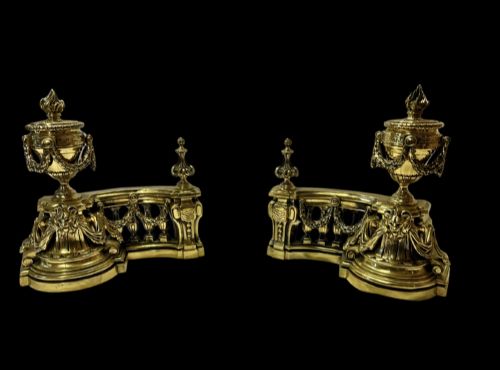
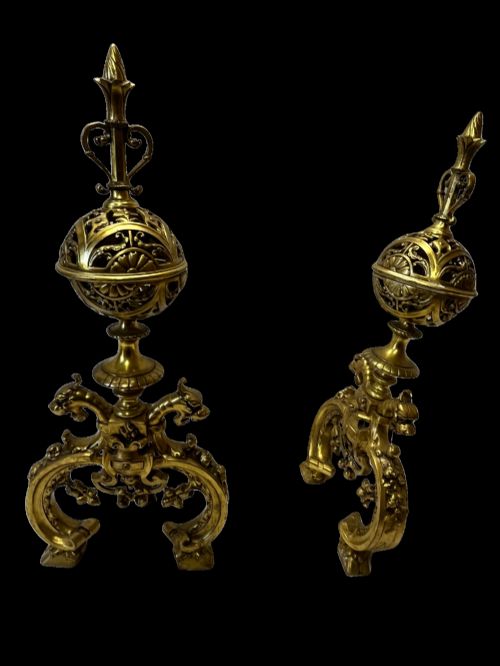
French hearth accessories encompass a range of functional fireside items designed to organise and elevate the fireplace, predominantly featuring andirons, chenets, fire screens, and bellows. These pieces originate largely from the nineteenth century, capturing periods from the Regency era through to the early twentieth century.
Andirons and chenets form the backbone of this selection, appearing as matched pairs designed to support logs within the hearth. Alongside these, decorative fire screens and illustrated bellows complete the ensemble of French hearth accessories available to collectors.
Materials and Construction
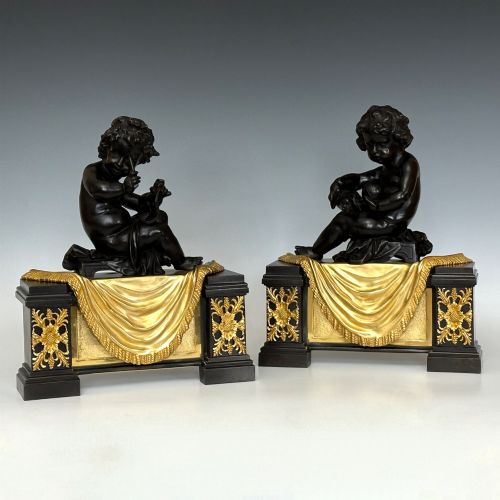
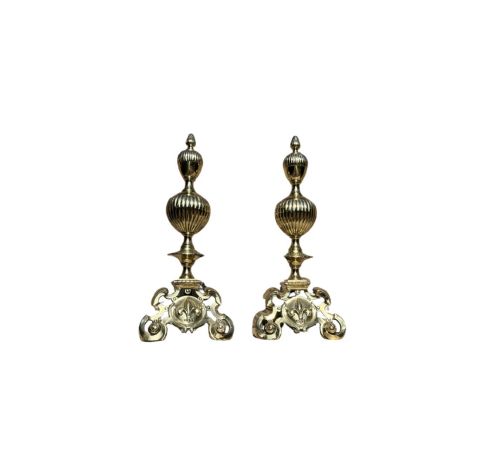
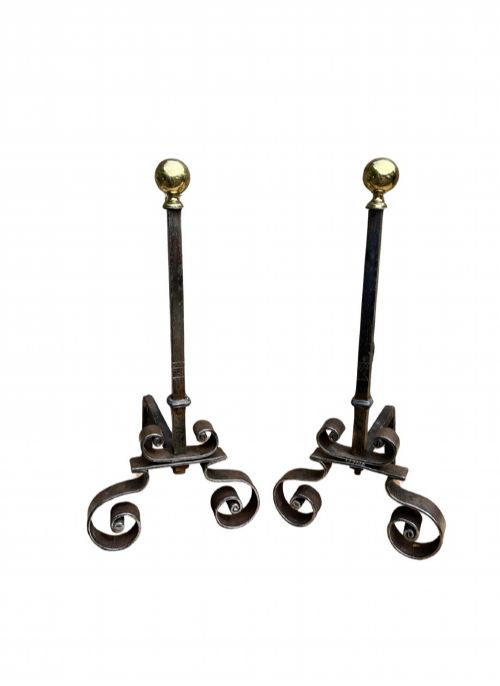
Metalworking dominates the fabrication of these items, utilising cast iron, wrought iron, brass, bronze, and ormolu. Artisans employed casting, chasing, and parcel gilding techniques to achieve intricate surface details and contrasting patinated finishes.
Wood and wire mesh appear in supporting roles, particularly in the construction of framed fire screens and functional bellows. These organic elements complement the heavy metalwork of the chenets and fire dogs.
French Hearth Accessories Retail Price Guide 2026
Typical asking prices for french hearth accessories among the pieces listed under this phrase on Sellingantiques today, from the lower quarter to the upper quarter. They describe what is for sale here now, not the wider market.
Current listings demonstrate a strong preference for nineteenth-century craftsmanship, with brass, bronze, and iron forming the primary structural materials.
Factors of Quality
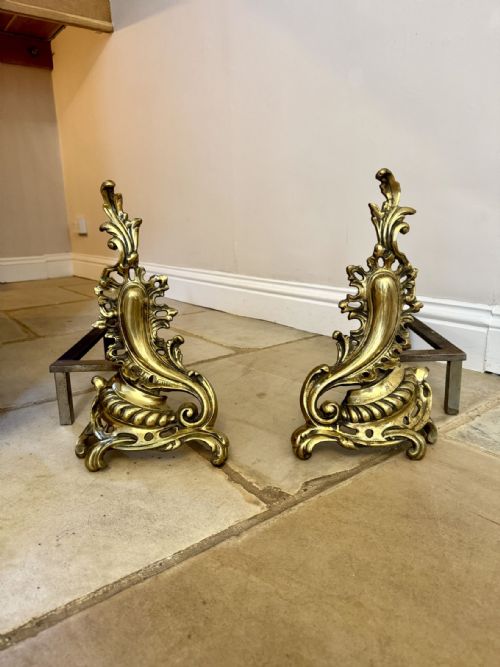
The distinction between standard items and exceptional pieces lies in the crispness of the casting and the depth of the chasing. Superior examples display sharply defined motifs, such as cherubs, musical trophies, or rococo scrolls, rather than softened contours.
Weight and stability also indicate calibre, as heavier bronze and brass assemblies demonstrate a substantial use of metal. Furthermore, the finesse of the parcel gilding or patination separates ordinary utility items from finely finished salon pieces.
The French Hearth Accessories Glossary
- Andiron
- Supports for firewood within a hearth, usually featuring an upright decorative front and horizontal bars behind. They are frequently paired with or synonymous with chenets.
- Chenet
- The French term for an andiron, typically ornamental and placed at the front of the fireplace opening. These often showcase elaborate rococo or baroque styling.
- Ormolu
- Gilt bronze produced by applying a finely ground high-carat gold mercury amalgam to a bronze object. This technique imparts a rich, enduring metallic lustre.
- Fire Screen
- A decorative barrier placed in front of the fireplace opening when the fire is unlit. They often incorporate wire mesh or metal panels adorned with floral or musical motifs.
- Bellows
- A device with flexible sides enclosed by wooden handles, used for pumping air into a fire. Examples in this category feature hand-painted or decorated surfaces, including chinoiserie motifs.
French Hearth Accessories: Frequently Asked Questions
What is the difference between andirons and chenets?
Andirons and chenets are essentially the same functional object, with chenet being the traditional French term. Both serve to hold logs aloft in the hearth while presenting a decorative front to the room.
In practice, pieces described as chenets often display more ornate French styling, such as rococo scrolls or figural mounts, compared to simpler utilitarian fire dogs.
How do I use antique fire screens safely?
Antique fire screens, particularly those with wire mesh or delicate frames, are primarily intended to shield the room from stray sparks or to obscure an unlit hearth during warmer months. Position them at a safe distance from active flames to protect the metalwork and any decorative gilding.
When a real fire burns brightly, ornate screens with painted or gilded panels should be moved back to prevent heat damage to the surface.
How do I identify Louis XV style pieces?
Louis XV style pieces, often associated with the rococo revival of the nineteenth century, are distinguished by asymmetrical curves, C-scrolls, and naturalistic leaf motifs. You will frequently find decorations featuring cherubs, floral garlands, and fluid, plant-like lines.
This aesthetic avoids rigid symmetry in favour of dynamic, flowing shapes that give the heavy bronze and brass a sense of movement.
Can I burn wood using antique andirons?
Most antique andirons and chenets are made of robust materials like cast iron, wrought iron, and heavy bronze, meaning they are structurally capable of supporting burning logs. However, you should assess the individual condition of the horizontal support bars before lighting a fire.
For exceptionally delicate or heavily gilded ormolu pieces, many collectors prefer to use them purely for decorative hearth display rather than risking heat damage.