
French Glass Display Case
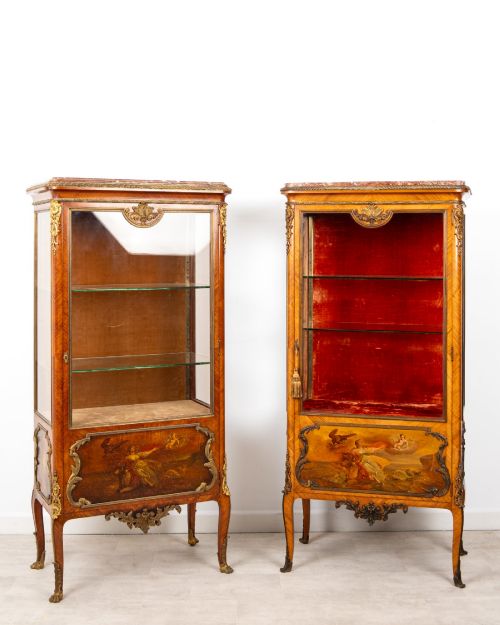
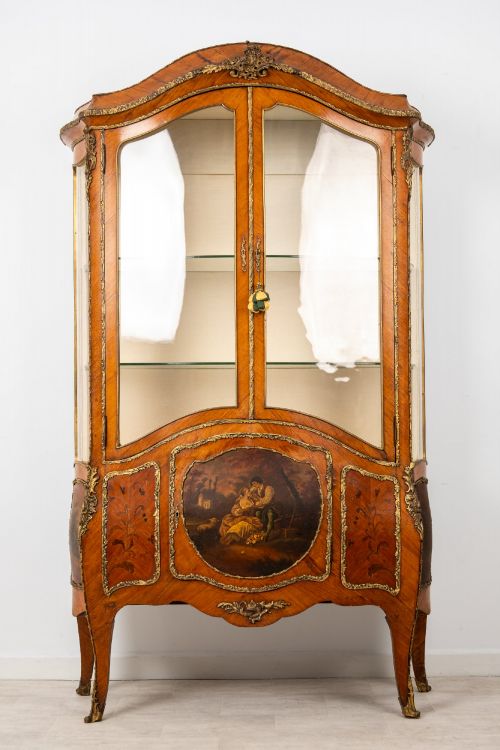
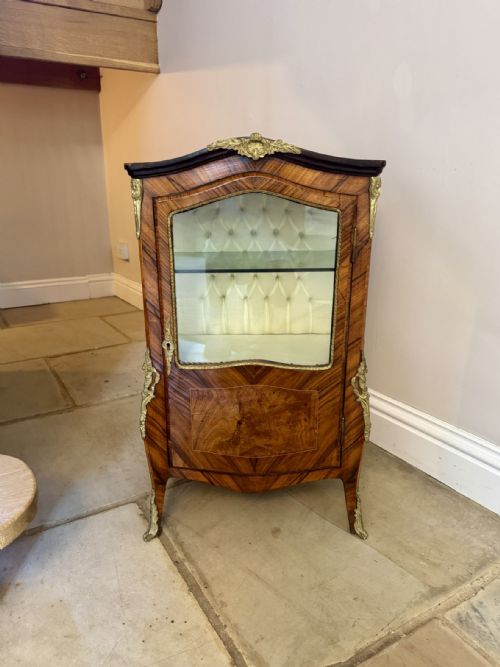
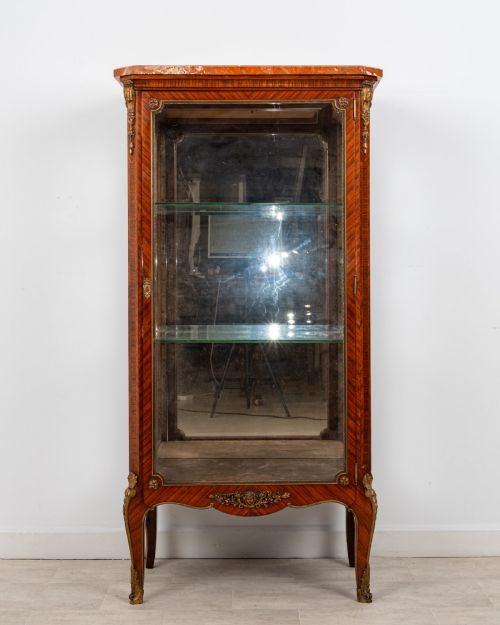
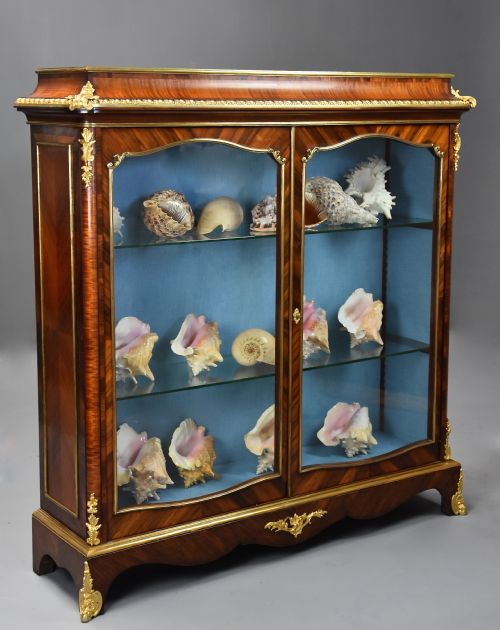
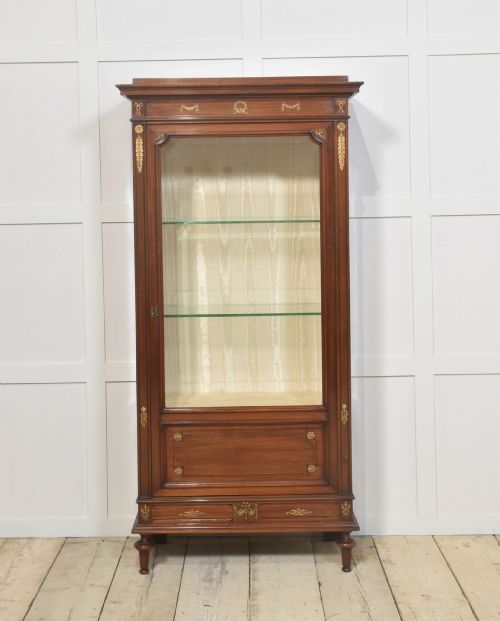
A french glass display case protects precious objects behind clear panes while showing off the warmth of kingwood and the gleam of ormolu.
French Glass Display Case
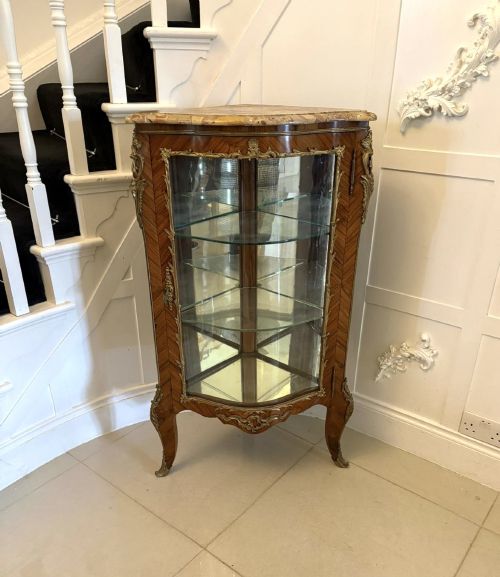
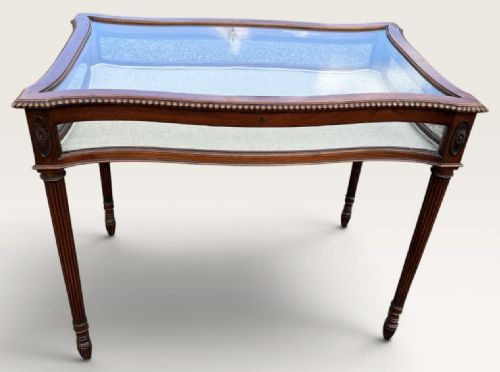
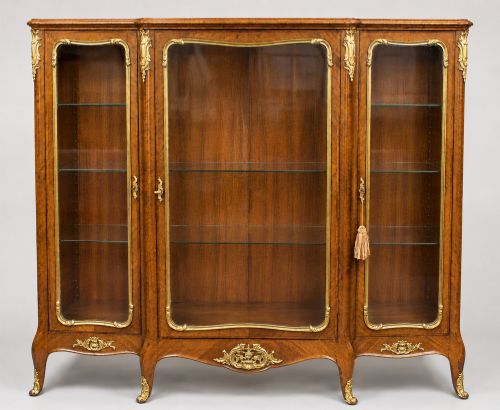
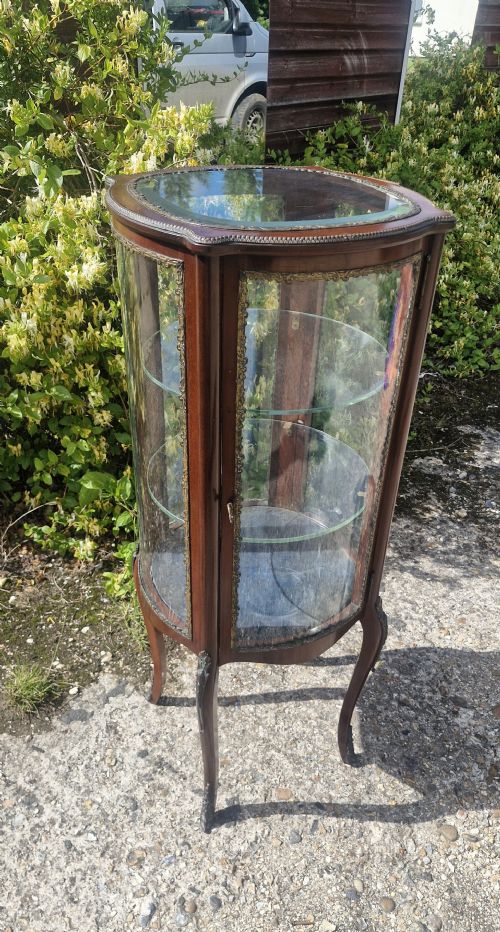
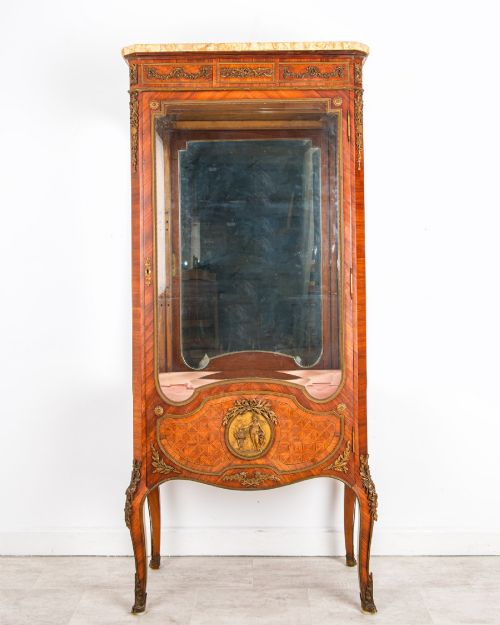
A french glass display case brings together centuries of European craftsmanship, taking the form of tall vitrines, low bijouterie tables, and serpentine corner cabinets. These pieces originate largely from the nineteenth century and the Edwardian era, spanning revivals of Louis XV and Louis XVI styles alongside French Rococo and Directoire designs.
Buyers meet varied iterations on this page, from mahogany wall-hanging cabinets to oak museum display cases and burr walnut pier cabinets. Many incorporate glazed sides and velvet-lined interiors designed to exhibit small treasures, porcelain, and decorative glass domes safely.
Materials and Technique
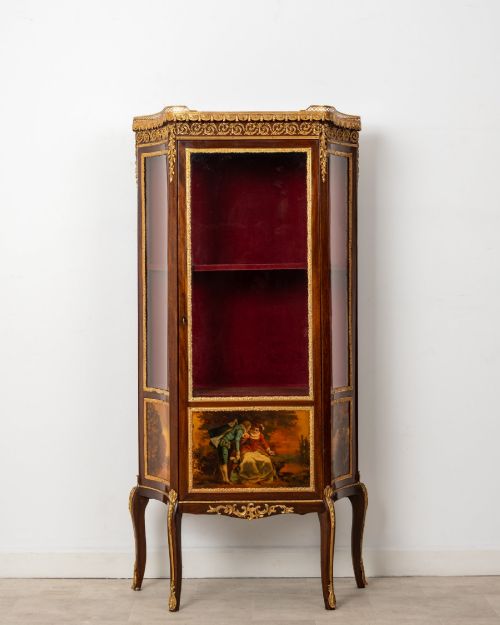
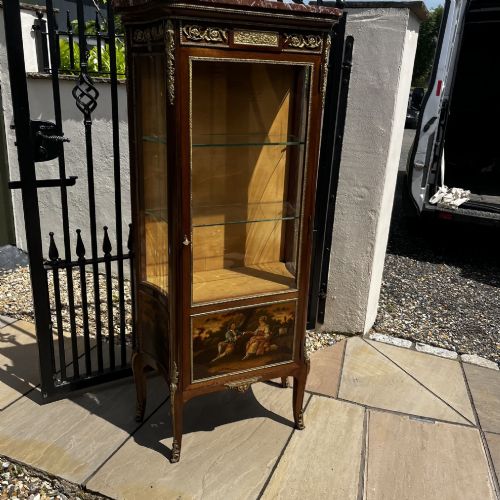
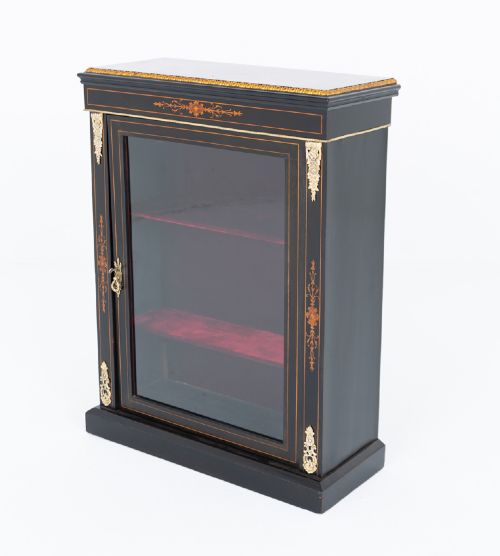
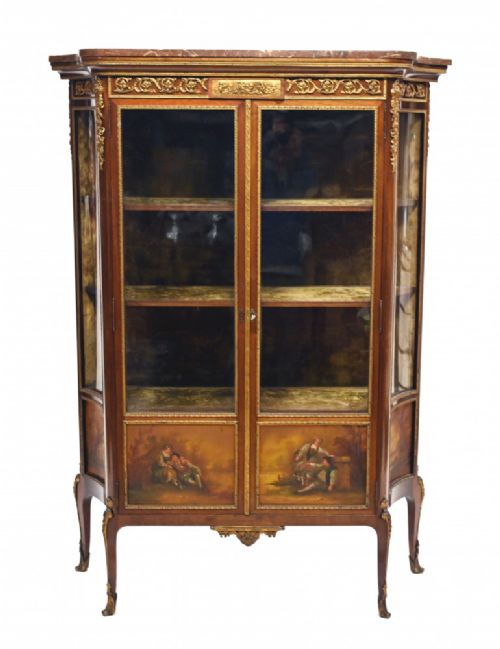
Cabinetmakers constructed these frames using dense timber carcases of kingwood, mahogany, and walnut, frequently applying intricate marquetry or Boulle inlay. Vernis Martin painted panels add soft pastoral scenes to cabinet doors and lower sections.
Gilt bronze and ormolu mounts punctuate the wooden structures, framing glass doors and corners with cast metal detail. White or coloured marble tops cap many of the pieces, providing a heavy, polished counterpoint to the delicate woodwork and glass panes.
French Glass Display Case Retail Price Guide 2026
Typical asking prices for french glass display case among the pieces listed under this phrase on Sellingantiques today, from the lower quarter to the upper quarter. They describe what is for sale here now, not the wider market.
Several cabinets include velvet-lined interiors that have quietly absorbed the whispered secrets of generations of collected trinkets.
Standards of Execution
Quality rests upon the crispness of the ormolu casting and the fluidity of the woodwork, where superior examples display hand-chased mounts and perfectly fitted curved glass. The depth of the kingwood grain and the subtlety of Vernis Martin painted work distinguish workshop standards.
Finer specimens reveal meticulous interior detailing, such as original velvet linings and precisely joined serpentine frames that maintain structural integrity without sagging under the weight of marble tops.
François Linke·G. Durand
The French Glass Display Case Glossary
- Ormolu
- Gilt bronze mounts applied to furniture. This technique involves gilding a metal object with a mercury and gold amalgam.
- Vitrine
- A glass-fronted cabinet designed for displaying fine porcelain, books, or curiosities. The term derives from the French word for glass.
- Vernis Martin
- A simulated Japanese varnish developed by the Martin brothers in eighteenth-century France. It creates translucent, glossy painted panels on furniture.
- Bijouterie table
- A low display table with a glazed top and compartment for small valuables or jewellery. These pieces often sat in nineteenth-century drawing rooms for social viewing.
- Boulle inlay
- A marquetry process using brass and tortoiseshell arranged in contrasting patterns. Named after the royal cabinetmaker André-Charles Boulle.
French Glass Display Case: Frequently Asked Questions
What went inside a french glass display case?
These cabinets housed collections of porcelain, small silver trinkets, manuscripts, and curiosities collected during travels. Owners used them to exhibit their taste and education to visiting guests.
Interior velvet linings provided a soft bed for delicate items while reflecting light through the glass panes to illuminate the objects from multiple angles.
How do I clean the glass and ormolu?
Dust the exterior timber and mounts regularly using a soft, dry natural bristle brush. Avoid harsh chemical polishes that can strip the gilding from ormolu.
Clean the glass panes with a mild solution applied to a cloth rather than sprayed directly, ensuring moisture does not seep into antique wood joints.
Where should I place a vitrine?
Position your cabinet away from direct sunlight to protect interior fabrics and polished timber veneers from fading. Stable room temperatures prevent the wooden carcase and joints from warping.
Allow sufficient clearance around doors and hinged glass lids so they open fully without striking adjacent walls or furniture.
How do I tell nineteenth century pieces apart?
Examine the timber construction methods, screw types, and the hand-chasing detail on ormolu mounts to gauge age. Earlier nineteenth-century examples often employ heavier kingwood veneers and more substantial cast bronze.
Compare the style markers, such as Louis XV serpentine curves or strict Louis XVI symmetry, against documented revival periods recorded by cabinetmakers.