
French Gilt Fauteuils
French gilt fauteuils are grand open-framed salon armchairs that bring Continental elegance and classical proportion to any interior.
French Gilt Fauteuils
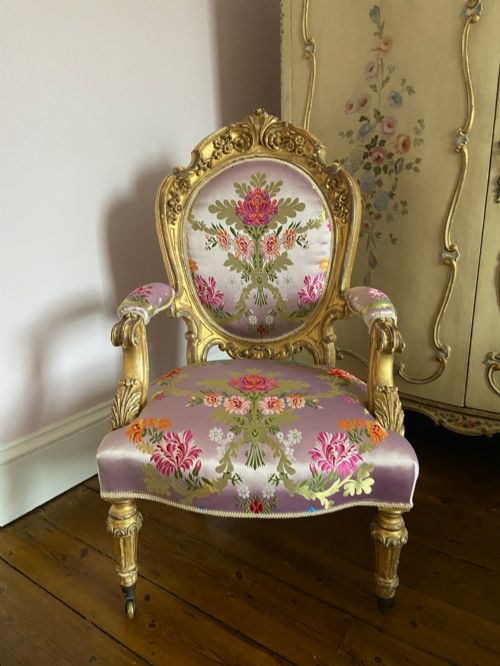
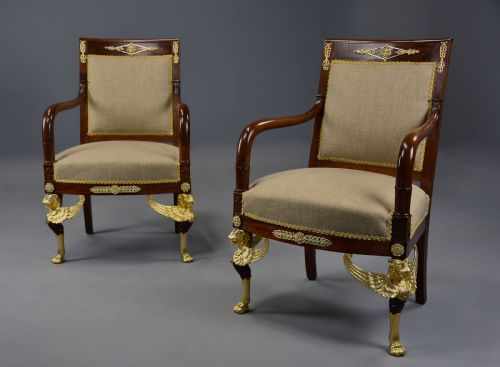
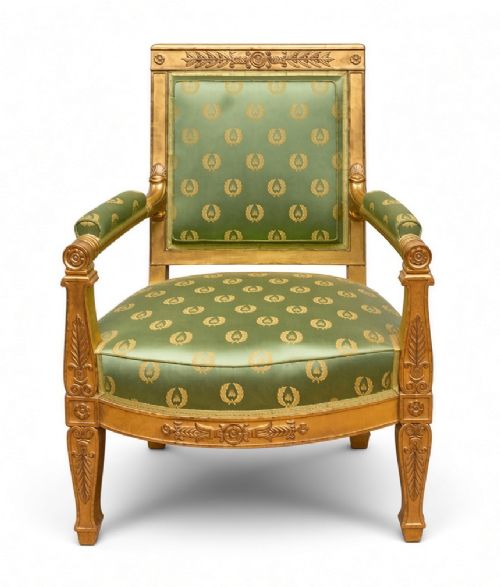
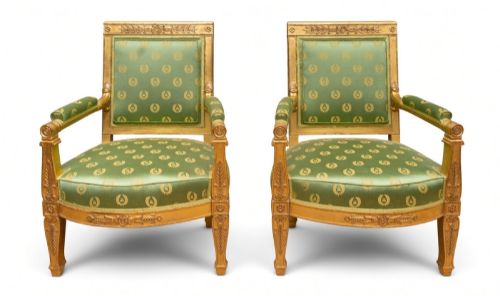
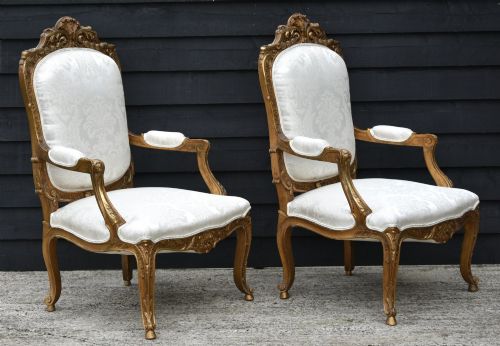
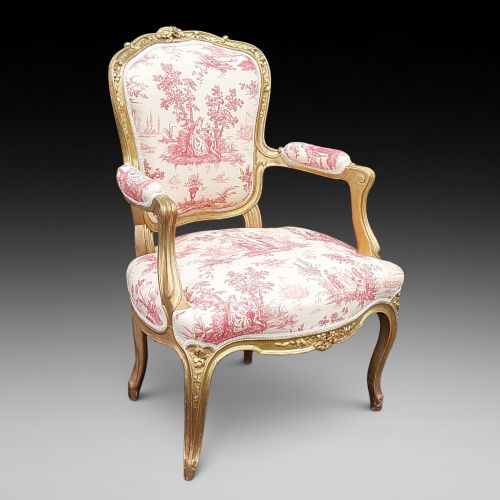
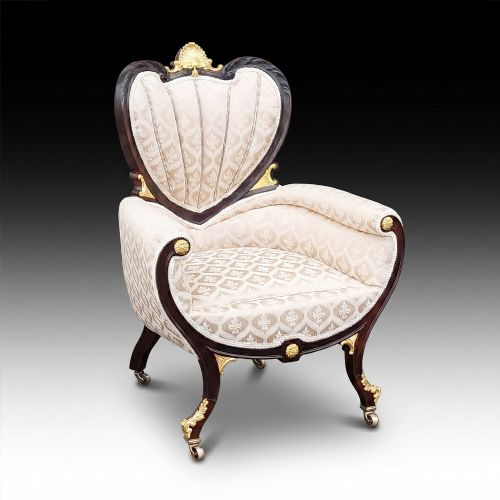
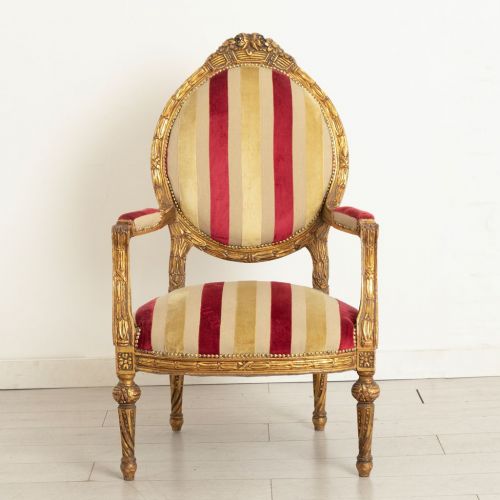
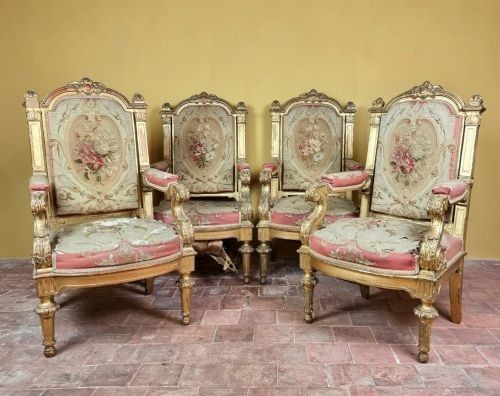
French gilt fauteuils are open-framed upholstered armchairs originating in France, designed for formal salons and drawing rooms with exposed wooden frames finished in gold leaf or gilt paint. When searching for french gilt fauteuils, buyers encounter diverse forms ranging from compact bedroom chairs to imposing salon suites and throne chairs.
The pieces available span several centuries and revival movements, with the nineteenth century heavily represented through interpretations of earlier royal aesthetics. Styles frequently draw upon Louis XVI, Louis XV, Empire, and Régence designs, alongside specific variations such as desk chairs and children's salon seats.
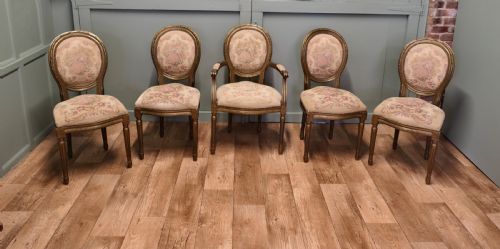
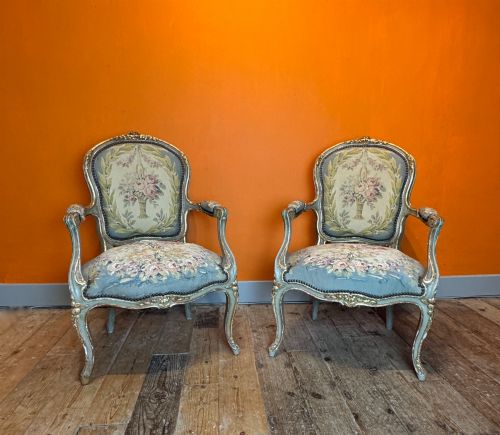
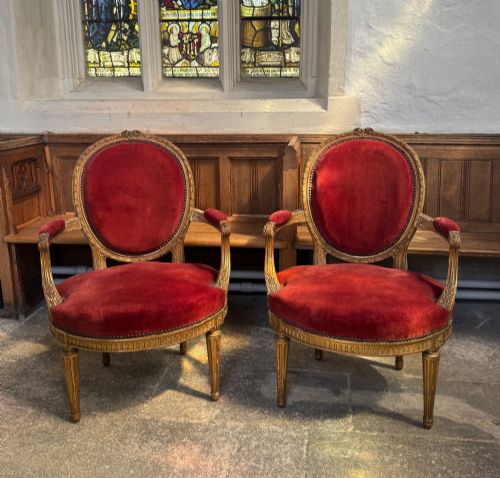
Most examples meet on this page as pairs or larger sets, constructed to serve both as functional seating and decorative centrepieces. The framework typically incorporates padded armrests, known as manchettes, designed to support the user while displaying intricate carved detail.
How they were made
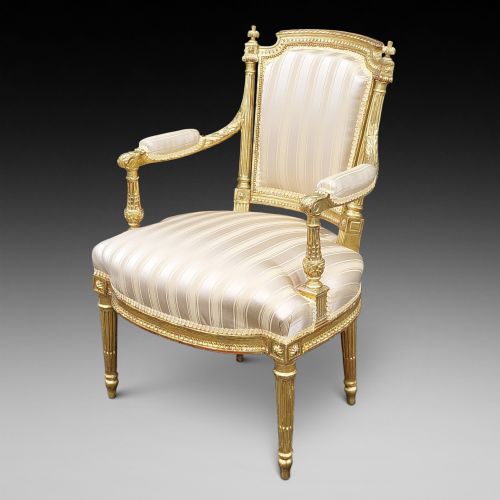
Makers shaped the structural frames of these chairs from hardwoods including beech, walnut, and mahogany, carving the wood with foliage, scrolls, and neoclassical motifs before applying surface decoration. Giltwood finishes were achieved by laying gold leaf over a prepared gesso ground, whilst alternative pieces received paint, parcel gilt, or bronze mounts.
Upholstery methods involved traditional stuffing secured over webbing, finished with textiles such as silk, velvet, tapestry, and fabric secured with decorative brass tacks. Frames frequently employ traditional joinery techniques, ensuring stability across both eighteenth-century originals and later nineteenth-century revival pieces.
Even miniature aristocrats needed somewhere to sit, as proved by tiny gilded children's chairs.
What varies in quality
The distinction between standard and superior pieces rests largely on the crispness and depth of the wood carving. Master carvers produced ornament with sharp undercut details and harmonious proportions, whereas lesser examples display softer, shallower moulding.
Quality also manifests in the application and survival of the gilding itself. Hand-applied gold leaf exhibits a rich, nuanced lustre that ages gracefully, differing visibly from flat modern metallic paints applied during later restorations.
Jacob-Desmalter·Blaise Maucuy·Holland & Sons
The French Gilt Fauteuils Glossary
- Fauteuil
- An open-framed armchair originating in France, characterised by upholstered back and seat panels with exposed wooden arms. These chairs were designed for formal indoor entertaining.
- Giltwood
- Timber coated with gold leaf or metallic powder applied over a prepared chalk and size ground. This finish catches the light and denotes high status.
- Manchette
- The padded elbow rest on the open arm of a fauteuil. It provides cushioned arm support for the sitter.
- Ormolu
- Gilt bronze mounts applied to furniture for decorative accent. The technique was particularly favoured during the Empire and revival periods.
- Restauration
- A transitional decorative style spanning the early nineteenth century in France. It bridges the classical restraint of the Empire period and later revivals.
French Gilt Fauteuils: Frequently Asked Questions
What is a fauteuil?
A fauteuil is an open-arm upholstered chair designed in France during the seventeenth and eighteenth centuries.
Unlike enclosed armchairs, these pieces feature open wooden sides that reveal the carved framework beneath.
How do I identify Louis XVI style?
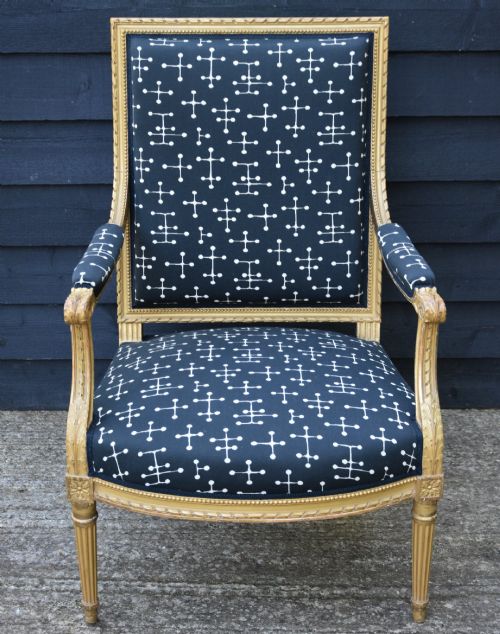
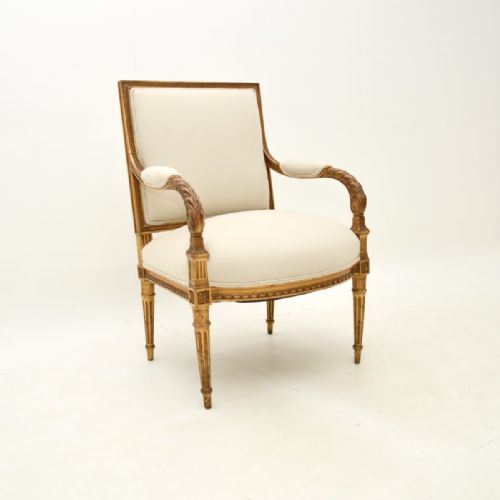
Louis XVI style pieces are defined by straight tapering legs, geometric shapes, and classical motifs such as fluting and ribbons.
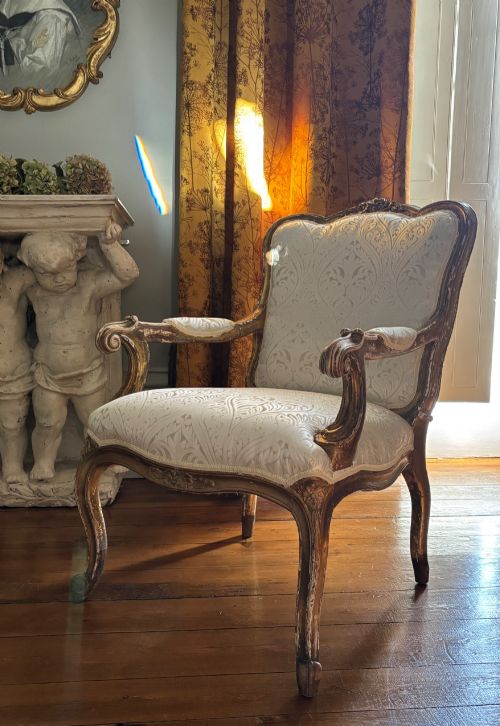
This aesthetic contrasts with the curved cabriole legs and asymmetrical scrolls of the earlier Louis XV period.
Were these chairs used at desks?
Specific forms known as fauteuils de bureau were constructed for writing desks and library use.
These functional variants often incorporate revolving mechanisms or modified proportions to accommodate working postures.
How should I clean giltwood frames?
Giltwood surfaces require gentle dusting with a soft, dry brush to prevent damage to the delicate gold leaf.
Moisture and harsh chemical cleaners must be avoided entirely to preserve the historic finish.