



French Gilt Bronze Mirror
A french gilt bronze mirror brings warmth and reflective depth to a room through heavy metal casting and mercury-silvered glass.
French Gilt Bronze Mirror
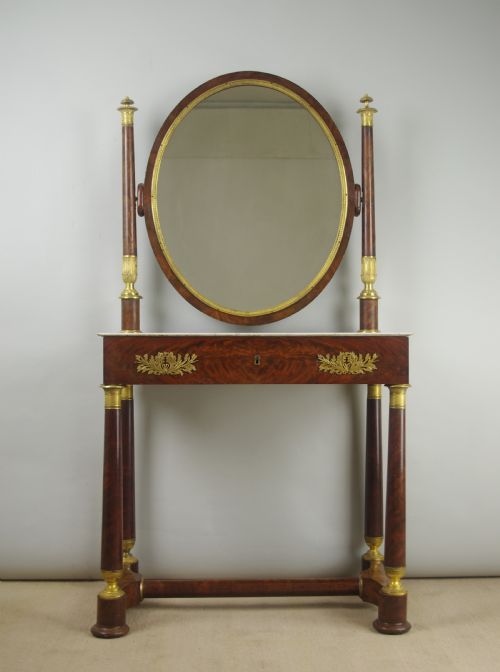
A french gilt bronze mirror spans wall-hung formats, table mirrors with stands, and large cheval designs produced across the nineteenth and early twentieth centuries. These objects reflect nineteenth-century revivals of historical aesthetics, notably Louis XV, Louis XVI, and Empire styles.
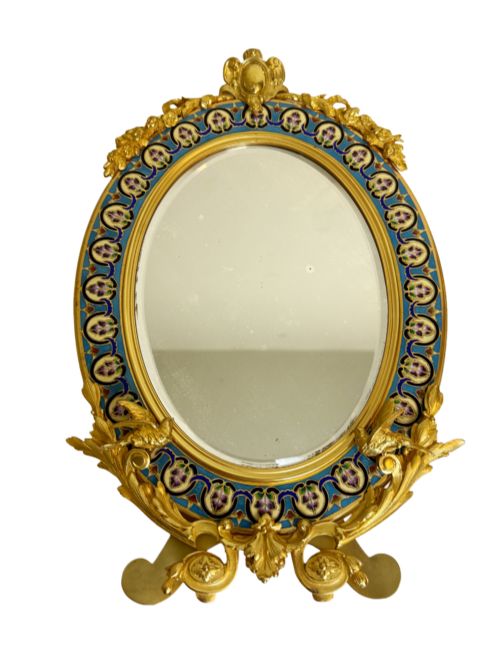
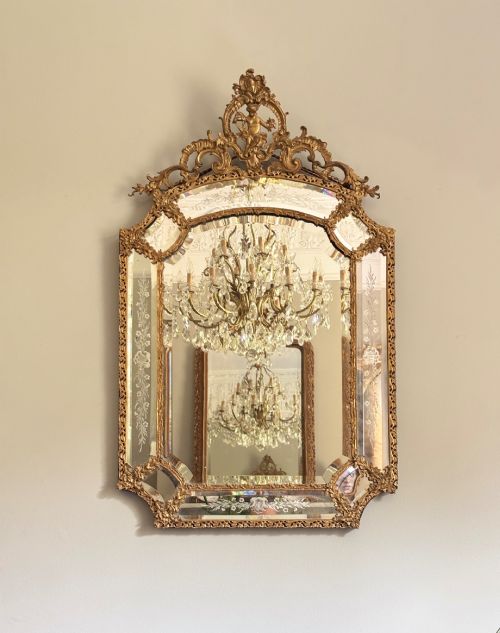
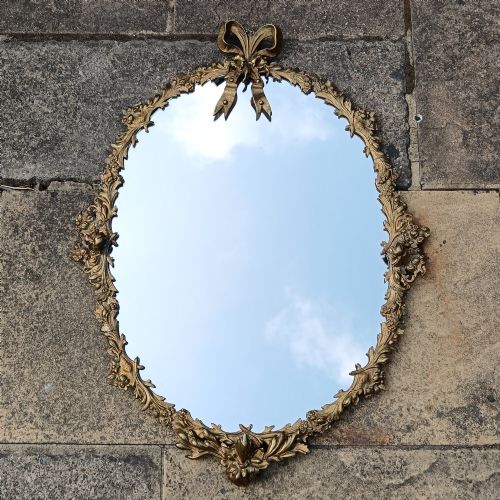
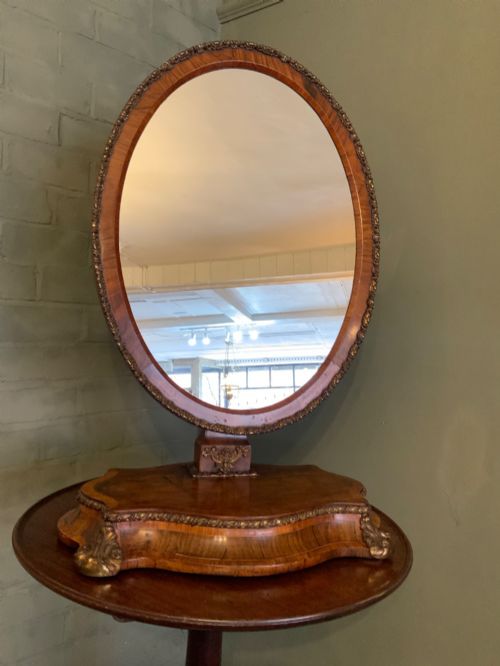
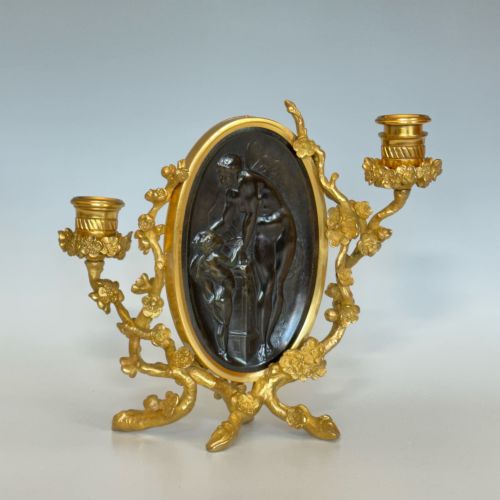
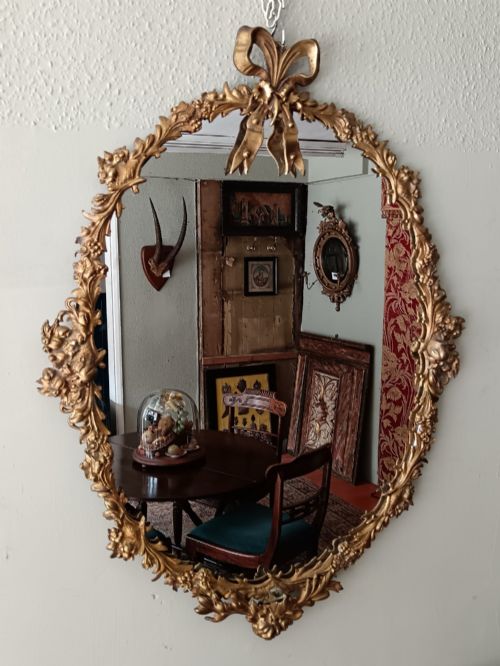
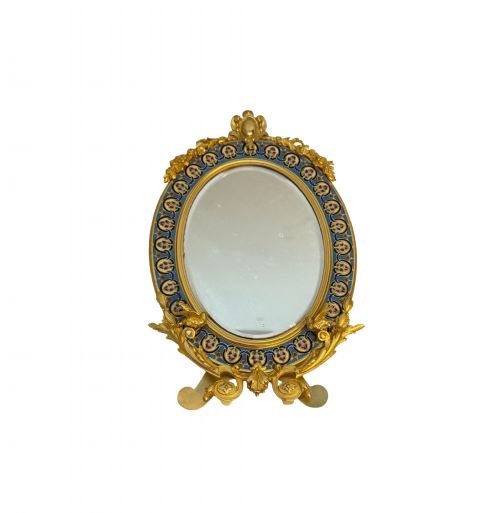
The version most commonly met on this page is the wall mirror or table dressing glass framed in cast gilt bronze or ormolu, often incorporating oval plates and elaborate crestings. Pieces originate from French workshops spanning from the second empire into the early nineteen-twenties.
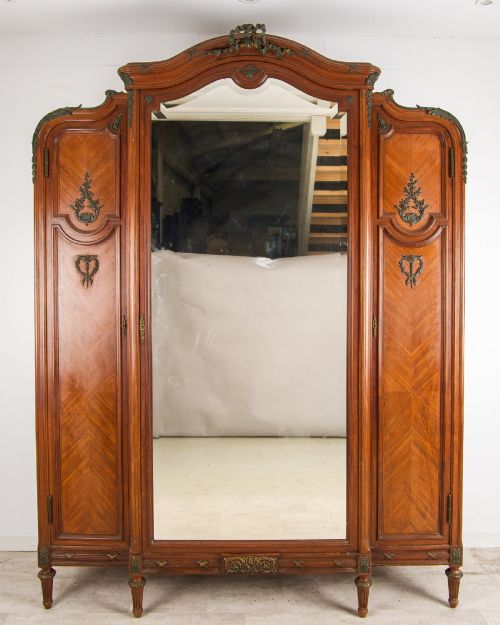
Beyond standalone hanging glasses, the selection includes related mirrored furniture forms such as dressing tables, armoires, and vanity pieces embellished with matching bronze mounts.
Materials and Technique
Frames combine sand-cast or lost-wax cast bronze finished with a gold-coloured mercury gilding, known as ormolu, or electroplated gilt layers. These metal mounts are secured to structural timbers like mahogany, walnut, or kingwood using threaded pins and screws.
Decorative elements frequently integrate champlevé enamel panels, Sevres-style porcelain plaques, or inset hand-painted Limoges medallions set directly into the cast bronze borders. Glass plates are bevelled at the edges and held within the metal rebate by wooden backing boards.
Materials recorded in current inventory include ormolu, champlevé enamel, kingwood, mahogany, and marble-topped display furniture.
Craftsmanship and Detail
Quality separates in the crispness of the bronze chasing, where finer examples display hand-tooled depth in floral swags, scrolling acanthus leaves, and figural masks rather than soft, mass-produced casts. The thickness and weight of the bronze carcass indicate the structural integrity of the piece.
The integration of secondary materials such as hand-painted enamel plaques, flawless mercury glass, and matching original hardware distinguishes superior studio output from standard commercial production.
Thiebaut Freres·G. Durand·Joseph Meissonnier·F.Bienvue·Town and Emanuel
The French Gilt Bronze Mirror Glossary
- Gilt Bronze
- Bronze metal coated with a layer of gold, providing a bright metallic finish that resists tarnishing. It forms the primary structural frame for these decorative mirrors.
- Ormolu
- A term specifically used for high-quality mercury gilding applied to bronze objects during the eighteenth and nineteenth centuries. The technique produces a rich, deep golden tone.
- Champlevé
- An enamelwork technique where troughs or cells are hollowed out of the bronze surface and filled with vitreous enamel paste before firing. These colourful sections accent the metal frames.
- Cheval Mirror
- A full-length floor mirror hung on a vertical swivelling frame supported by four feet. This freestanding form allows the glass to tilt at various angles.
- Girandole
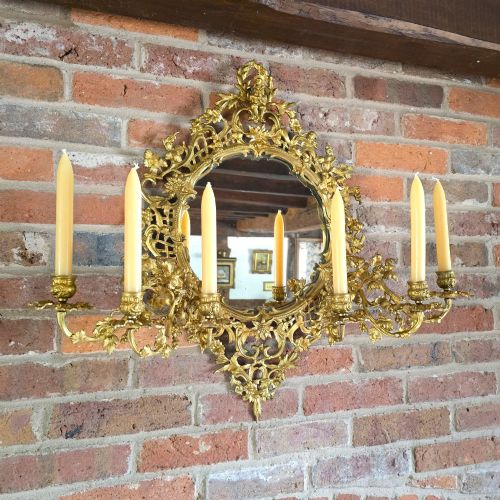
- A branched wall sconce or candleholder incorporating a mirrored backplate to multiply the reflected light. Many surviving examples feature gilt bronze frames with multiple candle branches.
French Gilt Bronze Mirror: Frequently Asked Questions
How do I hang a heavy bronze mirror safely?
Heavy cast metal frames require direct anchorage into wall studs using steel brackets or picture wire rated for substantial weights. Professional installation prevents strain on the original hanging loops.
Ensure the wall plate supports both the downward load and the outward pull of the projecting bronze cresting.
Were these mirrors originally used with candles?
Many wall-hung examples incorporate integrated branching arms designed to hold wax candles, amplifying light output in nineteenth-century interiors. These sconce-backed frames are often termed girandoles.
Table variants focused on personal grooming and vanity rather than ambient room illumination.
How do I clean gilt bronze frames?
Dust the metal surface gently with a soft, dry artist brush to remove particles settled within the recessed chased details. Avoid liquid polishes, which strip the historic gold wash.
Keep glass plates clean using standard window cleaner applied to a cloth rather than sprayed directly near the bronze edges.
How do I distinguish Louis XVI style from Rococo?
Louis XVI style mirrors rely on symmetrical geometry, straight lines, classical urns, ribbons, and beaded borders. Rococo frames embrace asymmetrical C-scrolls, tumbling flowers, and exuberant organic curves.
Both styles were heavily revived during the nineteenth century using identical gilt bronze casting methods.