




French Gilt Bronze Dish
A french gilt bronze dish brings continental weight and brilliant metalwork to a table, uniting cast bronze with rich fire-gilding.
French Gilt Bronze Dish
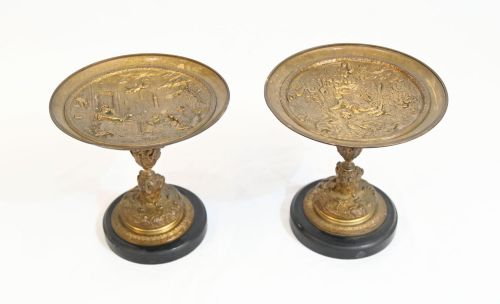
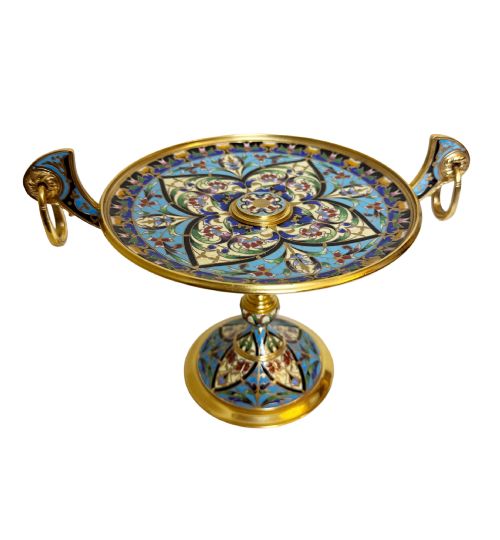
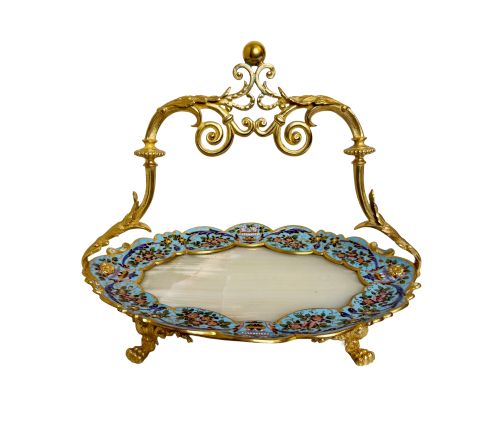
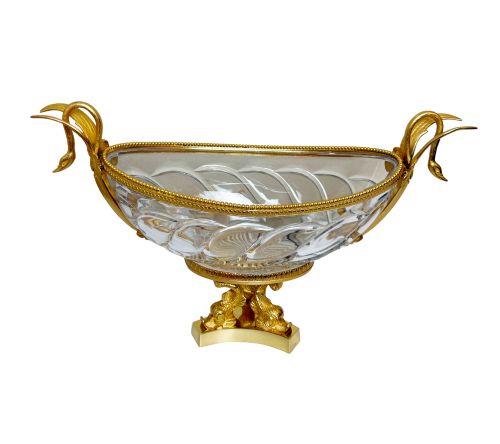
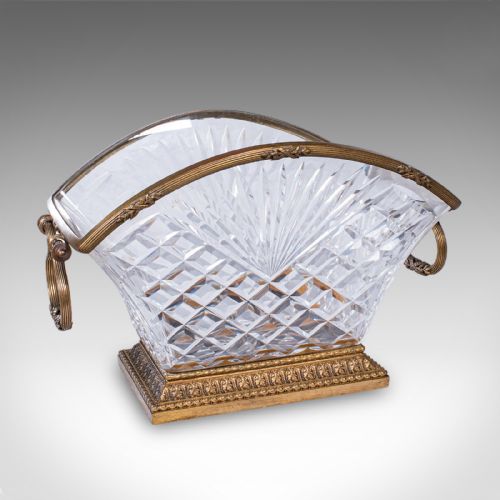
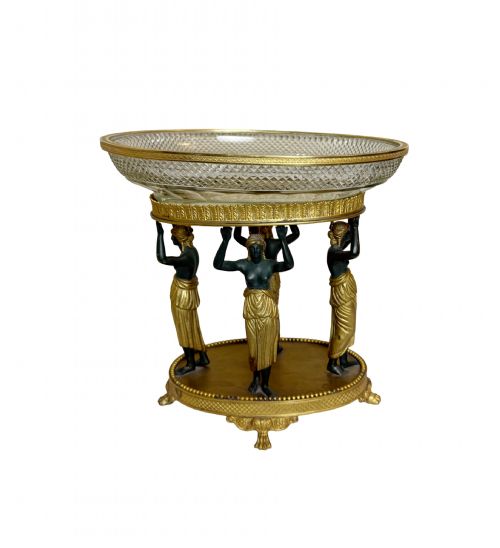
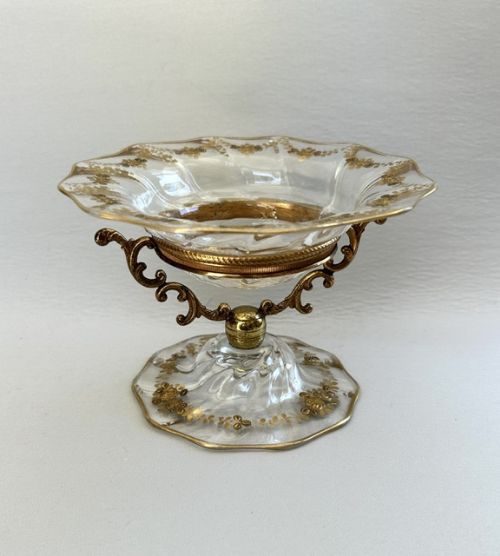
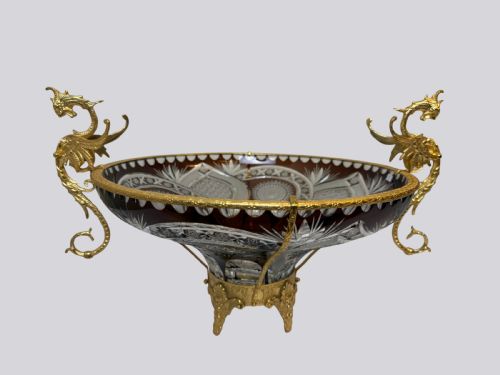
A french gilt bronze dish takes many forms on this page, appearing as tazzas, centrepieces, vide poches, and serving trays from the nineteenth century. These pieces reflect revivalist tastes like French Rococo, Empire style, and Japonesque aesthetics.
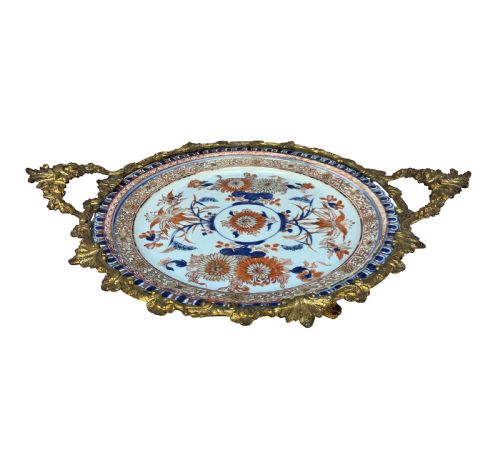
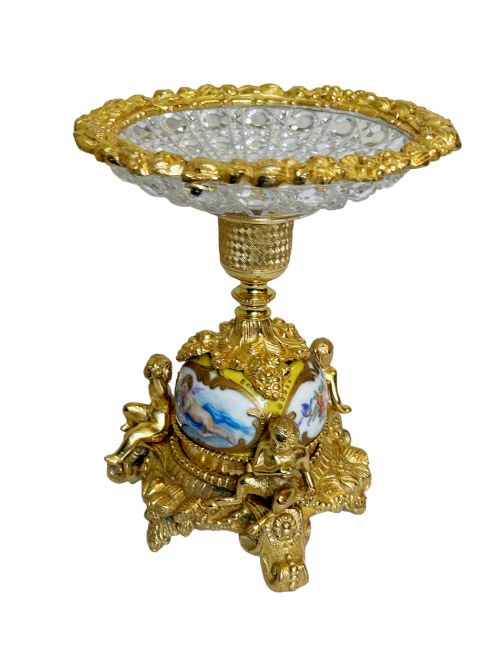
Buyers will most frequently meet nineteenth-century examples combining gilded metal mounts with porcelain, enamel, or cut crystal. The forms range from small pin trays to large display bowls supported by cherubs or mermen.
How they were made
Craftsmen shaped the structural frames using cast bronze, applying an amalgam of mercury and gold to achieve the bright ormolu surface finish. This metalwork is frequently paired with contrasting materials such as champlevé enamel, onyx, marble, and cut glass.
Porcelain inserts from factories like Limoges and Sevres were often fitted directly into the metal frames, secured by detailed mounts and cast bezels. The assembly relies on threaded screws and pins rather than modern adhesives.
French Gilt Bronze Dish Retail Price Guide 2026
Typical asking prices for french gilt bronze dish among the pieces listed under this phrase on Sellingantiques today, from the lower quarter to the upper quarter. They describe what is for sale here now, not the wider market.
Several pieces feature cherubs and mermen peering out from the bronze mounts, keeping watch over the edge of the bowl.
What varies in quality
The refinement of the chasing and the depth of the fire-gilding separate standard items from superior pieces. Crisp detailing on cast figures, such as cherubs or mermen, indicates skilled hand-finishing after the metal came out of the mould.
The integration of secondary materials also dictates quality, seen in the clarity of cut crystal and the precision of applied champlevé enamel work. Well-matched components that sit tight in their ormolu mounts show superior workshop standard.
Louis Pierre Malpass
The French Gilt Bronze Dish Glossary
- Ormolu
- Gilt bronze produced by applying a mercury and gold mixture to a bronze base and heating it. This technique creates a durable, bright golden surface.
- Champleve enamel
- A technique where troughs are dug into the metal surface and filled with enamel powder before firing. The resulting coloured patterns sit flush with the metal dividers.
- Tazza
- A shallow ornamental bowl raised on a stem and foot. These pieces were typically used for display or serving sweets.
- Vide poche
- A small tray or dish meant for emptying pockets of loose items like coins and keys. They often feature detailed cast bronze rims.
- Comport
- A large pedestal dish used as a centrepiece on a dining table. They frequently combine cut crystal bowls with elaborate metal bases.
French Gilt Bronze Dish: Frequently Asked Questions
What is a French gilt bronze dish used for?
These pieces served as decorative centrepieces, bonbon dishes, or small vide poches for holding personal items in nineteenth-century interiors.
Today, they function well on sideboards, tables, or desks to display small objects or simply as decorative metalwork.
How do I know if it is real ormolu?
Genuine ormolu has a deep, heavy bronze base beneath a rich golden layer that does not flake off like modern paint. You will often see subtle tool marks from hand-chasing under magnification.
Pieces from the nineteenth century carry the weight and casting seams typical of period foundry work rather than modern lightweight alloys.
What periods do these dishes come from?
The selections available here date largely from the nineteenth century, including specific periods like the Victorian era, the Regency, and turn-of-the-century 1900.
Stylistic influences span from earlier Empire designs through to later Rococo Revival and Art Nouveau forms.