

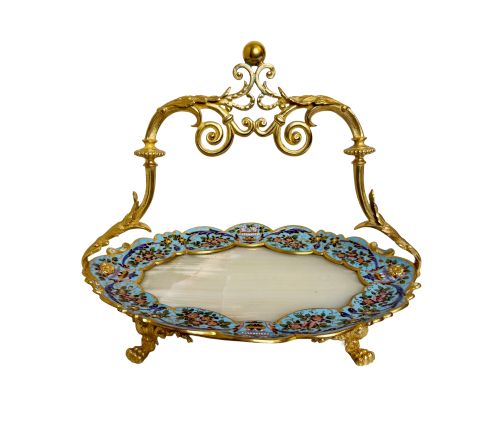


19th Century Vide Poche
A 19th century vide poche is a small pocket-emptier for keys and coins, offering a neat desktop or hallway catch-all with French nineteenth-century character.
19th Century Vide Poche
A 19th century vide poche serves as a small receptacle for daily pocket items, appearing across this page in various decorative forms such as trinket dishes, centrepiece trays, and pin trays. Buyers seeking this phrase encounter practical small basins designed to sit on a hallway table or desk for coins, keys, and pocket watch storage.
The pieces listed here span the nineteenth century, taking shape through objects like fretted faience dishes, circular mahogany bedside tables, and gilt bronze trays. Ormolu mounts, champleve enamel panels, and onyx bases frequently shape the French iterations common to this search.
Origins heavily lean towards French workshops spanning the Regency, Belle Epoque, and Rococo Revival styles. Alongside metalwork dishes, buyers meet specific sculptural forms including bronzes by Georges Van Der Straeten and tazzas featuring malachite and blue john.
How they were made
Metalwork pieces rely on casting and chasing in gilt bronze and ormolu, often paired with hand-applied champleve enamel decoration. Copper and brass plaques receive hammered or engraved detail, while ceramic versions utilise traditional earthenware and blue and white faience.
Natural stones and timber provide structural contrast, incorporating onyx bases, malachite, blue john, and turned mahogany. Makers combined these diverse materials using mechanical fixings, rivets, and precise joinery to unite metal mounts with stone, glass, or ceramic bowls.
19th Century Vide Poche Retail Price Guide 2026
Typical asking prices for 19th century vide poche among the pieces listed under this phrase on Sellingantiques today, from the lower quarter to the upper quarter. They describe what is for sale here now, not the wider market.
Materials seen in this category include champleve enamel, ormolu, gilt bronze, onyx, copper, brass, faience, and earthenware.
What varies in quality
Quality rests in the crispness of the bronze chasing and the vibrancy of the champleve enamel colours. Finer examples display deeply articulated ormolu mounts with sharp casting detail, whereas simpler pieces show softer edges and standard surface finishing.
The selection of materials dictates the upper tier, distinguishing standard brass and copper from substantial onyx, malachite, blue john, and heavy sterling silver. The integration of signed sculptural bronze elements or fine stonework elevates the stature of an individual vide poche.
Georges Van Der Straeten·Tiffany and Co
The 19th Century Vide Poche Glossary
- Vide poche
- A pocket-emptier or small dish designed for holding loose change, keys, and personal trinkets. It typically sits in a hallway or on a desk.
- Champleve enamel
- A technique where troughs are dug into a metal surface and filled with vitreous enamel powder before firing. The metal partitions remain visible between the coloured glass areas.
- Ormolu
- Gilded bronze, usually mercury-gilded, used extensively on decorative objects and mounts during the eighteenth and nineteenth centuries. It provides a bright golden finish that resists tarnishing.
- Faience
- Tin-glazed earthenware, often decorated in blue and white, produced widely across France and Europe. The glaze gives a milky white opaque surface over the clay body.
19th Century Vide Poche: Frequently Asked Questions
What is a vide poche used for?
A vide poche functions as a small tray or bowl for holding daily pocket items like coins, keys, and pocket watches. They were placed on hall tables, desks, or bedside tables to keep small accessories organised.
Over time, these versatile receptacles adapted to various domestic spaces, transitioning from functional hallway catch-alls to decorative tabletop centrepieces and pin trays.
Are these pieces French?
Many items originating from this period reflect French design, spanning styles from Regency and Rococo Revival to Belle Epoque and Art Nouveau. French workshops excelled in combining gilt bronze and champleve enamel.
While the majority demonstrate French origin, the selection also includes English bedside tables and American silver pieces from the same era.
How do I date a 19th century vide poche?
Dating relies on stylistic clues, manufacturing techniques, and material combinations typical of specific decades. Pieces influenced by the Regency period differ distinctly from later Art Nouveau or Belle Epoque designs.
Maker marks, signatures on bronze sculptures, and specific ceramic glazes like blue and white faience further help pinpoint the era of production within the nineteenth century.
What materials are used?
Materials include gilt bronze, ormolu, copper, brass, onyx, and champleve enamel. Some incorporate decorative stones such as malachite and blue john alongside sterling silver and mahogany.
Ceramic examples utilise traditional earthenware and faience, often finished with hand-painted blue and white motifs or fretted openwork rims.