

French Gilt Bronze Candlesticks
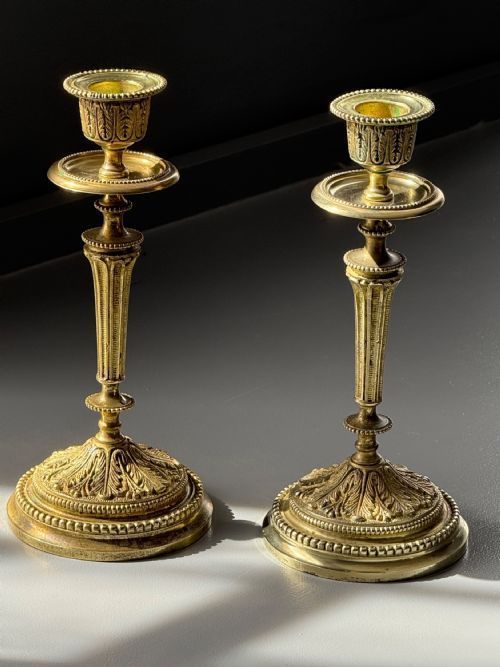
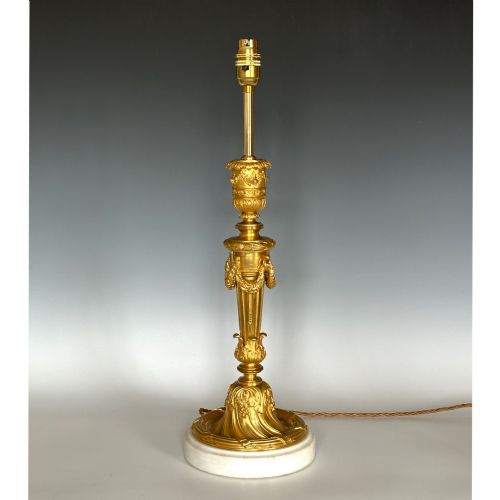
French gilt bronze candlesticks bring together ornate metalwork, classical motifs and substantial weight to illuminate interiors with distinct period character.
French Gilt Bronze Candlesticks
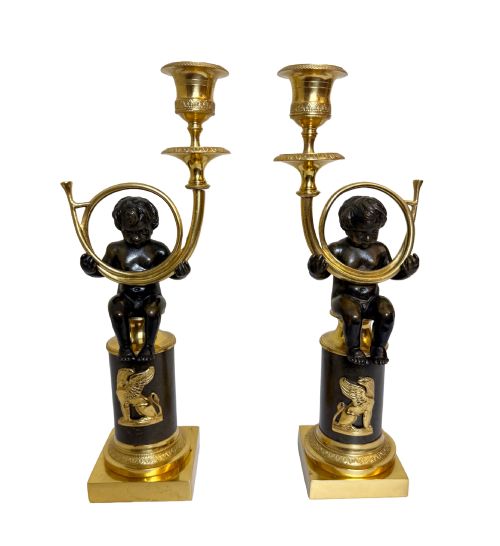
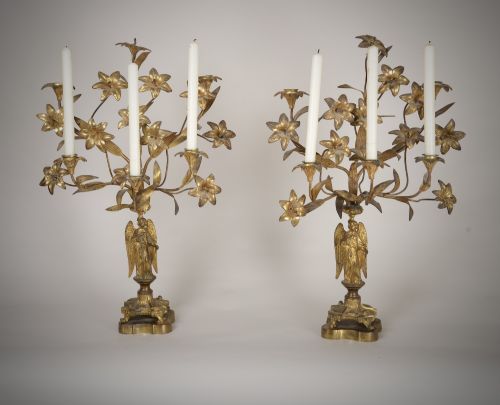
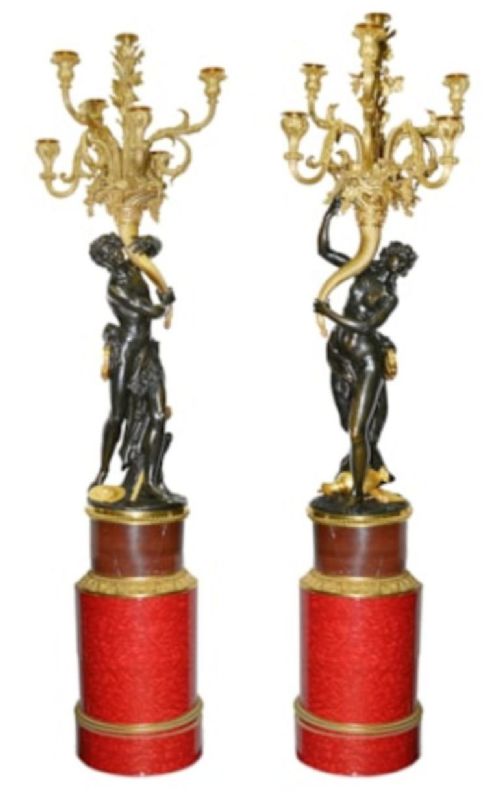
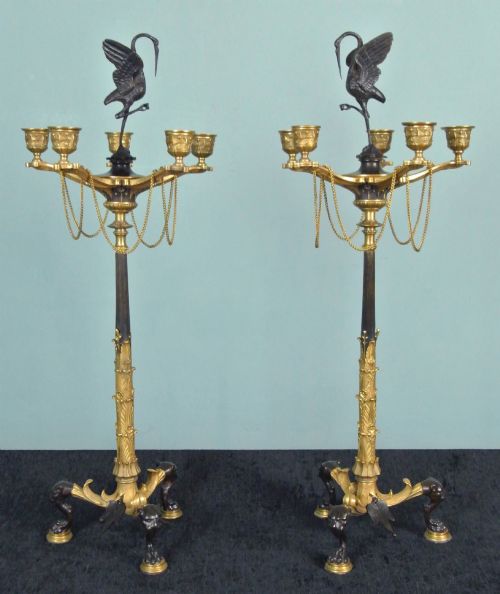
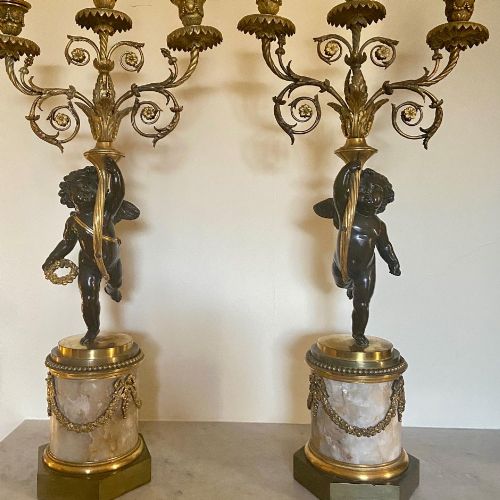
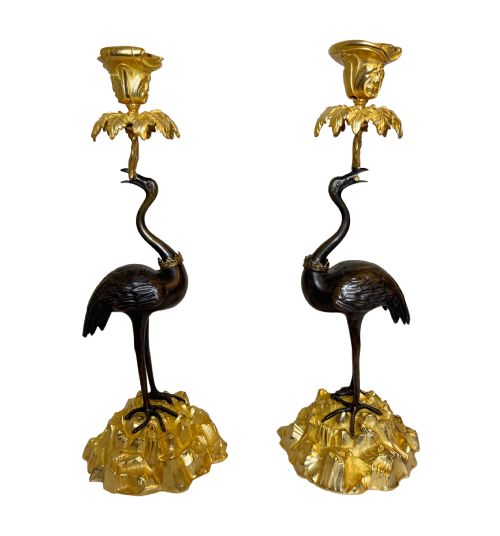
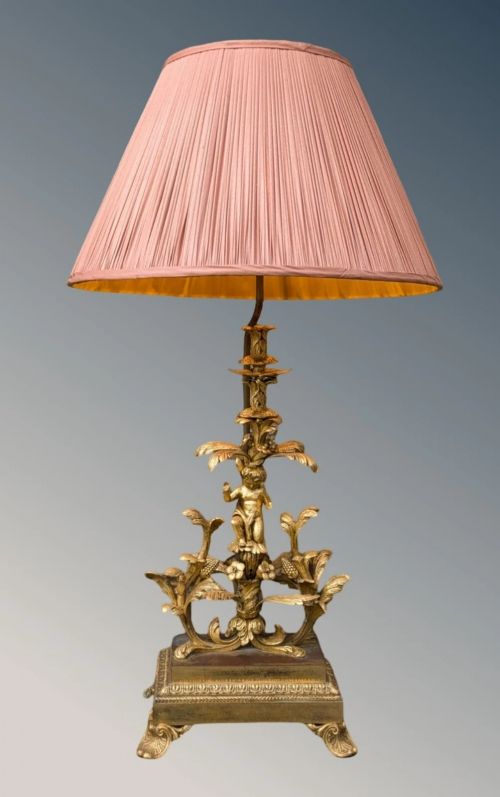
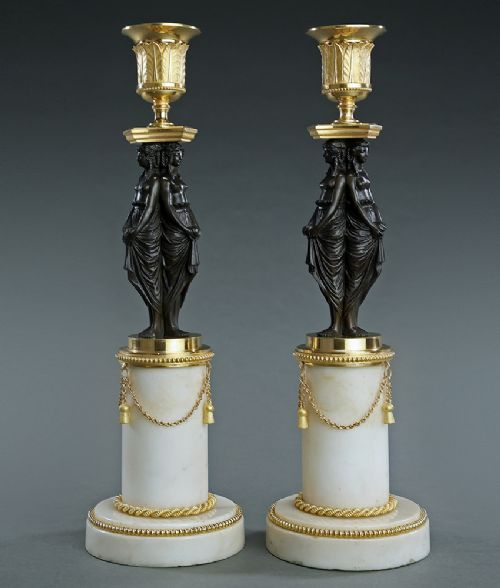
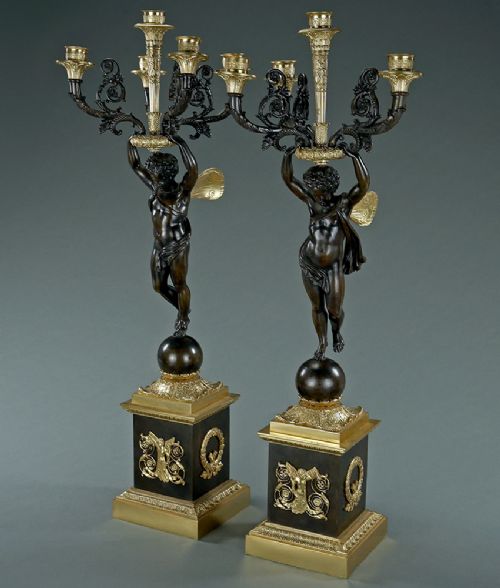
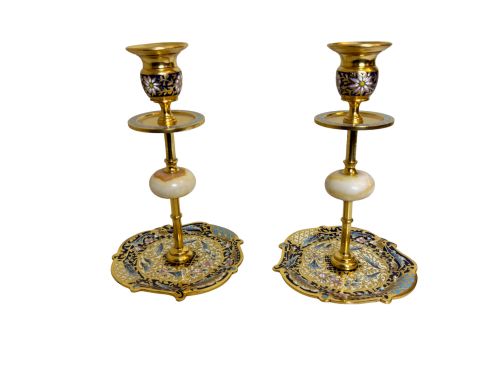
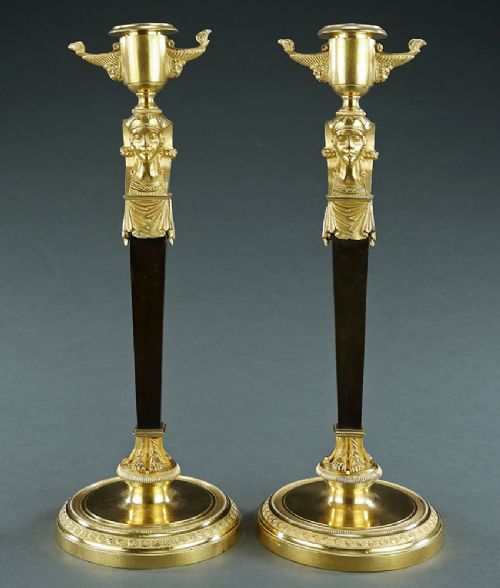
Makers frequently incorporated figurative elements such as cherubs, putti, caryatids, and animal motifs alongside architectural columns and urn forms. Variations also include combinations with materials like white marble, onyx, fluorspar, and champlevé enamel to enrich the overall composition.
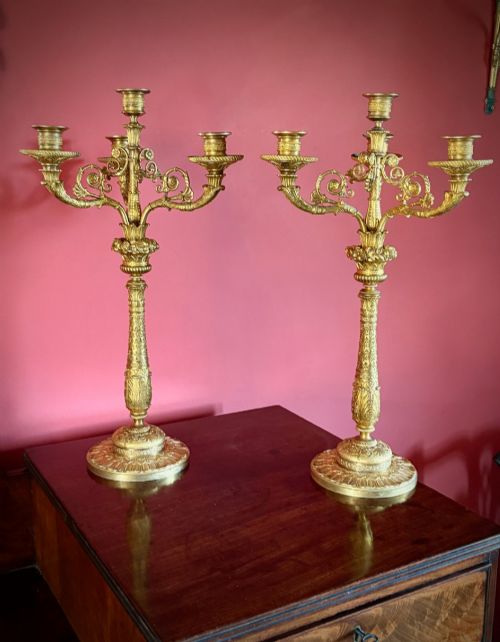
Buyers encounter both standard single-stick candlesticks and more complex multi-branch candelabra, often surviving as matching pairs from periods such as the Napoleon III era and the late nineteenth century. These objects served functional lighting roles in period salons before many later adapted to modern electrical fittings.
Materials and Construction Methods
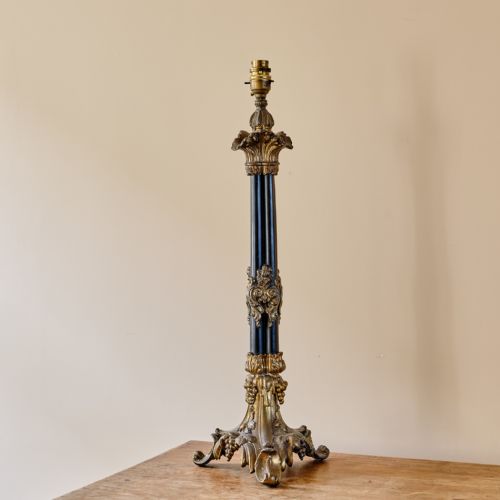
The primary material foundation relies upon cast bronze, which was frequently finished with mercury gilding to produce ormolu surfaces alongside areas of patinated dark bronze. This metalwork was often paired with carved white marble, onyx bases, or colourful champlevé enamel sections.
Listings feature items spanning the eighteenth century through the early twentieth century, incorporating marble, onyx, and champlevé enamel.
Determinants of Quality
Quality in these pieces rests primarily upon the crispness of the bronze chasing and the depth of the original gilding, where sharp, hand-tooled leaf work and contrasting matte and polished surfaces separate superior items from softer, cast-only examples. The weight of the bronze and the integration of solid marble or onyx plinths further distinguish finer studio productions.
Design coherence also dictates value, with well-proportioned figures, balanced arm configurations on candelabra, and documented aesthetic influences showing greater artistic ambition than simpler commercial foundry outputs.
Barbedienne·Francois Redmond·Dugourc·Abel Landry
The French Gilt Bronze Candlesticks Glossary
- Ormolu
- Gilded bronze produced by applying a mixture of gold and mercury to a bronze base and heating it to drive off the mercury. This technique creates a rich, enduring golden finish characteristic of fine antique objects.
- Patinated Bronze
- Bronze treated with chemical solutions to produce a dark, aged surface tone. This darker metal often contrasts with bright ormolu highlights in nineteenth-century decorative pieces.
- Champlevé Enamel
- A technique where troughs are dug into the surface of the bronze and filled with vitreous enamel powder before firing. The resulting coloured glass designs decorate the stems and bases of ornamental works.
- Candelabra
- A branched lighting fixture designed to hold multiple candles simultaneously. These pieces often feature removable top sections and central figural stems.
- Retour d'Egypte
- A decorative style inspired by Napoleon's campaign in Egypt, utilising motifs such as sphinxes, caryatids, and classical pharaonic symbols. This aesthetic heavily influenced early nineteenth-century French metalwork.
French Gilt Bronze Candlesticks: Frequently Asked Questions
How do I date these candlesticks?
Dating relies on examining the stylistic markers, such as neoclassical columns or ornate Rococo curves, and cross-referencing them with the casting methods and material combinations typical of periods like the Louis XVI era or the late nineteenth century.
Subtle indicators, including the hand-chasing technique on the bronze and the type of marble or enamel used, help narrow the production window alongside any foundry stamps or signatures.
Were these originally electrified?
These pieces were originally made to hold wax candles or oil lamps and were later adapted for electricity during the twentieth century. Many retain their original sockets and wiring paths added during conversion.
Collectors often seek both unconverted pairs and those with period-appropriate lamp conversions, depending on whether they plan to display them with candles or utilise them as table lamps.
How do I clean gilt bronze?
Maintenance requires only gentle dusting with a soft, dry cloth to prevent the accumulation of dirt in the recesses of the chasing. Moisture and harsh metal polishes will strip the fragile ormolu layer from the bronze underneath.
Preserving the original surface sheen means avoiding all chemical cleaners and professional dipping methods that alter the historic patina.
What is the difference between ormolu and gilt bronze?
Ormolu specifically describes objects finished using the historic mercury-gilding process, which yields a deep, matte golden appearance unique to earlier manufacturing methods. Gilt bronze is a broader term that can also include modern or electroplated gold finishes.
In marketplace terminology, the two terms are frequently used interchangeably to denote gold-colored bronze decorative items from France.