
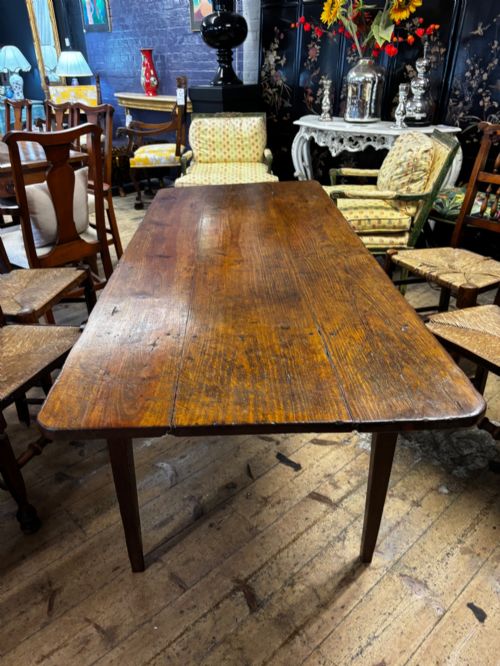
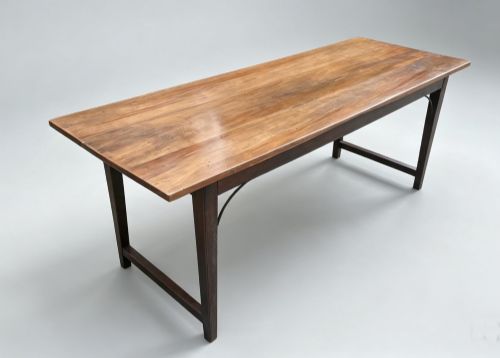
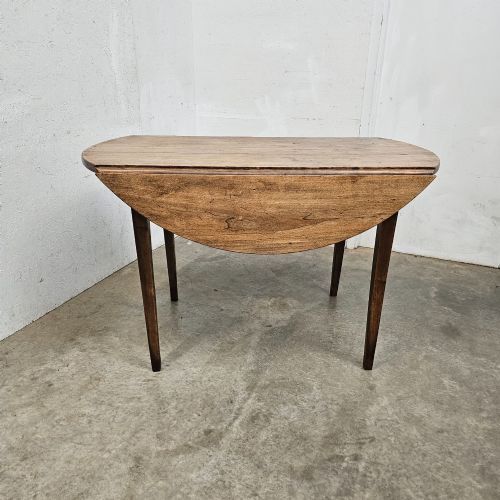
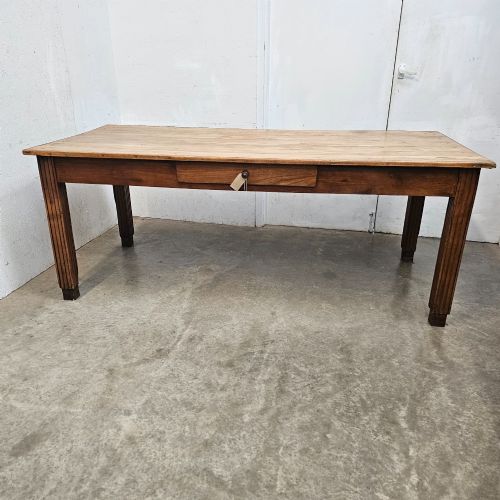


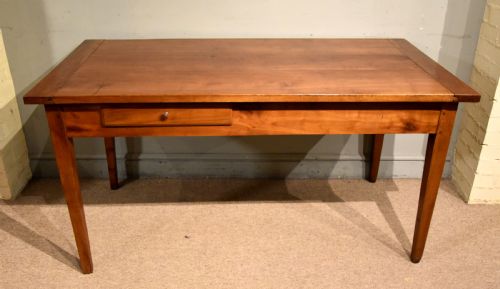

French Fruitwood Dining Table
A french fruitwood dining table brings warmth and honest grain to a room, rooted in provincial practicality and centuries of social dining.
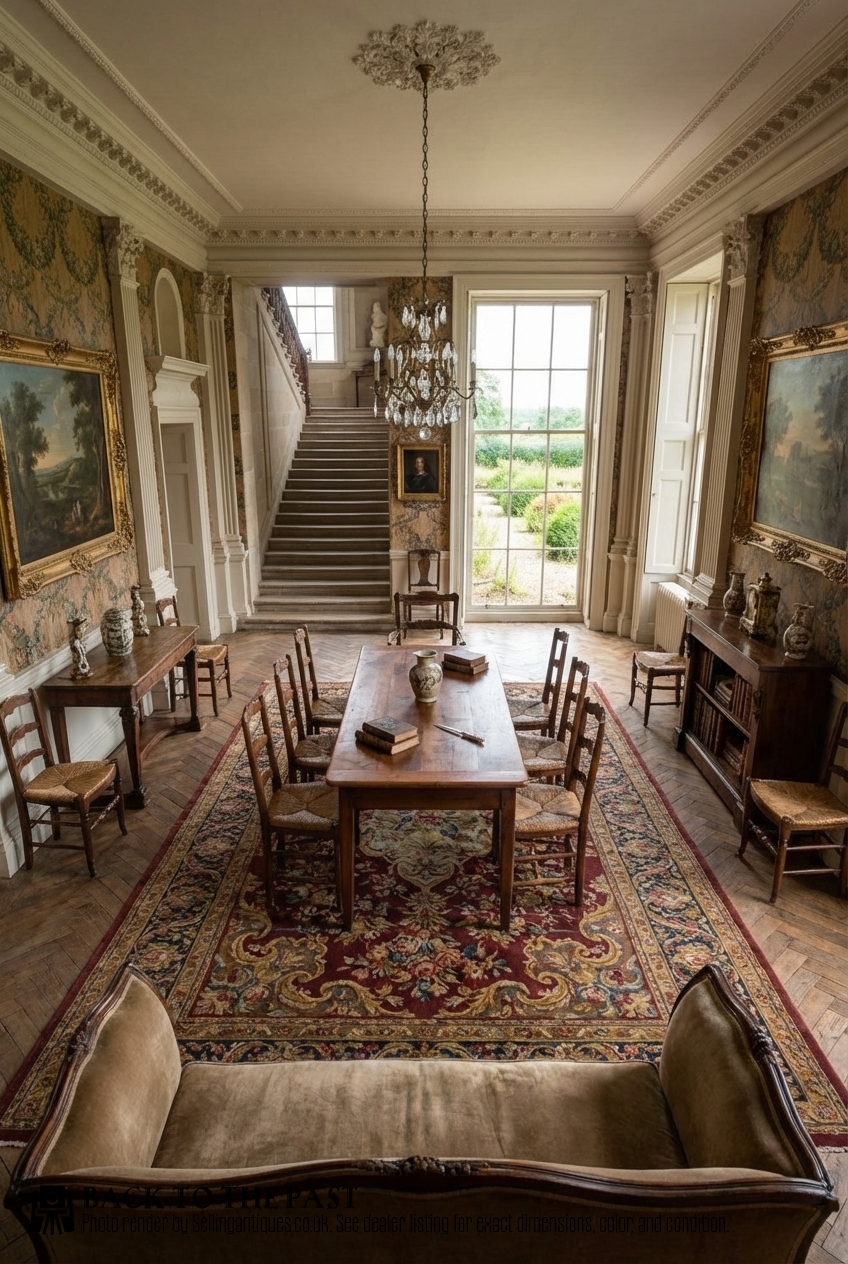
French Fruitwood Dining Table
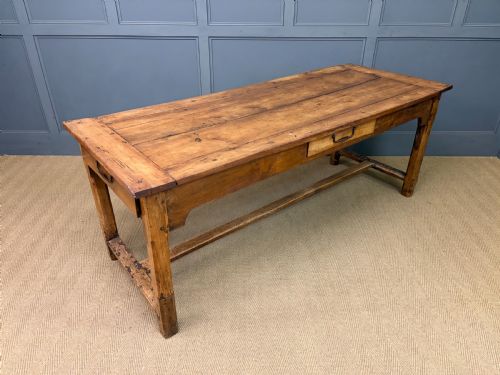
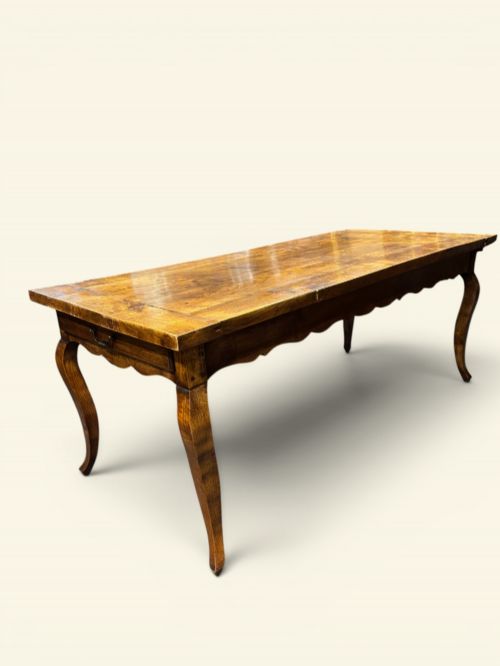
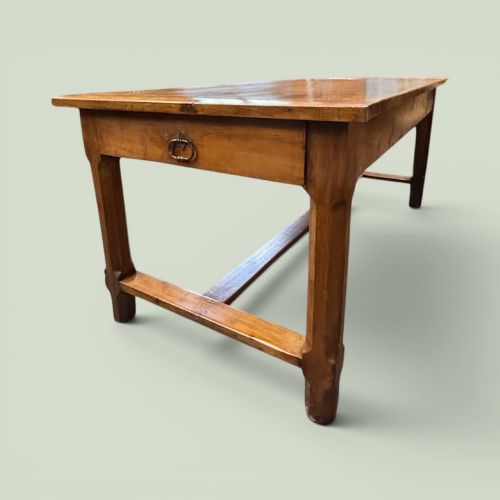
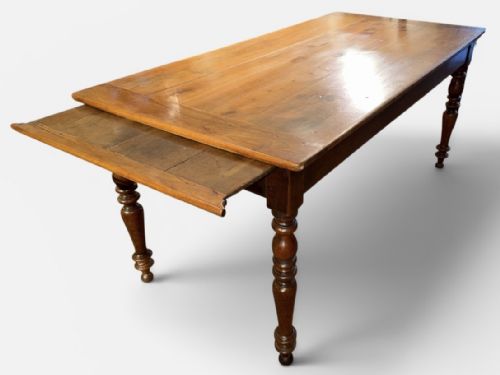
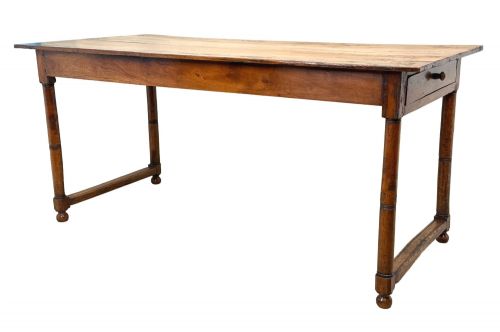
A french fruitwood dining table typically takes the form of a provincial farmhouse or kitchen table designed for daily domestic use. Buyers encounter these pieces largely across the nineteenth century, from simple refectory designs to extending variants.
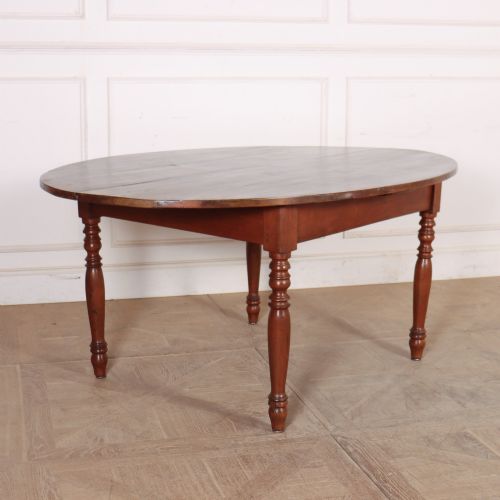
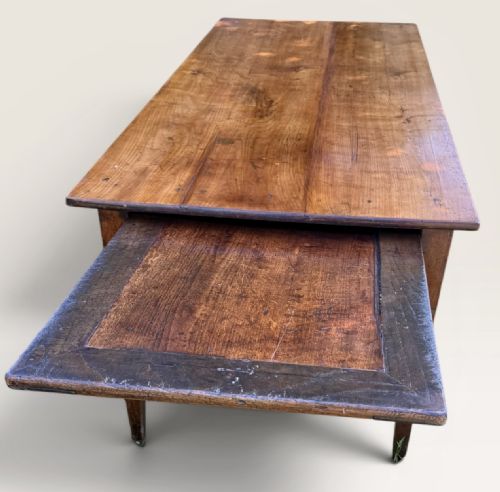
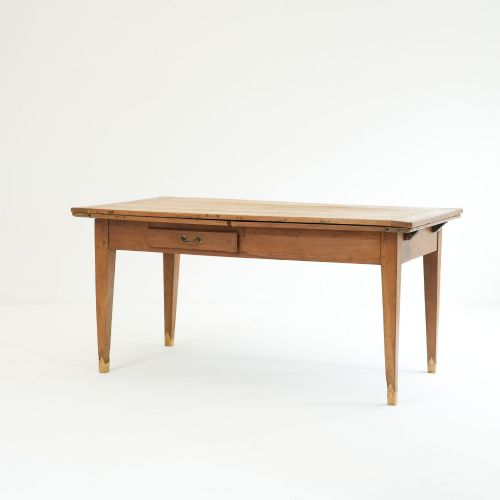
The selection ranges from compact drop-leaf and round vendange wine-tasting tables to very large double-extending formats. Regional variations bring specific functional elements such as bread slides and drawers into daily service.
Many examples adhere to French provincial and rustic farmhouse aesthetics, though occasional 1920s Art Deco pieces appear. These tables serve as robust gathering places that reflect utilitarian origins in rural French households.
How They Were Made
Cabinet makers utilised dense fruitwoods like cherry alongside pine, oak, and elm for structural support and topboards. Metal components such as iron brackets and brass fittings reinforced extension mechanisms and joints.
Joinery methods focused on durability, employing thick plank construction, trestle supports, and gate legs to withstand heavy domestic demands. Surfaces were finished by hand, preserving the natural grain and warm tone of the timber.
Some vendange tables retain subtle grape stain traces on their circular tops, a quiet reminder of French vineyard harvests.
What Varies in Quality
Quality rests on the selection and grain continuity of the fruitwood timber used for the topboards. Tables built from wide, single-source planks command greater respect than multi-board tops assembled from mixed secondary timbers.
The sophistication of the mechanism dictates the level of craftsmanship, particularly in extending versions that incorporate smooth draw-leaf or wind-out systems. Refinement in leg turning, apron shaping, and the integration of functional drawers further separates standard regional items from finer examples.
The French Fruitwood Dining Table Glossary
- Fruitwood
- Timber sourced from fruit-bearing trees such as cherry, pear, or apple. It develops a rich patina and warm hue with age.
- Bread slide
- A pull-out shelf positioned beneath the table top. Historically used for cooling bread or expanding workspace.
- Vendange table
- A round or occasional table associated with the grape harvest. Often designed with a tilt-top mechanism for compact storage.
- Draw leaf
- An extension system where auxiliary leaves slide out from beneath the main surface. This allows the table length to increase quickly.
French Fruitwood Dining Table: Frequently Asked Questions
How do I care for a fruitwood surface?
Clean the timber using a soft, dry cloth to remove dust and grit. Avoid harsh chemical sprays that can strip the natural wax finish.
Apply a traditional beeswax polish occasionally to nourish the grain and protect the wood from drying out. Keep the table away from direct heat sources and strong sunlight to prevent warping.
Can I use a farmhouse table daily?
These tables were built for heavy domestic use and function exceptionally well as the centrepiece of a busy kitchen. Their robust construction handles routine family dining without issue.
Use coasters and placemats to guard against moisture rings and heat marks from hot dishes. Embracing minor marks as part of the history of the piece preserves its character.
How do extending mechanisms work?
Nineteenth-century extending tables often rely on draw-leaf systems where additional leaves pull out from beneath the main top. Some larger formats utilise wooden runners and central support legs.
Operate the extension gently, lifting slightly if the leaves bind on the runners. Regular waxing of the sliding tracks ensures smooth movement without forcing the timber.
What is a vendange table?
A vendange table originates from French wine-growing regions where grapes were harvested and sorted. These round tables often feature a tilt-top mechanism.
Their compact scale makes them suitable for smaller dining spaces or breakfast corners. They offer a distinct provincial character compared to long rectangular farmhouse tables.