


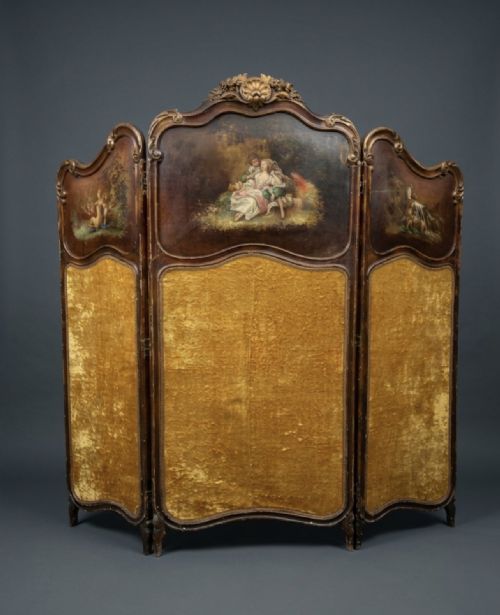


French Folding Room Screen
A French folding room screen divides a space with carved frames and painted panels, offering both privacy and decorative presence.
French Folding Room Screen
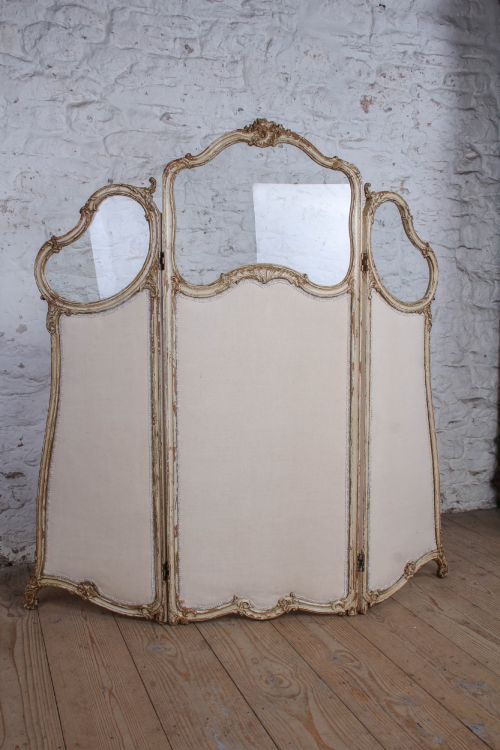
A French folding room screen primarily functions as a portable partition or privacy screen within a larger interior. The pieces gathered here span multiple periods, notably the nineteenth century, Victorian era, and Edwardian period, alongside earlier eighteenth-century examples.
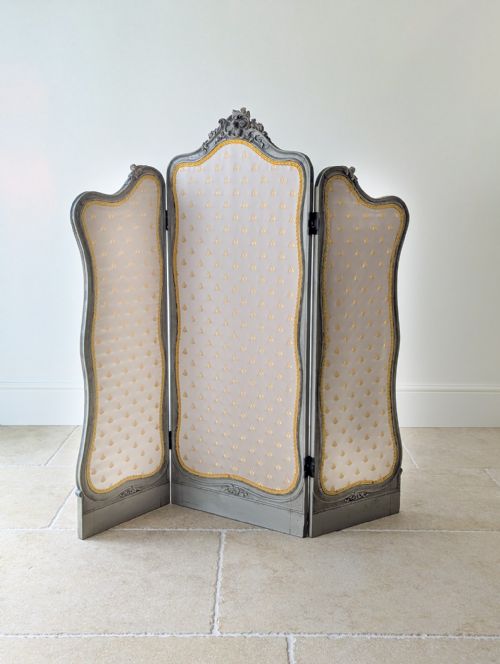
Most entries on this page consist of three-fold or four-fold configurations, constructed to articulate and shape a room. Alongside standard room dividers, variations such as modesty screens, vanity screens, and fire screens appear across the listings.
Makers and workshops from France and the broader continent shaped these objects using distinct regional vocabularies. Styles range from French Rococo Revival and Napoleon III to Louis XVI Style, Art Nouveau, and Chinoiserie.
Materials and construction
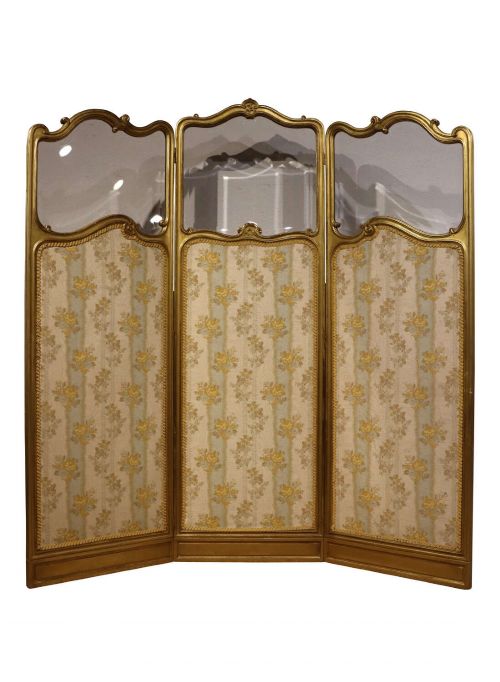
The structural framework relies predominantly on timber, specifically walnut and giltwood, carved with classical or revival motifs. Brass fittings often link the individual folds together, allowing the panels to articulate smoothly.
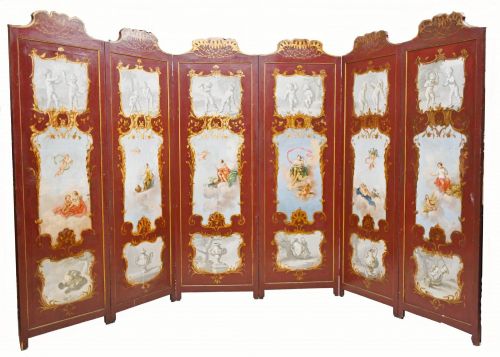
Surface decoration involves oil paint on canvas, leather, or wood, alongside delicate silk panels and bevelled glass inserts. Certain examples incorporate hand-painted pastoral scenes or Aubusson tapestry work set directly into the wooden frames.
French Folding Room Screen Retail Price Guide 2026
Typical asking prices for french folding room screen among the pieces listed under this phrase on Sellingantiques today, from the lower quarter to the upper quarter. They describe what is for sale here now, not the wider market.
One listed modesty screen offers painted panels designed to protect the user from both draughts and overly inquisitive eyes.
Assessing quality
The execution of the painted or needleworked panels marks a primary distinction in overall standard. Hand-painted pastoral scenes or detailed leather work demonstrate a higher level of artisan skill than simpler decorative treatments.
The choice of primary wood and the depth of carving on the giltwood or walnut frames dictate the calibre of the piece. Integrated elements such as bevelled glass and original brass hinges further separate standard domestic items from more ambitious commissions.
Paul Sormani
The French Folding Room Screen Glossary
- Giltwood
- Timber treated with gold leaf or a gold-coloured metallic finish. This technique highlights carved ornamentation across nineteenth-century frames.
- Aubusson
- A traditional type of tapestry woven in the French town of the same name. These textiles frequently appear inset within folding screen panels.
- Modesty screen
- A specific, smaller screen type historically utilised to shield individuals from draughts or direct attention. They share the hinged construction of larger room dividers.
- Napoleon III
- A nineteenth-century French design style associated with the Second Empire. It draws heavily on historical revivals, particularly Louis XIV, XV, and XVI aesthetics.
- Chinoiserie
- European artistic style reflecting Chinese motifs and decorative techniques. It appears on painted panels depicting traditional Eastern landscapes and figures.
French Folding Room Screen: Frequently Asked Questions
How were folding screens used?
Historically, folding screens created private enclosures within large, draughty rooms or served to conceal specific areas of a chamber.
They also functioned as decorative partitions that directed foot traffic and added colour or texture to an interior.
How many folds do they have?
The pieces listed typically feature three or four panels linked by hinges, though examples with six folds also appear.
This multi-panel construction allows the screen to stand independently in a zig-zag configuration.
Are the panels painted?
Many examples incorporate hand-painted canvases, leather panels, or pastoral scenes directly into the wooden framework.
Other variations utilise glazed sections, silk inserts, or woven Aubusson tapestry rather than painted surfaces.
What woods are used?
Makers primarily utilised walnut and giltwood for the structural frames of these nineteenth-century pieces.
The underlying timber provides sturdy support for the hinged panels while carrying intricate carved decoration.
How do I place one?
Position a screen against a wall to display painted panels as artwork, or angle the folds to section off a corner of a room.
Ensure the hinges are stable and place the screen where accidental knocks from furniture or foot traffic remain minimal.