




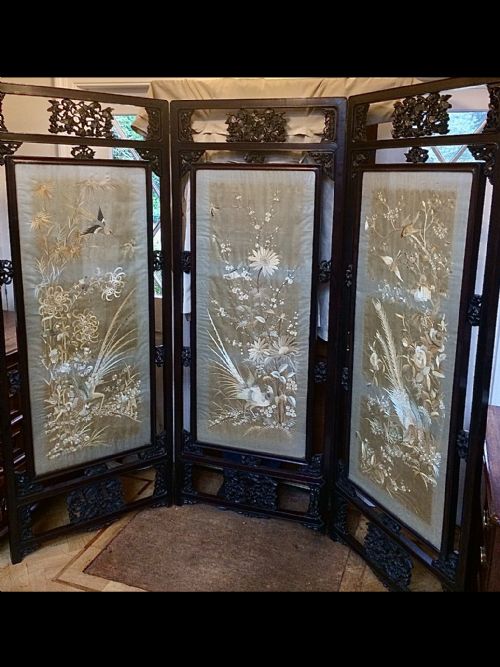
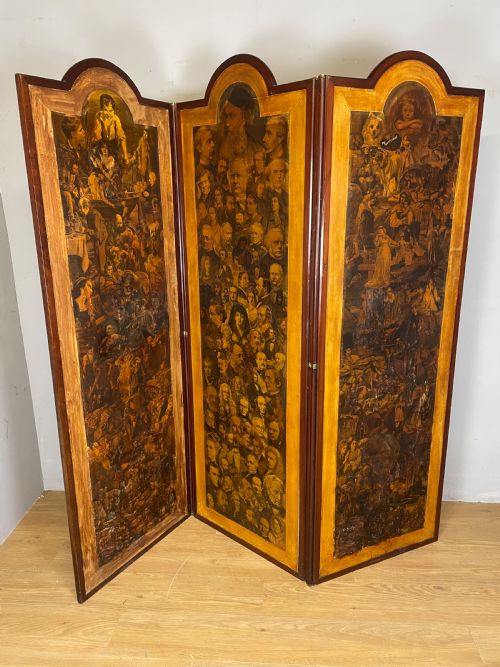


Three Fold Partition Screen
A three fold partition screen divides a room with architectural grace, offering both privacy and a distinct focal point for an interior.
Three Fold Partition Screen
A three fold partition screen stands as a hinged assemblage of three panels designed to segment interior spaces or conceal private areas. These pieces originate from various eras, ranging from nineteenth century examples to mid twentieth century items.
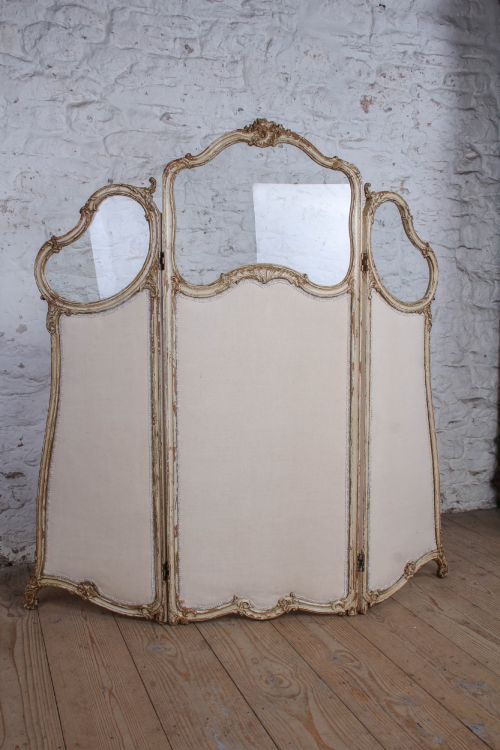
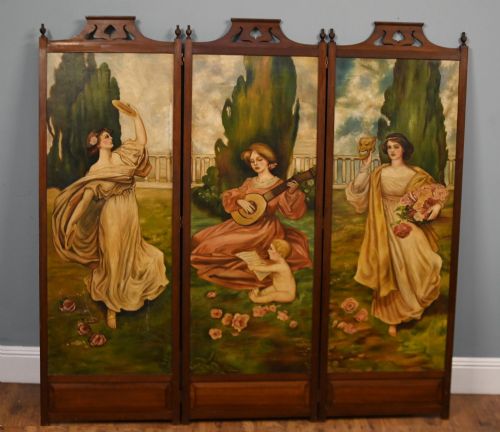
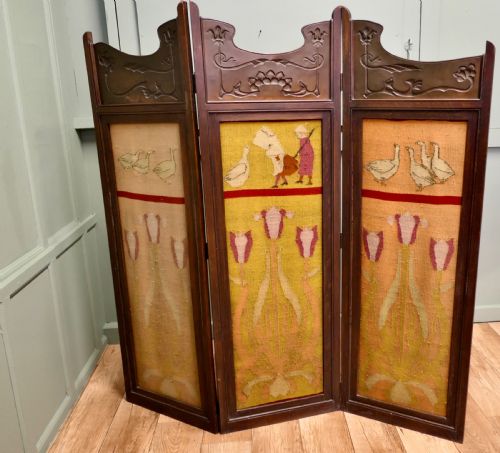
The versions most frequently encountered on this page encompass wooden and gilt frames housing panels of hand painted leather, embroidered wool, or glazed glass. Makers utilised diverse stylistic influences, including Art Nouveau, Edwardian, and Continental Baroque, to ornament domestic and institutional interiors.
How they were made
Craftsmen built the structural frames using sturdy timbers such as oak, mahogany, walnut, and padauk, often shaping the wood with intricate carvings or inlay. Giltwood and brass also appear among the structural materials, providing a polished finish to the folding framework.
Infill panels demanded specialised artisanal techniques, spanning hand painted leather, oil paint on canvas, decoupage, and woven textiles like William Morris velvet or Aubusson tapestry. Artisans joined the three sections with metal hinges to ensure smooth articulation across the panels.
Three Fold Partition Screen Retail Price Guide 2026
Typical asking prices for three fold partition screen among the pieces listed under this phrase on Sellingantiques today, from the lower quarter to the upper quarter. They describe what is for sale here now, not the wider market.
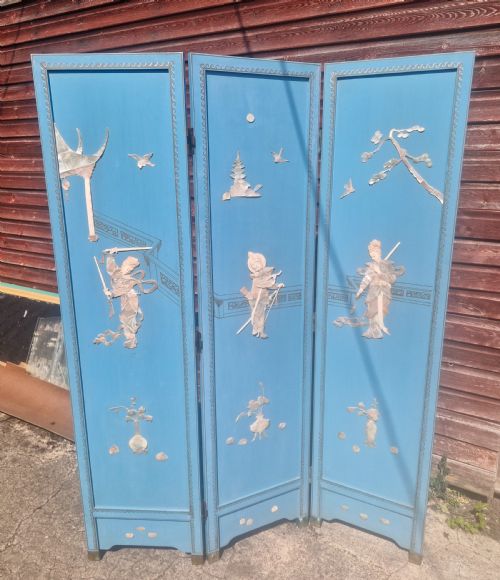
Listings span the nineteenth and twentieth centuries, incorporating materials such as brass, glass, wool, oil paint, and leather across various European and Asian styles.
What varies in quality
The calibre of a three fold partition screen rests primarily upon the skill evident in the structural joinery and the artistic merit of the panel infills. Finer examples display meticulous hand carving on solid timbers alongside expertly executed paintings or authentic period textiles.
Subtler distinctions emerge in the weight of the frame and the execution of the hinges, where superior manufacturing ensures stability and balanced folding. The integration of high grade materials, from giltwood to supple leather, elevates the overall presence of the divider.
The Three Fold Partition Screen Glossary
- Partition screen
- A moveable barrier composed of connected panels used to divide a room or provide privacy. These screens fold easily for repositioning.
- Giltwood
- Timber that has been coated with a thin layer of gold leaf or gold paint. This technique imparts a luminous metallic sheen to the carved frame.
- Decoupage
- The art of decorating a surface by applying coloured paper cutouts and sealing them with layers of varnish. Country house examples often utilise this decorative method on wooden panels.
- Aubusson
- A style of tapestry woven in the French town of the same name, frequently featuring pastoral or floral motifs. Such textiles lend texture and historical depth to screen panels.
- Inlay
- A technique where pieces of contrasting material are inserted into a recessed wooden base to form patterns. Edwardian makers applied this method to enhance furniture surfaces.
Three Fold Partition Screen: Frequently Asked Questions
How do I place a three fold partition screen?
Position the screen against a wall to create a decorative backdrop, or angle the three panels to carve out a private nook within an open living space.
Ensure the hinges allow the panels to fold securely without straining the frame or tipping on uneven flooring.
Were these screens used in offices?
Certain examples served utilitarian roles in debating societies, political rooms, and dressing areas to partition space for privacy.
More decorative specimens remained in formal drawing rooms and country house interiors as ornamental furnishings.
How do I clean painted leather panels?
Dust the leather gently with a soft, dry cloth to prevent the accumulation of grit on the painted surface.
Avoid liquid cleaners or harsh solvents that might damage the historical oil paint or leather substrate.
What defines an Art Nouveau screen?
Art Nouveau designs incorporate flowing organic lines, floral motifs, and stylised natural forms typical of the late nineteenth century.
Copper accents and naive wool embroidery frequently accompany the woodwork in pieces from this movement.