



Antique Draught Screen Divider
An antique draught screen divider is a folding panel structure designed to manage interior space and block chilly drafts.
Antique Draught Screen Divider
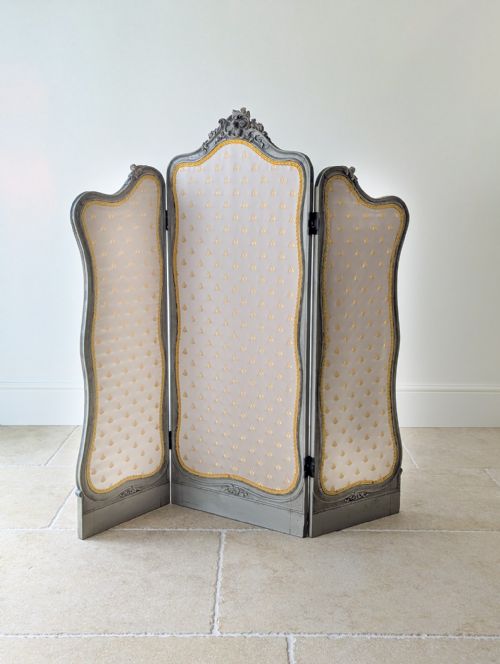
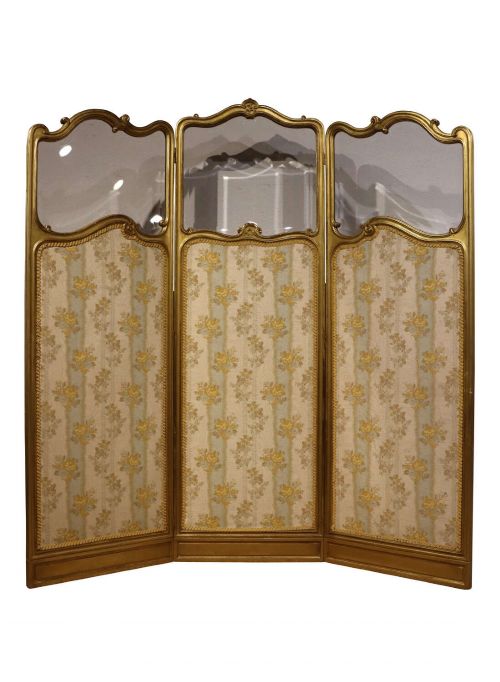
An antique draught screen divider serves to break up large rooms and shelter seating areas from cold air currents. These pieces appear in configurations ranging from three folds up to eight folds, utilising wood, brass, and glass frames.
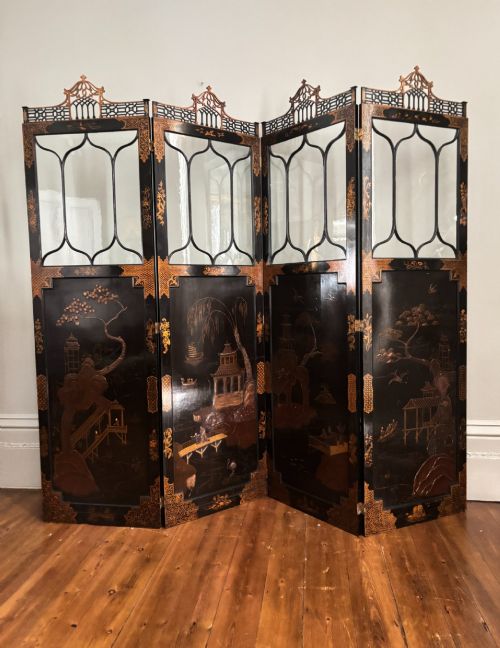
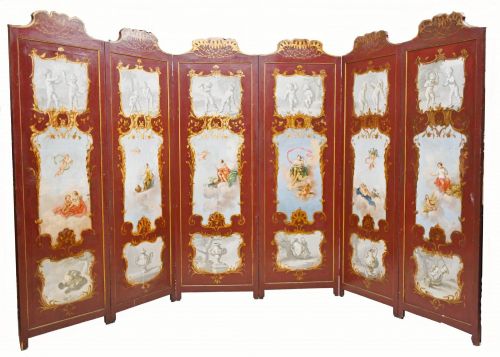
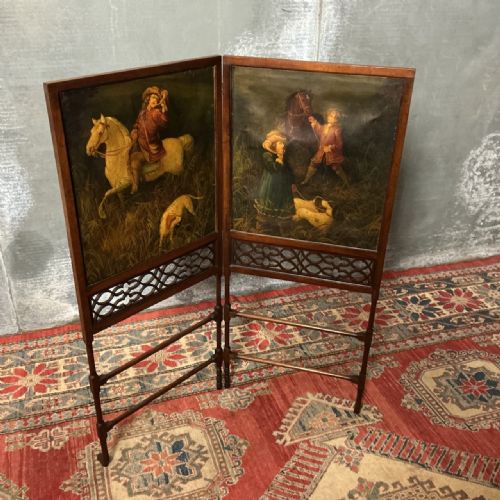
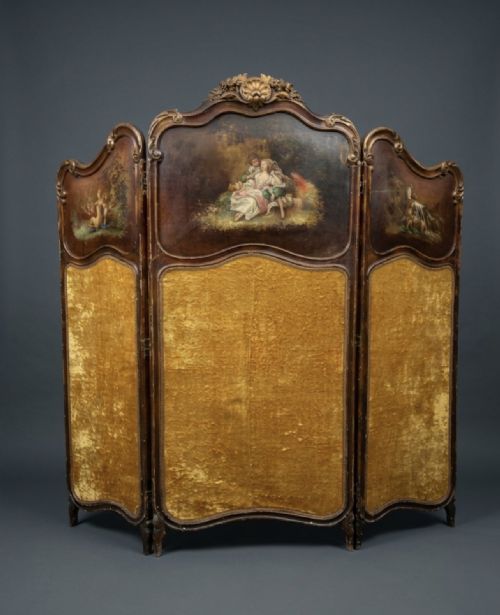
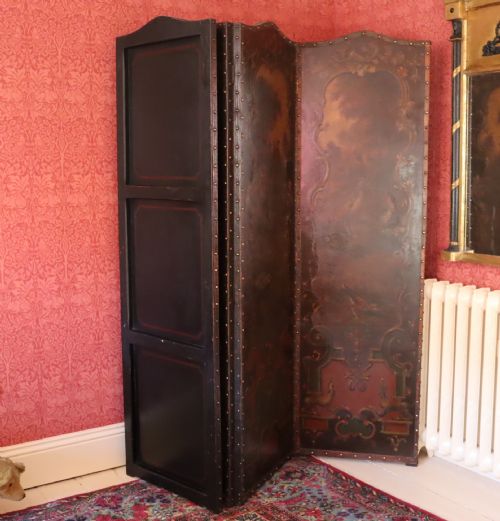
The selection encompasses English and Continental examples spanning the eighteenth and nineteenth centuries into the early twentieth century. Common formats include painted leather panels, carved giltwood frames, and fabric insertions designed for privacy or decoration.
Materials and construction
Frames rely on sturdy timbers such as mahogany, oak, walnut, and giltwood, joined with hinges to permit folding across multiple panels. Supporting elements integrate brass hardware and bevelled glass alongside textile components.
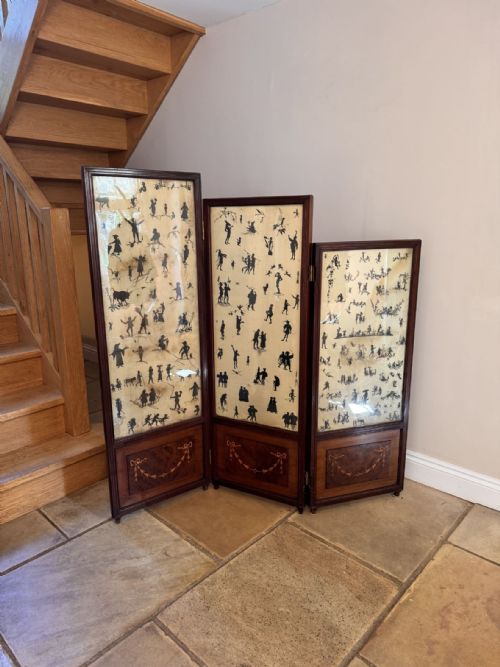
Surface decoration involves hand-painted oil compositions, gilt embossing, needlepoint, and lacquering techniques. Leather panels receive specific tooling and painted finishes, while scrap work and decoupage apply paper layers directly to the backing.
Antique Draught Screen Divider Retail Price Guide 2026
Typical asking prices for draught screen divider among the pieces listed under this phrase on Sellingantiques today, from the lower quarter to the upper quarter. They describe what is for sale here now, not the wider market.
Listings include items spanning the eighteenth century through the 1930s, featuring materials such as brass, leather, giltwood, and oil paint.
Craftsmanship and distinction
The standard of an antique draught screen divider rests on the execution of its decorative panels and the integrity of its timber framing. Finer examples display meticulous hand-painted details, specialised lacquer work, or intricate needlepoint executed by skilled hands.
Structural division and panel weight dictate stability during folding and positioning. Superior items maintain cohesive decorative schemes across every fold, utilising quality brass hinges that support heavy timber and glass components without sagging.
Paul Sormani
The Antique Draught Screen Divider Glossary
- Cordoban leather
- Heavy leather decorated with embossed and gilded designs, frequently utilised in panels for seventeenth and eighteenth-century screens. This material provides both durability and decorative richness.
- Verdure
- Tapestry or painted decoration depicting lush foliage, trees, and landscapes. Such pastoral scenes often appear on large fabric or woven panels.
- Chinoiserie
- European artistic style reflecting Chinese motifs and decorative techniques. Artisans applied these designs to lacquered and painted screens during the eighteenth and nineteenth centuries.
- Scrap work
- Decorative technique involving the arrangement and adherence of paper cut-outs onto a surface. Victorian screens frequently employ this method for dense collage displays.
- Giltwood
- Timber coated with a thin layer of gold leaf or gilt paint. This finish appears on elaborate frames designed for formal domestic interiors.
Antique Draught Screen Divider: Frequently Asked Questions
What is an antique draught screen divider?
An antique draught screen divider is a multi-panel folding screen used historically to block cold air currents and partition large rooms.
These functional furnishings double as decorative room partitions, constructed from materials like wood, leather, glass, and fabric.
How were these screens used?
Occupants positioned them around seating areas or beds to deflect drafts coming from fireplaces and doors.
They also created private dressing spaces and divided open plan rooms in large houses.
What materials make up the panels?
Panels incorporate painted leather, oil canvas, Aubusson tapestry, needlepoint, bevelled glass, and decorative paper scrap work.
Supporting frames utilise mahogany, oak, walnut, and giltwood joined by metal hinges.
How do I identify the period?
Stylistic clues such as French Rococo Revival carving, Arts and Crafts ebonisation, or Victorian scrap work point to specific eras.
Construction methods, hinge types, and material treatments further indicate whether a piece dates to the eighteenth, nineteenth, or early twentieth century.