

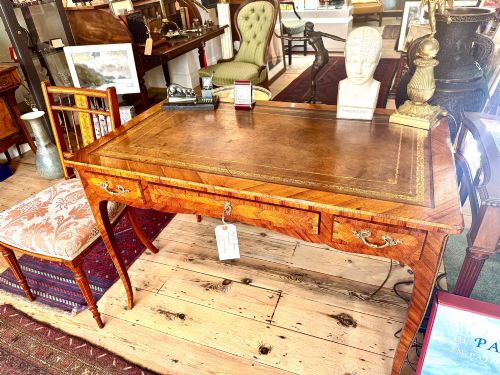


French Flat Desk
A french flat desk provides a refined writing surface, combining decorative wood veneers with classic metal mounts for practical study.
French Flat Desk
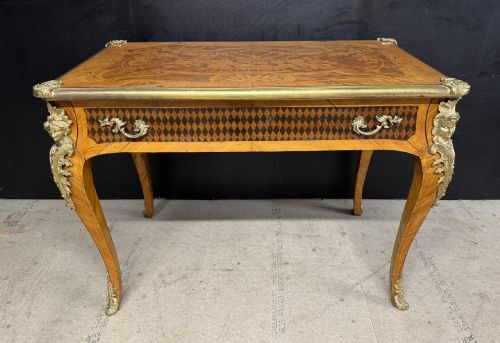
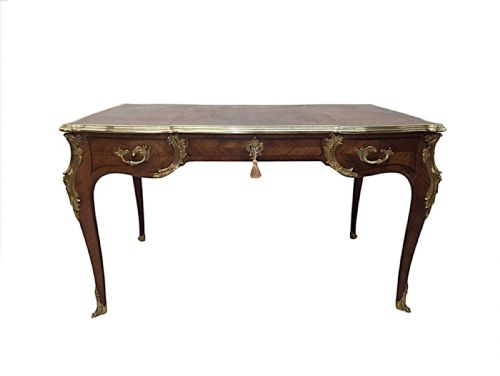
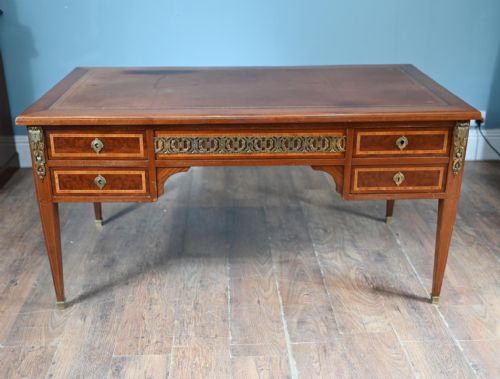
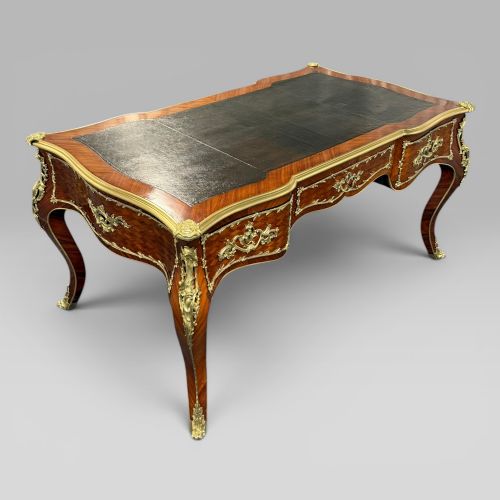
A french flat desk, often known as a bureau plat, serves as a freestanding writing table designed to sit away from the wall in a room. These pieces appear frequently from the nineteenth century, drawing heavily on earlier Louis XV, Louis XVI, and Directoire aesthetic traditions.
The dominant forms on this page include mahogany, kingwood, and red lacquered surfaces fitted with bronze, ormolu, or brass mounts. Such desks balance decorative marquetry and parquetry with functional writing areas often inset with leather.
Buyers encounter both single tables and paired examples spanning periods from eighteen sixty through to nineteen forty. The construction reflects traditional cabinetmaking methods adapted for domestic study and reception spaces.
Assessing Quality and Execution
Quality rests upon the precision of the timber veneers and the crispness of the cast metal mounts attached to the frame. Finer examples display meticulous attention to parquetry alignment and carefully chased bronze or ormolu details.
The integration of the leather writing panel and the stability of the freestanding legs distinguish standard cabinet work from exceptional workshop production. Superior execution shows in the seamless fit of drawer linings and balanced proportions.
French Flat Desk Retail Price Guide 2026
Typical asking prices for french flat desk among the pieces listed under this phrase on Sellingantiques today, from the lower quarter to the upper quarter. They describe what is for sale here now, not the wider market.
Listings feature nineteen-century pieces incorporating mahogany, kingwood, leather, and ormolu mounts across Louis XV and Directoire styles.
Henry Dasson·Zweiner
The French Flat Desk Glossary
- Bureau plat
- A French freestanding writing table typically fitted with one or more drawers in the frieze. This term forms the traditional name for the pieces listed under this search.
- Ormolu
- Gilded bronze used for decorative mounts and accents on furniture. The technique involves applying a gold amalgam to a bronze base.
- Marquetry
- The art of applying pieces of veneer to a structure to form decorative patterns and pictures. It differs from parquetry through its pictorial designs.
- Parquetry
- A geometric mosaic of wood pieces used for decorative floors and furniture surfaces. It creates repeating patterns across the top of the desk.
- Directoire style
- A transitional decorative style bridging Louis XVI and Empire periods, characterised by neoclassical restraint and simpler lines. Pieces in this style appear from the late eighteenth century onwards.
French Flat Desk: Frequently Asked Questions
What is a french flat desk used for?
These pieces function primarily as writing tables and study desks placed centrally within a room rather than against a wall. The flat top surface combined with frieze drawers provides practical storage for correspondence and documents.
Historically, they served elite domestic interiors for letter writing and administrative tasks. Today, they continue to function as working desks in studies or libraries.
How do I identify a Louis XV style desk?
Louis XV style desks typically feature curved cabriole legs, asymmetrical mounts, and flowing rococo ornamentation. These elements create a lighter, more organic silhouette compared to earlier geometric designs.
Makers working in this tradition also incorporated rich kingwood veneers and floral marquetry. The mounts of gilt bronze or ormolu follow the contours of the apron and legs.
What materials are used in these desks?
Construction relies on timber carcases faced with decorative veneers such as mahogany, walnut, and kingwood. Writing surfaces are traditionally inset with leather panels bordered by gilt tooling.
Metal components include brass, bronze, and ormolu used for handles, sabots, and decorative mounts. These materials combine to create the distinctive aesthetic of nineteenth-century revival pieces.
Are these desks freestanding?
Yes, these tables are designed to be viewed from all sides, featuring finished backs and polished surfaces throughout. This allows placement in the middle of a room rather than tucked against a wall.
The finished rear matches the attention given to the front facade, often including dummy drawers or continuous veneer work.