



French Figural Ornament
French figural ornament brings human and animal subjects into domestic spaces through cast metal and porcelain sculptures.
French Figural Ornament
French figural ornament comprises sculptures, vases, and statues depicting people, putti, and animals. These works span the eighteenth, nineteenth, and early twentieth centuries, capturing shifts from Rococo revival and Neoclassical themes to Art Nouveau and Art Deco designs.
The objects take many forms, including standalone figures, pairs, and functional pieces like inkwells and vases. Buyers frequently encounter nineteenth-century bronzes and early twentieth-century spelter works mounted on marble or onyx bases.
Materials and casting methods
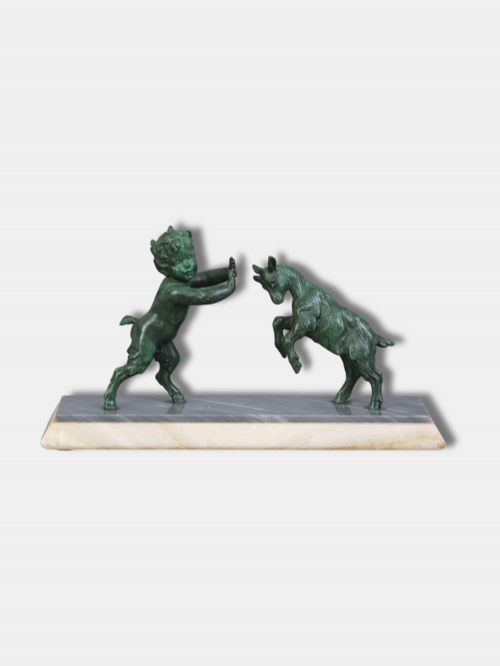
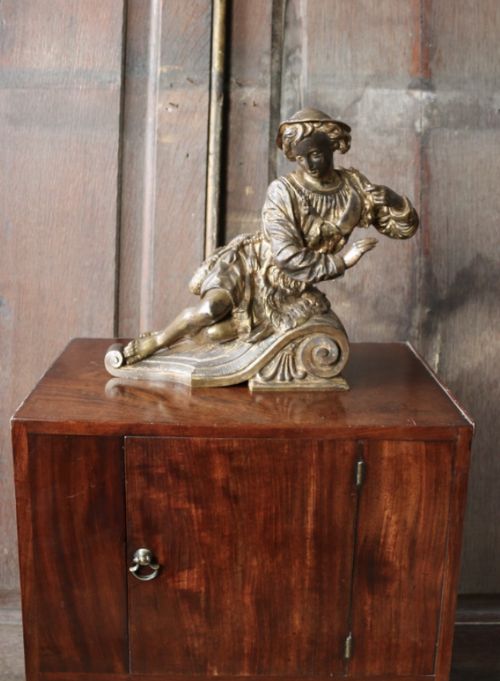
Foundries shaped these pieces primarily in bronze, gilt bronze, ormolu, and spelter, often finishing the metal with patination or gilding. Many figures incorporate natural stone bases such as marble, onyx, and alabaster to anchor the composition.
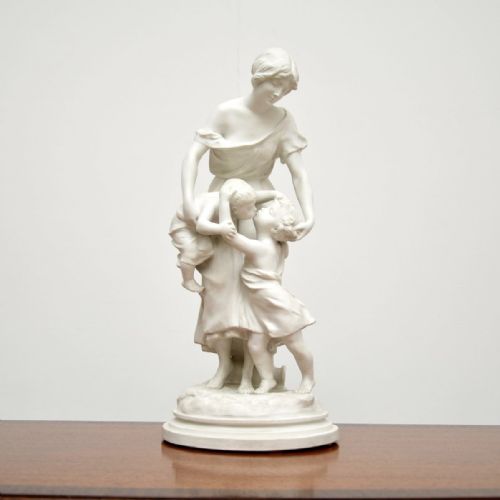
Ceramic works appear in bisque porcelain and enamel, sometimes reflecting specific pottery styles. Metal pieces rely on detailed casting techniques that preserve the line of the sculptor's original model.
The listings span from the eighteenth century to the nineteen-thirties, recording materials from raw bronze and spelter to fine marble and porcelain.
Distinctions in craftsmanship
The choice of base materials and the depth of the patina also signal grade. Pieces that integrate quality marble or onyx with finely chased bronze represent the higher end of the range.
Pierre-Augustin Caron de Beaumarchais·Emile Carlier·Georges Van Der Straeten·Clodion·Lucien Madrassi·Auguste Moreau·Eugene Laurent·Charles Korschann·Ernest Louis Adnin
The French Figural Ornament Glossary
- Spelter
- A zinc alloy frequently utilised as a substitute for bronze in nineteenth and twentieth-century figures. It accepts patination well to simulate heavier metals.
- Ormolu
- Gilt bronze produced by applying a finely ground high-carat gold mercury amalgam to a bronze object. This technique imparts a rich, lasting metallic lustre.
- Patination
- The surface coloration applied to metal through chemical or natural processes. It enhances the visual depth and highlights the contours of a sculpture.
- Bisque porcelain
- Unglazed white ceramic that has been fired once, yielding a matte finish with a texture resembling marble. It was a favourite medium for nineteenth-century figurative groups.
- Putto
- A representation of a plump, naked male child, often winged, appearing frequently in classical and revivalist decorative sculpture.
French Figural Ornament: Frequently Asked Questions
What is the difference between bronze and spelter figures?
Bronze is a heavy copper alloy that takes fine detail and holds a durable patina over centuries. Spelter is a lighter, softer zinc-based metal that was common in affordable decorative figures.
Spelter figures often carry a bronzed or painted finish that can show wear more readily than true bronze. Weight and coldness to the touch help separate the two metals.
How do I identify Art Deco pieces?
Art Deco pieces from the nineteen-thirties favour stylised human forms, geometric bases in marble or onyx, and sleek metallic finishes. The subjects often reflect modern dance, athletics, or stylised wildlife.
These designs move away from the ornate naturalism of nineteenth-century Neoclassical and Rococo revival styles towards clean, aerodynamic lines.
Where were these ornaments placed in a home?
Historically, these ornaments served as mantelpiece centrepieces, tabletop studies, and decorative elements on desks or cabinets. Figural inkwells and andirons combined utility with ornamental sculpture.
Pairs often stood symmetrically on either side of a clock or urn on a grand fireplace mantle.
How should I clean bronze and spelter sculptures?
Dust metal sculptures gently with a dry, soft cloth to prevent the accumulation of grit. Avoid chemical polishes, water, or abrasive cloths that can strip away the original patina.
Marble and onyx bases can be wiped with a barely damp cloth and dried immediately to protect the stone surface.