


Continental Ceramic Statue
These continental ceramic statue examples bring character and period charm into a room, offering finely modelled figures shaped across European kilns.
Continental Ceramic Statue
A continental ceramic statue encompasses figurative works produced across European factories, ranging from small table ornaments to large sculptural groups. Buyers exploring this category will frequently encounter porcelain figurines, allegorical representations, and decorative pairs spanning multiple centuries.
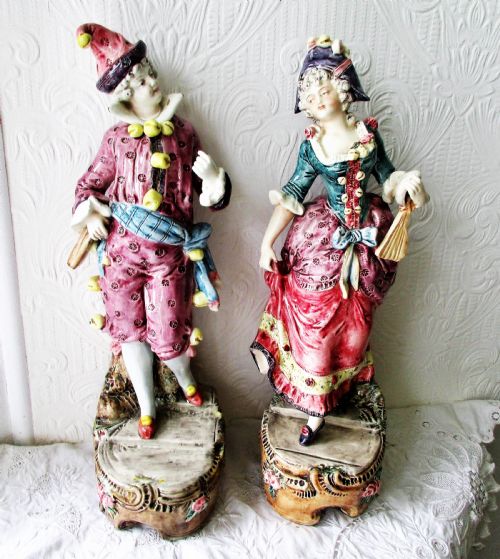
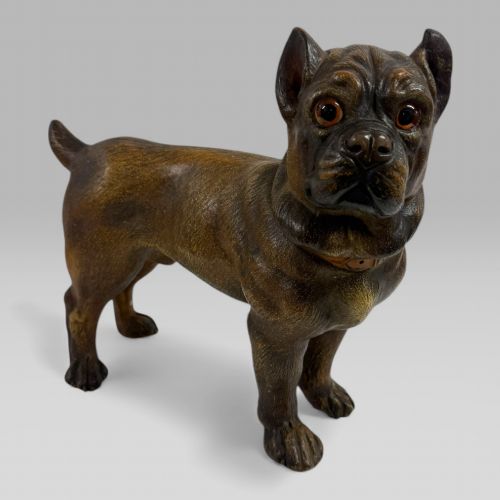
The selections span from eighteenth-century models through to twentieth-century interpretations, showing influences from Rococo Revival and Art Nouveau styles. Common subjects include mythological figures, pastoral characters, animals, and human pairs depicted in various historical costumes.
Most entries originate from established European manufacturing regions, notably German, French, and Austrian kilns. These items function primarily as decorative mantel or cabinet pieces rather than utilitarian objects.
Materials and construction methods
Makers utilised hard-paste porcelain, earthenware, terracotta, and bisque porcelain as primary base materials. Bisque porcelain provided an unglazed, matte finish resembling marble, while hard-paste formulations allowed for crisp detail and smooth glazed surfaces.
Mansion House dwarves wear oversized tri-corner hats and cheerful expressions, originally produced as satirical ornaments for wealthy dining tables.
Factors determining quality
The crispness of the modelling and the precision of the hand-painting set superior examples apart from standard production pieces. Finer works display subtle facial expressions, delicate hand-modelled foliage, and controlled enamel application without bleeding.
The reputation of the manufactory and the complexity of the figural grouping heavily influence the standing of an item. Multi-figure compositions requiring advanced kiln techniques and extensive hand-finishing represent the upper tier of the medium.
Volkstedt Rudolstadt Factory·Samson of Paris·Royal Dux·Carl Thieme Dresden·C G Schierholz·Eugene Clauss
The Continental Ceramic Statue Glossary
- Bisque porcelain
- Unfired or single-fired unglazed porcelain that possesses a matte, white texture similar to carved marble. It gained popularity for its ability to show fine anatomical detail without surface gloss.
- Hard-paste porcelain
- A durable ceramic composite fired at high temperatures using kaolin and petuntse. It resists scratching and provides a bright, translucent ground for enamel painting.
- Enamel
- A glassy substance fused to the ceramic body through firing to provide permanent colour decoration. Artisans applied these pigments by hand to robes, floral motifs, and background elements.
- Gilt
- A thin layer of gold or gold-coloured material applied to highlights on the ceramic surface. This technique added decorative contrast to borders, hair, and garment edges.
Continental Ceramic Statue: Frequently Asked Questions
How do I clean an antique ceramic figure?
Dust the surface gently using a soft, dry brush to prevent dirt accumulation in delicate crevices. Avoid harsh chemical cleaners or total immersion in water, especially on pieces with enamel or gold leaf decoration.
Older ceramic bodies can be porous or feature vulnerable repairs that moisture might damage. Professional conservation advice should be sought for significant cleaning procedures.
Where were most of these figures made?
Production centred primarily in European regions with established ceramic traditions, particularly Germany and France. Prominent factories operated in towns like Meissen, Plaue, and Paris, producing works for international markets.
Each manufacturing centre often employed distinct clay recipes and sculptural styles that help modern observers trace their geographic origin.
What does allegorical mean in these pieces?
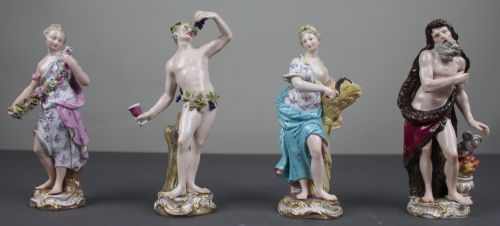
Allegorical figures represent abstract concepts such as the Four Seasons, the senses, or virtues through human form and symbolic attributes. A figure holding wheat sheaves might symbolise Autumn or harvest.
These thematic sets were popular in European drawing rooms as conversation pieces reflecting classical education and refinement.
How can I tell a reproduction from an antique?
Examine the base for factory marks, paste consistency, and signs of age-appropriate wear on the unglazed foot rim. Genuine antique examples often exhibit hand-finishing marks and subtle irregularities absent in modern mass-produced items.
Comparing glaze characteristics and painting techniques against documented factory standards helps clarify the production period.